Medieval Matter TT26, wk5

Welcome to week 5,

Last week’s Wikipedia editathon proved a great success, and there is now a wikipedia article for OMS itself! Thanks again to Louise for leading the session – a recording of the introductory talk can be found here.

This Friday sees the ‘Exploring Medieval Oxford through Surviving Archives‘ conference at the Weston, which includes an exhibition curated by the participants.

Exciting news! The Thegns of Mercia – an Anglo-Saxon reconstruction group – are coming to Balliol the Friday 29th May to show off a range of replicas (Old Common Room, 14:30). All are welcome!

Monday

  • French Palaeography Manuscript Reading Group – 10:30, Weston Library. If you are interested in joining the group or would like more information, please email the convenor Laure Miolo.
  • Armenian Studies Lecture – 4:00, Pembroke College. Ruth Gornandt (Faculty of Asian and Middle Eastern Studies) will be speaking on ‘‘Measured Theology’ – Gregory of Tatev (1346–1410) and the limits of theological knowledge’.
  • Medieval History Seminar: – 5:00, All Souls College. Julia Hillner (University of Bonn) will be speaking on ‘The marrying kind: how late Roman emperors chose their wives’.

Tuesday

  • Latin Palaeography Manuscript Reading Group – 2pm, Weston Library. Those who are interested can email the convenor Laure Miolo.
  • Medieval French Research Seminar – 5:00, Maison Francaise. Laura Campbell (Durham University) will be speaking on‘In the Beginning: Re-Creating the Creation Story in Medieval French Translations’.
  • Medieval Church and Culture Seminar– Tea & coffee from 5pm; papers begin at 5.15pm, Harris Manchester College. Youfei Fan (St Anne’s) will be speaking on ‘The Potion and the Women around It: female knowledge and trickery in the Tristan Legend’.
  • Professor Frank Griffel’s inaugural lecture – 5:00, Humanities Centre. ‘Double Truth and Multiple Rationalisms: Philosophy in Islam’s Post-Classical Period’. More information here.
  • Centre for Manuscript and Text Cultures – 5:15, Memorial Room, Queen’s College. Gunnar Seelentag (Hannover & Münster) will be speaking on ‘Monumentalising Norms, not Names: cartelisation and colossality in Archaic Crete’.

Wednesday

  • Methods in Arabic and Islamic Studies Class – 10:30, LMH Library.
  • Medieval German Graduate Seminar on Thomasin von Zerklaere – 11:15, Oriel College. If you are interested to be added to the teams group for updates and access to the sources, please contact Henrike Lähnemann.
  • Old Norse Reading Group – 4:00, Merton College, Breakfast Room. This term we are reading Völsunga saga. If you are interested in joining the group, please contact one of the group convenors via email Brooklyn Arnot or Zeynep Kirca
  • The Medieval Latin Documentary Palaeography Reading Group – 4:00, online. To join and/or to find out more about this and the possibility of some hands-on experience of cataloguing such documents to develop further your research skills, please contact  Michael Stansfield.
  • Late Antique and Byzantine Seminar – 5:00, Late Antique and Byzantine Seminar, Ioannou Centre. Alessandra Bucossi (Venice) will be speaking on ‘The Komnenian Panoplies between Religious Polemic and Political Self-Defence’.
  • Medieval English Research Seminar – 5:15, The Schwarzman Centre, room 00.018 . Mel Cowdery (U of North Carolina, Chapel Hill) will be speaking on ‘What Does a Mirror Mean to Thomas Hoccleve?’.
  • ‘Public Health in the Premodern World’ Book Launch – 5:30 in the Mark Bedingham Room, St John’s College. Discussants: H. Skoda, U. Khan, G. Geltner, Janna Coomans, and Ronit Yoeli-Tlalim. Drinks reception to follow.

Thursday

  • Middle English Reading Group (MERG) – 11:00, Lincoln College, Beckington Room. All are welcome as we finish Sir Gawain and the Green Knight. Bring any edition of the original text! There will be tea and biscuits. For more information or to be added to the mailing list, please email Rebecca Menmuir
  • Oxford Environmental History Working Group – 12:30, Schwarzman Centre History Hub Room 20.421. Dr. Kelsey Granger (IHR History Research Fellow) will be speaking on ‘Messengers of Empire: The Lives and Labour of Horses in China’s Ancient Postal System’.
  • Medieval Visual Culture Seminar – 5:00, St Catherine’s College. Lloyd Debeer (British Museum) will be speaking on ‘The Many Lives of the Asante Ewers’.
  • Global Manuscript and Text Cultures Seminar – 5:15, Memorial Room, Queen’ College. Lauren Dogaer (Univ) will be speaking on ‘How the Greek Text Culture Has Shaped Modern Views of Ptolemaic Egyptian Priests’; Fergus Bovill (Merton) will be speaking on ‘Rebuilding the Medieval, Preserving the 19th Century: Littifredi Corbizzi, Johann Anton Ramboux, and the making and breaking of a choirbook in Gubbio’.
  • Old English Graduate Reading Group – 5:15. This term we will be reading some of the Exeter Riddles. Our Location is variable so please email Hattie (harriet.carter@lmh.ox.ac.uk) or James (james.titterington@stcatz.ox.ac.uk) if you’re interested.
  • The Khalili Research Centre Seminar – 5:15, KRC Lecture Room. Margaret Squires (Ashmolean Museum) will be speaking on ‘Woven Together: Carpets and Architecture in Safavid Iran’.
  • Oxford Trobadors Concert – 7:00, La Maison Francaise.
  • Bede Reading Group (or, ‘Bede-ing Group’) – 6:00, Blackfriars. To sign up, email Maura McKeon. Don’t stop Bede-lieving.
  • Compline in the Crypt – 9:30, St Edmund Hall.

Friday

  • Conference Exploring Medieval Oxford through Surviving Archives – 9:00, Weston Library lecture theatre.
  • Oxford Festival of the Arts: Reading the signs: The meanings of medieval and Renaissance objects, symbols, and tokens – 9:30, The Hub, Kellog College.
  • Medievalist Coffee Morning – Friday 10:30, Visiting Scholars Centre (Weston Library). All welcome, coffee and insight into special collections provided.
  • Thegns of Mercia: Learning through Making – 2:30, Balliol College (Old Common Room).
  • Medieval Latin Reading Group – 5:30, Christ Church. This term, we will be reading the Cosmographia of Bernardus Silvestris in the original. For more information, please contact Clara Bykvist or Monty Powell

Opportunities (see Medieval Studies booklet for full details)

Come shape the Ashmolean Museum’s University Engagement Programme

The Ashmolean Museum are inviting twelve University of Oxford students to help us shape our new University Engagement Programme. Over 3.5 days we will work with staff from across the Museum to set the vision, shape the communications and scope activities for 2026/27 academic year.

We are looking for creative pragmatists, with exciting ideas and unique perspectives about museums, access and the University to be part of this dreaming session. If this sounds like you, please submit a 120-word statement or 1 minute video outlining why you want to participate in the project by 10:00am on 1 June via Microsoft Forms.

This opportunity will take place onsite at the Ashmolean Museum in Oxford, and is paid at the Oxford Living Wage of £14.06 per hour. Students will need to be available from 10:00am to 4:00pm, Tuesday 23 – Thursday 25 June and from 10:00am – 1:00pm on Friday 26 June 2026.

Please note that this is a positive action opportunity, open to all University of Oxford students who have matriculated. Although not a requirement of the role we are particularly interested in hearing from applicants from lower socioeconomic backgrounds and Disabled, LGBTQIA+ and Global Majority applicants, all of whom are typically underrepresented in the heritage sector.

If you would like to discuss any questions about, or necessary adjustments to, both the application process and the role its self before submitting your application please email caroline.moore@ashmus.ox.ac.uk

(Use of AI in Applications: To help us get a real sense of why you are interested in this opportunity we encourage you to only use AI to perfect rather the write the content of your application.  We also welcome applications which have not used AI at all!)

Exploring Medieval Oxford through Surviving Archives

Conference Friday 29 May 2026 – Weston Library
With an exhibition curated by the participants

9          Welcome Matthew Holford & Laure Miolo

9.15      Lauren Pidgeon & Deborah Seymour : An agreement between Agatha the widow and John Halegod

9.30      Emily Breithaupt & India Kelly: The Charter of Alice of Stokes

9.45      Alice Zhang & Annabel Brodersen: A Study of Christ Church F. 48: Property Ownership in Thirteenth-Century St Aldates, Oxford

10         Natasha Jenman (History, St Edmund Hall):  Jews in the Queen’s Gold Accounts of Eleanor of Castile

10.30     Marina Giraudeau & Philine Armbuster: Renting and Salvation: The Tenancy Agreement of Christ Church F. 17

10.45    Break

11.15     Teresa Witcombe (History, Wadham College): Captives and slaves in medieval Castilian archives

11.45   Tabitha Claydon: At the “insistence” of an “intervening” king

12         Julian Munby (Conted, Oxford): Mapping medieval Oxford from the archives

12.45     Lunch

2          Richard Allen (Magdalen College): Towards a new edition of the cartulary and charters of the Hospital of St John the Baptist, Oxford

2.30      Kevin Hoff & Cara Nicholls: Christina Pady and the Priory of St Frideswide

2.45      Hannele Hellerstedt, Holly Smith & Vanessa Emmet: Land and Legacy: The Life of Hugo de Plugenet

3          Louise Keitsch: Giving up (on) everything?

3.15      Yijia Wang& Luka Luhai: Cumin, Lamp, and Obligation: Making Continuity in a Medieval Oxford Parish.

3.30      Dan Wakelin (English Faculty, St Hilda’s College): Late medieval letters: disorderly archives

4.15      Daniel Dias & Charlotte Visconsi: Copying Amidst Conflict: Reproducing Castilian Law in the Wake of Civil War, (1437-1445).

4.30      End

This event is supported by the Centre for the Study of the Book.

Screenshot of header image with logo of the University of Oxford and the stylised cupola of the Radcliffe Camera turning into graphic arrows in green on dark blue

AccessiBod. Widening Access to Digital Bodleian

Thursday 21 May from 15:00 to 16:00. 

Registration link: AccessiBod: Widening access to Digital Bodleian

Digitised special collections such as manuscripts, archives and photographs are rarely made accessible to people who are blind or have low vision, but this does not mean they are not interested in accessing such materials or that they have no need for access in order to pursue their studies, research, work or pleasure. The cultural heritage and academic sectors could do more to expand access for blind and low vision people, but research is needed to understand what blind and low vision people want to know about digital cultural heritage, and what methods and resources are required to achieve access.

In this talk, Dr Victoria Van Hyning, Assistant Professor of Library Innovation at University of Maryland, College of Information, will report key findings from ‘AccessiBod: Exploring Accessible Futures for Digital Bodleian’, a participatory design study conducted at the Bodleian Libraries in 2025 to understand how crowdsourcing, AI, curatorial metadata and scholarly expertise might be harnessed to create better access within the Digital Bodleian site. Bodleian Libraries curators, digital scholarship specialists, web developers, students, disability services specialists and faculty from across the collegiate University and the broader Oxford community participated in interviews and workshops.

The findings and recommendations shared in this talk will be germane to Digital Bodleian as well as wider cultural heritage and digital humanities practice. We all have a role to play in widening access to digital cultural heritage and the web more broadly, and even small changes can make a big difference. 

This is the latest talk in the Bodleian Bytes series, hosted by the Centre for Digital Scholarship at the Bodleian Libraries.

Medieval matter TT26, Wk 4

Welcome to week 4!

This Thursday sees our first ever Wikipedia Editathon for Medievalists, at 5:00 in the Old Library at St Edmund Hall. Whether you have always wanted to write or improve a Wikipedia article, are looking for a low-pressure way to start writing about your topic, or simply want a productive and enjoyable distraction from exams or papers, this editathon offers a space to do so! Participants are encouraged to bring a topic they would like to work on, and prior experience with Wikipedia editing is not required – beginners are very welcome.

Exciting news! Two of our medievalists – Sumner Braund and Helen Flatley – have just opened a used bookshop in Oxford’s Golden Cross called ‘Barker and Company’, full of medieval books.

Monday

  • Bartlemas 900 Exhibition – weeklong, Bartlemas Chapel (Cowley Road). Exhibition exploring the history and significance of Bartlemas. More info here.
  • French Palaeography Manuscript Reading Group – 10:30, Weston Library. If you are interested in joining the group or would like more information, please email the convenor Laure Miolo.
  • Medieval History Seminar: – 5:00, All Souls College. Teresa Witcombe (Wadham College, Oxford) will be speaking in ‘The spoils of war: Andalusi captives in medieval Castile’.
  • Italian Research Seminar – 5:15, Taylorian, Room 2. Ambrogio Camozzi Pistoja (Harvard) will be speaking on ‘towards a Criminal History of Medieval Satire: Boccaccio, Decameron 5.10 (Sodomy, Apuleius, Forgery)’

Tuesday

  • Latin Palaeography Special Session – 2pm, Weston Library. Angela Cossu (Grenoble/ Richard Sharpe Memorial Visiting Fellow, Bodleian Libraries) will show and speak about “Medieval Latin florilegia: palaeography, mise en page and mise en texte” Those who are interested can email the convenor Laure Miolo.
  • Medieval Church and Culture Seminar– Tea & coffee from 5pm; papers begin at 5.15pm, Harris Manchester College. Henry Merrifield (Corpus) will be speaking on ‘Adoption or Rejection:  assessing Anglo-Saxon attitudes to ancient Rome’; Rhys Schwan (Trinity) will be speaking on ‘Revisiting the Regnal Chronology of the Kingdom of Northumbria in the 9th Century’
  • The Oxford Society for the Caucasus and Central Asia (TOSCCA) Seminar Series – 5:00, Lecture Room 4, New College. Dilnoza Duturaeva (University of York/ONGC) will be speaking on ‘Animal Power in the Highlands: Qarakhanid Hybrid Camels to China.’

Wednesday

  • Methods in Arabic and Islamic Studies Class – 10:30, LMH Library.
  • ‘AI and the Future of Everyday Heritage’ Heritage Pathway Programme – 11:00, Humanities Centre. Speaker: Dr Dominique Bouchard, Heritage and Engagement Director, Leeds Castle Clara Saliba, AI and Data Insights Analyst, Blenheim Place. More details and booking here.
  • Medieval German Graduate Seminar on Thomasin von Zerklaere – 11:15, Oriel College. If you are interested to be added to the teams group for updates and access to the sources, please contact Henrike Lähnemann.
  • Oxford Seminar in the History of Alchemy and Chemistry – 3:00, Maison Française d’Oxford. Session 2 — Spiritual Foundations of Alchemy. Chair: Ellen Hausner (Oxford). Speakers: Mark Edwards (Oxford) on ‘Ancient Alchemy as Philosophy’; Charles Burnett (Warburg Institute) on ‘Alchemy as Divinatio’.
  • Old Norse Reading Group – 4:00, Merton College, Americas Room. This term we are reading Völsunga saga. If you are interested in joining the group, please contact one of the group convenors via email Brooklyn Arnot or Zeynep Kirca
  • The Medieval Latin Documentary Palaeography Reading Group – 4:00, online. To join and/or to find out more about this and the possibility of some hands-on experience of cataloguing such documents to develop further your research skills, please contact  Michael Stansfield.
  • Late Antique and Byzantine Seminar – 5:00, Late Antique and Byzantine Seminar, Ioannou Centre. Apolline Gay (Brussels and Oxford) will be speaking on ‘They Also Tell the Story: The Role of Biblical Female Figures in Images from Byzantine and Early Islamic Egypt‘.
  • Medieval English Research Seminar – 5:15, Medieval English Research Seminar – 5:15. Annie Englund (U of Oxford) will be speaking on ‘Ghosts, roasts, and the speaking dead: grappling with the popularity of the Old English Soul and Body’; Corinne Clark (U of Oxford) will be speaking on ‘The Reading bee: honey and venom in Walter Map’s De Nugis Curialium’.
  • Centre for Manuscript and Text Cultures: Provenance Unknown – 5:15, Memorial Room, The Queen’s College. Roberta Mazza (University of Bologna) will be speaking on ‘Beyond Provenance: Publishing Papyri and Other Manuscripts from Egypt in 2026’.

Thursday

  • Middle English Reading Group (MERG) – 11:00, Lincoln College, Beckington Room. All are welcome as we finish Sir Gawain and the Green Knight. Bring any edition of the original text! There will be tea and biscuits. For more information or to be added to the mailing list, please email Rebecca Menmuir
  • Medieval Women’s Writing Research Seminar- 4:00, Somerville College. Poetry and Song, including extracts from the works of Kassia of Constantinople, Florencia Pinar and Gwerful Mechain.
  • Wikipedia Editathon for Medievalists – 5:00, Old Library at St Edmund Hall. More info here.
  • The Khalili Research Centre Seminar – 5:15, KRC Lecture Room. Stephane Pradines (The Aga Khan University) will be speaking on ‘Islamic Archaeology in Egypt: Sixteen Years of Rescue Excavations in Cairo’.
  • Bede Reading Group (or, ‘Bede-ing Group’) – 6:00, Blackfriars. To sign up, email Maura McKeon. Don’t stop Bede-lieving.

Friday

  • Medievalist Coffee Morning – 10:30, Visiting Scholars Centre (Weston Library). All welcome, coffee and insight into special collections provided.
  • Older Scots Reading Group – 3:00, Schwarzman room 30.401. No intensive preparation required. All are welcome and there are usually snacks. This week the theme is Orpheus and Eurydice. Contact megan.bushnell@ling-phil.ox.ac.uk for further details.
  • Oxford Medieval Manuscript Group: Tour of the Magdalen College Old Library – 3:00, Magdalen College, Porter’s Lodge. Booking required.
  • Medieval Latin Reading Group – 5:30, Christ Church. This term, we will be reading the Cosmographia of Bernardus Silvestris in the original. For more information, please contact Clara Bykvist or Monty Powell

Opportunities (see Medieval Studies booklet for full details)

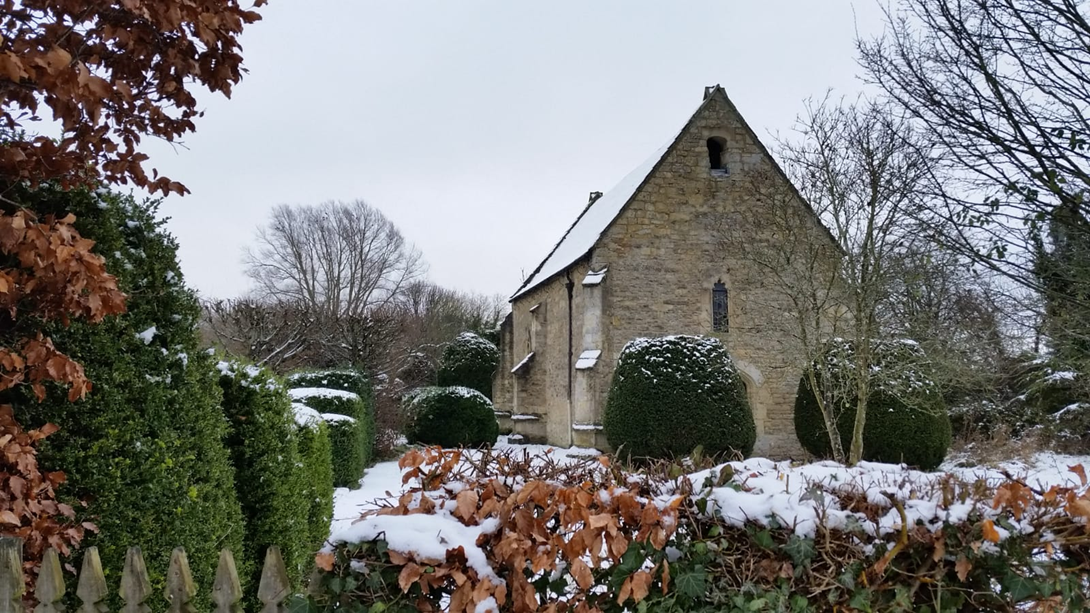
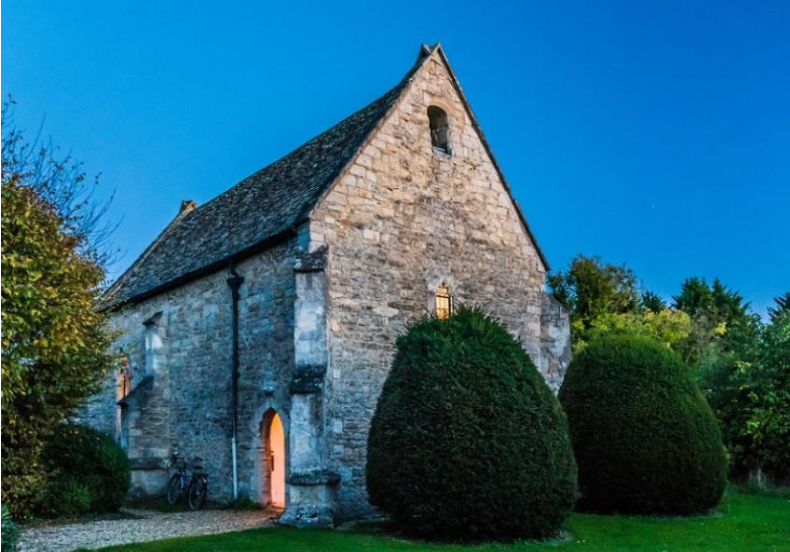
The History of Bartholomew Chapel

Celebrating 900 years of prayer, care and pilgrimage at Bartlemas Chapel

A historic Oxford chapel is marking 900 years of history with a year-long programme of events celebrating its legacy of prayer, care and welcome. This follows on from the workshop with Ian Forrest, read the report: Searching for History

The celebrations at Bartlemas Chapel in 2026 will tell the story of a place that has served pilgrims, the sick and those on the margins since it was founded in 1126 during the reign of Henry I. 

The chapel began life as part of a medieval hospital for people with leprosy. Today the chapel is in the parish of St Mary and St John Church Oxford and remains a place of quiet prayer and reflection on the edge of the city. 

Organisers say the Bartlemas 900th anniversary is about more than marking an ancient date. 

Revd Martha Grace Weatherill, Vicar of the parish, said:

“At heart, the anniversary is about telling the story of this extraordinary place well. Bartlemas has been a place of prayer, pilgrimage, healing and welcome for centuries. The celebrations are an opportunity to help people understand why it still matters today.” 

The life of Bartlemas 

One spring morning, a young boy spies the dreaming spires of Oxford through the mists from the top of Shotover. Descending the hill, hoping to find a welcome and the opportunity to study, he is caught up in a strange procession of young men singing madrigals and brought to a small chapel on the edge of the city. So begins Elizabeth Goudge’s fine novel of Tudor Oxford, Towers in the Mist, beloved of generations of children. The chapel is, of course, Bartlemas Chapel, and young Faithful has, unbeknownst to him, stumbled across the traditional May morning procession of the scholars of New College to sing for the brethren of the attached hospital and the lepers who crowd around the windows outside. 

This tradition of May morning singing died out in the early modern period, until in 2009. The choristers of New College revived it once again, walking to Bartlemas chapel on Ascension Day in 2009 to sing once more.  

Although the hospital has long since gone (it was badly damaged in the Civil War), the chapel remains a place of prayer and music. Evensong continues to be sung monthly, as well as a celebration of the feast of St Bartholomew every August and an Advent Carol Service. The most recent celebration in 2025 was made even more atmospheric by a fuse blowing at the beginning of the service, leaving the organist and choir to sing in almost complete darkness. 

A year of art, music and history 

The celebration programme begins in May with several events linked to the Oxford Festival of the Arts and Oxford Artweeks. 

On 10 May, the Voice Trio performed Feather on the Breath of God at the chapel. The performance celebrates the music and spirituality of the medieval abbess Hildegard of Bingen, whose writings and compositions continue to inspire audiences today. 

Later in the month, the chapel will host a Bartlemas 900 exhibition as part of Oxford Artweeks (16–25 May). The exhibition will feature photography and reflections from a new book by Martin Stott exploring the chapel’s architecture, landscape and spiritual significance. 

Visitors will also have the chance to delve deeper into the site’s story at a public talk on 23 May at St Mary and St John’s Church, exploring the history of the chapel and the medieval leper hospital that once stood there. 

Music will return to the chapel on 24 May with an intimate concert during Artweeks. On 31 May the chapel will host May Song, a celebration of medieval music, poetry and readings about Oxfordshire in spring. The event will feature the Comper Singers alongside actor Anna Tolputt and poet Kate Wakeling. 

A place of pilgrimage 

The liturgical focus of the anniversary year will be on 24 August, the feast day of St Bartholomew. A special patronal festival service will gather parishioners, pilgrims and visitors to mark the chapel’s nine centuries of worship. 

Later in the year, the chapel will open its doors to a wider audience during Oxford Open Doors, inviting people who may not yet know Bartlemas to explore the site. 

Discovering Bartlemas today 

Photographer, writer, and sustainability campaigner Martin Stott has worked with the church on a new photographic book to offer readers a way to encounter Bartlemas through image and story. In the book he traces the site’s medieval origins and reflecting on its continuing spiritual resonance. 

Organisers hope the anniversary will help more people discover the chapel and reflect on how ancient places still speak into modern life. 

Martha said:

“We would love people who have never heard of Bartlemas to discover it. It’s a place where history, prayer and quiet hospitality have come together for centuries — and where that story continues today.” 

Visitors are encouraged to attend an event, explore the chapel during Artweeks or Oxford Open Doors, or simply make time to pause and reflect in this ancient place of prayer. 

Bartlemas 900th anniversary programme of events 

All at Bartlemas Chapel unless otherwise listed. 

  • Feather on the breath of God, Voice Trio, Bartlemas Chapel 10 May, 4pm 
  • Bartlemas 900 Exhibition 16–25 May, 12-6pm 
  • Talk: The History of Bartlemas Chapel and the Leper Hospital, May 23, 6.30pm at St Mary & John’s Church with Martin Stott 
  • Concert, 24 May 6.30pm  
  • May Song 31 May 4-5pm 
  • 24 August St Bartholomew’s Day Service  
  • Oxford Open Doors, throughout September 

For an up to date list, visit https://cowleystjohn.co.uk/bartlemas-chapel-900-years-anniversary 

When? Wed 13 May 2026, 7:30pm
Where? OXFORD: Florence Park Community Centre (info)

This follows on from the workshop with Ian Forrest, read the report: Searching for History

An event of the history of a local medieval site posted by the Florence Park Community Centre – FPCC. 900 Years of Sanctuary & Compassion in East Oxford. Martin Stott marks the anniversary of Bartlemas, a hidden treasure. Presented by: Florence Park Talks

On the 900th anniversary of the founding of the leper hospital at Bartlemas in east Oxford, Martin Stott charts its origins, turbulent history, its focus on the outcasts, dispossessed, and refugees of the times, and the healing, care, refuge and sanctuary it offered. He traces its impact on east Oxford over 900 years, drawing out the threads of these traditions, re-made and celebrated in the neighbourhood today. Also known as St Bartholomew’s Chapel, it is older than any other Grade 1 listed building across the city. A hidden treasure.  Starting as a leper hospital, recent archeological investigations have shed light on a wide fascinating history. You will be enthralled.

Martin Stott is a photographer and local historian. His photobook Bartlemas: Oxford’s hidden sanctuary is just out and will be available for sale on the evening.

https://wegottickets.com/f/18091

Medieval Matters TT26, Wk 3

Week 3 is upon us, and it’s jam-packed with medieval events and opportunities. Of particular note is Balliol’s Oliver Smithies Lecture, this Thursday, which sees Elaine Treharne discussing Medieval women scribes.

Looking to the future, we’re hoping to put together a list of Oxford participants in this year’s IMC Leeds. If you are organising or speaking on a panel, please drop me a quick email with the details.

Monday

  • French Palaeography Manuscript Reading Group – 10:30, Weston Library. If you are interested in joining the group or would like more information, please email the convenor Laure Miolo.
  • Medieval History Seminar: – 5:00, All Souls College. Round table on Richard Hodges’s The Origins of Anglo-Saxon Towns: A Viking Gift? (London, 2025) with John Blair, Helen Gittos, Helena Hamerow and Rory Naismith.
  • Italian Research Seminar – 5:15, Taylorian, Room 2. Graduate Work-in-Progress. Presentations from DPhil students Silvia Cercarelli (modern/contemporary), Esme Hodson (modern/contemporary), Katherine McKee (medieval), and Victoria White (early modern)

Tuesday

  • Latin Palaeography Manuscript Reading Group – 2pm, Weston Library. Those who are interested can email the convenor Laure Miolo.
  • Medieval French Research Seminar – 5:00, Maison Francaise. Adrian Armstrong (Queen Mary University of London) will be speaking on ‘Testopolis: The Testament as Urban Art’ .
  • Medieval Church and Culture Seminar– Tea & coffee from 5pm; papers begin at 5.15pm, Harris Manchester College. Cris Arama (St Anne’s) will be speaking on ‘Gender embodiment in Old French hagiography:  a textual and iconographical approach’;  Bartholomew Chu (Lincoln) will be speaking on ;The Quandary of Quality:  copying prestige in MS. Bodl. 770′.

Wednesday

  • Methods in Arabic and Islamic Studies Class – 10:30, LMH Library.
  • Medieval German Graduate Seminar on Thomasin von Zerklaere – 11:15, Oriel College. If you are interested to be added to the teams group for updates and access to the sources, please contact Henrike Lähnemann.
  • Early Printed Books: A Computer-Aided Collate-A-Thon – 2:00, Taylor Institute Library. To book a place, please sign up here. For information about the project see here or contact Giles Bergel at giles.bergel@eng.ox.ac.uk 
  • Oxford Seminar in the History of Alchemy and Chemistry: Life and Nature in Early Modern Alchemy – 3:00, Maison Française d’Oxford. Oana Matei (Western University of Arad) will be speaking on ‘Can Life Rise from Ashes? Discussions on the Possibility of the Palingenesis of Plants in the Seventeenth Century’; Xinyi Wen(Warburg Institute) will be speaking on ‘Cosmos or Coitus? A Copy Census of Oswald Croll’s Basilica Chymica, 1609–1690′.
  • Old Norse Reading Group – 4:00, Merton College, Breakfast Room. This term we are reading Völsunga saga. If you are interested in joining the group, please contact one of the group convenors via email Brooklyn Arnot or Zeynep Kirca
  • The Medieval Latin Documentary Palaeography Reading Group – 4:00, online. To join and/or to find out more about this and the possibility of some hands-on experience of cataloguing such documents to develop further your research skills, please contact  Michael Stansfield.
  • Late Antique and Byzantine Seminar – 5:00, Late Antique and Byzantine Seminar, Ioannou Centre. Pawel Nowakowski (Warsaw) will be speaking in ‘New Fragments of the Order (forma generalis) of the Praetorian Prefect of the East, Pusaeus Dionysius, 480 CE, from Stratonikeia in Caria’.
  • Oxford Centre for Islamic Studies Lecture – 5:00, Oxford Centre for Islamic Studies. Dr Harry Muntv(University of York) will be speaking on ‘Haram Historiography: Writing the History of Mecca, Medina and Jerusalem in the Early Islamic Centuries’.  
  • Oxford Centre of Early Medieval Britain and Ireland: Invisible East – 5:00, online. Nima Asefi (Universität Hamburg) will be speaking on ‘Documents from Turbulent Times: Studying Middle Persian Collections from the Late Sasanian and Early Islamic Periods-Opportunities and Challenges’. Registration essential.  
  • Medieval English Research Seminar – 5:15, The Schwarzman Centre, room 00.018 . Cathy Shrank (U of Sheffield) will be speaking on ‘Thomas More’s dialogues’.

Thursday

  • Middle English Reading Group (MERG) – 11:00, Lincoln College, Beckington Room. All are welcome as we finish Sir Gawain and the Green Knight. Bring any edition of the original text! There will be tea and biscuits. For more information or to be added to the mailing list, please email Rebecca Menmuir
  • Oxford Environmental History Working Group – 12:30, Schwarzman Centre History Hub Room 20.421. Wallerand Bazin will be speaking on ‘Bracken dissensus: a historical political ecology of tree planting in the English Lake District’.
  • Oliver Smithies Lecture at Balliol College – 5:15, Gillis Lecture Theatre, Balliol College. Elaine Treharne (Stanford University) will be speaking on “Death of a Nun: Medieval Women Scribes and Networks of Piety”. Followed by a Drinks Reception. More information here.
  • Bede Reading Group (or, ‘Bede-ing Group’) – 6:00, Blackfriars. To sign up, email Maura McKeon. Don’t stop Bede-lieving.
  • Medieval Academy of America’s Graduate Student Council webinar on funding – 8:00 online. MAA Special Projects Assistant Jon Dell Isola will discuss what grants are available to graduate students, how to apply, and tips for grant applications. Register here.
  • Compline in the Crypt – 9:30, St Edmund Hall.

Friday

  • Medievalist Coffee Morning – Friday 10:30, Visiting Scholars Centre (Weston Library). All welcome, coffee and insight into special collections provided.
  • Oxford Medieval Manuscript Group – 3:00. Courtauld Gallery (London) Visit.
  • Old Frisian Reading Group – 3:00, Online.
  • Medieval Latin Reading Group – 5:30, Christ Church. This term, we will be reading the Cosmographia of Bernardus Silvestris in the original. For more information, please contact Clara Bykvist or Monty Powell

Opportunities (see Medieval Studies booklet for full details)

  • The experimental production of the Harrowing of Hell is still looking for players. More information can be found here.
  • OMS small grants is now open! Grants are normally in the region of £100–250 and can either be for expenses or for administrative and organisational support such as publicity, filming or zoom hosting. Closing date for applications: Friday of Week 5.
  • Publishing with the Journal Manuscript and Text Cultures. Are you interested in submitting to the journal Manuscript and Text Cultures? Please review the About the Journal page.
  • Register for the Anglo-German Research Funding Opportunities Showcase, Wednesday, 13 May  •  2 PM – 5:30 PM | Eventbrite. The Global Engagement team will host representatives from some of the major German and UK funding bodies (DFGThe Royal Society, the Alexander von Humboldt Foundation, the Royal Academy of Engineering and more) at Rhodes House; for Early Career People as well as established researchers!
  • CfP – Representations of Women and/as Animals in Literature, Arts, and Other Media. Deadline: 15 July 2026.
  • Sir John Rhŷs Prize for the study of the Celtic languages, literature, history, and antiquities. Entries should be submitted by email, with the subject line “Sir John Rhŷs Prize”, to the English Faculty Office, no later than Monday of Week 8 of Trinity Term (15 June 2026).
  • CfP – 9th International Conference on Myth Criticism. Deadline: 15 May 2026
  • CfP – The Nine Worthies: Interdisciplinary Perspectives. Deadline: 15 May 2026
  • CfP – Contested Ground: Ownership and Belonging in the Middle Ages. More information here. Deadline: 1 June 2026.
  • CfP – 1027 – 2027 : The World in which William was Born. More information here. Deadline: 1 June 2026.
  • 20th MEMSA Anniversary Conference. More information here. Deadline: 20th June 2026.
  • The Mortimer History Society will once again be offering two Research Bursaries (each of £1000) for the academic year 2026 to 2027, for PhD and MA students whose research includes any aspect of the medieval Welsh Marches or the Mortimers. More information here. Deadline: 30 June 2026.
  • Bodleian Purchasing Opportunity. Do you know of books that would aid your work but are not in the Bodleian? Help us strengthen the university’s collections. You can submit details of suggested books via https://www.bodleian.ox.ac.uk/collections-and-resources/recommend-a-purchase or by email to medieval@bodleian.ox.ac.uk.

Feminaminals

Call for papers Representations of Women and/as Animals in Literature, Arts, and Other Media

University of Oxford, Oriel College, 14-16 April 2027
Keynote speakers: Prof Chloë Taylor (University of Alberta) and Dr Kaori Nagai (University of Kent)
Roundtable with Queer Kinship Network led by Prof Charlotte Ross (University of Oxford)
Organising committee: Dr Fanny Clemente (University of Oxford), Dr Greta Colombani (independent scholar), Dr Cécile Bishop (University of Oxford)

FEMINANIMALS is a three-day international conference investigating representations of women as non-human animals and of the relationship between women and non-human animals in literature, arts, and other media across languages, from medieval to contemporary times. The last decades have witnessed an explosion of theoretical discourses directed towards a critique of humanism and a re-evaluation of humans’ interactions with the non-human world and wider ecosystem. Since the 1970s such a focus has found a privileged expression in ecofeminist theories, which have started to interrogate and deconstruct the history-long, negatively connoted association of women with non-human animals and to denounce the fundamental links between the oppression of women and that of non- human nature simultaneously perpetrated by the patriarchal system. From the ecofeminist manifestos of the 1990s (Gaard 1993, Gruen 1993, Plumwood 1993, Adams and Donovan 1995), the field of inquiry examing the deleterious intersections of anthropocentric and androcentric attitudes has been prolifically expanded and enriched by a notable array of theoretical standpoints adopting diverse disciplinary perspectives and an increasingly intersectional approach, that is, bringing to the fore of the analysis other categories of oppression that ought to be necessarily considered alongside gender and species, such as race, sexuality, class, physical abilities. Recent contributions to the field include Alaimo and Hekman 2008, Decka 2012, Adams and Gruen 2014, Gaard 2017, Vakoch and Mickey 2017, Braidotti 2022, and Taylor 2024. Theoretical discourses on the intersected nature of different systems of oppressions have been productively applied to the study of literature and other arts. Some of the above-mentioned works already include references to or analysis of literary and artistic sources (Taylor 2024); other contributions directly postulate, for instance, the benefits of intertwining ecofeminism and literary criticism (Gaard and Murphy 1998, Vakoch and Mickey 2019, and Vakoch 2023). Increasingly moving away from a privileged Anglo-American-centred perspective, moreover, scholarship is embracing more comprehensive assessments of literary and artistic portrays of nature, non-human animals, and humans’ relationship with them. Following in the footsteps of such recent contributions, dialoguing with different theoretical approaches and exploring different media, FEMINANIMALS seeks to enrich and foster ongoing discussions around the connections and intersections between our changing constructions of womanhood and animality by looking at representations of women as non-human animals and of the relationship between women and non-human animals, from medieval to contemporary times, assessing the significance and implications of those representations against the backdrop of diverse historical and cultural contexts. Across time and space, literature, arts, and other media have been pervaded by portrayals of women as/and animals, from the moralistic, religiously informed intertwining of gender and species in medieval bestiaries, exempla such as the cuento XXXV “La mujer brava” in Don Juan Manuel’s El Conde Lucanor or works like Boccaccio’s Il Corbaccio (ca. 1365) describing women as an “animale imperfetto” to the countless retellings and translations of the legend of the half-human half-snake Melusine in widely circulating texts like Jean d’Arras’s Mélusine (ca. 1393) and its adaptations in the following centuries, from the woman-animal erotic unions and shapeshifting in the late seventeenth- and early eighteenth-century supernatural tales Liaozhai zhiyi by Pu Songling to the numerous poems dedicated to wild, exploited, or domesticated animals by Romantic and Victorian women authors such as Anna Letitita Barbauld’s “A Mouse’s Petition” (1773) and Elizabeth Barrett Browning’s “To Flush, My Dog” (1843), from Odette’s transformation into a swan in Pyotr Ilyich Tchaikovsky’s ballet Swan Lake (1877) to visual depictions of woman-animal entanglements like Oskar Kokoschka’s painting Mädchenakt auf galoppierendem Schimmel in Weiherlandschaft (1905) and the surrealist works of Leonora Carrington who herself identified as a “female human animal”. The manifold associations between women and non-human animals continue to be prominent in recent times, enriched by new media and perspectives, with meaningful examples including Clarice Lispector’s novel A paixão segundo G.H (1964) centring on the unsettling encounter of the female protagonist with a cockroach, Marie Darrieussecq’s satirical tale of a woman’s metamorphosis into a female pig in Truismes (1996), the Africanfuturist speculative fiction of Nnedi Okorafor who endows the heroine of Who Fears Death (2010) with the magical ability to turn into a vulture and dedicated her novella Binti (2015) to a jellyfish, and the central place that the porous borders between women and animals occupy in Athina Rachel Tsangari’s cinema, particularly in Attenberg (2010) and her short film The Capsule (2012). What can these pervasive representations of women as/and animals in different cultures and historical periods tell us about the complexities and intersections of shifting notions of gender and species, the fraught line between humanity and animality, and the entwined practices of domination and othering to which women and animals have been subjected? How can we look at such a variety of literary and artistic sources with the benefit of decades of theoretical perspectives that have tackled the historical, philosophical, social, cultural, and political implications of the multifaceted association of women and non-human animals? In what crucial ways can an interdisciplinary, comparative, and temporally wide approach help us think about and rethink this fundamental pairing today, as we continue to navigate, experience, suffer, and/or reclaim it against the backdrop of a dramatic environmental crisis, a deterioration of our relationship with nature and other living creatures, and a new rising tide of sexism that is infiltrating the virtual and real-life world? The conference aims to foster new conversations around these questions by inviting scholars to examine representations of women as/and animals across languages and cultures, from medieval times to the present day. We encourage proposals considering works belonging to different media and genres, focusing on canonical as well as non-canonical authors and artists, and dialoguing with diverse theoretical and methodological approaches, such as human-animal studies, posthumanist studies, new materialism studies, ecofeminist studies, animal studies, critical animal studies, animality studies, gender studies, critical race and postcolonial studies, queer studies, psychoanalytic and post-structural studies, affect theory, and other relevant fields of inquiry.

Papers may explore topics including, but not limited to:

  • women-animals metamorphoses
  • women-animals hybrids
  • women, animals, and the body
  • women, animals, and sexuality
  • women, animals, and gender
  • women, animals, and race
  • women, animals, and class
  • women, animals, and motherhood
  • metaphors of women as animals
  • women, animals, and language
  • kinship between women and animals
  • women, animals, and ethics and aesthetics of care
  • women, animals, and the environmental crisis
  • women, animals, and science
  • women, animals, and spirituality
  • women, animals, and folklore
  • women writers/artists and animals
  • trans women and animals
  • women, animals, and the male gaze

The conference is part of a wider project including a cultural programme of public events that will take place at the Schwarzman Centre for the Humanities in April 2027 and will consist in:

  • a writers roundtable with authors Naomi Booth, Chịkọdịlị Emelụmadụ, Helen Jukes, and Helen Macdonald;
  • a screening of H is for Hawk (2025) preceded by conversation with director Philippa Lowthorpe.

More information on the cultural programme, confirmed dates, and how to register will follow. All conference participants are very welcome to extend their stay in Oxford to attend the events. Please note that the conference will take place in person in Oxford with no possibility for hybrid participation. There will be no conference fee. All presentations should be in English and last no longer than 20 minutes. Proposals, including title, abstract (250 words max), and short bio (150 words max), must be submitted via email in a single Word document to Dr Fanny Clemente and Dr Greta Colombani by 15 July 2026. Notification of acceptance will be sent by 30 July 2026. Please feel free to contact the organisers Dr Fanny Clemente and Dr Greta Colombani at any point for inquiries and further information. 

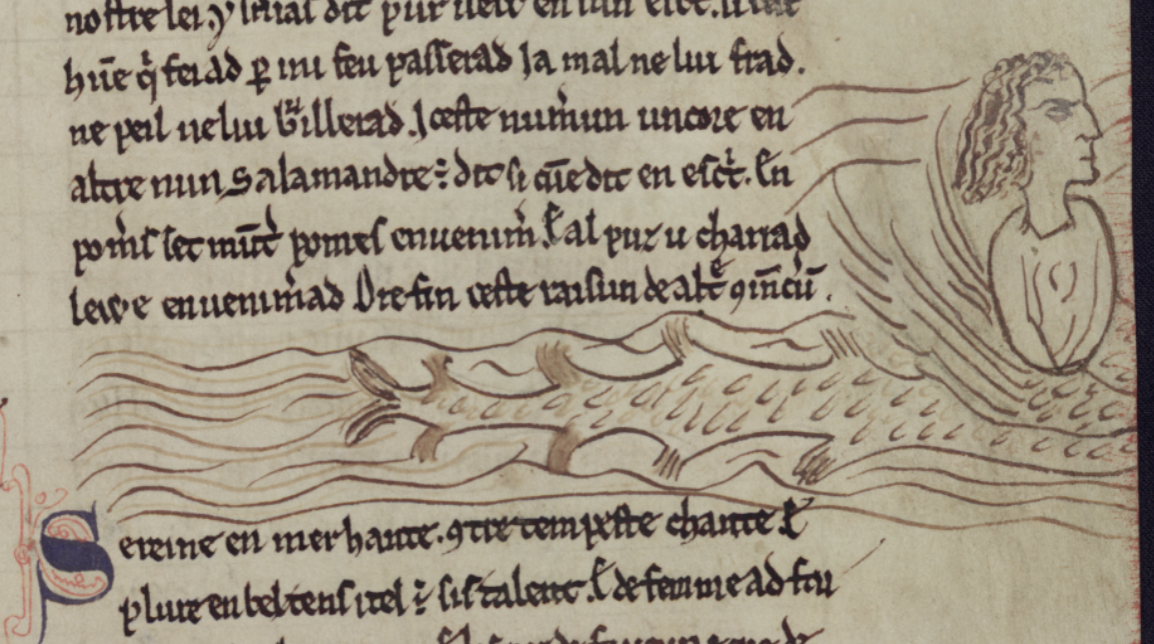
Image: The siren from the Merton Bestiary https://editions.mml.ox.ac.uk/editions/bestiary/#Serena

Medieval Matters TT26, Wk 2

Welcome to week 2. Alongside the usual weekly roster of reading groups and opportunities, this weeks sees a number of exciting one-off events: ‘Black Lives in the Archives’ (Thur), Prof Treharne on ‘The Look of the Medieval Book’ (Fri), and Dr Griffith in the annual O’ Donnell Lecture (Fri).

Monday

  • French Palaeography Manuscript Reading Group – 10:30, Weston Library. If you are interested in joining the group or would like more information, please email the convenor Laure Miolo.
  • Medieval History Seminar: – 5:00, All Souls College. Nancy Thebaut (St Catherine’s College, Oxford) will be speaking on ‘When Christ turns away: representing the ascension ca. 1000’.

Tuesday

  • Latin Palaeography Manuscript Reading Group – 2pm, Weston Library. Those who are interested can email the convenor Laure Miolo.
  • Medieval Church and Culture Seminar– Tea & coffee from 5pm; papers begin at 5.15pm, Harris Manchester College. Hannah Free (Kellogg) will be speaking on ‘Christian Fanfiction? Searching for truth in biblical retellings’; Samuel Bedford (Wadham) will be speaking on ‘Reginald Pecock’s Rationalist Turn: a study in medieval intellectual biography’

Wednesday

  • Methods in Arabic and Islamic Studies Class – 10:30, LMH Library.
  • Medieval German Graduate Seminar on Thomasin von Zerklaere – 11:15, Oriel College. If you are interested to be added to the teams group for updates and access to the sources, please contact Henrike Lähnemann.
  • Old Norse Reading Group – 5:00, Merton College, Americas Room. This term we are reading Völsunga saga. If you are interested in joining the group, please contact one of the group convenors via email Brooklyn Arnot or Zeynep Kirca
  • The Medieval Latin Documentary Palaeography Reading Group – 4:00, online. To join and/or to find out more about this and the possibility of some hands-on experience of cataloguing such documents to develop further your research skills, please contact  Michael Stansfield.
  • Late Antique and Byzantine Seminar – 5:00, Late Antique and Byzantine Seminar, Ioannou Centre. Ekaterini Vavaliou (Oxford) will be speaking on ‘Dissecting a Medieval Frontier: The Fortifications of Eastern Central Greece‘.

Thursday

  • Middle English Reading Group (MERG) – 11:00, Lincoln College, Beckington Room. All are welcome as we finish Sir Gawain and the Green Knight. Bring any edition of the original text! There will be tea and biscuits. For more information or to be added to the mailing list, please email Rebecca Menmuir
  • Writing Environmental History Workshop – 2:00, Schwarzman Centre Room TBA. For updated meeting information, please email Ryan Mealiffe.
  • Black Lives in the Archives: Chivalric Romances – 3:00, Weston Library. This hands-on workshop will explore how surviving medieval manuscripts can help us understand race and race-making in medieval Europe. Register here.
  • Medieval Women’s Writing Research Seminar- 4:00, Somerville College. Spiritual and Material World, including extracts from the works of Margery Kempe, Leonor López de Córdoba and Isabel de Villena 
  • Medieval Visual Culture Seminar – 5:00, St Catherine’s College. Cécile Voyer (Université de Poitiers) will be speaking on “Under the Gaze of the Judge: New approaches to a re-reading of the Conques tympanum” 
  • Centre for Manuscript and Text Cultures: Global Manuscript and Text Cultures Seminar – 5:15, Memorial Room, Queen’s College. Shaahin Pishbin (Queen’s) & Thomas Newbold (Asian University for Women, Chittagong) will be speaking on M’uhajir manuscripts: Field notes from the Alia Madrasa Library in Dhaka’; Jaimee Comstock-Skipp (New College) will be speaking on ‘What’s in a nisba? Manuscript makers and migrations in 16th-century Central Asia’.
  • The Khalili Research Centre Seminar – 5:15, KRC Lecture Room. Suna Çağaptay (Muğla Sıtkı Koçman University) will be speaking on ‘Reading Between the Lines: The Maritime Landscape of Anaia on the Byzantine-Genoese and Aydinid Cusp’ 
  • Guild of Medievalist Makers – 5:30, online. Making Space Session –  optional theme: dreams.
  • Bede Reading Group (or, ‘Bede-ing Group’) – 6:00, Blackfriars. To sign up, email Maura McKeon. Don’t stop Bede-lieving.
  • Compline in the Crypt – 9:30, St Edmund Hall.

Friday

  • Medievalist Coffee Morning – 10:30, Visiting Scholars Centre (Weston Library). All welcome, coffee and insight into special collections provided.
  • Older Scots Reading Group – 3:00, Schwarzman room 30.401. No intensive preparation required. All are welcome and there are usually snacks. This week the theme is Orpheus and Eurydice. Contact megan.bushnell@ling-phil.ox.ac.uk for further details.
  • Oxford Medieval Manuscript Group – 5:00, Merton College Mure Room. Professor Elaine Treharne (Stanford University) will be speaking on ‘The Look of the Medieval Book: Manuscripts and Their Uses’. Please join us for a drinks reception following the lecture.
  • Medieval Latin Reading Group – 5:30, Christ Church. This term, we will be reading the Cosmographia of Bernardus Silvestris in the original. For more information, please contact Clara Bykvist or Monty Powell
  • O’ Donnell Lecture – 5:30, Schwarzman Centre for the Humanities. Dr Aaron Griffith (Utrecht University) will be speaking on ‘Old Irish: plenty of variation, but of what kind?‘. Register for free tickets here
  • A Multilingual Moses Play – 6:30, Ioannou Centre.

Opportunities (see Medieval Studies booklet for full details)

  • The experimental production of the Harrowing of Hell is still looking for players. More information can be found here.
  • OMS small grants is now open! Grants are normally in the region of £100–250 and can either be for expenses or for administrative and organisational support such as publicity, filming or zoom hosting. Closing date for applications: Friday of Week 5.
  • Publishing with the Journal Manuscript and Text Cultures. Are you interested in submitting to the journal Manuscript and Text Cultures? Please review the About the Journal page.
  • Register for the Anglo-German Research Funding Opportunities Showcase, Wednesday, 13 May  •  2 PM – 5:30 PM | Eventbrite. The Global Engagement team will host representatives from some of the major German and UK funding bodies (DFGThe Royal Society, the Alexander von Humboldt Foundation, the Royal Academy of Engineering and more) at Rhodes House; for Early Career People as well as established researchers!
  • Sir John Rhŷs Prize for the study of the Celtic languages, literature, history, and antiquities. Entries should be submitted by email, with the subject line “Sir John Rhŷs Prize”, to the English Faculty Office, no later than Monday of Week 8 of Trinity Term (15 June 2026).
  • CfP – 9th International Conference on Myth Criticism. Deadline: 15 May 2026
  • CfP – The Nine Worthies: Interdisciplinary Perspectives. Deadline: 15 May 2026
  • CfP – Contested Ground: Ownership and Belonging in the Middle Ages. More information here. Deadline: 1 June 2026.
  • CfP – 1027 – 2027 : The World in which William was Born. More information here. Deadline: 1 June 2026.
  • 20th MEMSA Anniversary Conference. More information here. Deadline: 20th June 2026.
  • The Mortimer History Society will once again be offering two Research Bursaries (each of £1000) for the academic year 2026 to 2027, for PhD and MA students whose research includes any aspect of the medieval Welsh Marches or the Mortimers. More information here. Deadline: 30 June 2026.
  • Bodleian Purchasing Opportunity. Do you know of books that would aid your work but are not in the Bodleian? Help us strengthen the university’s collections. You can submit details of suggested books via https://www.bodleian.ox.ac.uk/collections-and-resources/recommend-a-purchase or by email to medieval@bodleian.ox.ac.uk.
1027 – 2027 : The World in which William was Born

International Conference in Cerisy-la-Salle and Caen (9-13 June 2027)
Organisation : Pierre Bauduin, Alban Gautier, Marie-Agnès Lucas-Avenel
(Université de Caen Normandie, Centre Michel de Boüard – CRAHAM)

We do not know exactly the date of William the Conqueror’s birth. It seems that the
future Duke of the Normans and King was born between mid-1027 and mid-1028. His
mother’s name – Arletta or Herleva – is mentioned only in much later sources; as for
his father, Duke Robert ‘the Magnificent’, he had but recently succeeded his brother
Richard III, who had died on 6 August 1027 in circumstances that remain uncertain.

The year 1027 was rich in political events. On Whitsun Day (14 May), the young Henry
– that is, the future Henry I, King of France – was anointed in Rheims, his father King
Robert II being still alive. Forty years after Hugh Capet’s accession, the new Capetian
monarchy was now firmly established and its legitimacy was no longer disputed.
Several princes of the realm, including Richard III, attended the ceremony. Not long
before, on Easter Day (26 March), Emperor Conrad II had been crowned in Rome.
This new emperor inaugurated a new dynasty, that of the Salians, having succeeded
Henry II, last of the Ottonians, who had died without an heir in 1024. This succession
had been disputed, particularly in Italy, but Conrad had been able to curb opposition
and receive the imperial crown. Among the princes who attend the event was Cnut the
Great, King of the Danes and of the English. In a letter addressed to his Insular subjects
during his stay in Italy, Cnut told of his pride for participating in the event and being
received by grandees from all Europe, and he also mentions the fact that it was for himan occasion to visit Rome as a pilgrim, something he had wanted to do for a long time.
This visit may be seen as a climax in the reign of the Danish king, who had become
one of Europe’s most powerful rulers. His power was by then undisputed in England,
where he had been able to coopt some of the country’s elites: Earl Godwine, one of
his most prominent supporters, had married one of the king’s kinswomen and their
second son, the future King Harold II, had been born a few years earlier. Cnut had
himself married Emma of Normandy, the widow of his Anglo-Saxon predecessor
Æthelred II and the sister of Richard II of Normandy (which made her young William’s
great-aunt), and their son Harthacnut was then still a young boy. Emma’s children from
her earlier marriage, including the future Edward the Confessor, were then refugees at
the Norman court, where they probably had many occasions to meet William in the
years of his childhood. But at that time, they were no major threat to Cnut, who
focussed on other plans: the main one was to establish control over Norway. It was
done the year after (1028), when some of the Norwegians rebelled against their king
Olaf Haraldsson, who was defeated in the battle of Stiklestad and forced to flee. If we
are to believe William of Jumièges, Olaf had actually been baptised in Rouen in the
mid-1010s; after his death in 1030, he was considered a martyr and rapidly became
Norway’s national saint. If we take this game of chronological concordances a little
further, the year 1027 was also that of the deaths of Gaimar III of Salerno, one of the
first Southern Italian princes who called upon Normans, and of Romuald of Ravenna
(on 19 June), that is St Romuald, founder of the order of the Camaldolese hermits, a
reformer of Western monasticism who probably influenced the spirituality of John of
Ravenna… who himself succeeded William of Volpiano at the Norman abbey of
Fécamp in 1028.

A broader perspective over the fifteen of so years that surround the year 1027/8 allows
us to mention the following events: the death of Emperor Basil II, one of the most
important Byzantine rulers, in December 1025; the disintegration of the Umayyad
Caliphate of Cordoba in 1031; Richard of Verdun’s great pilgrimage, which brought
700 pilgrims (including Normans) to the Holy Land in 1026; King Sigtrygg Silkenbeard
of Dublin’s own pilgrimage to Rome in 1028, in the wake of which, having returned via
Cologne and Canterbury, he founded the bishopric of Dublin; the deaths of Wulfstan II,
archbishop of York (28 May 1023), of Fulbert of Chartres (10 April 1028) and of
Adalbero of Laon (27 January 1030), three of the most important ecclesiastical and
intellectual figures of the time. Several major construction works in Western Europe
were also started in the same period, including the abbey church in Fleury (SaintBenoît-sur-Loire) after the fire of July 1026, the cathedral of Speyer (one of the grandest Romanesque buildings) around 1030, and the abbey church of Mont-SaintMichel in 1023 (which was the subject of a recent conference in Cerisy).


These few events, all taking place around the time of William’s birth, are enough to
show that the world in which the future duke and king was born was characterised by
interacting relationships and dynamics. Of course, nobody at that time could have
guessed that here and then were woven the threads of events and motions that would
span the next century, nor would they have anticipated the connexions which today’s
historians see between them.

Our conference will draw inspiration from the methods of so-called ‘connected history’,
here simply defined as an approach that aims to establish links between different
national or regional historical traditions which have long remained isolated and tries to
avoid a perspective that would focus exclusively on Normandy or France. We want to
stress mobilities and their consequences, connexions and transfers between diverse human communities. Because of this global perspective, we do not wish to exclude
any discipline or methodology (history, art history, archaeology, philology…) that helps
exploring this world in which William was born. This is also why we wish to gather
scholars from many horizons, countries and disciplines, in order to discuss the
following topics.

1/ Knowing about the world
Geographical knowledge was not, in the early eleventh century, as reduced as it has
been said to be. In the Islamic world, in the Latin West or in Byzantium, representations
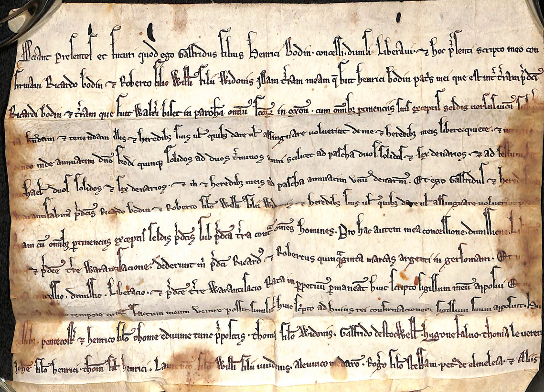
of the earth are known both in maps and texts. The British Library’s ‘Cottonian World
Map’ was made around 1025/1050; it is roughly contemporary with the Bibliothèque
nationale de France’s ‘Saint-Sever mappa mundi’, illustrating a manuscript of Beatus
de Liebana’s Commentary on the Apocalypse. More broadly, in the century that ended
with the First Crusade, knowledge of the world informed Western representations of
the Other – Eastern Christian, Muslim, Jewish or pagan – that were undergoing radical
transformation. We particularly aim to understand how the Normans and the
populations with whom they came into contact perceived each other. By the late the
tenth century, members of Rollo’s dynasty were still regularly perceived and
stigmatised as descendants of pagan pirates of the North, but they increasingly
appeared as Latin Christians like any others, even as models of Christian behaviour.
Proposed themes:

  • Knowledge of the world.
  • Cartography.
  • Knowledge and representations of Others.

2/ Moving through the world
Many roads allowed travellers from Normandy to reach other regions, and the Normans
were keen to use them. There were maritime roads towards Britain, Ireland or
Scandinavia, but towards Aquitaine, Iberia and, beyond that, the Mediterranean –
especially Southern Italy, Byzantium and the Holy Land. There were also roads over
land and up and down rivers, and travel often combined several means of transport.
We will follow attested circulations and retrace the itineraries followed by people,
commodities and ideas. We also wish to focus on the places where connexions were
made and on the people who enabled them, especially in the case of Normans: in an
English lawcode that mentions Norman merchants in London in the first decade of the
eleventh century, or in Warner of Rouen’s poem Moriuht, in which Rouen is shown to
be a port where slave trade was still in operation. Pilgrimage routes are also among
those we want to highlight: to Rome of course, but also to Puglia and Monte Gargano
(where the cult of St Michael echoes contemporary developments in Normandy), to
Compostela (where pilgrimage to St James’s relics precisely took off in the eleventh
century), to Constantinople (where a wealth of relics attracted people in ever greater
numbers) and to Jerusalem (and here we should not forget that Duke Robert the
Magnificent died in 1035 while he was travelling back from the Holy Land).
Proposed themes:

  • Itineraries, routes over sea and land.
  • Circulations, connexions, networks.
  • Trade.
  • Pilgrimages.

3/ Places, gender, life and death
Rodulfus Glaber’s terrifying pages on the famine of the years 1031 to 1033 remind us
of how precarious life was then for most of the population. The economic and
demographic balances of the time, and the growth that characterised the West in the
Central Middle Ages have all been reconsidered through new approaches based on
notions of need, resources and the relationship between humans and their
environment. The role played by lordship and coercion, work and the peasantry’s
initiative, technology and innovation, money and its circulation are also among the
factors that should be interrogated. Varied approaches of ‘material culture’ have
revealed new issues, which open more generally to questions about the relationship
between humans and objects. Archaeological sites, newly excavated and published,
help us answer them and bring new informations on conditions of life and residence:
among them, the fortified settlement of Colletière in Charavines (Isère), occupied
between 1006 and 1040, the castrum of Andone (Charente), abandoned in the 1020s,
or the moated residence of Pineuilh (Gironde)… Both in urban and rural settings,
churches and their cemeteries were increaslingly polarising the lives of communities.
Exchanges and connexions between the living and the dead remained a crucial
preoccupation of kin- or church-based groups. Thousands of charters record gifts
made to ecclesiastics ‘for the sake of souls’ (pro anima) or in memory of founders,
donors and their families. It is well-known that women played an important role in such
memorial practices, and the conference will allow participants to explore more broadly
their agency in the social changes of the time. Here, William’s birth may not be such a
significant date, but the perspectives explained above are an occasion to develop
comparative studies which will place Normandy in broader contexts.
Proposed themes:

  • Connexions with the environment.
  • Material culture.
  • Ways of life, settlements.
  • Connexions with the dead and the other world; memory of the deceased.

4/ Believing, thinking, creating
Even if the pagan beliefs and rituals imported by Scandinavians in the tenth century
do not seem to have survived in Normandy, the duchy probably was not immune from
what Dominique Barthélemy has called ‘the great awakening of heresy’: indeed, the
whole kingdom was concerned in the early eleventh century, for instance when the
‘Orléans heretics’ were denounced in 1022, as told by Rodulfus Glaber or Ademar of
Chabannes. There was also a movement towards reform of Benedictine monasteries
in the spirit of Cluny: in Normandy with William of Volpiano and his successors, but
also beyond the eastern and north-eastern borders of the kingdom with Richard of
Saint-Vanne in Verdun and Abbo Poppo in Stavelot. A new ecclesiastical elite worked towards the consolidation of lay power, weaving networks of confraternity and fostering
exchanges in the fields of liturgy, ideas, sciences and arts. This was also a time of
development for episcopal schools, for copying and illuminating religious and nonreligious manuscripts, and for creating new works in the fields of theology,
historiography and poetry: we may mention here again Fulbert of Chartres and
Adalbero of Laon, to whom Dudo of St Quentin dedicated his prosimetrical and
panegyrical history of the earliest Norman dukes. New architectural technologies were
also experimented at that time, for example in the abbey church of Mont-Saint-Michel
(the construction of which began in 1023) or in the cathedral of Chartres (the
restoration of which started in 1024). The conference will allow participants to question
or revisit beliefs and categories of thought, spiritual and intellectual debates, traditions
and innovations in literature and the arts, all visible in the early eleventh century.
Proposed themes:

  • Circulation of ideas and knowledge, and of artistic processes and techniques
  • Religious practices and beliefs, Christian and pagan.
  • Religious and cultural networks.
  • Production and circulation of manuscripts.

5/ Norman men and women of the 1020s
The Normans of the 1020s may be approaches through varied sources that allow us
to better understand aspects of the society of that time. More than a year after the
duchy had been founded, they shared the ways of life, the language and the beliefs of
the Franks; all traces of the Scandinavian past of the province were rapidly fading. The
conference will revisit these transformations and how they affected the inhabitants of
the duchy. Who were Norman men and women in the 1020s? Did they share common
identities, affiliations, cultural values, and how did they express them? A crucial factor
of cohesion in the duchy and between its inhabitants was the power wielded by the
ducal dynasty. How was the dukes’ authority manifested and how did it frame society
and its diverse components, both lay and ecclesiastical? To which extend can we
perceive the action of social networks based of kinship, friendship, alliances or loyalty
in their different forms (including feudal-vassalic)? What agency did women have in
these networks? Which aspirations, which contestations can we see emerging or
circulating in this society? The conference will allow us to revisit the current image of
a dynamic principality, where public order resisted better than elsewhere and where
peasant communities benefited for more a favourable status or condition.
Proposed themes:

  • Norman identity.
  • The role played by the Norman dukes and their kin.
  • The social and political fabric of the duchy of Normandy.
  • Men and women in the duchy of Normandy.

6/ Norman men and women in the kingdom of France and in Europe
As mentioned above, Normans are well-attesed both in the kingdom and in the wider
world. Some of them returned quickly, others remained in exile for long periods before
coming back, others settled permanently abroad. Take Roger de Tosny, who went to
fight Saracens in the county of Barcelona, where he married around 1020 the daughter
of Countess Ermesenda, but finally came back to Duke Richard II. In 1022, Emperor
Henry II drafted 24 Normans to serve the nephews of Meles and fight the Byzantines,
investing them with the county of Comino in Chieti province: we do know some of their
names, such as Torstin Scitel or Hugh Falloc (this one later a companion of Robert
Guiscard). Others settled with Prince Gaimar, while the Duke of Naples gave Rainulf
his sister’s hand, fortifying for him the county of Aversa in 1030. On the other side of
the Channel, a Norman queen, Emma, the daughter of Richard I, reigned twice, first
as Æthelred II’s consort and then as Cnut’s: long before 1066, a Norman princess wore
the English crown. Many Norman knights were also looking for military employment or
marrying into the greatest families, both in Northern and Southern Europe.
Proposed themes:

  • The Normans in neighbouring principalities.
  • The Normans in Southern Italy and in the Mediterranean.
  • The Normans in England and in the Insular world.

Our conference will give priority to proposals that combine several of the approaches
outlined above and help presenting a dynamic vision of the world in which William was
born and understanding how the future ‘Conqueror’ made it change.
The conference will host two kinds of contributions: 30-minute presentations followed
by discussions; and posters on specific case studies, which will be presented by their
authors in a special session. We welcome proposals by early career scholars: the
‘Centre culturel international de Cerisy’ is an ideal venue, fostering discussion and
allowing them to receive advice from members of the scientific board or from other
scholars attending the conference.


Proposals for papers or posters must be sent before 1 June 2026 to all organisers:
Pierre Bauduin (pierre.bauduin@unicaen.fr), Alban Gautier (alban.gautier@unicaen.fr) and Marie-Agnès Lucas-Avenel (marieagnes.avenel@unicaen.fr). Applicants should submit two separate files: a 1-page
abstract, clearly stating how the proposed contribution may fit within one or several topics outilned in the call for papers; and a 1-page CV.