Report by Méryl Vourch: Staging a medieval mystery play in 2026
In Trinity Term 2026, we staged The Harrowing of Hell.26 in two radically differentspaces: the Burton Taylor Studio, a black box venue, and the crypt of St Peter-in-the-East,Oxford’s oldest place of worship. The project grew out of a single question: what can a medieval dramatic text offer contemporary theatre? The original play runs about twenty minutes. We expanded it into an hour-long production — not to complicate the story, but to draw out the questions it raises and explore what it might still offer a twenty-first-century audience.
Entering the fiction
One of the first challenges we faced concerned how an audience enters the fiction. Incontemporary theatre, this entry is usually governed by stable, deeply internalised conventions: the spectator arrives, receives a programme, takes their seat, and then the lights go down. Darkness in the auditorium signals the beginning of the performance. This convention has become so familiar that it usually passes unnoticed. Medieval theatre, by contrast, invites us to question this threshold. We wanted the fiction to emerge without a clean break, growing directly out of the audience’s arrival itself. The two spaces led us to two different answers to this same question.
At the Burton Taylor Studio, spectators entered a conventional theatre space; yet fromthe moment they crossed the threshold, they were immersed in the lighting and atmosphere ofthe performance. The effect was immediate: many remained silent and hesitant, uncertain about what they were expected to watch. Several elements contributed to this sense of uncertainty. Upon ticket inspection, audience members had their hands washed by the stage managers—a gesture inspired by purification rituals and conceived as a symbolic preparation for Christ’s descent into Hell. Four performers—Adam, Eve, and the two devils—entered the space alongside the audience, immediately blurring the boundary between those who perform and those who observe. Spectators were seated on either side of the playing area and could see one another throughout. Hell did not appear at the moment the performance began; rather, it gradually took shape before their eyes as they themselves took their places within it.
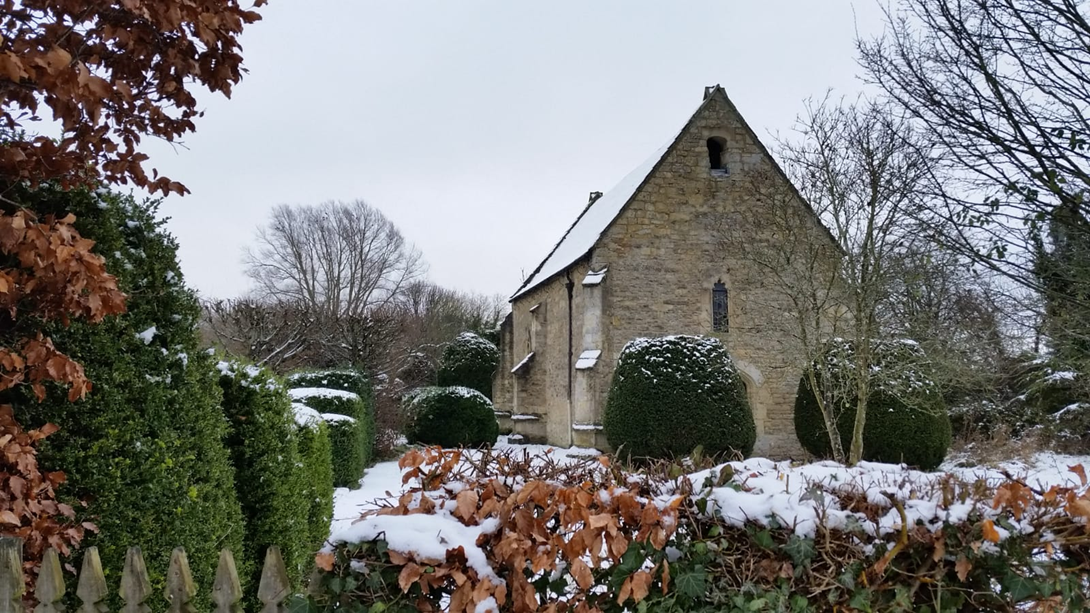
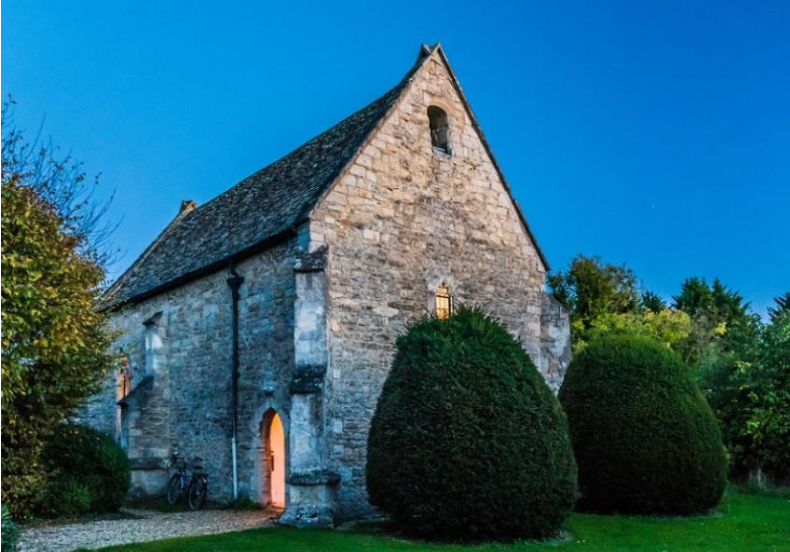
In the crypt, the issue presented itself differently. The space was not a theatre but theoldest consecrated site in Oxford, dating from the twelfth century. The boundary between reality and fiction was therefore far less distinct, precisely because the performance space was also a lived environment, invested with functions that extended beyond theatrical representation. The audience’s arrival already formed part of the performance: as spectators crossed the churchyard, they encountered Adam, Eve, and the devils, engaged in a distorted reenactment of the story of Eden. They could choose either to watch or simply to continue ontheir way. In this way, we sought to move away from the black-box model, in which attention converges almost inevitably—and indeed almost obligatorily—upon a single focal point.
Henrike Lähnemann then announced the performance with a trumpet call and invited the audience to gather. Even before the play began, a community was already being formed around a shared event. The hand-washing ritual, moreover, was received far more naturally in the crypt than in a conventional theatre. At the Burton Taylor Studio, some spectators had declined to participate; in the crypt, by contrast, the gesture seemed entirely self-evident.
Advancing the narrative through bodies rather than speech
The other central question we had to confront concerned the very nature ofperformance. Contemporary theatre, particularly within the realist tradition, tends to advance the action primarily through speech: one line prompts the next, and the narrative unfolds through dialogue. We wished to explore a different approach, one in which the body would become the principal vehicle of storytelling. This immediately raised a further question: should all characters operate within the same corporeal register? Could Jesus, Satan, Adam, Eve, and the devils inhabit the stage in the same way?
The performance opened with a five-minute prologue in which Satan alone occupied the stage, moving in silence. Nothing appeared to motivate or trigger the action. Alone before the audience, Satan gradually started moving around the space, yet no external cause seemed to explain this movement. The character appeared to exist prior to the audience’s arrival: themajority of the spectators could not see him as they entered the performance space. In thecrypt, the actor could conceal himself behind a pillar and seem almost to emerge from thearchitecture itself.
The prologue alternated between immediately legible images—the apple of Adam andEve serving as an obvious narrative marker—and more abstract sequences. One such momentshowed Satan rushing towards the altar and engaging in a series of strange, elongatedstretches. Through the body, time itself seemed to dilate: a silent struggle, a mute groan setagainst the inexorable unfolding of events. The opening sequence culminated in Christ’s cry—the cry of dereliction, the cry of abandonment uttered on the cross — which caused Satanto collapse to the ground.
Within the space of five minutes, the audience was drawn into the narrative not through dialogue or the exposition of plot, but through Satan’s body and Christ’s cry.
Introducing the characters through vignette scenes
The first act then took the form of a succession of tableaux. Each character waspresented through a relatively self-contained vignette, designed less to advance the plot than to introduce the protagonists and establish their distinctive modes of presence.
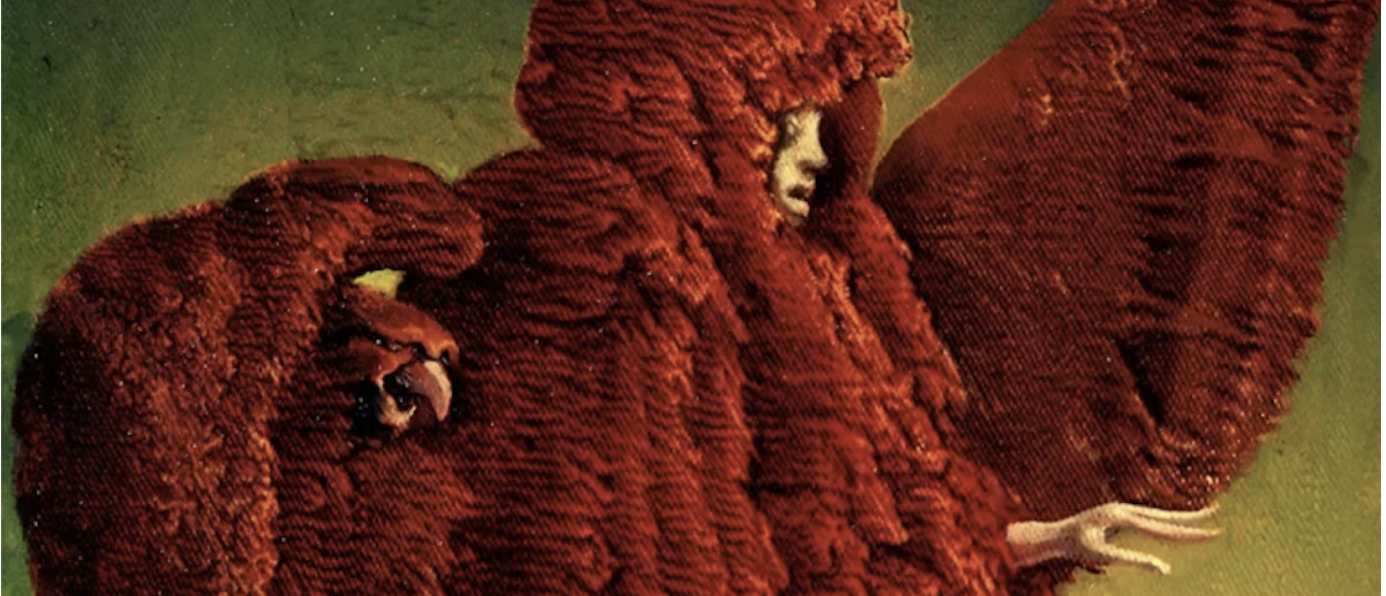
The Narrator—performed by Patrizia Hinz—provided continuity throughout theproduction. She collected the water used during the hand-washing ritual and passed it to Satan, who used it to cleanse themself. Having already been charged with the audience’s physical contact, this water created a new connection between spectators and characters. Her red costume stood in deliberate contrast to the whites and blues worn by the other performers. We intended this colour to evoke Christ’s blood and to suggest a privileged relationship to thenarrative, almost aligning her with the divine perspective. The Narrator thus embodied a form of inevitability: nothing could ultimately prevent Christ’s victory. Patrizia organised the space, directed the audience’s attention, and maintained a direct relationship with the spectators.
For Satan, we sought to imagine what 4,600 years of confinement within the same space might do to both body and mind. His attention constantly shifted from one object to another without any clear logic, repeatedly interrupted by noises that disturbed an otherwise static existence. He oscillated between outbursts of violence and moments of profound disorientation. The body bore the marks of millennia of captivity while retaining the appearance of youth. Adam, Eve, and the devils were conceived as extensions of Satan: externalisations of desires, fears, and internal contradictions. Seated in a chair, Satan observed them like a spectator watching their own visions, caught between horror and fascination—repelled by the demons’ violence yet irresistibly drawn towards it.
The demons’ torture scene sought to evoke beings fossilised by confinement,compressed within a space from which they could not escape. Antoinette Cheng’s musicalcomposition and the devils’ white body paint were intended to reinforce this impression, while the actors’ incessant movement generated a sense of invasion. The audience, too, was meant to experience the impossibility of escape.
Adam and Eve, by contrast, were not conceived as psychologically realistic characters.They represented all the souls detained in Hell. Their costumes emphasised conventionalgender markers—a turtleneck and skirt for Eve, shorts for Adam—while covering their bodiesalmost entirely, in contrast to the devils, who appeared nearly half-naked. After 4,600 years ofwaiting, their hope for salvation had been reduced to almost nothing; yet they continued tohope. Their performance style therefore rested on slowness and bodily exhaustion. Theirspeech took the form of a collage of fragments and multiple voices, intended to convey apresence that was constant and impossible to silence. The first act concluded with a dance ofthe souls: a movement that was at once ritualistic and mechanical, to which the actors gradually joined themselves, as though each ultimately yielded to a force greater than their own will.
Reconstructing dramatic tension
One of the major challenges of the adaptation stemmed from the play’s isolation from the wider medieval cycle. Within the complete cycle, the dramatic tension of the Harrowing of Hell is built gradually through the sequence of pageants that precede it. Presenting a single episode therefore required us to recreate this dramatic build-up from the ground up. The second act of our play responded to this challenge through a dramaturgy entirely oriented towards acceleration.
Antoinette Cheng’s music played a central role in this process. The soundscapeincorporated knives falling onto the floor, the scraping of metal bars, abrasive noises, and anincreasing proliferation of infernal voices. The hand-washing ritual was likewise transformed.Initially a simple gesture of purification, it gradually became strange, even unsettling: Adam and Eve washed Satan’s face with excessive care, accompanied by music resembling the echo of water droplets reverberating through a cavern.
The bodies of the characters appeared progressively overtaken by a force beyond theircontrol. Certain actions emerged without any identifiable cause. The space itself seemed toclose in around them: the characters tested its limits, while in the crypt the presence of lockediron gates gave this sensation an immediate physical reality. The Narrator further intensified this pressure by physically holding Satan down against the ground.
The appearance of Christ
We chose not to reveal Christ’s face immediately. He first appeared behind a curtaindesigned by Bee Merton Wright, whose pattern drew inspiration from the drawings of HenriMichaux: animal-like, indeterminate forms seemed to crawl across its surface, as thoughemerging from the very walls of Hell. Christ was initially manifested through his voice, thenthrough his silhouette; only later did his body become visible, concealed until the last momentbehind Ian Machalek’s long hair.
His performance was structured around two distinct corporeal states: that of the crucified Christ, still external to Hell, and that of Christ already present among the damned. The vocal work sought to move beyond the register of an ordinary human voice. Working from Ian Machalek’s physical presence, we aimed to evoke a divine presence, for which breath itself became an essential expressive element.
The text emphasises the experience of abandonment—abandonment by the Father, byhumanity. We wanted to approach this dimension in a contemporary way, granting genuinespace to the character’s psychological vulnerability. The hysterical laughter of Adam and Eve at the end of the monologue marked precisely the irruption of this new presence, neither human nor satanic.
Medieval theatre is a theatre of tricks—of pyrotechnics, surprise effects, and moments of wonder. We sought to reconnect with this tradition in Christ’s arrival, while embracing adeliberately handcrafted aesthetic. The soundtrack incorporated fragments of the Latin formula Attollite portas; isolated vowels gradually transformed into a breath that seemed to cross the boundaries of Hell itself. Christ’s voice appeared to open the space and to command the bodies within it: under its influence, the actors crouched to the ground.
At the Burton Taylor Studio, the revelation drew inspiration from the kabuki drop. Asystem of ropes and magnets allowed the curtain to fall suddenly, while strobe lights increased in intensity before Christ’s appearance. In the crypt, by contrast, the architecture itself produced the dramatic effect. Christ emerged from an alcove, and depending on their position, some spectators remained unaware of his location until the very last moment. The crypt’s actual doorway—through which Adam, Eve, the devils, and Christ eventually exited—contributed to this same handcrafted theatricality.
The difficulty of leaving hell
The final axis of our work concerned the psychological dimension of the narrative: thedifficulty of leaving Hell. Traditional iconography often depicts Christ pulling Adam and Eve out of Hell by the wrists. We sought to radicalise this image. After 4,600 years spent in the same place, departure is no longer self-evident. At times, Adam and Eve recoiled from Christ’s touch—a kind of inverted noli me tangere. Gestures of tenderness became ambiguous, even threatening. His affection could be experienced as a form of violence.
The relationship between Christ and Satan followed a similar logic. Satan felt a form of attachment towards Christ that bordered on devotion, while Jesus’s presence in Hell operated like a disease, gradually insinuating itself into Satan’s being and consuming him from within. This process of transformation was particularly evident in Thomas Arensen’s physical and facial performance. Christ did not destroy Satan; rather, he slowly emptied him of his substance.
Putting on The Harrowing of Hell.26 in 2026 did not consist in updating a medieval text for acontemporary audience; rather, it meant allowing ourselves to be challenged and transformedby it. The project led us to question a number of assumptions that underpin contemporarytheatrical practice. Far from appearing as an obsolete theatrical form, the medieval mystery play revealed itself to be a laboratory for imagining alternative relationships between performers, spectators, space, and fiction.
From the Cast Call
The Harrowing of Hell.26 is a 2026 experimental and abstract adaptation of the medieval Harrowing of Hell narrative, created from English mystery plays (York Cycle, Towneley Plays, Ludus Coventriae, Chester Cycle) and rewritten into contemporary English. With: Thomas Arensen (Satan), Ian Machalek (Jesus), Elizabeth Henderson-Millier (Devil 1), Sonny Fox (Devil 2), Anastasija Vidjajeva (Eve), Caleb Silvergleid (Adam), Patrizia Hinz (Narrator). Stage Director — Méryl Vourch. Sound Designer — Antoinette Cheng. Set Designer — Bee Morton-Wright. Lighting Designer — Heather Stokes. Stage Managers — Tess Levann, Polly Casey. Producer — Emily Cunnington. Production Manager — Elsa Vass-de-Zomba.
Plot: For 4000 years, Satan has ruled Hell and guarded the souls of the dead. After the Crucifixion, Christ descends into Hell to reclaim them and dismantle the kingdom Satan built. The play opens in an exhausted, decaying Hell where Satan, far from triumphant, has become the prisoner of his own creation, haunted by the voices, smells, and bodies of the souls who have been condemned. A narrator forces both the audience and Satan to witness the spectacle of his downfall, imposing upon him the slow collapse and reconfiguration of his kingdom.
Around him, demons transform suffering into ritual. Their violent games perpetually reenact a grotesque mechanism. Hell becomes an obsessive choreography in which exhausted bodies repeat the same gestures endlessly, trapped within laws that even Satan no longer fully controls. Meanwhile, Adam and Eve drift between terror, dependence, and tenderness toward the very being who imprisons them. As an unknown presence begins to press against the walls of Hell, the fragile balance of this decaying world starts to fracture. Christ arrives not as a merciful redeemer, but as a violent intrusion: abandoned by both God and mankind, he descends to reclaim what he believes is rightfully his, tearing apart the miserable order in which these souls have painfully learned to survive. Yet what Christ offers is far from simple salvation. The inhabitants of Hell no longer know how to imagine life outside the systems that have shaped them. Adam and Eve hesitate to leave Satan behind, even as they continue to suffer under his power.
The play asks whether escape from Hell truly means submission, or whether salvation itself can become another form of violence. The Harrowing of Hell.26 is a piece about domination, exhaustion, attachment, and the terrifying uncertainty of liberation itself. Warning: Contains religious (Christian) themes, elements of irreverence, and depictions of psychological distress
About the director: Méryl Vourch is an Oxford Visiting Student at Merton College. She has worked as an assistant director with Laurent Delvert and Denis Podalydès at the Opéra de Lille (Gounod’s Faust, May 2025), and assisted Caroline Staunton (Don Giovanni, Opéra Bastille, 2023) and Mariame Clément (Don Giovanni, Glyndebourne Festival, 2023). As a director, she has staged three productions in Paris: Hamlet, Alice in Wonderland (Théâtre Nicole Loraux, 2024–2025), and Mamma Mia! (MPAA, 2025).
We will be performing our play in week 6 (2 to 6 June) at the Burton Taylor Studio, from 9:30 to 10:30pm and in week 7 (9 to 11 June, tbc) in the crypt of St-Peter-in-the-East (St Edmund Hall), from 8 to 9pm. We are still missing three roles (Adam, Eve, and a demon; all backgrounds welcome, aged 18+). There were auditions on 25/26 April, but anyone who was unavailable is very welcome to contact the director by email for further information.
Roles Available
- One demon (one of two): part of a grotesque and comic duo—agents of chaos, both cruel and ridiculous, frustrated by their condition.
- Adam and Eve: a bourgeois couple frozen in time, marked by long waiting, repetitive gestures, and a certain passivity
All roles include some choreographed scenes (minimal movement required).
Auditions
Please prepare a monologue of your choice (2–5 minutes) and an extract from the audition pack for your chosen role. Contact : meryl.vourch@merton.ox.ac.uk if you are interested or have any questions! If the audition dates have already passed but you are still interested, you are very welcome to contact us.