Medieval Matters TT26, Wk 3

Week 3 is upon us, and it’s jam-packed with medieval events and opportunities. Of particular note is Balliol’s Oliver Smithies Lecture, this Thursday, which sees Elaine Treharne discussing Medieval women scribes.

Looking to the future, we’re hoping to put together a list of Oxford participants in this year’s IMC Leeds. If you are organising or speaking on a panel, please drop me a quick email with the details.

Monday

  • French Palaeography Manuscript Reading Group – 10:30, Weston Library. If you are interested in joining the group or would like more information, please email the convenor Laure Miolo.
  • Medieval History Seminar: – 5:00, All Souls College. Round table on Richard Hodges’s The Origins of Anglo-Saxon Towns: A Viking Gift? (London, 2025) with John Blair, Helen Gittos, Helena Hamerow and Rory Naismith.
  • Italian Research Seminar – 5:15, Taylorian, Room 2. Graduate Work-in-Progress. Presentations from DPhil students Silvia Cercarelli (modern/contemporary), Esme Hodson (modern/contemporary), Katherine McKee (medieval), and Victoria White (early modern)

Tuesday

  • Latin Palaeography Manuscript Reading Group – 2pm, Weston Library. Those who are interested can email the convenor Laure Miolo.
  • Medieval French Research Seminar – 5:00, Maison Francaise. Adrian Armstrong (Queen Mary University of London) will be speaking on ‘Testopolis: The Testament as Urban Art’ .
  • Medieval Church and Culture Seminar– Tea & coffee from 5pm; papers begin at 5.15pm, Harris Manchester College. Cris Arama (St Anne’s) will be speaking on ‘Gender embodiment in Old French hagiography:  a textual and iconographical approach’;  Bartholomew Chu (Lincoln) will be speaking on ;The Quandary of Quality:  copying prestige in MS. Bodl. 770′.

Wednesday

  • Methods in Arabic and Islamic Studies Class – 10:30, LMH Library.
  • Medieval German Graduate Seminar on Thomasin von Zerklaere – 11:15, Oriel College. If you are interested to be added to the teams group for updates and access to the sources, please contact Henrike Lähnemann.
  • Early Printed Books: A Computer-Aided Collate-A-Thon – 2:00, Taylor Institute Library. To book a place, please sign up here. For information about the project see here or contact Giles Bergel at giles.bergel@eng.ox.ac.uk 
  • Oxford Seminar in the History of Alchemy and Chemistry: Life and Nature in Early Modern Alchemy – 3:00, Maison Française d’Oxford. Oana Matei (Western University of Arad) will be speaking on ‘Can Life Rise from Ashes? Discussions on the Possibility of the Palingenesis of Plants in the Seventeenth Century’; Xinyi Wen(Warburg Institute) will be speaking on ‘Cosmos or Coitus? A Copy Census of Oswald Croll’s Basilica Chymica, 1609–1690′.
  • Old Norse Reading Group – 5:00, Merton College, Breakfast Room. This term we are reading Völsunga saga. If you are interested in joining the group, please contact one of the group convenors via email Brooklyn Arnot or Zeynep Kirca
  • The Medieval Latin Documentary Palaeography Reading Group – 4:00, online. To join and/or to find out more about this and the possibility of some hands-on experience of cataloguing such documents to develop further your research skills, please contact  Michael Stansfield.
  • Late Antique and Byzantine Seminar – 5:00, Late Antique and Byzantine Seminar, Ioannou Centre. Pawel Nowakowski (Warsaw) will be speaking in ‘New Fragments of the Order (forma generalis) of the Praetorian Prefect of the East, Pusaeus Dionysius, 480 CE, from Stratonikeia in Caria’.
  • Oxford Centre for Islamic Studies Lecture – 5:00, Oxford Centre for Islamic Studies. Dr Harry Muntv(University of York) will be speaking on ‘Haram Historiography: Writing the History of Mecca, Medina and Jerusalem in the Early Islamic Centuries’.  
  • Oxford Centre of Early Medieval Britain and Ireland: Invisible East – 5:00, online. Nima Asefi (Universität Hamburg) will be speaking on ‘Documents from Turbulent Times: Studying Middle Persian Collections from the Late Sasanian and Early Islamic Periods-Opportunities and Challenges’. Registration essential.  
  • Medieval English Research Seminar – 5:15, The Schwarzman Centre, room 00.018 . Cathy Shrank (U of Sheffield) will be speaking on ‘Thomas More’s dialogues’.

Thursday

  • Middle English Reading Group (MERG) – 11:00, Lincoln College, Beckington Room. All are welcome as we finish Sir Gawain and the Green Knight. Bring any edition of the original text! There will be tea and biscuits. For more information or to be added to the mailing list, please email Rebecca Menmuir
  • Oxford Environmental History Working Group – 12:30, Schwarzman Centre History Hub Room 20.421. Wallerand Bazin will be speaking on ‘Bracken dissensus: a historical political ecology of tree planting in the English Lake District’.
  • Oliver Smithies Lecture at Balliol College – 5:15, Gillis Lecture Theatre, Balliol College. Elaine Treharne (Stanford University) will be speaking on “Death of a Nun: Medieval Women Scribes and Networks of Piety”. Followed by a Drinks Reception. More information here.
  • Bede Reading Group (or, ‘Bede-ing Group’) – 6:00, Blackfriars. To sign up, email Maura McKeon. Don’t stop Bede-lieving.
  • Medieval Academy of America’s Graduate Student Council webinar on funding – 8:00 online. MAA Special Projects Assistant Jon Dell Isola will discuss what grants are available to graduate students, how to apply, and tips for grant applications. Register here.
  • Compline in the Crypt – 9:30, St Edmund Hall.

Friday

  • Medievalist Coffee Morning – Friday 10:30, Visiting Scholars Centre (Weston Library). All welcome, coffee and insight into special collections provided.
  • Oxford Medieval Manuscript Group – 3:00. Courtauld Gallery (London) Visit.
  • Old Frisian Reading Group – 3:00, Online.
  • Medieval Latin Reading Group – 5:30, Christ Church. This term, we will be reading the Cosmographia of Bernardus Silvestris in the original. For more information, please contact Clara Bykvist or Monty Powell

Opportunities (see Medieval Studies booklet for full details)

  • The experimental production of the Harrowing of Hell is still looking for players. More information can be found here.
  • OMS small grants is now open! Grants are normally in the region of £100–250 and can either be for expenses or for administrative and organisational support such as publicity, filming or zoom hosting. Closing date for applications: Friday of Week 5.
  • Publishing with the Journal Manuscript and Text Cultures. Are you interested in submitting to the journal Manuscript and Text Cultures? Please review the About the Journal page.
  • Register for the Anglo-German Research Funding Opportunities Showcase, Wednesday, 13 May  •  2 PM – 5:30 PM | Eventbrite. The Global Engagement team will host representatives from some of the major German and UK funding bodies (DFGThe Royal Society, the Alexander von Humboldt Foundation, the Royal Academy of Engineering and more) at Rhodes House; for Early Career People as well as established researchers!
  • CfP – Representations of Women and/as Animals in Literature, Arts, and Other Media. Deadline: 15 July 2026.
  • Sir John Rhŷs Prize for the study of the Celtic languages, literature, history, and antiquities. Entries should be submitted by email, with the subject line “Sir John Rhŷs Prize”, to the English Faculty Office, no later than Monday of Week 8 of Trinity Term (15 June 2026).
  • CfP – 9th International Conference on Myth Criticism. Deadline: 15 May 2026
  • CfP – The Nine Worthies: Interdisciplinary Perspectives. Deadline: 15 May 2026
  • CfP – Contested Ground: Ownership and Belonging in the Middle Ages. More information here. Deadline: 1 June 2026.
  • CfP – 1027 – 2027 : The World in which William was Born. More information here. Deadline: 1 June 2026.
  • 20th MEMSA Anniversary Conference. More information here. Deadline: 20th June 2026.
  • The Mortimer History Society will once again be offering two Research Bursaries (each of £1000) for the academic year 2026 to 2027, for PhD and MA students whose research includes any aspect of the medieval Welsh Marches or the Mortimers. More information here. Deadline: 30 June 2026.
  • Bodleian Purchasing Opportunity. Do you know of books that would aid your work but are not in the Bodleian? Help us strengthen the university’s collections. You can submit details of suggested books via https://www.bodleian.ox.ac.uk/collections-and-resources/recommend-a-purchase or by email to medieval@bodleian.ox.ac.uk.

Medieval Matters TT26, Wk 2

Welcome to week 2. Alongside the usual weekly roster of reading groups and opportunities, this weeks sees a number of exciting one-off events: ‘Black Lives in the Archives’ (Thur), Prof Treharne on ‘The Look of the Medieval Book’ (Fri), and Dr Griffith in the annual O’ Donnell Lecture (Fri).

Monday

  • French Palaeography Manuscript Reading Group – 10:30, Weston Library. If you are interested in joining the group or would like more information, please email the convenor Laure Miolo.
  • Medieval History Seminar: – 5:00, All Souls College. Nancy Thebaut (St Catherine’s College, Oxford) will be speaking on ‘When Christ turns away: representing the ascension ca. 1000’.

Tuesday

  • Latin Palaeography Manuscript Reading Group – 2pm, Weston Library. Those who are interested can email the convenor Laure Miolo.
  • Medieval Church and Culture Seminar– Tea & coffee from 5pm; papers begin at 5.15pm, Harris Manchester College. Hannah Free (Kellogg) will be speaking on ‘Christian Fanfiction? Searching for truth in biblical retellings’; Samuel Bedford (Wadham) will be speaking on ‘Reginald Pecock’s Rationalist Turn: a study in medieval intellectual biography’

Wednesday

  • Methods in Arabic and Islamic Studies Class – 10:30, LMH Library.
  • Medieval German Graduate Seminar on Thomasin von Zerklaere – 11:15, Oriel College. If you are interested to be added to the teams group for updates and access to the sources, please contact Henrike Lähnemann.
  • Old Norse Reading Group – 5:00, Merton College, Americas Room. This term we are reading Völsunga saga. If you are interested in joining the group, please contact one of the group convenors via email Brooklyn Arnot or Zeynep Kirca
  • The Medieval Latin Documentary Palaeography Reading Group – 4:00, online. To join and/or to find out more about this and the possibility of some hands-on experience of cataloguing such documents to develop further your research skills, please contact  Michael Stansfield.
  • Late Antique and Byzantine Seminar – 5:00, Late Antique and Byzantine Seminar, Ioannou Centre. Ekaterini Vavaliou (Oxford) will be speaking on ‘Dissecting a Medieval Frontier: The Fortifications of Eastern Central Greece‘.

Thursday

  • Middle English Reading Group (MERG) – 11:00, Lincoln College, Beckington Room. All are welcome as we finish Sir Gawain and the Green Knight. Bring any edition of the original text! There will be tea and biscuits. For more information or to be added to the mailing list, please email Rebecca Menmuir
  • Writing Environmental History Workshop – 2:00, Schwarzman Centre Room TBA. For updated meeting information, please email Ryan Mealiffe.
  • Black Lives in the Archives: Chivalric Romances – 3:00, Weston Library. This hands-on workshop will explore how surviving medieval manuscripts can help us understand race and race-making in medieval Europe. Register here.
  • Medieval Women’s Writing Research Seminar- 4:00, Somerville College. Spiritual and Material World, including extracts from the works of Margery Kempe, Leonor López de Córdoba and Isabel de Villena 
  • Medieval Visual Culture Seminar – 5:00, St Catherine’s College. Cécile Voyer (Université de Poitiers) will be speaking on “Under the Gaze of the Judge: New approaches to a re-reading of the Conques tympanum” 
  • Centre for Manuscript and Text Cultures: Global Manuscript and Text Cultures Seminar – 5:15, Memorial Room, Queen’s College. Shaahin Pishbin (Queen’s) & Thomas Newbold (Asian University for Women, Chittagong) will be speaking on M’uhajir manuscripts: Field notes from the Alia Madrasa Library in Dhaka’; Jaimee Comstock-Skipp (New College) will be speaking on ‘What’s in a nisba? Manuscript makers and migrations in 16th-century Central Asia’.
  • The Khalili Research Centre Seminar – 5:15, KRC Lecture Room. Suna Çağaptay (Muğla Sıtkı Koçman University) will be speaking on ‘Reading Between the Lines: The Maritime Landscape of Anaia on the Byzantine-Genoese and Aydinid Cusp’ 
  • Guild of Medievalist Makers – 5:30, online. Making Space Session –  optional theme: dreams.
  • Bede Reading Group (or, ‘Bede-ing Group’) – 6:00, Blackfriars. To sign up, email Maura McKeon. Don’t stop Bede-lieving.
  • Compline in the Crypt – 9:30, St Edmund Hall.

Friday

  • Medievalist Coffee Morning – 10:30, Visiting Scholars Centre (Weston Library). All welcome, coffee and insight into special collections provided.
  • Older Scots Reading Group – 3:00, Schwarzman room 30.401. No intensive preparation required. All are welcome and there are usually snacks. This week the theme is Orpheus and Eurydice. Contact megan.bushnell@ling-phil.ox.ac.uk for further details.
  • Oxford Medieval Manuscript Group – 5:00, Merton College Mure Room. Professor Elaine Treharne (Stanford University) will be speaking on ‘The Look of the Medieval Book: Manuscripts and Their Uses’. Please join us for a drinks reception following the lecture.
  • Medieval Latin Reading Group – 5:30, Christ Church. This term, we will be reading the Cosmographia of Bernardus Silvestris in the original. For more information, please contact Clara Bykvist or Monty Powell
  • O’ Donnell Lecture – 5:30, Schwarzman Centre for the Humanities. Dr Aaron Griffith (Utrecht University) will be speaking on ‘Old Irish: plenty of variation, but of what kind?‘. Register for free tickets here
  • A Multilingual Moses Play – 6:30, Ioannou Centre.

Opportunities (see Medieval Studies booklet for full details)

  • The experimental production of the Harrowing of Hell is still looking for players. More information can be found here.
  • OMS small grants is now open! Grants are normally in the region of £100–250 and can either be for expenses or for administrative and organisational support such as publicity, filming or zoom hosting. Closing date for applications: Friday of Week 5.
  • Publishing with the Journal Manuscript and Text Cultures. Are you interested in submitting to the journal Manuscript and Text Cultures? Please review the About the Journal page.
  • Register for the Anglo-German Research Funding Opportunities Showcase, Wednesday, 13 May  •  2 PM – 5:30 PM | Eventbrite. The Global Engagement team will host representatives from some of the major German and UK funding bodies (DFGThe Royal Society, the Alexander von Humboldt Foundation, the Royal Academy of Engineering and more) at Rhodes House; for Early Career People as well as established researchers!
  • Sir John Rhŷs Prize for the study of the Celtic languages, literature, history, and antiquities. Entries should be submitted by email, with the subject line “Sir John Rhŷs Prize”, to the English Faculty Office, no later than Monday of Week 8 of Trinity Term (15 June 2026).
  • CfP – 9th International Conference on Myth Criticism. Deadline: 15 May 2026
  • CfP – The Nine Worthies: Interdisciplinary Perspectives. Deadline: 15 May 2026
  • CfP – Contested Ground: Ownership and Belonging in the Middle Ages. More information here. Deadline: 1 June 2026.
  • CfP – 1027 – 2027 : The World in which William was Born. More information here. Deadline: 1 June 2026.
  • 20th MEMSA Anniversary Conference. More information here. Deadline: 20th June 2026.
  • The Mortimer History Society will once again be offering two Research Bursaries (each of £1000) for the academic year 2026 to 2027, for PhD and MA students whose research includes any aspect of the medieval Welsh Marches or the Mortimers. More information here. Deadline: 30 June 2026.
  • Bodleian Purchasing Opportunity. Do you know of books that would aid your work but are not in the Bodleian? Help us strengthen the university’s collections. You can submit details of suggested books via https://www.bodleian.ox.ac.uk/collections-and-resources/recommend-a-purchase or by email to medieval@bodleian.ox.ac.uk.

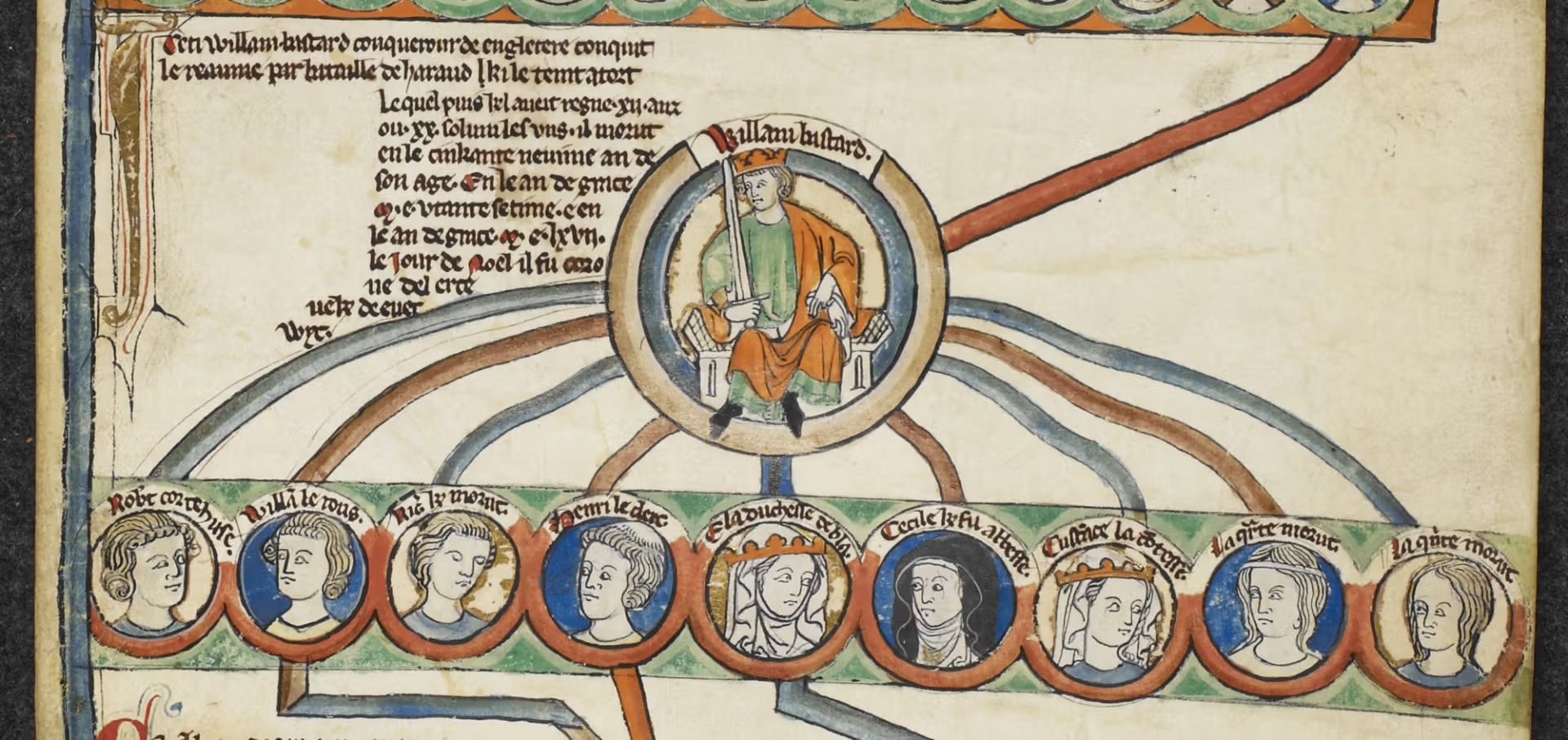
1027 – 2027 : The World in which William was Born

International Conference in Cerisy-la-Salle and Caen (9-13 June 2027)
Organisation : Pierre Bauduin, Alban Gautier, Marie-Agnès Lucas-Avenel
(Université de Caen Normandie, Centre Michel de Boüard – CRAHAM)

We do not know exactly the date of William the Conqueror’s birth. It seems that the
future Duke of the Normans and King was born between mid-1027 and mid-1028. His
mother’s name – Arletta or Herleva – is mentioned only in much later sources; as for
his father, Duke Robert ‘the Magnificent’, he had but recently succeeded his brother
Richard III, who had died on 6 August 1027 in circumstances that remain uncertain.

The year 1027 was rich in political events. On Whitsun Day (14 May), the young Henry
– that is, the future Henry I, King of France – was anointed in Rheims, his father King
Robert II being still alive. Forty years after Hugh Capet’s accession, the new Capetian
monarchy was now firmly established and its legitimacy was no longer disputed.
Several princes of the realm, including Richard III, attended the ceremony. Not long
before, on Easter Day (26 March), Emperor Conrad II had been crowned in Rome.
This new emperor inaugurated a new dynasty, that of the Salians, having succeeded
Henry II, last of the Ottonians, who had died without an heir in 1024. This succession
had been disputed, particularly in Italy, but Conrad had been able to curb opposition
and receive the imperial crown. Among the princes who attend the event was Cnut the
Great, King of the Danes and of the English. In a letter addressed to his Insular subjects
during his stay in Italy, Cnut told of his pride for participating in the event and being
received by grandees from all Europe, and he also mentions the fact that it was for himan occasion to visit Rome as a pilgrim, something he had wanted to do for a long time.
This visit may be seen as a climax in the reign of the Danish king, who had become
one of Europe’s most powerful rulers. His power was by then undisputed in England,
where he had been able to coopt some of the country’s elites: Earl Godwine, one of
his most prominent supporters, had married one of the king’s kinswomen and their
second son, the future King Harold II, had been born a few years earlier. Cnut had
himself married Emma of Normandy, the widow of his Anglo-Saxon predecessor
Æthelred II and the sister of Richard II of Normandy (which made her young William’s
great-aunt), and their son Harthacnut was then still a young boy. Emma’s children from
her earlier marriage, including the future Edward the Confessor, were then refugees at
the Norman court, where they probably had many occasions to meet William in the
years of his childhood. But at that time, they were no major threat to Cnut, who
focussed on other plans: the main one was to establish control over Norway. It was
done the year after (1028), when some of the Norwegians rebelled against their king
Olaf Haraldsson, who was defeated in the battle of Stiklestad and forced to flee. If we
are to believe William of Jumièges, Olaf had actually been baptised in Rouen in the
mid-1010s; after his death in 1030, he was considered a martyr and rapidly became
Norway’s national saint. If we take this game of chronological concordances a little
further, the year 1027 was also that of the deaths of Gaimar III of Salerno, one of the
first Southern Italian princes who called upon Normans, and of Romuald of Ravenna
(on 19 June), that is St Romuald, founder of the order of the Camaldolese hermits, a
reformer of Western monasticism who probably influenced the spirituality of John of
Ravenna… who himself succeeded William of Volpiano at the Norman abbey of
Fécamp in 1028.

A broader perspective over the fifteen of so years that surround the year 1027/8 allows
us to mention the following events: the death of Emperor Basil II, one of the most
important Byzantine rulers, in December 1025; the disintegration of the Umayyad
Caliphate of Cordoba in 1031; Richard of Verdun’s great pilgrimage, which brought
700 pilgrims (including Normans) to the Holy Land in 1026; King Sigtrygg Silkenbeard
of Dublin’s own pilgrimage to Rome in 1028, in the wake of which, having returned via
Cologne and Canterbury, he founded the bishopric of Dublin; the deaths of Wulfstan II,
archbishop of York (28 May 1023), of Fulbert of Chartres (10 April 1028) and of
Adalbero of Laon (27 January 1030), three of the most important ecclesiastical and
intellectual figures of the time. Several major construction works in Western Europe
were also started in the same period, including the abbey church in Fleury (SaintBenoît-sur-Loire) after the fire of July 1026, the cathedral of Speyer (one of the grandest Romanesque buildings) around 1030, and the abbey church of Mont-SaintMichel in 1023 (which was the subject of a recent conference in Cerisy).


These few events, all taking place around the time of William’s birth, are enough to
show that the world in which the future duke and king was born was characterised by
interacting relationships and dynamics. Of course, nobody at that time could have
guessed that here and then were woven the threads of events and motions that would
span the next century, nor would they have anticipated the connexions which today’s
historians see between them.

Our conference will draw inspiration from the methods of so-called ‘connected history’,
here simply defined as an approach that aims to establish links between different
national or regional historical traditions which have long remained isolated and tries to
avoid a perspective that would focus exclusively on Normandy or France. We want to
stress mobilities and their consequences, connexions and transfers between diverse human communities. Because of this global perspective, we do not wish to exclude
any discipline or methodology (history, art history, archaeology, philology…) that helps
exploring this world in which William was born. This is also why we wish to gather
scholars from many horizons, countries and disciplines, in order to discuss the
following topics.

1/ Knowing about the world
Geographical knowledge was not, in the early eleventh century, as reduced as it has
been said to be. In the Islamic world, in the Latin West or in Byzantium, representations
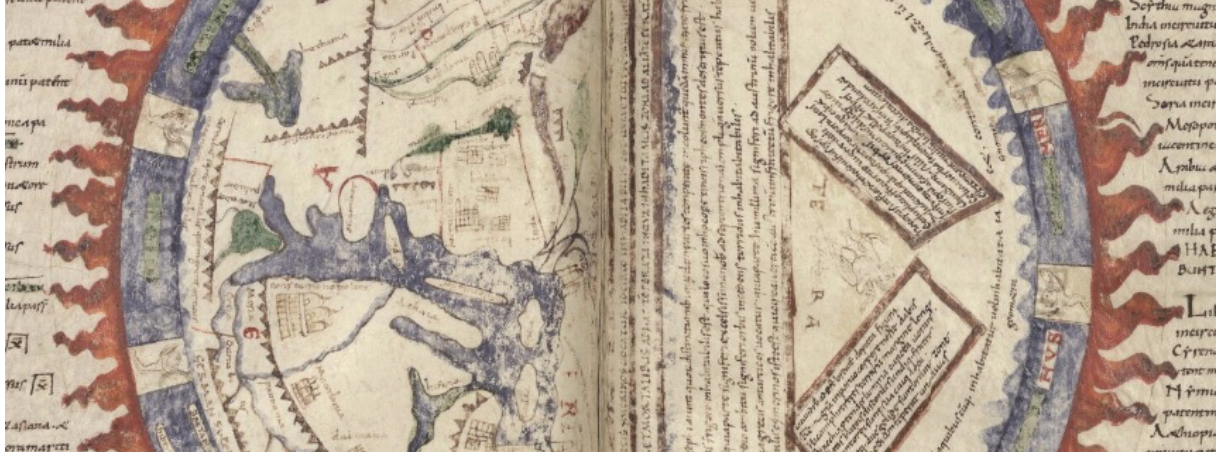
of the earth are known both in maps and texts. The British Library’s ‘Cottonian World
Map’ was made around 1025/1050; it is roughly contemporary with the Bibliothèque
nationale de France’s ‘Saint-Sever mappa mundi’, illustrating a manuscript of Beatus
de Liebana’s Commentary on the Apocalypse. More broadly, in the century that ended
with the First Crusade, knowledge of the world informed Western representations of
the Other – Eastern Christian, Muslim, Jewish or pagan – that were undergoing radical
transformation. We particularly aim to understand how the Normans and the
populations with whom they came into contact perceived each other. By the late the
tenth century, members of Rollo’s dynasty were still regularly perceived and
stigmatised as descendants of pagan pirates of the North, but they increasingly
appeared as Latin Christians like any others, even as models of Christian behaviour.
Proposed themes:

  • Knowledge of the world.
  • Cartography.
  • Knowledge and representations of Others.

2/ Moving through the world
Many roads allowed travellers from Normandy to reach other regions, and the Normans
were keen to use them. There were maritime roads towards Britain, Ireland or
Scandinavia, but towards Aquitaine, Iberia and, beyond that, the Mediterranean –
especially Southern Italy, Byzantium and the Holy Land. There were also roads over
land and up and down rivers, and travel often combined several means of transport.
We will follow attested circulations and retrace the itineraries followed by people,
commodities and ideas. We also wish to focus on the places where connexions were
made and on the people who enabled them, especially in the case of Normans: in an
English lawcode that mentions Norman merchants in London in the first decade of the
eleventh century, or in Warner of Rouen’s poem Moriuht, in which Rouen is shown to
be a port where slave trade was still in operation. Pilgrimage routes are also among
those we want to highlight: to Rome of course, but also to Puglia and Monte Gargano
(where the cult of St Michael echoes contemporary developments in Normandy), to
Compostela (where pilgrimage to St James’s relics precisely took off in the eleventh
century), to Constantinople (where a wealth of relics attracted people in ever greater
numbers) and to Jerusalem (and here we should not forget that Duke Robert the
Magnificent died in 1035 while he was travelling back from the Holy Land).
Proposed themes:

  • Itineraries, routes over sea and land.
  • Circulations, connexions, networks.
  • Trade.
  • Pilgrimages.

3/ Places, gender, life and death
Rodulfus Glaber’s terrifying pages on the famine of the years 1031 to 1033 remind us
of how precarious life was then for most of the population. The economic and
demographic balances of the time, and the growth that characterised the West in the
Central Middle Ages have all been reconsidered through new approaches based on
notions of need, resources and the relationship between humans and their
environment. The role played by lordship and coercion, work and the peasantry’s
initiative, technology and innovation, money and its circulation are also among the
factors that should be interrogated. Varied approaches of ‘material culture’ have
revealed new issues, which open more generally to questions about the relationship
between humans and objects. Archaeological sites, newly excavated and published,
help us answer them and bring new informations on conditions of life and residence:
among them, the fortified settlement of Colletière in Charavines (Isère), occupied
between 1006 and 1040, the castrum of Andone (Charente), abandoned in the 1020s,
or the moated residence of Pineuilh (Gironde)… Both in urban and rural settings,
churches and their cemeteries were increaslingly polarising the lives of communities.
Exchanges and connexions between the living and the dead remained a crucial
preoccupation of kin- or church-based groups. Thousands of charters record gifts
made to ecclesiastics ‘for the sake of souls’ (pro anima) or in memory of founders,
donors and their families. It is well-known that women played an important role in such
memorial practices, and the conference will allow participants to explore more broadly
their agency in the social changes of the time. Here, William’s birth may not be such a
significant date, but the perspectives explained above are an occasion to develop
comparative studies which will place Normandy in broader contexts.
Proposed themes:

  • Connexions with the environment.
  • Material culture.
  • Ways of life, settlements.
  • Connexions with the dead and the other world; memory of the deceased.

4/ Believing, thinking, creating
Even if the pagan beliefs and rituals imported by Scandinavians in the tenth century
do not seem to have survived in Normandy, the duchy probably was not immune from
what Dominique Barthélemy has called ‘the great awakening of heresy’: indeed, the
whole kingdom was concerned in the early eleventh century, for instance when the
‘Orléans heretics’ were denounced in 1022, as told by Rodulfus Glaber or Ademar of
Chabannes. There was also a movement towards reform of Benedictine monasteries
in the spirit of Cluny: in Normandy with William of Volpiano and his successors, but
also beyond the eastern and north-eastern borders of the kingdom with Richard of
Saint-Vanne in Verdun and Abbo Poppo in Stavelot. A new ecclesiastical elite worked towards the consolidation of lay power, weaving networks of confraternity and fostering
exchanges in the fields of liturgy, ideas, sciences and arts. This was also a time of
development for episcopal schools, for copying and illuminating religious and nonreligious manuscripts, and for creating new works in the fields of theology,
historiography and poetry: we may mention here again Fulbert of Chartres and
Adalbero of Laon, to whom Dudo of St Quentin dedicated his prosimetrical and
panegyrical history of the earliest Norman dukes. New architectural technologies were
also experimented at that time, for example in the abbey church of Mont-Saint-Michel
(the construction of which began in 1023) or in the cathedral of Chartres (the
restoration of which started in 1024). The conference will allow participants to question
or revisit beliefs and categories of thought, spiritual and intellectual debates, traditions
and innovations in literature and the arts, all visible in the early eleventh century.
Proposed themes:

  • Circulation of ideas and knowledge, and of artistic processes and techniques
  • Religious practices and beliefs, Christian and pagan.
  • Religious and cultural networks.
  • Production and circulation of manuscripts.

5/ Norman men and women of the 1020s
The Normans of the 1020s may be approaches through varied sources that allow us
to better understand aspects of the society of that time. More than a year after the
duchy had been founded, they shared the ways of life, the language and the beliefs of
the Franks; all traces of the Scandinavian past of the province were rapidly fading. The
conference will revisit these transformations and how they affected the inhabitants of
the duchy. Who were Norman men and women in the 1020s? Did they share common
identities, affiliations, cultural values, and how did they express them? A crucial factor
of cohesion in the duchy and between its inhabitants was the power wielded by the
ducal dynasty. How was the dukes’ authority manifested and how did it frame society
and its diverse components, both lay and ecclesiastical? To which extend can we
perceive the action of social networks based of kinship, friendship, alliances or loyalty
in their different forms (including feudal-vassalic)? What agency did women have in
these networks? Which aspirations, which contestations can we see emerging or
circulating in this society? The conference will allow us to revisit the current image of
a dynamic principality, where public order resisted better than elsewhere and where
peasant communities benefited for more a favourable status or condition.
Proposed themes:

  • Norman identity.
  • The role played by the Norman dukes and their kin.
  • The social and political fabric of the duchy of Normandy.
  • Men and women in the duchy of Normandy.

6/ Norman men and women in the kingdom of France and in Europe
As mentioned above, Normans are well-attesed both in the kingdom and in the wider
world. Some of them returned quickly, others remained in exile for long periods before
coming back, others settled permanently abroad. Take Roger de Tosny, who went to
fight Saracens in the county of Barcelona, where he married around 1020 the daughter
of Countess Ermesenda, but finally came back to Duke Richard II. In 1022, Emperor
Henry II drafted 24 Normans to serve the nephews of Meles and fight the Byzantines,
investing them with the county of Comino in Chieti province: we do know some of their
names, such as Torstin Scitel or Hugh Falloc (this one later a companion of Robert
Guiscard). Others settled with Prince Gaimar, while the Duke of Naples gave Rainulf
his sister’s hand, fortifying for him the county of Aversa in 1030. On the other side of
the Channel, a Norman queen, Emma, the daughter of Richard I, reigned twice, first
as Æthelred II’s consort and then as Cnut’s: long before 1066, a Norman princess wore
the English crown. Many Norman knights were also looking for military employment or
marrying into the greatest families, both in Northern and Southern Europe.
Proposed themes:

  • The Normans in neighbouring principalities.
  • The Normans in Southern Italy and in the Mediterranean.
  • The Normans in England and in the Insular world.

Our conference will give priority to proposals that combine several of the approaches
outlined above and help presenting a dynamic vision of the world in which William was
born and understanding how the future ‘Conqueror’ made it change.
The conference will host two kinds of contributions: 30-minute presentations followed
by discussions; and posters on specific case studies, which will be presented by their
authors in a special session. We welcome proposals by early career scholars: the
‘Centre culturel international de Cerisy’ is an ideal venue, fostering discussion and
allowing them to receive advice from members of the scientific board or from other
scholars attending the conference.


Proposals for papers or posters must be sent before 1 June 2026 to all organisers:
Pierre Bauduin (pierre.bauduin@unicaen.fr), Alban Gautier (alban.gautier@unicaen.fr) and Marie-Agnès Lucas-Avenel (marieagnes.avenel@unicaen.fr). Applicants should submit two separate files: a 1-page
abstract, clearly stating how the proposed contribution may fit within one or several topics outilned in the call for papers; and a 1-page CV.
20th MEMSA Anniversary Conference

We hereby would like to announce that the registration for the 20th Medieval and Early Modern Student Association Conference in Durham University is open! The conference theme this year will be ‘Connection, Conversation, and Contention: Encounters in the Medieval and Early Modern World’, and the event itself will feature 36 papers on this theme by Postgraduates from different disciplines and countries. In addition, there will also be three keynotes by Dr. Lisa Kattenberg, Dr. Natalie Goodison and Professor Stuart Carroll. This will be a great opportunity to meet peers and to get an insight in the current research themes on Premodern world. 

The tickets for the conference itself will be £30, which includes refreshments and lunches. There will also be an optional add-on dinner for the first day (Monday the 13th of July).  Furthermore, we will organise an optional special collections library tour and a Durham city tour which are both free of charge. 

We kindly ask you to register by 20th June 2026 using the following link: https://forms.office.com/pages/responsepage.aspx?id=i9hQcmhLKUW-RNWaLYpvlFFYknFXEpJOkqwtgqakMuZUMkZGTE1aTEVEUFVVTEE3NlVVOTRMMlRSSi4u&route=shorturl

The conference itself will take place on the 13th and 14th of July at St. John’s College (3 South Bailey, Durham). The location can be easily reached from Durham train station, and the train station in turn, is well connected with Newcastle airport through metro and train services. If you have any questions, regarding to staying in Durham or any other aspect of the conference experience, do not hesitate to contact us at memsa.conference@durham.ac.uk. We hope to meet you in Durham soon!

Medieval Matters TT26, Wk 1

Welcome back to Trinity term.

There have been a substantial number of new additions to the booklet since the draft issued last week – please have a check through the updated booklet here for even more medieval events throughout the term. For some time-sensitive announcements (such as the call for actors for an experimental production of the Harrowing of Hell) read through to the end under ‘opportunities’! A reminder that if there are any changes to events such as rooms or times, we are always happy to update the weekly blog post and calendar of events which is integrated into theblog.

Monday

  • French Palaeography Manuscript Reading Group – 10:30, Weston Library. If you are interested in joining the group or would like more information, please email the convenor Laure Miolo.
  • Runic Germanic Inscriptions and Language Lectures – 2:00, room 30.445 of the Schwarzman Centre
  • Medieval History Seminar: – 5:00, All Souls College. Ruth Mazo Karras (Trinity College, Dublin) will be speaking on ‘Parental control of women’s marriage in late medieval Paris’
  • Italian Research Seminar – 5:15, Taylorian, Room 2. Geri Della Rocca de Candal (Sapienza) will be speaking on ‘Italian Incunabula in US Collections: Paths, Patterns, and Investigation Methods’

Tuesday

  • Latin Palaeography Manuscript Reading Group – 2pm, Weston Library. Those who are interested can email the convenor Laure Miolo.
  • Medieval French Research Seminar – 5:00, Maison Francaise. Benedetta Viscidi (Université de Fribourg) will be speaking on ‘Représentations et mythes du viol dans la littérature médiévale en français: le cas du roman’ 

Wednesday

  • Methods in Arabic and Islamic Studies Class – 10:30, LMH Library.
  • Medieval German Graduate Seminar – 11:15, Oriel College. The first week will be a shortish planning meeting. The topic for this term is the ‘Welsche Gast’ by Thomasin von Zerklaere.
  • Old Norse Reading Group – 5:00, Merton College, Breakfast Room. This term we are reading Völsunga saga. If you are interested in joining the group, please contact one of the group convenors via email Brooklyn Arnot or Zeynep Kirca
  • The Medieval Latin Documentary Palaeography Reading Group – 4:00, online. To join and/or to find out more about this and the possibility of some hands-on experience of cataloguing such documents to develop further your research skills, please contact  Michael Stansfield.
  • Late Antique and Byzantine Seminar – 5:00, Late Antique and Byzantine Seminar, Ioannou Centre. The Oxford University Byzantine Society will discuss their Research Trip to Sicily.
  • Medieval English Research Seminar – 5:15, The Schwarzman Centre, room 00.063. Emma Nuding (U of Birmingham) will be speaking on ‘Writing the early medieval Fens: place in the medieval and modern lives of St Guthlac’.

Thursday

  • Middle English Reading Group (MERG) – 11:00, Lincoln College, Beckington Room. All are welcome as we finish Sir Gawain and the Green Knight. Bring any edition of the original text! There will be tea and biscuits. For more information or to be added to the mailing list, please email Rebecca Menmuir
  • Old English Graduate Reading Group – 5:15. This term we will be reading some of the Exeter Riddles. Our Location is variable so please email Hattie (harriet.carter@lmh.ox.ac.uk) or James (james.titterington@stcatz.ox.ac.uk) if you’re interested.
  • Heraldry Society – 5:30, Oriel College. Mark Scott (Somerset Herald) will be speaking on “Princely Heraldry in the United Kingdom”.
  • Bede Reading Group (or, ‘Bede-ing Group’) – 6:00, Blackfriars. To sign up, email Maura McKeon. Don’t stop Bede-lieving.

Friday

  • Medievalist Coffee Morning – Friday 10:30, Visiting Scholars Centre (Weston Library). All welcome, coffee and insight into special collections provided.
  • Medieval Latin Reading Group – 5:30, Christ Church. This term, we will be reading the Cosmographia of Bernardus Silvestris in the original. For more information, please contact Clara Bykvist or Monty Powell

Saturday (!)

Opportunities (see Medieval Studies booklet for full details)

  • The experimental production of the Harrowing of Hell is seeking performers. We will be performing our play in week 6 (2 to 6 June) at the Burton Taylor Studio, from 9:30 to 10:30pm and in week 7 (9 to 11 June, tbc) in the crypt of St-Peter-in-the-East (St Edmund Hall), from 8 to 9pm. We are still missing three roles (Adam, Eve, and a demon; all backgrounds welcome, aged 18+). More information can be found here.
  • OMS small grants is now open! Grants are normally in the region of £100–250 and can either be for expenses or for administrative and organisational support such as publicity, filming or zoom hosting. Closing date for applications: Friday of Week 5.
  • Publishing with the Journal Manuscript and Text Cultures. Are you interested in submitting to the journal Manuscript and Text Cultures? Please review the About the Journal page.
  • Register for the Anglo-German Research Funding Opportunities Showcase, Wednesday, 13 May  •  2 PM – 5:30 PM | Eventbrite. The Global Engagement team will host representatives from some of the major German and UK funding bodies (DFG, The Royal Society, the Alexander von Humboldt Foundation, the Royal Academy of Engineering and more) at Rhodes House; for Early Career People as well as established researchers!
  • Sir John Rhŷs Prize for the study of the Celtic languages, literature, history, and antiquities. Entries should be submitted by email, with the subject line “Sir John Rhŷs Prize”, to the English Faculty Office, no later than Monday of Week 8 of Trinity Term (15 June 2026).
  • CfP – 9th International Conference on Myth Criticism. Deadline: 15 May 2026
  • CfP – The Nine Worthies: Interdisciplinary Perspectives. Deadline: 15 May 2026
  • Bodleian Purchasing Opportunity. Do you know of books that would aid your work but are not in the Bodleian? Help us strengthen the university’s collections. You can submit details of suggested books via https://www.bodleian.ox.ac.uk/collections-and-resources/recommend-a-purchase or by email to medieval@bodleian.ox.ac.uk.

New Directions in Old English Prose: Conference Report

Over the course of two days, this international conference highlighted emerging directions in the study of the field. Hosted at the University of Oxford as part of Prof. Francis Leneghan’s AHRC-funded projected Writing Pre-Conquest England: A History of Old English Prose, the event brought together a diverse cohort of international senior scholars, early career researchers, and postgraduates. 25 papers were presented and over 60 delegates were in attendance. The features of the texts under study were remarkably broad, moving beyond traditional literary analysis to explore objects, inscriptions, glosses, and prefaces. By employing methodologies rooted in syntax, style, semiotics, and the history of gendered literacy, the contributors demonstrated that Old English prose remains a site of dynamic intellectual enquiry.

A significant theme that unified the sessions was a re-evaluation of the prose canon. For much of the twentieth century, the study of Old English prose was dominated by a teleological focus on the “great books” of the Alfredian era and the late tenth-century homiletic traditions of Ælfric and Wulfstan. This conference, however, placed these established corpora into dialogue with less canonical and a range of pre- and post-Alfredian materials. By integrating marginalia and vernacular glosses, historically sidelined in favour of “complete” or “literary” texts, the sessions highlighted the regional and linguistic diversity of the early medieval period of English literature.

Related to this reassessment of the canon was a shift away from a West-Saxon centred perspective toward a more nuanced dialectal landscape. Scholars explored the importance of the Northumbrian and Mercian traditions and interlinear glossing further emphasised the extent to which Old English prose reflects localised and context-sensitive literacy practices rather than a single uniform prose standard.

The inclusion of papers on women readers (and the possibility of female authorship) and the re-evaluations of wisdom within texts further expanded the scope of prose study. This social-historical approach suggests that “New Directions” in the field are not only about identifying new materials, but also about asking new questions of the texts we already possess.

As an undergraduate student, I found this bird’s-eye view of the field particularly illuminating. Many of the texts discussed, such as early Mercian prayerbooks and Northumbrian glosses, sit outside the standard undergraduate curriculum, yet the conference gave these materials space and challenged the traditional bounds of prose study. For the next generation of scholars, these “New Directions” offer an invitation to pursue fresh angles within the Old English corpus, ensuring that the work of the ROEP project will continue to shape future research in the field.

Libby Histed, Harris Manchester College

Medieval Matters – Vac

The OMS emails will be put on brief pause over the vac, although the blog will be continually updated with new events. Please see below a number of important opportunities and reminders before term starts. Of particular note to those interested in early medieval England (and who amongst us doesnt fall into that category) is the British Library’s upcoming PhD placement on the Norman Conquest. Applications are open for three PhD placements which will support the development of our upcoming major exhibition on the Norman Conquest, marking the 1,000th anniversary of the birth of William the Conqueror. Apply by Monday 6 April 2026. Apply by Monday 6 April 2026.

British Library PhD placement: the Norman Conquest

Application are open for three PhD placements which will support the development of our upcoming major exhibition on the Norman Conquest, marking the 1,000th anniversary of the birth of William the Conqueror. Apply by Monday 6 April 2026.

This placement will be hosted by the Ancient, Medieval and Early Modern Manuscripts team at the Library. This team curates the extensive national collection of British and European manuscripts dating from Antiquity to 1600, actively making these collections accessible through cataloguing, digitisation and exhibitions. Curators in the section have led major Library exhibitions including Medieval Women: In Their Own Words (2024–25); Elizabeth and Mary: Royal Cousins, Rival Queens (2021–22); Anglo-Saxon Kingdoms: Art, Word, War (2018–19); Harry Potter: A History of Magic (2017–18) and Magna Carta: Law, Liberty, Legacy (2015).

The Library is currently developing a major exhibition on the Norman Conquest which will run from 1 October 2027 to 27 February 2028, to mark the 1,000th anniversary of the birth of William the Conqueror in 1027. The exhibition will span two generations either side of the Conqueror to explore the history, art and culture of England from the early 11th century to the middle of the 12th century. It will draw on our extremely strong collection of historical and illuminated manuscripts from this period, together with a large number of manuscripts and museum objects on loan from collections in Britain and Europe.

The placement student will be supervised primarily by the co-curator of the exhibition and will assist with key tasks in the development of the exhibition.

The students will assist with the varied tasks involved in developing the exhibition, including but not limited to: 

  • Helping to liaise with other teams at the Library such as Exhibitions, Conservation and Marketing.
  • Researching themes, exhibits or historical figures within the exhibition to support the curators in finalising the object list and storyline
  • Editorial assistance for the exhibition book such as assembling images, bibliography and proof-reading
  • Producing promotional materials such as preparing social media threads and writing blog posts based on exhibits and themes in the exhibition

More information can be found here.

A Conference at the British Library: Multispectral Gaze: New Approaches to the Cotton Genesis

Friday 9th June, at 10:00

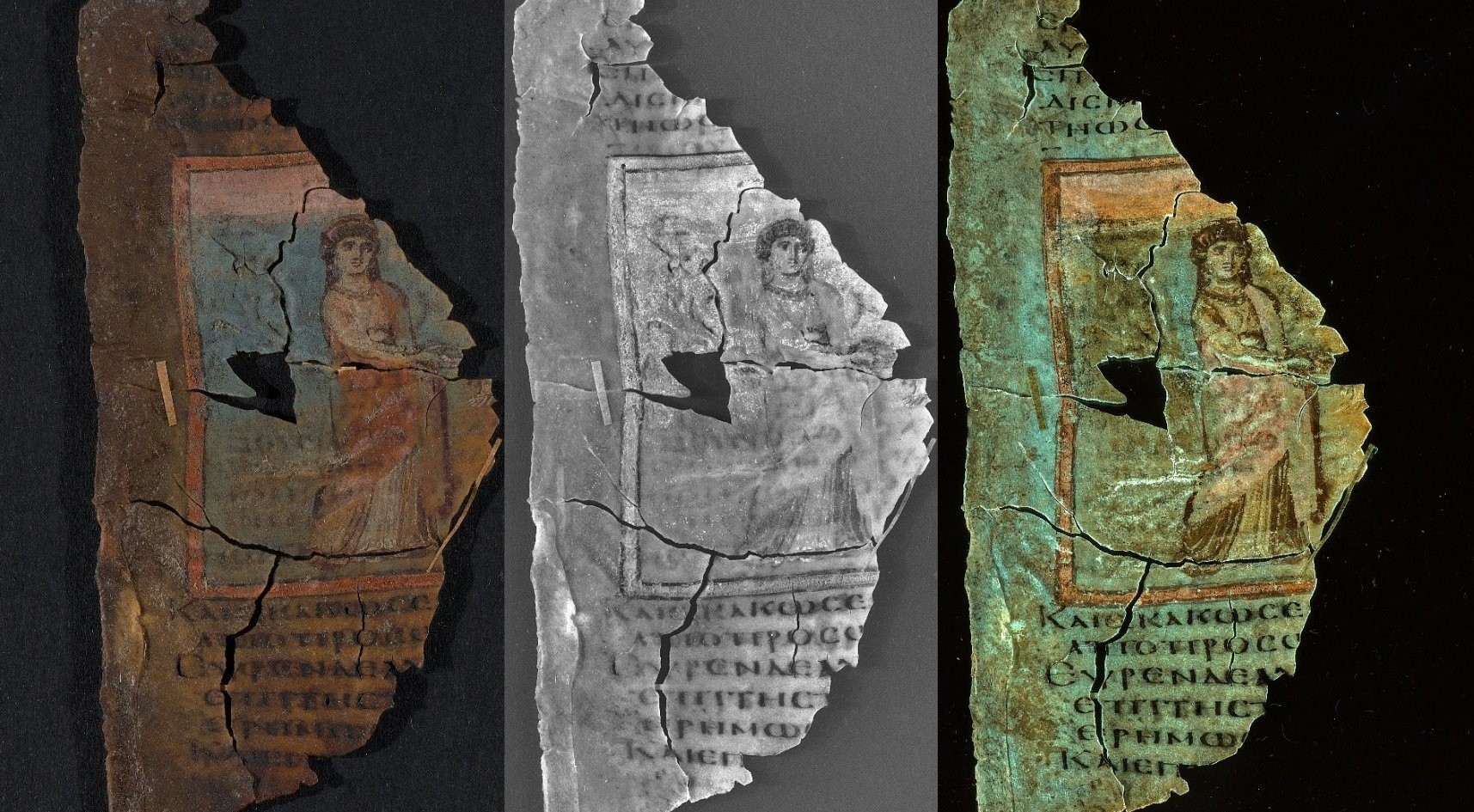
The British Library recently undertook a new multispectral digitisation campaign of the Cotton Genesis (British Library, Cotton MS Otho B VI), one of the greatest works of manuscript art to survive from late Antiquity and one of the most tragic casualties of the Cotton Library fire of 1731. The new imagery made visible parts of the manuscript unseen since the fire. Pages that look black to the naked eye now reveal portions of readable texts; illuminations that look like blocks of colour now show layers of paint, brush strokes, and fold outlines. This opens exciting opportunities for new research on this manuscript, which is a significant witness both of an influential late-antique visual tradition and of the text of the Septuagint. The British Library will celebrate the launch of the multispectral images of the Cotton Genesis on its website with an interdisciplinary conference fully dedicated to the manuscript: Multispectral Gaze: New Approaches to the Cotton Genesis.

View the full programme and register here.

Supported by the Paul Mellon Centre for Studies in British Art and the Association for Manuscripts and Archives in Research Collections (AMARC).

Thank to support from AMARC, five free student tickets are available. To apply, please contact  elena.lichmanova@bl.uk and e.zingg@hist.uzh.ch.