20th MEMSA Anniversary Conference

We hereby would like to announce that the registration for the 20th Medieval and Early Modern Student Association Conference in Durham University is open! The conference theme this year will be ‘Connection, Conversation, and Contention: Encounters in the Medieval and Early Modern World’, and the event itself will feature 36 papers on this theme by Postgraduates from different disciplines and countries. In addition, there will also be three keynotes by Dr. Lisa Kattenberg, Dr. Natalie Goodison and Professor Stuart Carroll. This will be a great opportunity to meet peers and to get an insight in the current research themes on Premodern world. 

The tickets for the conference itself will be £30, which includes refreshments and lunches. There will also be an optional add-on dinner for the first day (Monday the 13th of July).  Furthermore, we will organise an optional special collections library tour and a Durham city tour which are both free of charge. 

We kindly ask you to register by 20th June 2026 using the following link: https://forms.office.com/pages/responsepage.aspx?id=i9hQcmhLKUW-RNWaLYpvlFFYknFXEpJOkqwtgqakMuZUMkZGTE1aTEVEUFVVTEE3NlVVOTRMMlRSSi4u&route=shorturl

The conference itself will take place on the 13th and 14th of July at St. John’s College (3 South Bailey, Durham). The location can be easily reached from Durham train station, and the train station in turn, is well connected with Newcastle airport through metro and train services. If you have any questions, regarding to staying in Durham or any other aspect of the conference experience, do not hesitate to contact us at memsa.conference@durham.ac.uk. We hope to meet you in Durham soon!

Medieval Matters TT26, Wk 1

Welcome back to Trinity term.

There have been a substantial number of new additions to the booklet since the draft issued last week – please have a check through the updated booklet here for even more medieval events throughout the term. For some time-sensitive announcements (such as the call for actors for an experimental production of the Harrowing of Hell) read through to the end under ‘opportunities’! A reminder that if there are any changes to events such as rooms or times, we are always happy to update the weekly blog post and calendar of events which is integrated into theblog.

Monday

  • French Palaeography Manuscript Reading Group – 10:30, Weston Library. If you are interested in joining the group or would like more information, please email the convenor Laure Miolo.
  • Runic Germanic Inscriptions and Language Lectures – 2:00, room 30.445 of the Schwarzman Centre
  • Medieval History Seminar: – 5:00, All Souls College. Ruth Mazo Karras (Trinity College, Dublin) will be speaking on ‘Parental control of women’s marriage in late medieval Paris’
  • Italian Research Seminar – 5:15, Taylorian, Room 2. Geri Della Rocca de Candal (Sapienza) will be speaking on ‘Italian Incunabula in US Collections: Paths, Patterns, and Investigation Methods’

Tuesday

  • Latin Palaeography Manuscript Reading Group – 2pm, Weston Library. Those who are interested can email the convenor Laure Miolo.
  • Medieval French Research Seminar – 5:00, Maison Francaise. Benedetta Viscidi (Université de Fribourg) will be speaking on ‘Représentations et mythes du viol dans la littérature médiévale en français: le cas du roman’ 

Wednesday

  • Methods in Arabic and Islamic Studies Class – 10:30, LMH Library.
  • Medieval German Graduate Seminar – 11:15, Oriel College. The first week will be a shortish planning meeting. The topic for this term is the ‘Welsche Gast’ by Thomasin von Zerklaere.
  • Old Norse Reading Group – 5:00, Merton College, Breakfast Room. This term we are reading Völsunga saga. If you are interested in joining the group, please contact one of the group convenors via email Brooklyn Arnot or Zeynep Kirca
  • The Medieval Latin Documentary Palaeography Reading Group – 4:00, online. To join and/or to find out more about this and the possibility of some hands-on experience of cataloguing such documents to develop further your research skills, please contact  Michael Stansfield.
  • Late Antique and Byzantine Seminar – 5:00, Late Antique and Byzantine Seminar, Ioannou Centre. The Oxford University Byzantine Society will discuss their Research Trip to Sicily.
  • Medieval English Research Seminar – 5:15, The Schwarzman Centre, room 00.063. Emma Nuding (U of Birmingham) will be speaking on ‘Writing the early medieval Fens: place in the medieval and modern lives of St Guthlac’.

Thursday

  • Middle English Reading Group (MERG) – 11:00, Lincoln College, Beckington Room. All are welcome as we finish Sir Gawain and the Green Knight. Bring any edition of the original text! There will be tea and biscuits. For more information or to be added to the mailing list, please email Rebecca Menmuir
  • Old English Graduate Reading Group – 5:15. This term we will be reading some of the Exeter Riddles. Our Location is variable so please email Hattie (harriet.carter@lmh.ox.ac.uk) or James (james.titterington@stcatz.ox.ac.uk) if you’re interested.
  • Heraldry Society – 5:30, Oriel College. Mark Scott (Somerset Herald) will be speaking on “Princely Heraldry in the United Kingdom”.
  • Bede Reading Group (or, ‘Bede-ing Group’) – 6:00, Blackfriars. To sign up, email Maura McKeon. Don’t stop Bede-lieving.

Friday

  • Medievalist Coffee Morning – Friday 10:30, Visiting Scholars Centre (Weston Library). All welcome, coffee and insight into special collections provided.
  • Medieval Latin Reading Group – 5:30, Christ Church. This term, we will be reading the Cosmographia of Bernardus Silvestris in the original. For more information, please contact Clara Bykvist or Monty Powell

Saturday (!)

Opportunities (see Medieval Studies booklet for full details)

  • The experimental production of the Harrowing of Hell is seeking performers. We will be performing our play in week 6 (2 to 6 June) at the Burton Taylor Studio, from 9:30 to 10:30pm and in week 7 (9 to 11 June, tbc) in the crypt of St-Peter-in-the-East (St Edmund Hall), from 8 to 9pm. We are still missing three roles (Adam, Eve, and a demon; all backgrounds welcome, aged 18+). More information can be found here.
  • OMS small grants is now open! Grants are normally in the region of £100–250 and can either be for expenses or for administrative and organisational support such as publicity, filming or zoom hosting. Closing date for applications: Friday of Week 5.
  • Publishing with the Journal Manuscript and Text Cultures. Are you interested in submitting to the journal Manuscript and Text Cultures? Please review the About the Journal page.
  • Register for the Anglo-German Research Funding Opportunities Showcase, Wednesday, 13 May  •  2 PM – 5:30 PM | Eventbrite. The Global Engagement team will host representatives from some of the major German and UK funding bodies (DFG, The Royal Society, the Alexander von Humboldt Foundation, the Royal Academy of Engineering and more) at Rhodes House; for Early Career People as well as established researchers!
  • Sir John Rhŷs Prize for the study of the Celtic languages, literature, history, and antiquities. Entries should be submitted by email, with the subject line “Sir John Rhŷs Prize”, to the English Faculty Office, no later than Monday of Week 8 of Trinity Term (15 June 2026).
  • CfP – 9th International Conference on Myth Criticism. Deadline: 15 May 2026
  • CfP – The Nine Worthies: Interdisciplinary Perspectives. Deadline: 15 May 2026
  • Bodleian Purchasing Opportunity. Do you know of books that would aid your work but are not in the Bodleian? Help us strengthen the university’s collections. You can submit details of suggested books via https://www.bodleian.ox.ac.uk/collections-and-resources/recommend-a-purchase or by email to medieval@bodleian.ox.ac.uk.

New Directions in Old English Prose: Conference Report

Over the course of two days, this international conference highlighted emerging directions in the study of the field. Hosted at the University of Oxford as part of Prof. Francis Leneghan’s AHRC-funded projected Writing Pre-Conquest England: A History of Old English Prose, the event brought together a diverse cohort of international senior scholars, early career researchers, and postgraduates. 25 papers were presented and over 60 delegates were in attendance. The features of the texts under study were remarkably broad, moving beyond traditional literary analysis to explore objects, inscriptions, glosses, and prefaces. By employing methodologies rooted in syntax, style, semiotics, and the history of gendered literacy, the contributors demonstrated that Old English prose remains a site of dynamic intellectual enquiry.

A significant theme that unified the sessions was a re-evaluation of the prose canon. For much of the twentieth century, the study of Old English prose was dominated by a teleological focus on the “great books” of the Alfredian era and the late tenth-century homiletic traditions of Ælfric and Wulfstan. This conference, however, placed these established corpora into dialogue with less canonical and a range of pre- and post-Alfredian materials. By integrating marginalia and vernacular glosses, historically sidelined in favour of “complete” or “literary” texts, the sessions highlighted the regional and linguistic diversity of the early medieval period of English literature.

Related to this reassessment of the canon was a shift away from a West-Saxon centred perspective toward a more nuanced dialectal landscape. Scholars explored the importance of the Northumbrian and Mercian traditions and interlinear glossing further emphasised the extent to which Old English prose reflects localised and context-sensitive literacy practices rather than a single uniform prose standard.

The inclusion of papers on women readers (and the possibility of female authorship) and the re-evaluations of wisdom within texts further expanded the scope of prose study. This social-historical approach suggests that “New Directions” in the field are not only about identifying new materials, but also about asking new questions of the texts we already possess.

As an undergraduate student, I found this bird’s-eye view of the field particularly illuminating. Many of the texts discussed, such as early Mercian prayerbooks and Northumbrian glosses, sit outside the standard undergraduate curriculum, yet the conference gave these materials space and challenged the traditional bounds of prose study. For the next generation of scholars, these “New Directions” offer an invitation to pursue fresh angles within the Old English corpus, ensuring that the work of the ROEP project will continue to shape future research in the field.

Libby Histed, Harris Manchester College

Medieval Matters – Vac

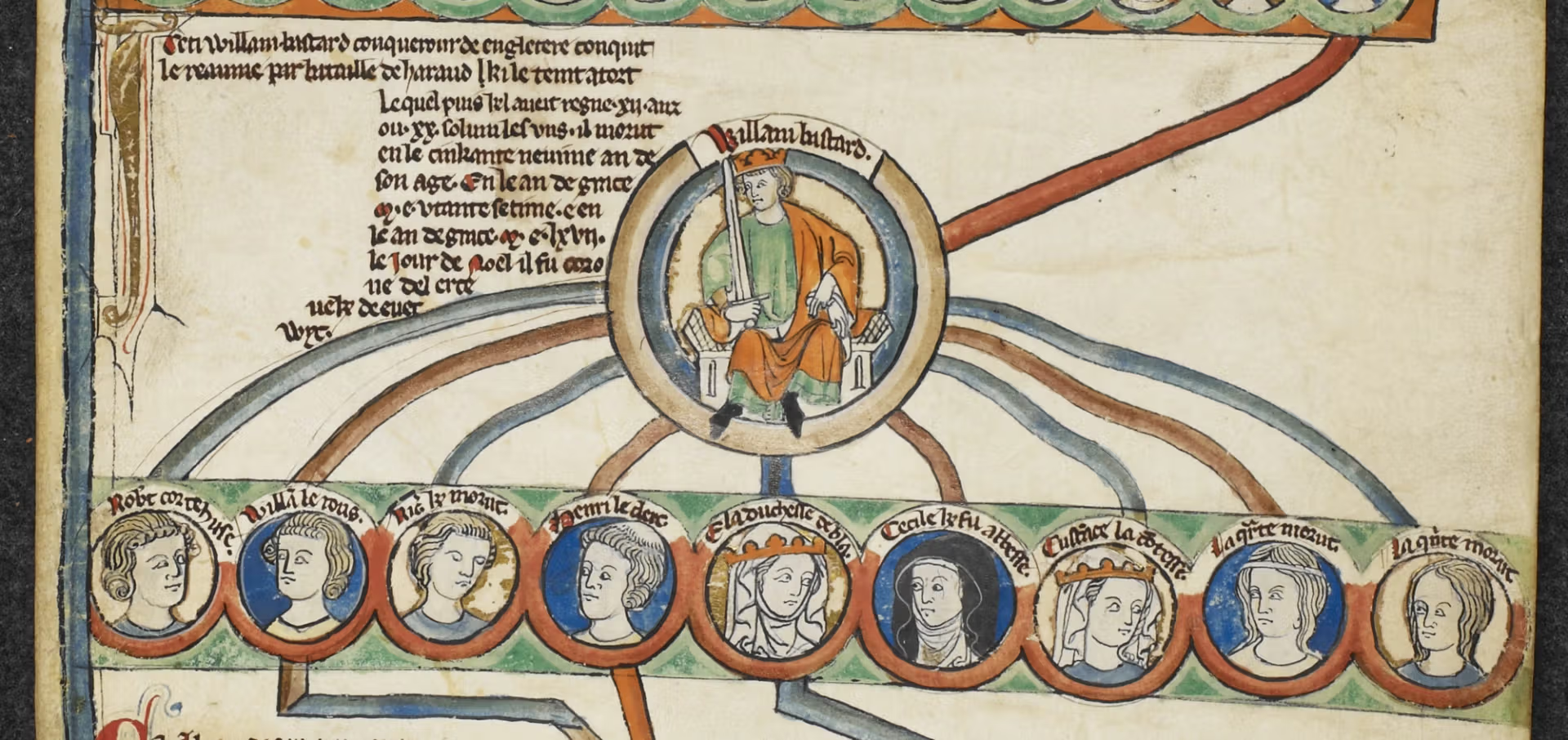
The OMS emails will be put on brief pause over the vac, although the blog will be continually updated with new events. Please see below a number of important opportunities and reminders before term starts. Of particular note to those interested in early medieval England (and who amongst us doesnt fall into that category) is the British Library’s upcoming PhD placement on the Norman Conquest. Applications are open for three PhD placements which will support the development of our upcoming major exhibition on the Norman Conquest, marking the 1,000th anniversary of the birth of William the Conqueror. Apply by Monday 6 April 2026. Apply by Monday 6 April 2026.

British Library PhD placement: the Norman Conquest

Application are open for three PhD placements which will support the development of our upcoming major exhibition on the Norman Conquest, marking the 1,000th anniversary of the birth of William the Conqueror. Apply by Monday 6 April 2026.

This placement will be hosted by the Ancient, Medieval and Early Modern Manuscripts team at the Library. This team curates the extensive national collection of British and European manuscripts dating from Antiquity to 1600, actively making these collections accessible through cataloguing, digitisation and exhibitions. Curators in the section have led major Library exhibitions including Medieval Women: In Their Own Words (2024–25); Elizabeth and Mary: Royal Cousins, Rival Queens (2021–22); Anglo-Saxon Kingdoms: Art, Word, War (2018–19); Harry Potter: A History of Magic (2017–18) and Magna Carta: Law, Liberty, Legacy (2015).

The Library is currently developing a major exhibition on the Norman Conquest which will run from 1 October 2027 to 27 February 2028, to mark the 1,000th anniversary of the birth of William the Conqueror in 1027. The exhibition will span two generations either side of the Conqueror to explore the history, art and culture of England from the early 11th century to the middle of the 12th century. It will draw on our extremely strong collection of historical and illuminated manuscripts from this period, together with a large number of manuscripts and museum objects on loan from collections in Britain and Europe.

The placement student will be supervised primarily by the co-curator of the exhibition and will assist with key tasks in the development of the exhibition.

The students will assist with the varied tasks involved in developing the exhibition, including but not limited to: 

  • Helping to liaise with other teams at the Library such as Exhibitions, Conservation and Marketing.
  • Researching themes, exhibits or historical figures within the exhibition to support the curators in finalising the object list and storyline
  • Editorial assistance for the exhibition book such as assembling images, bibliography and proof-reading
  • Producing promotional materials such as preparing social media threads and writing blog posts based on exhibits and themes in the exhibition

More information can be found here.

A Conference at the British Library: Multispectral Gaze: New Approaches to the Cotton Genesis

Friday 9th June, at 10:00

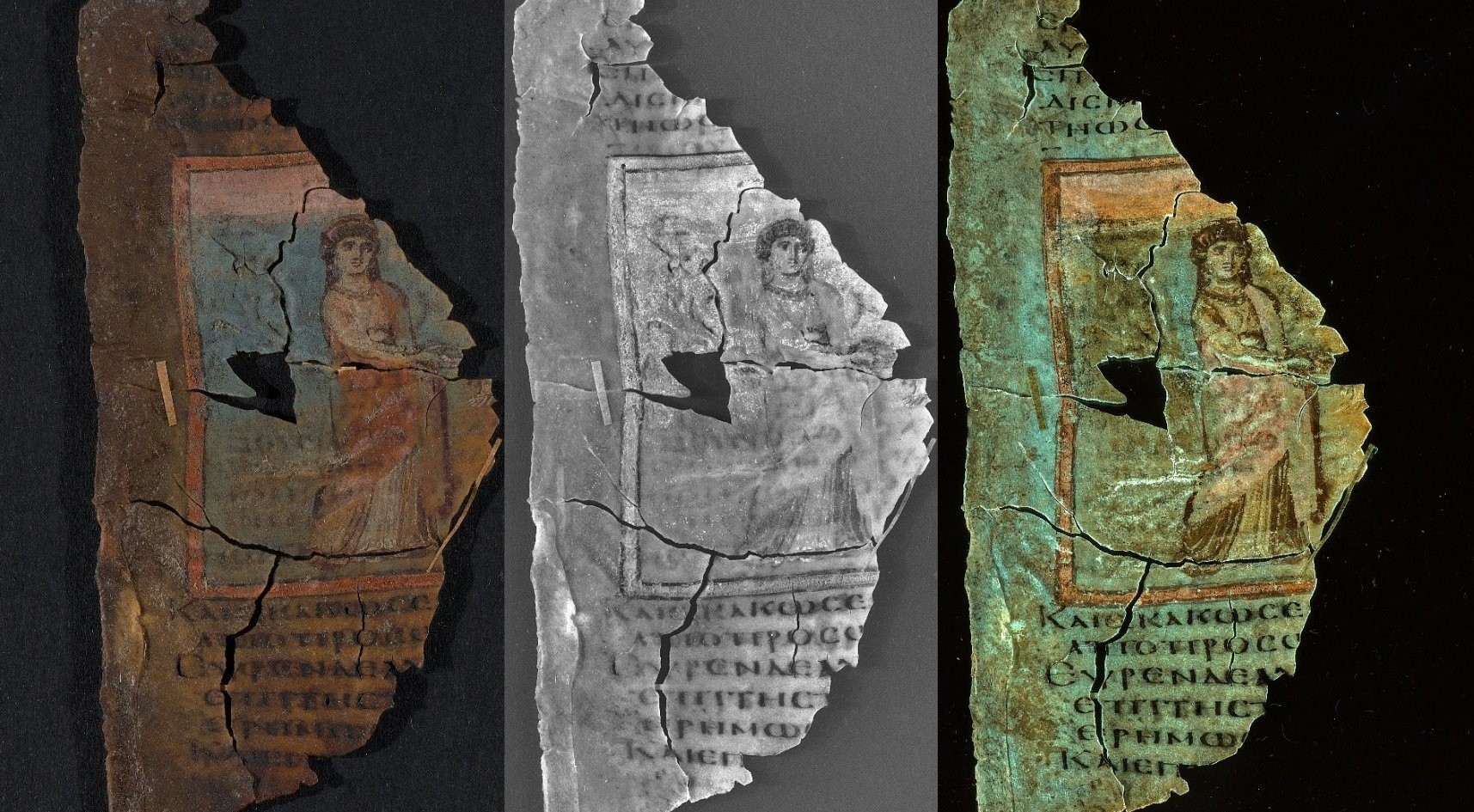
The British Library recently undertook a new multispectral digitisation campaign of the Cotton Genesis (British Library, Cotton MS Otho B VI), one of the greatest works of manuscript art to survive from late Antiquity and one of the most tragic casualties of the Cotton Library fire of 1731. The new imagery made visible parts of the manuscript unseen since the fire. Pages that look black to the naked eye now reveal portions of readable texts; illuminations that look like blocks of colour now show layers of paint, brush strokes, and fold outlines. This opens exciting opportunities for new research on this manuscript, which is a significant witness both of an influential late-antique visual tradition and of the text of the Septuagint. The British Library will celebrate the launch of the multispectral images of the Cotton Genesis on its website with an interdisciplinary conference fully dedicated to the manuscript: Multispectral Gaze: New Approaches to the Cotton Genesis.

View the full programme and register here.

Supported by the Paul Mellon Centre for Studies in British Art and the Association for Manuscripts and Archives in Research Collections (AMARC).

Thank to support from AMARC, five free student tickets are available. To apply, please contact  elena.lichmanova@bl.uk and e.zingg@hist.uzh.ch.

Medieval Matter HT26, Week 8

We have made it, at long last, to the end of another Hilary term – but the events don’t stop coming! Please find below another week full of medieval events for you to enjoy, and an ever-increasing list of future opportunities. NB: the Maison Française d’Oxford lecture this Tuesday has had to move earlier and is now at 12:00.

Monday

  • French Palaeography Manuscript Reading Group – 10:30, Weston Library.
  • Seminar in Palaeography and Manuscript studies – 2:15, Weston Library. Seamus Dwyer (Cambridge) will speak on ‘Pen-Flourishing and the Boundaries of Meaning’.
  • Medieval Archaeology Seminar – 3:00, Archaeology Faculty.  Eugene Costello will be speaking on ‘Exploring the expansion of pastoral farming in northern Europe’s uplands, c.1200-1600’.
  • Medieval History Seminar – 5:00, All Souls College. Nick Evans (Birkbeck) “Cowries, Cloth and Coins: Currency in Medieval Economic Anthropology”.
  • Theory and Play: Comparative Medievalisms – 5.15, Lady Margaret Hall.

Tuesday

  • Europe in the Later Middle Ages Seminar – 2:00, New Seminar Room, St John’s College. Mike Carr (Edinburgh) will be speaking on ‘Popes, Ambassadors and Falcons: Trade and Diplomacy between Latin Europe and the Mamluk Sultanate in the Fourteenth Century’.
  • Latin Palaeography Manuscript Reading Group – 2:00, Weston Library (Horton Room). Those who are interested can contact the convenor, Laure Miolo.
  • Maison Française d’Oxford lectures: ‘Children in the Middle Ages’ – 12:00, Maison Française. NB. the new, earlier, time.
  • Maghrib History Seminar: “Reading the Qurʾān across the Mediterranean: Toward a Maghribī School of Tafsīr in Early Islam” – 5:00, The Queen’s College.
  • Medieval Church and Culture, theme: TRANSLATION(S) – tea and coffee from 5:00, Harris Manchester College. Celeste Pan (Balliol) will be speaking on ‘Some issues of translation in an illuminated Hebrew bible manuscript from medieval Brussels (Hamburg, Staats- und Universitätsbibl., Cod. Levy 19)’.
  • Old English Hagiography Reading Group – 5:15, Jesus College Memorial Room.
  • Church Historian Pub Night – 6:00 at the Chequers Inn. Contact Rachel Cresswell.

Wednesday

  • History and Materiality of the Book Seminar series – 2:15, Weston Library. Matthew Holford and Laure Miolo will be speaking on ‘Text identification’.
  • Older Scots Reading Group – 2:30, Room 30.401 (Humanities Centre). Palyce of Honour, Thyrd Part, ll. 1288-2142; Palyce of Honour, Dedication, ll. 2142-2169.
  • The Medieval Latin Documentary Palaeography Reading Group – 4:00, online.
  • Islamic Studies Seminar – 5:00, Oxford Centre for Islamic Studies. Professor Sheilagh Ogilvie (University of Oxford) will speak on ‘Leviathan’s Health: State Capacity and Epidemics from the Black Death to Covid’.
  • Late Antique and Byzantine Seminar – 5:00, Ioannou Centre for Classical and Byzantine Studies. Nathan Websdale (Oxford) will be speaking on ‘Unbecoming Roman: Performative Ethnicity and Panspermía in the Byzantine World c.1190-1235’.
  • eCatalogus+: A Digital Tool for the Automated Study of Latin Manuscripts (Liturgical Case Studies) – 5:00, Weston Library. More infomation here.
  • Lydgate Book Club – Weston manuscript visit with Laure Miolo. Meet 3:50pm at the Weston lockers for a 4pm start. Please email Shaw Worth for any information.

Thursday

  • Middle English Reading Group (MERG) – 11:00, Lincoln College, Beckington Room. Sir Gawain and the Green Knight.
  • Medieval Women’s Writing Research Seminar – 4:00, Somerville College. Making and Breaking Connections, including letters sent by Hildegard von Bingen and Catherine of Lancaster, queen of Castile.
  • Seminars in Medieval and Renaissance Music – 5:00, online. Elisabeth Giselbrecht, Louisa Hunter-Bradley and Katie McKeogh (King’s College London) will be speaking on ‘No two books are the same. Interactions with early printed music and the people behind them’.
  • Celtic Seminar – 5:15, hybrid. Eleanor Stephenson (Cambridge) will be speaking on ‘Landscapes of Extraction: Philippe de Loutherbourg and the Morris Family’s Copper Works, Swansea’.
  • Medieval Visual Culture Seminar – 5:00, St Catherine’ College. Emily Guerry (University of Oxford) will be speaking on ‘Silver trees and pearl crosses: Franco-Mongolian diplomacy and cultural exchange in thirteenth-century Karakorum’.
  • The Khalili Research Centre For the Art and Material Culture of the Middle East: Research Seminar – 5:15, The Khalili Research Centre. Johannes Niehoff-Panagiotidis (Freie Universität, Berlin) will be speaking on ‘A Greek-Orthodox monastery in the desert: Mount Sinai and the material culture of its Arabic (and Islamic) manuscripts’.

Friday

  • Medievalist Coffee Morning – Friday 10:30, Visiting Scholars Centre (Weston Library). All welcome, coffee and insight into special collections provided. This week, Jana Lammerding will speak on the representation of witches in the Douce Collection.
  • The History of the Bible: From Manuscripts to Print – 12:00, Visiting Scholars Centre at the Weston Library. Week 8: The Bible printed. Places are limited. To register interest and secure a place, please contact Péter Tóth.
  • Exploring Medieval Oxford through Surviving Archives – 2:00, Weston Library (Horton Room). Those who are interested can contact the convenor, Laure Miolo.
  • EMBI ‘New Books: A Celebration’. – 4:30, Schwartzman Room 421. Helena Hamerow and Conor O’Brien will talk informally about the process of researching and writing the projects that they have both just published, and we will also hear some reflections on being a postdoctoral researcher on a major project such as the ERC-funded grant for FeedSax. End-of-term drinks in Jude the Obscure, Walton St.
  • Oxford Medieval Manuscript Group – 5:00, John Roberts Room at Merton College. Julian Harison (Curator, British Library) will be speaking on ‘Sir Robert Cotton and Oxford’.

Opportunities and Reminders

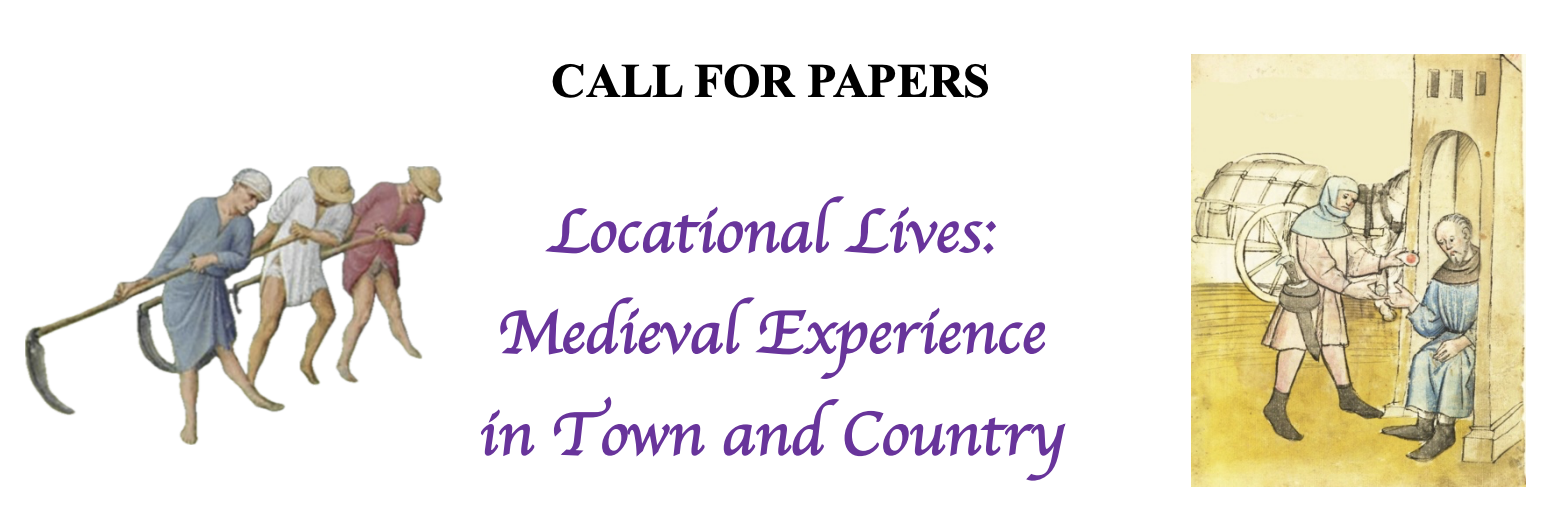
Locational Lives: Medieval Experience in Town and Country

Invitation to join the Graduate Centre of Medieval Studies at Reading on Thursday, 16th April 2026, for a postgraduate forum and discussion on understanding medieval life from the perspective of those in Town and those in the Country. Four sessions of 20-minute presentations followed by discussion on each topic area. Hybrid event in person and online – please register with Eventbrite.

10:00 -17:00 (Registration from 9:30; Lunch break 13:00 -14:00)

Session 1: The Impact of the Church on the Rural

  • The Templar estates in Gloucestershire, c.1308-1310
  • Hyde Abbey’s management of its estates in the localities around Winchester
  • The Network of Bishop Birinus: Religious Influence in the Upper Thames Valley

Session 2: The Rurality of Italy

  • ¨ The countryside and its changes during the Middle Ages in the Italian Peninsula
  • ¨ The emergence of rural communes in the Florentine hinterland
  • ¨ Regulating Transhumant Pastoralism in The Liber Augustalis

Session 3: Cities, Towns and Links with Wider Populations

  • ¨ Religious Fraternities dedicated to St Christopher in Town and Country
  • ¨ From Country to City: the London Artisan and the Art of Assimilation 1300-1520
  • ¨ Experiential Anthropogenic(ity): Locational Identities in Chaucer’s Wife of Bath’s Tale

Session 4: The Urban as seen in Manuscripts

  • ¨ Architecture: Representing the Urban Cathedral in Late Medieval French Manuscript Tradition
  • ¨ The visual representation of the ancient Russian ‘grad’ (city, fortress) in manuscript miniatures

TICKETS FOR BOTH IN PERSON AND ONLINE ATTENDEES AVAILABLE VIA EVENTBRITE: Please search ‘GCMS Eventbrite’ , or use this Eventbrite link

Medieval matter HT26, Week 7

Welcome all to week 7, and another packed schedule of events. The ‘Opportunities and Reminders’ section is growing particularly large, with a number of new additions – keep an eye out for CfPs and funding opportunities. The OMS blog continues to grow rapidly: Cris Arama (MSt. Medieval Studies) has recently written a report on Ian Forrest’s workshop.

Monday

  • French Palaeography Manuscript Reading Group – 10:30, Weston Library
  • Medieval History Seminar – 5:00, All Souls College. Jo Story (Leicester) “Insular manuscripts: why membrane matters” [Please note: this session will be in-person only, not hybrid – this is due to restrictions governing the sharing of unpublished data by grant partners].

Tuesday

  • EMBI workshop: ‘Reading’ manuscript membrane: bioarchaeology of early medieval books’ – 10:00, Weston Library. Requires pre-booking.
  • Latin Palaeography Manuscript Reading Group – 2:00, Weston Library (Horton Room). Those who are interested can contact the convenor, Laure Miolo.
  • Medieval Church and Culture, theme: TRANSLATION(S) – tea and coffee from 5:00, Harris Manchester College. Simon Heller (Lincoln) will be speaking on ‘Translation, Transformation, and Transmission: the case of the Old English Beowulf’
  • Old English Hagiography Reading Group – 5:15, Jesus College Memorial Room.
  • Medieval French Research Seminar – 5:15, Maison Française d’Oxford. Nathalie Koble (ENS Paris) will be speaking on ‘Sens et sentibilité. Pour une lecture multimédiale de la Dame à la Licorne (Musée de Cluny, Paris)’ .
  • Poetry Reading: Kevin Crossley-Holland – 5:30, St Edmund Hall. More information here.
  • Church Historian Pub Night – 6:00 at the Chequers Inn. Contact Rachel Cresswell

Wednesday

  • History and Materiality of the Book Seminar series – 2:15, Weston Library. Matthew Holford and Laure Miolo will be discussing Medieval Libraries and Provenance
  • Older Scots Reading Group – 2:30, Room 30.401 (Humanities Centre). Palyce of Honour, Thyrd Part, ll. 1288-2142 
  • The Medieval Latin Documentary Palaeography Reading Group – 4:00, online.
  • Islamic Studies Seminar – 5:00, Oxford Centre for Islamic Studies. Dr Moin Nizam will be speaking on ‘Transnational Ties of Faith: Imdadullah’s letters and writings from the Hijaz during the late-19th century’.
  • Late Antique and Byzantine Seminar – 5:00, Ioannou Centre for Classical and Byzantine Studies. Alasdair Grant (Hamburg) will be speaking on ‘Ubiquitous and Universal? Rebellion and State Formation between Byzantium and Early Islam’

Thursday

  • Middle English Reading Group (MERG) – 11:00, Lincoln College, Beckington Room. All are welcome as we read Sir Gawain and the Green Knight: bring any edition of the original text.
  • Heraldry Society – 5:00, Oriel College. Dr Beatrice Groves (Research Fellow, Trinity) will be speaking on ‘”Azure-laced / With blue of heaven’s own tinct:” Shakespeare’s heraldic language’.
  • Celtic Seminar – 5:15, Room 20.306 (Humanities Centre and Online). Emmet Taylor (Cork) will be speaking on ‘Heads, hierarchy and the heroic’
  • Old English Graduate Reading Group – 5:15. Email Harriet Carter for location.
  • The Khalili Research Centre For the Art and Material Culture of the Middle East: Research Seminar – 5:15, The Khalili Research Centre. Günseli Gürel (Khalili Research Centre) will be speaking on ‘Picturing marvels, magic and monsters at the Ottoman court, 1574–1603’.
  • Guild of Medievalist Makers – 5:30, online. Optional theme: regrowth.

Friday

  • Medievalist Coffee Morning – Friday 10:30, Visiting Scholars Centre (Weston Library). All welcome, coffee and insight into special collections provided.
  • The History of the Bible: From Manuscripts to Print – 12:00, Visiting Scholars Centre at the Weston Library. The theme this week is ‘Vernacular Bibles of the Middle Ages’. Places are limited. To register interest and secure a place, please contact the lecturer at Péter Tóth.
  • Exploring Medieval Oxford through Surviving Archives – 2:00, Weston Library (Horton Room). Those who are interested can contact the convenor, Laure Miolo.

Opportunities and Reminders