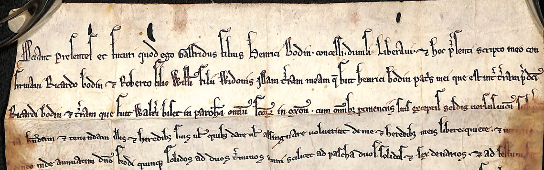
Exploring Medieval Oxford through Surviving Archives

Conference Report

by Louise Tjoline Keitsch (University of Freiburg, Research Intern with Henrike Lähnemann Hilary and Trinity Term 2026)

On 29 May 2026, the Weston Library hosted the one-day conference Exploring Medieval Oxford through Surviving Archives, organised by Laure Miolo and Matthew Holford and supported by the Centre for the Study of the Book. Bringing together students, early-career researchers, and established scholars, the event showcased research centred on medieval documents preserved in the Bodleian Libraries and the Christ Church archives: Claims, charters, letters and tenancy agreements.

The programme combined longer presentations by established Oxford academics with shorter papers by participants in the seminar, creating a productive dialogue between methodological reflection and original research. The keynote-style contributions by Natasha Jenman, Teresa Witcombe, Julian Munby, Richard Allen, and Dan Wakelin explored topics including the Queen’s Gold accounts of Eleanor of Castile, medieval Castilian archives, the documentary record of medieval Oxford, the cartulary and charters of the Hospital of St John the Baptist, and the challenges of working with late medieval letter collections (in that order). Together, these papers offered best-practice insights into archival research, palaeography, and the interpretation of medieval documentary sources.

The shorter presentations demonstrated the remarkable thematic breadth that a single archive can sustain. Papers addressed property ownership in thirteenth-century Oxford, the administration of religious houses, the lives of individuals at the margins of the historical record, and questions of legal practice, social obligation, and institutional memory. Several contributions drew on documents connected to the Priory of St Frideswide, whose extensive property interests across Oxford and the surrounding countryside formed a recurring thread throughout the day, while others highlighted the richness of individual charters, tenancy agreements, and parish records.

A particular strength of the conference was its sustained attention to medieval documents as material objects. Discussions addressed the challenges of transcription, the significance of seals and diplomatic features, and the interpretive possibilities opened up by close palaeographical analysis. This emphasis on materiality was complemented by an exhibition curated by the participants, displayed in two cases in the Weston Library, which presented a selection of the documents discussed during the conference and allowed attendees to engage directly with the archival material.

The conference highlighted the continued vitality of archive-based research in medieval studies and demonstrated the value of bringing together experienced scholars and emerging researchers to explore the rich documentary heritage of medieval Oxford. It offered an excellent example of how close engagement with archival sources continues to generate new perspectives on the medieval past.
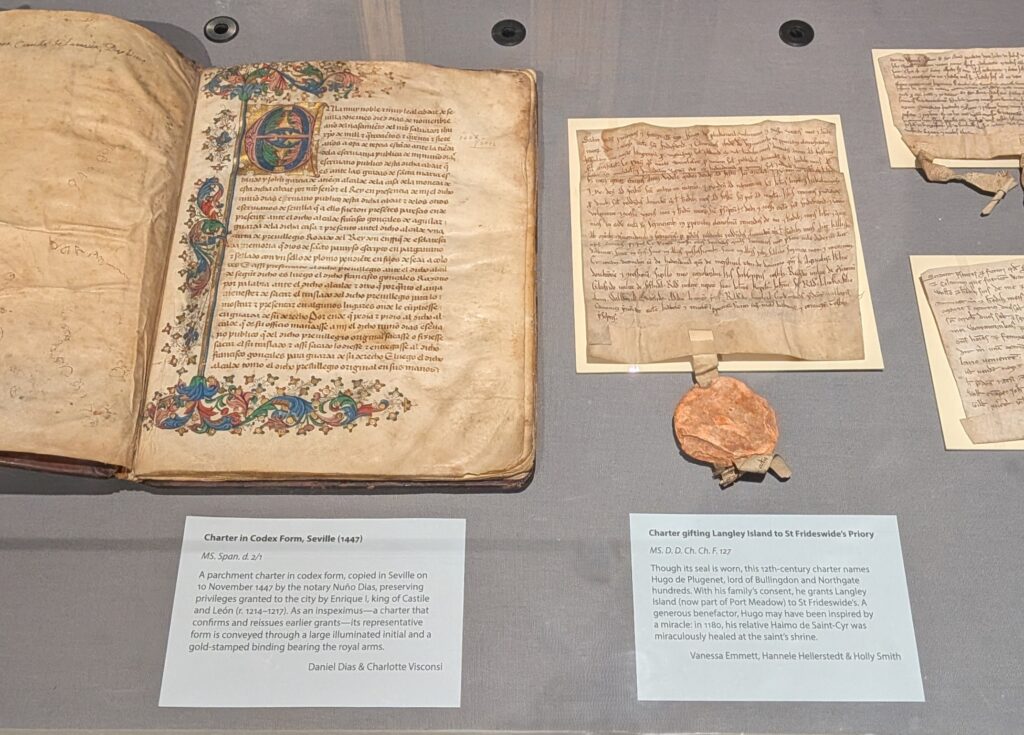
Exhibition curated by the students in the Weston Library (photograph: Louise Tjoline Keitsch)

Programme

Conference Friday 29 May 2026 – Weston Library
With an exhibition curated by the participants

9          Welcome Matthew Holford & Laure Miolo

9.15      Lauren Pidgeon & Deborah Seymour : An agreement between Agatha the widow and John Halegod

9.30      Emily Breithaupt & India Kelly: The Charter of Alice of Stokes

9.45      Alice Zhang & Annabel Brodersen: A Study of Christ Church F. 48: Property Ownership in Thirteenth-Century St Aldates, Oxford

10         Natasha Jenman (History, St Edmund Hall):  Jews in the Queen’s Gold Accounts of Eleanor of Castile

10.30     Marina Giraudeau & Philine Armbuster: Renting and Salvation: The Tenancy Agreement of Christ Church F. 17

11.15    Teresa Witcombe (History, Wadham College): Captives and slaves in medieval Castilian archives

11.45   Tabitha Claydon: At the “insistence” of an “intervening” king

12         Julian Munby (Conted, Oxford): Mapping medieval Oxford from the archives

12.45     Lunch

2          Richard Allen (Magdalen College): Towards a new edition of the cartulary and charters of the Hospital of St John the Baptist, Oxford

2.30      Kevin Hoff & Cara Nicholls: Christina Pady and the Priory of St Frideswide

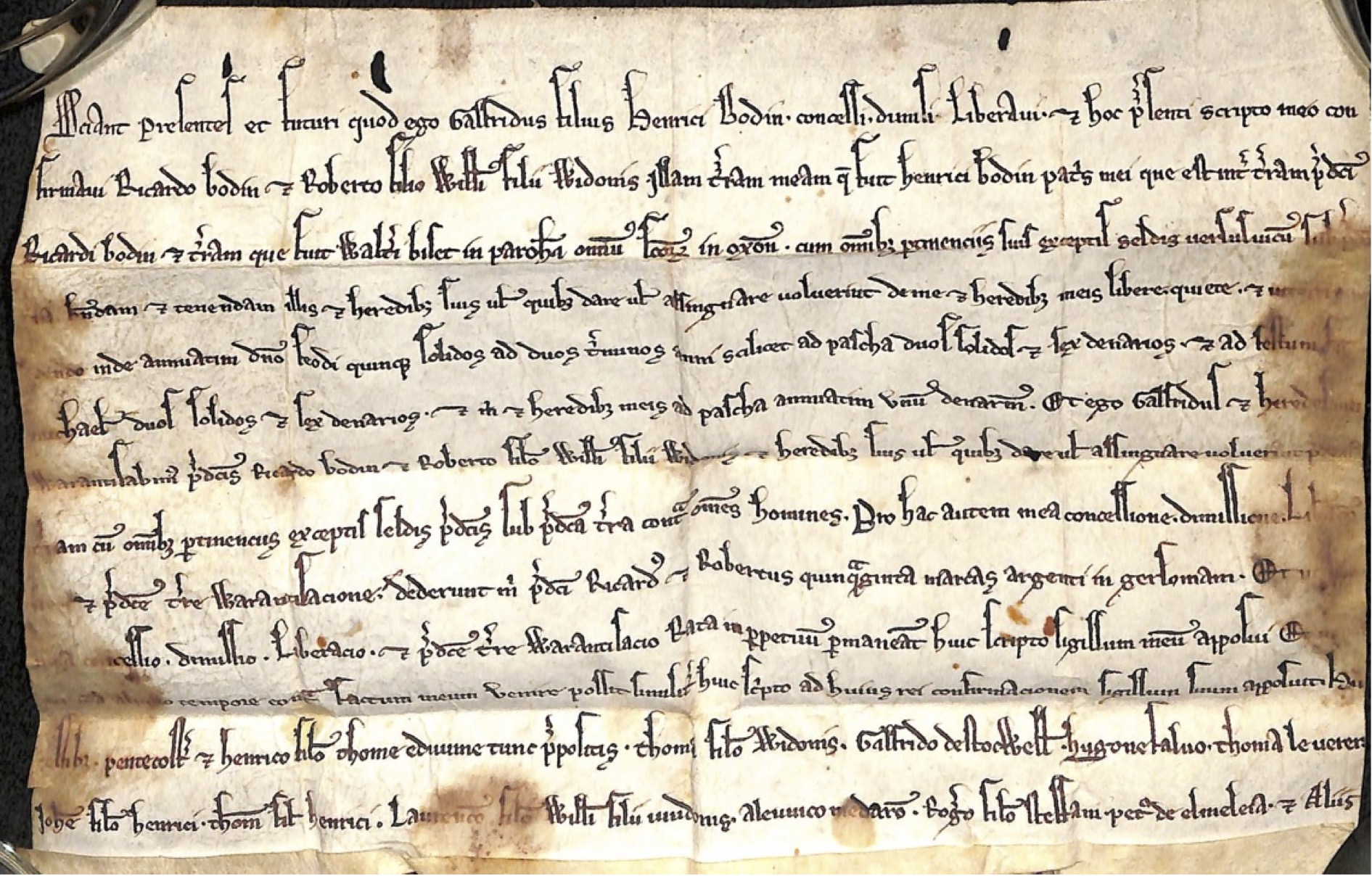
2.45      Hannele Hellerstedt, Holly Smith & Vanessa Emmet: Land and Legacy: The Life of Hugo de Plugenet

3          Louise Keitsch: Giving up (on) everything?

3.15      Yijia Wang& Luka Luhai: Cumin, Lamp, and Obligation: Making Continuity in a Medieval Oxford Parish.

3.30      Dan Wakelin (English Faculty, St Hilda’s College): Late medieval letters: disorderly archives

4.15      Daniel Dias & Charlotte Visconsi: Copying Amidst Conflict: Reproducing Castilian Law in the Wake of Civil War, (1437-1445).

4.30      End

This event is supported by the Centre for the Study of the Book.
Palaeography Offers in Michaelmas 25

There are a number of palaeography offers available for anybody interested in Oxford happening in Michaelmas 2025, coordinated by Dr Laure Miolo, Lyell Career Development Fellow in Latin Palaeography and Dilts Fellow at Lincoln College, historian of late medieval Europe, specialising in manuscript studies and history of early libraries with a special focus on scientific books and practices. Contact her for  any of the below under laure.miolo@history.ox.ac.uk.

Header Image: Lincoln College/EL/OAS/D1

  1. French Palaeography Manuscript Reading Group, Mo 10.30-12
  2. Exploring Medieval Oxford through Lincoln & Magdalen Archives, Fr 2-3pm
  3. Latin Palaeography Manuscript Reading Group, Tue 2-3.30pm

1. French Palaeography Manuscript Reading Group

This group is open to anyone with an interest in Old French, Middle French and Anglo-Norman manuscripts. We study and read manuscripts from the 12th century to the 16th century with a special focus on palaeography. We meet every Monday between 10.30am-12pm in the Weston Library. 

If you are interested in joining the group or would like more information, please write to Laure Miolo.

The seminar comprises brief lectures on the morphology and function of scripts, as well as the evolution of script shapes and graphic systems in context, followed by transcription practice using original manuscripts and documents. Sessions are structured around the historical development of scripts, progressing from simpler shapes and strokes with minimal ligatures and abbreviations to more cursive and complex forms. A study of the diverse scripts found between the twelfth and early sixteenth centuries in manuscripts and documents written in Old French, Middle French, and Anglo-Norman — and produced in various geographical areas —will allow participants to gain familiarity with a wide range of scripts and abbreviations. The reading of literary texts in parallel with the analysis of manuscripts and their scripts serves to complement both the lectures and transcription practice.

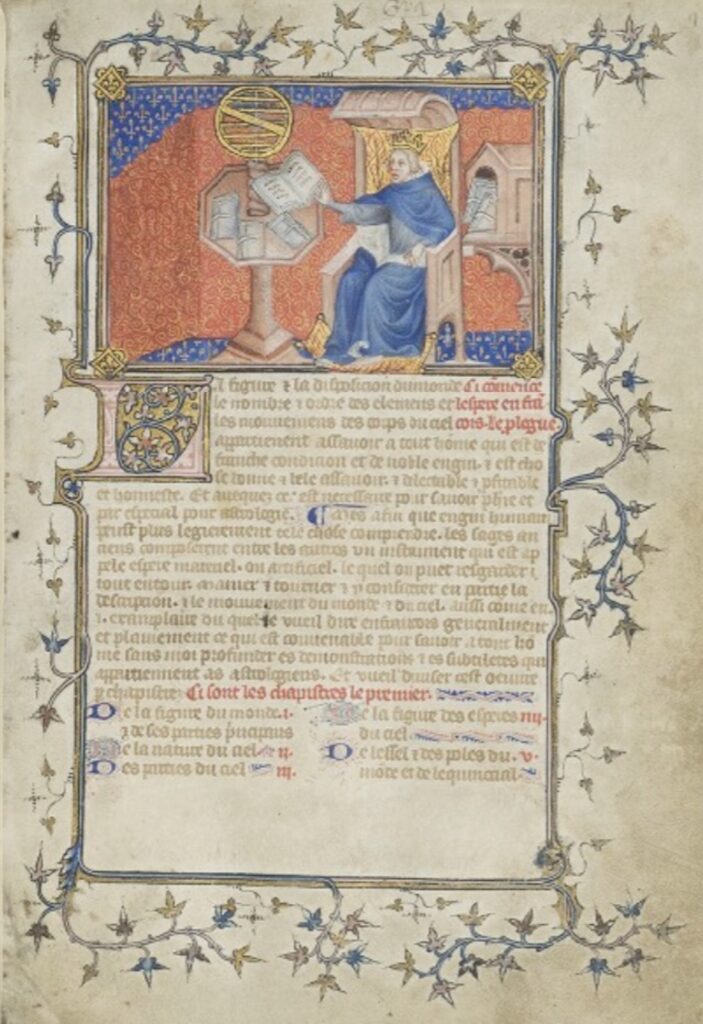
Oxford, St John’s College MS 164, fol. 1r

2. Exploring Medieval Oxford through Surviving Archives

Every Friday 2-3pm Weston Library (Horton Room)

This weekly one-hour seminar offers participants the opportunity to work directly with original documents from various Oxford parishes, held in the Bodleian Libraries. Focusing primarily on thirteenth-century deeds, these documents provide rich insight into everyday life in medieval Oxford. Open to undergraduates, postgraduates, and early career researchers, the seminar welcomes all those interested in working with primary sources and conducting in-depth contextual analysis of historical records

Working individually or in pairs on a self-selected original document, participants will closely examine its physical and material features (such as writing surface, layout, and signs of use), carry out transcription and translation, and identify the individuals and locations mentioned in order to situate the document within its historical context. Particular emphasis will be placed on the seals attached to the documents.

Alongside collaborative work on these unpublished or little-studied sources, participants will gain experience in the digitisation and cataloguing of archival materials, and will have the opportunity to present their research and original documents to a wider audience during a one-day workshop in Trinity Term.

This seminar is held at the Weston Library (Horton Room) in collaboration with Matthew Holford, Tolkien Curator of Medieval Manuscripts. Those who are interested can contact the convenor, Laure Miolo via email: laure.miolo@history.ox.ac.uk. Those who are interested can contact the convenor, Laure Miolo

3. Latin Palaeography Manuscript Reading Group

(advanced beginner, intermediate and advanced levels)

For those wishing to develop, deepen or maintain their skills in Latin palaeography, we meet every Tuesday between 2pm and 3.30pm in the Weston Library (Horton Room or Visiting Scholars Centre). We explore a wide variety of medieval manuscripts and documents dating from the 9th to the 15th centuries. Each session combines hands-on analysis of different scripts, abbreviations, and codicological features. Regular practice is key to building palaeographical skills and gaining confidence in reading a range of scripts, from clear book and documentary hands to more cursive and heavily abbreviated ones. This reading group is designed to introduce the essential features of each script and abbreviation, enabling participants to read and interpret manuscripts directly and with confidence. Those who are interested can contact the convenor, Laure Miolo

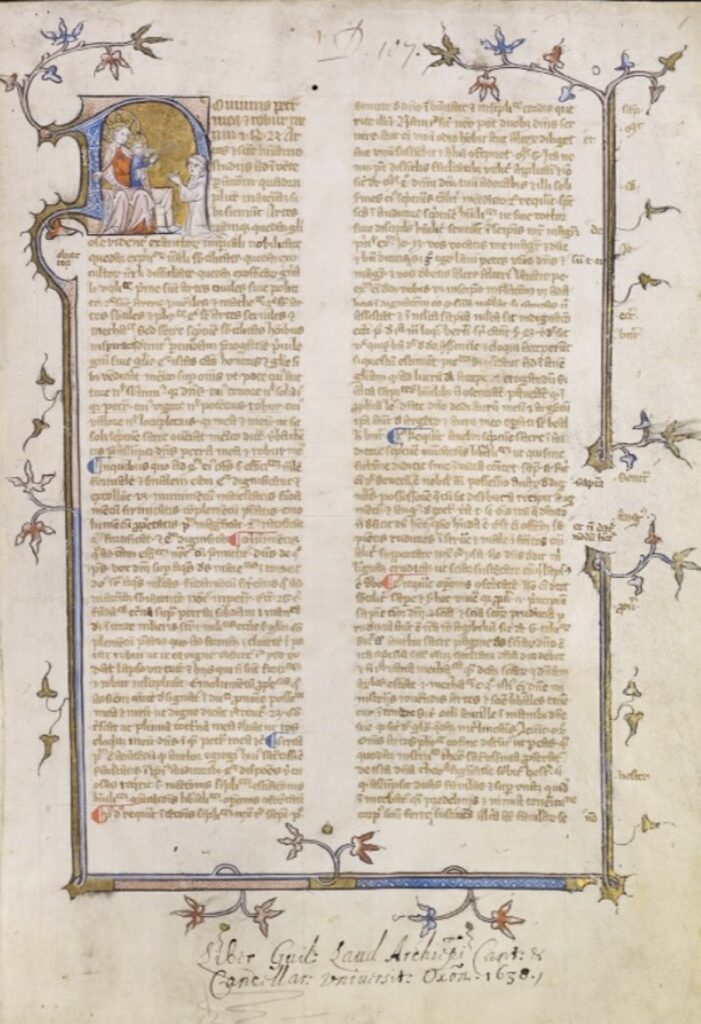
Oxford, Bodleian Library, MS. Laud Misc. 562, fol. 1r
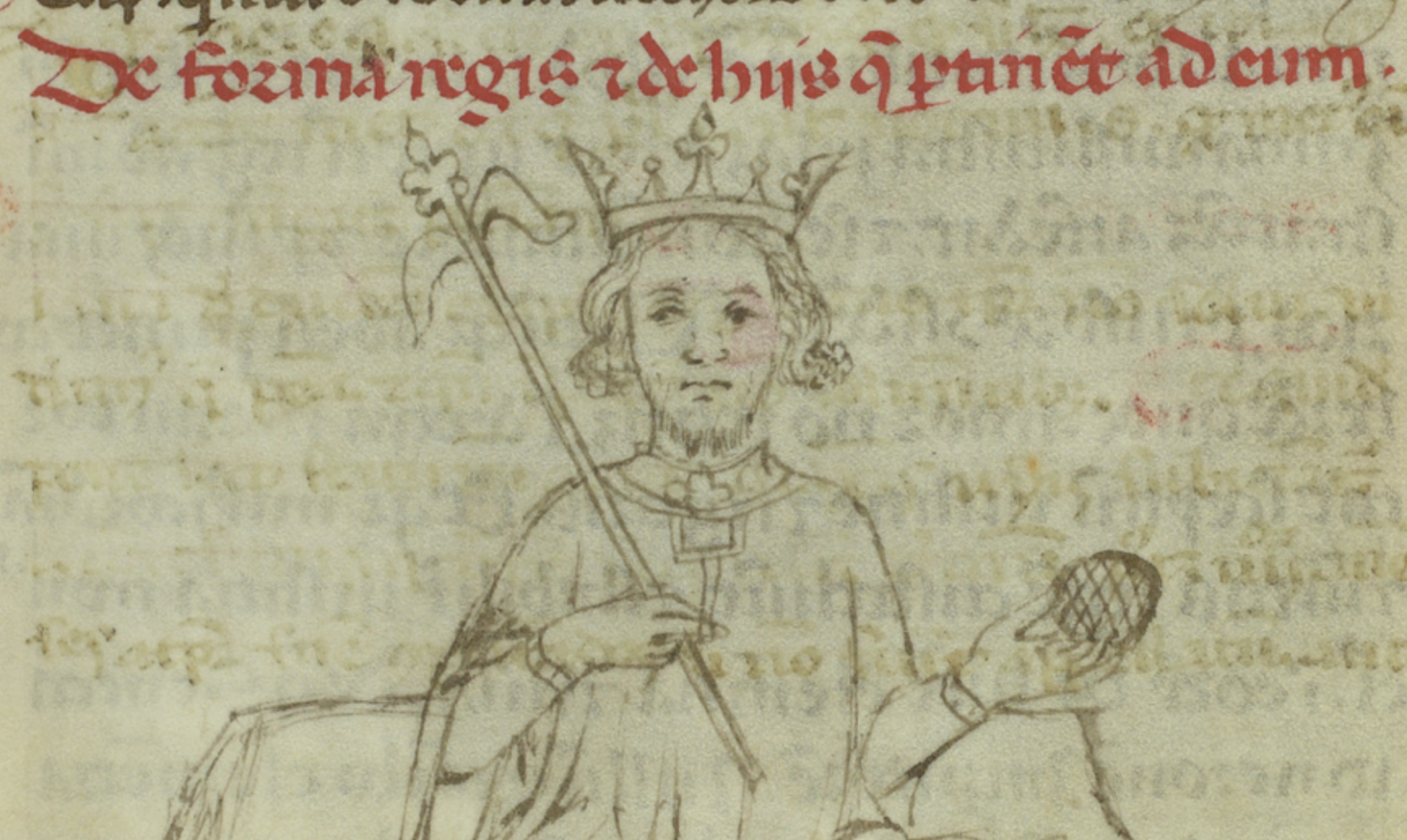
Penn’s LJS 267, De ludo schacchorum seu de moribus hominum et officiis nobilium, fol. 4r

Making the Medieval Archive: Celebrating Elizabeth A. R. Brown at Penn

September 12, 2025, 10:00am–7:00pm

Kislak Center for Special Collections, Rare Books and Manuscripts
Van Pelt-Dietrich Library Center, University of Pennsylvania, Philadephia
And online via Zoom

On September 12, 2025, the Kislak Center for Special Collections, Rare Books and Manuscripts at the University of Pennsylvania will host a day-long symposium commemorating Elizabeth (Peggy) A. R. Brown’s extraordinary legacy in the field of Medieval Studies. The event will also mark the official launch of the Elizabeth A. R. Brown Medieval Historians’ archive, a new initiative at Penn Libraries to collect the professional papers of scholars of the Middle Ages and of associated professional organizations. The goal of the symposium is to honor Peggy’s legacy and gift by celebrating research on her area of specialty, namely Medieval France.

The symposium will consist of three panels of short papers devoted to subjects featured in Peggy’s work: Source and ArchivePolitics and Kingship; and Liturgy and Sacred Image.

The day will also include an introduction to the research possibilities and historical interest of the medievalists’ archive at Penn, presented by the inaugural Elizabeth A.R. Brown Archivist, an endowed position in the Kislak Center for Special Collections, Rare Books and Manuscripts. The day will conclude with reminiscences by friends, students, and mentees, and a reception for all attendees.

Co-organized by Nicholas Herman (Schoenberg Institute for Manuscript Studies, Penn) and Ada Kuskowski (Department of History, Penn). Closing reception generously sponsored by the New York Medieval Society.

See here for event details, program, and abstracts.
For Registration, click here.
Donations to the Elizabeth A. R. Brown Medieval Historians’ Archivist Fund can be made here.
Public messages honoring Peggy Brown’s contributions to the field of medieval studies can be left here.

Introduction to Archival Research

From Domesday Book to the Leveson Enquiry, our historical records offer students a myriad of untapped research opportunities across a wide range of time periods and disciplines. With so many options, however, getting started in the archives can be a daunting prospect. Many students have questions which they are too afraid to ask. How will I know where to go? What do I need to bring with me? How do I find records for my research? How do I order documents? Do I need to use gloves? How can I be sure I’m not wasting my time?

To demystify the research process The National Archives has developed a programme of Archival Skills Training, providing students with the key skills and knowledge needed to undertake academic research using the archives.

This introduction day will explain how to get started with archival research, the importance of knowing the history and structure of a collection to navigate the records, and how to make the most of your time on site.

We will be running this one-day on-site training session on October 1 (BOOK HERE) and December 3 (BOOK HERE), with more sessions in the new year.

Thank you, and we look forward to welcoming you to The National Archives!
All the best,
Kath

Dr Kathryn Maude Team Leader, Medieval Specialists
T: 02083925369 | W: nationalarchives.gov.uk
Twitter: @krmaude @UkNatArchives |Pronouns: she/her
The National Archives, Kew, Richmond, TW9 4DU

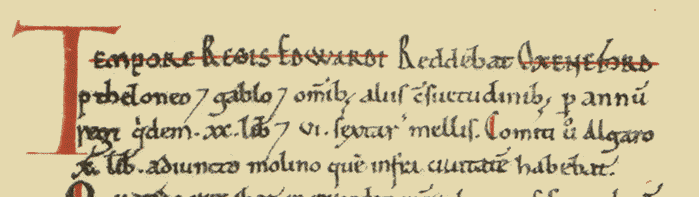
header image: A page of Domesday Book for Oxford, cf. the National Archives guide to the Domesday Book