Medieval Matters MT26, Wk1

It’s a new year! Welcome to all newcomers, and welcome back to the more seasoned members of the community. As always, we have a new booklet of events for this term. Please note the Oxford Medieval Studies Welcome Event this Tuesday at 5, held at Harris Manchester. Tea and Coffee provided, and a chance to meet new people and to get the term off to a great start!

Two further announcements: 1) Keep an eye open for anybody who would like to be on the mailing list (particularly new graduate students) – anybody from around the world can join by simply pressing the subscribe button on our homepage. 2) Consider writing a blog post announcing any event you are organising or about your research; see the blogpost on Peter Payne: A Forgotten Great European for the documentation on the fascinating Oxford character of the learned English Hussite Peter Payne (includes some recorded talks and a surreal animated film).

One final bit of housekeeping: if there are changes to the events after the email has been sent, we will update this both in the Google calendar and in the weekly blogpost on which the emails are based but won’t send round further emails to keep this a low-traffic mailing list.

Monday

  • French Palaeography Manuscript Reading Group – 10:30, Weston Library. If you are interested in joining the group or would like more information, please email the convenor Laure Miolo.
  • Greek Palaeography Manuscript Reading Group – 15:00, Horton Room Weston Library. Contact Péter Tóth for further details.
  • Medieval History Seminar: – 5:00, All Souls College. Erin Daley (Leicester) and Seth Stadel (AMES, Oxford) will be speaking on “Domestic Slavery and Sexual Exploitation in the Households of Late Antiquity: Conclusions and
  • Questions after Five Years of Collaborative Research’. Alternatively, see booklet to join online.
  • Medieval Latin Reading Group – 5.30pm in Merton College. The text this term is Ysengrimus.

Tuesday

  • Latin Palaeography Manuscript Reading Group – 2pm, Weston Library. Those who are interested can email the convenor Laure Miolo.
  • Byzantine Literature Lectures – 4:00, Kloppenburg Room, Exeter College.
  • Oxford Medieval Studies Welcome Event – 5:00, Harris Manchester College. Tea, coffee, biscuits, catching up and making new friends – everyone warmly welcome!

Wednesday

  • Medieval German Graduate Seminar – 11:15, Somerville College . This first meeting is a short planning session – the topics for the term will be Frauenlob, Kreuzleich and Minneleich. If you are interested to be added to the teams group for updates, please contact Almut Suerbaum
  • Byzantine Text Seminar – 3:00, Kloppenberg Room, Exeter College.
  • Old Norse Reading Group – 4:00. Please email Brooklyn Arnold for the location
  • The Medieval Latin Documentary Palaeography Reading Group – 4:00, online. To join and/or to find out more about this and the possibility of some hands-on experience of cataloguing such documents to develop further your research skills, please contact  Michael Stansfield.
  • Bede Reading Group – 6:00, Blackfriars. Bede, wine, and merriment – all are welcome.

Thursday

  • Middle English Reading Group (MERG) – 10:00, Beckington Room, Lincoln College. The text this year is Troilus and Criseyde. Bring any edition of the original text! There will be tea and biscuits. For more information or to be added to the mailing list, please email Rebecca Menmuir.
  • Medieval English Research Seminar – 12:15, room 00.018 in the Humanities Centre. Nicola McDonald (York) will be speaking on ‘Writing exercises, pious and obscene, in Oxford, University College, MS 142’.
  • Older Scots Reading Group – 3:00, Room 30.401 in the Humanities Centre. No preparation required. All are welcome. There may be snacks!
  • Celtic Seminar – Room 00.056 in the Humanities Centre and online. Mary-Ann Constantine, Elizabeth Edwards, Rhys Kaminski-Jones & Ffion Mair Jones will be speaking on ‘Thomas Pennant 300: Launching new digital editions of the Tours in Wales (1778 & 1781)’.
  • Compline in the Crypt – 9:30, St Edmund Hall

Friday

  • Medievalist Coffee Morning – 10:30, Weston Library. Laura Cracknell will be speaking on ‘History of photography at the Bodleian’. Coffee and tea provided
  • Exploring Medieval Oxford through Surviving Archives – 2:00, Magdalen College. As space is limited, registration is required. Those interested in participating are invited to contact Laure Miolo

Opportunities (see booklet for more info)

  • Call for Readers of Early New High German for the launch of a Hans Sachs dialogue on 30 October. More information
  • Call for Committee Members: Oxford Medieval Graduate Conference 2027 – contact oxgradconf@gmail.com.
  • OMS Small Grants open. Closing date for applications: Friday of Week 4. More information.
  • Medieval Afterlives: Cultural Programme Open Call – investment of up to £10,000, see booklet.
  • The Multicultural Middle Ages podcast proposal for 6th season. Applications are due October 15th.
  • Medieval Manors Research Network/Provost’s Postdoctoral Fellowship Program at the University of Notre Dame. Art (History), English, German / Slavic / Eurasian, History and Philosophy of Science, Initiative on Race and Resilience, Philosophy, Romance Languages, Theology; international applications and medievalists welcome!
  • Publishing with the Journal Manuscript and Text Cultures – see booklet for details.
  • John W. Baldwin Post -Doctoral Fellowship. A two-year position beginning July 1, 2027, for recent Ph.D. recipients whose work focuses on European medieval studies within a global comparative context. The application deadline is November 13, 2026 .
Peter Payne: A Forgotten Great European

Peter Payne: A Forgotten Great European was an international workshop taking place at St Edmund Hall, Oxford, 30 September – 1 October 2026, co-organised by Elizabeth Solopova, Henrike Lähnemann, Hannah Schühle-Lewis and James Howarth. The workshop was generously funded by a grant from the John Fell Fund awarded to Elizabeth Solopova and Hannah Schühle-Lewis, supported by St Edmund Hall and the Bodleian Centre for the Study of the Book, and organised in association with ‘Medieval Vernacular Bibles as Unity, Diversity and Conflict‘, funded by the Arts and Humanities Research Council and Deutsche Forschungsgemeinschaft as part of the UK-German Funding Initiative in the Humanities.

Focussing on an outstanding individual, the workshop explored connectedness in European cultural development and the emergence, as a result of joint artistic and scholarly endeavour, of modern local and common European identity. Contact the organisers: Elizabeth Solopova and Hannah Schühle-Lewis.

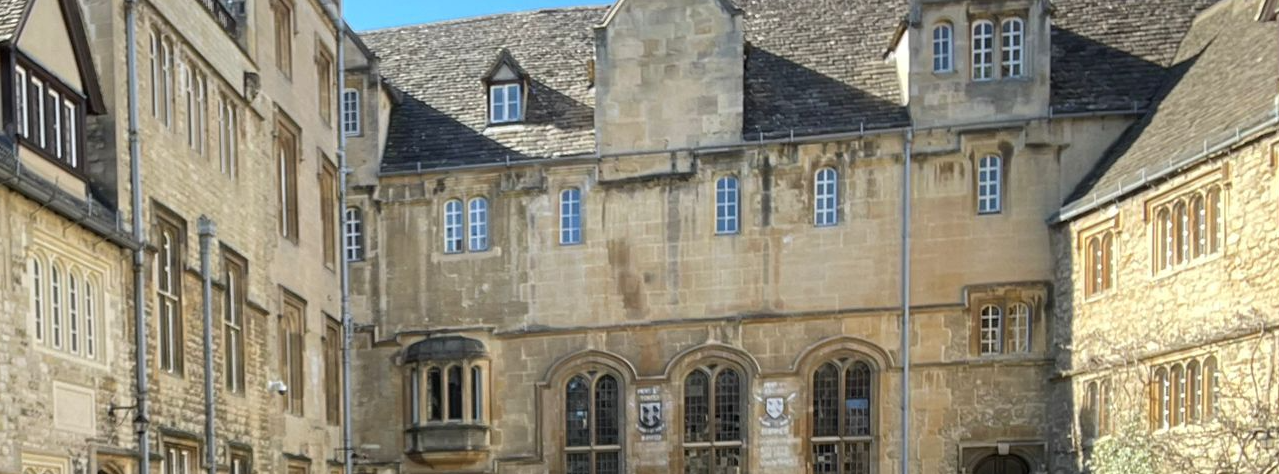
Peter Payne, the Principal of St Edmund Hall

Peter Payne (d. 1455/6?), referred to as ‘Peter Engliss’ in Bohemia, was an outstanding scholar, theologian, diplomat and an international figure. His career spans two universities and several European countries. He started to study at Oxford shortly before 1400 and became a highly outspoken supporter of the reformist theologian John Wyclif (d. 1384). Payne became the principal of St Edmund Hall in 1410.

Payne participated in some of the most famous events of the Wycliffite movement in England. Medieval evidence suggests that he introduced Sir John Oldcastle (d. 1417), the rebel and Lollard leader, to Wycliffite ideas. He also met two Bohemian scholars, Mikuláš Faulfiš and Jiří of Knínice, who came to England to copy Lollard texts, and provided them with a letter, bearing the university seal, affirming that Wyclif was an outstanding scholar and never condemned for heresy. The letter was taken to Prague and published in 1409 by Jerome of Prague. Jerome was later burned at the stake with Jan Hus, leader of the Bohemian reform movement, after their condemnation at the Council of Constance in 1414. Peter Payne may have acted as an intermediary in the correspondence between Hus and the English Wycliffites.

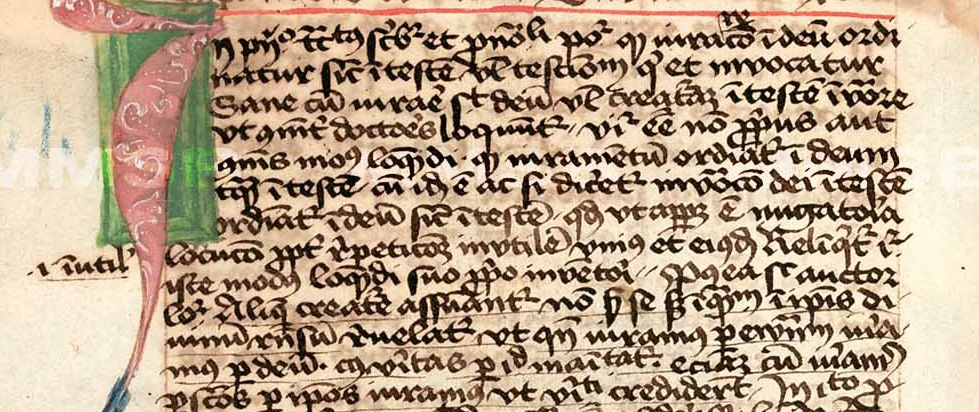
Peter Payne, Tractatus de iuramento, Prague, National Library of the Czech Republic MS V.F.2. Image provided by Manuscriptorium.

Payne left England in 1413 to avoid prosecution and travelled to Germany and possibly Switzerland, meeting with representatives of the European reform movement including a Waldensian emissary, Friedrich Reiser. He settled in Prague in 1414 and became a highly prominent member of the Hussite movement. He authored several theological and polemical treatises, compiled high quality indices of Wyclif’s works, and was registered as a Master of Arts at Prague University, where he acted as a teacher and examiner. His authority, as an English Wycliffite and defender of the Hussite doctrine, was so great that the city of Prague chose him as a principle speaker of several Hussite delegations to King Sigismund of Germany and Bohemia, and to King Władysław of Poland in 1420 and later. A skilful diplomat, he acted as a go-between and impartial adviser to different Hussite groups. He was elected to defend Hussite positions in a debate with Catholic clergy in 1429 and at the Council of Basel in 1433. The positions included utraquism (the idea that communion should be administered to the laity in the same form as to the clergy); free preaching of God’s word; and clerical poverty. He continued to be in danger throughout his career: arrested in 1438, he was imprisoned and ransomed by Hussite towns. Despite this he remained a public figure, acting as a negotiator and respected arbitrator in doctrinal disputes among the Hussites into the early 1450s. He is presumed to have died in Prague.

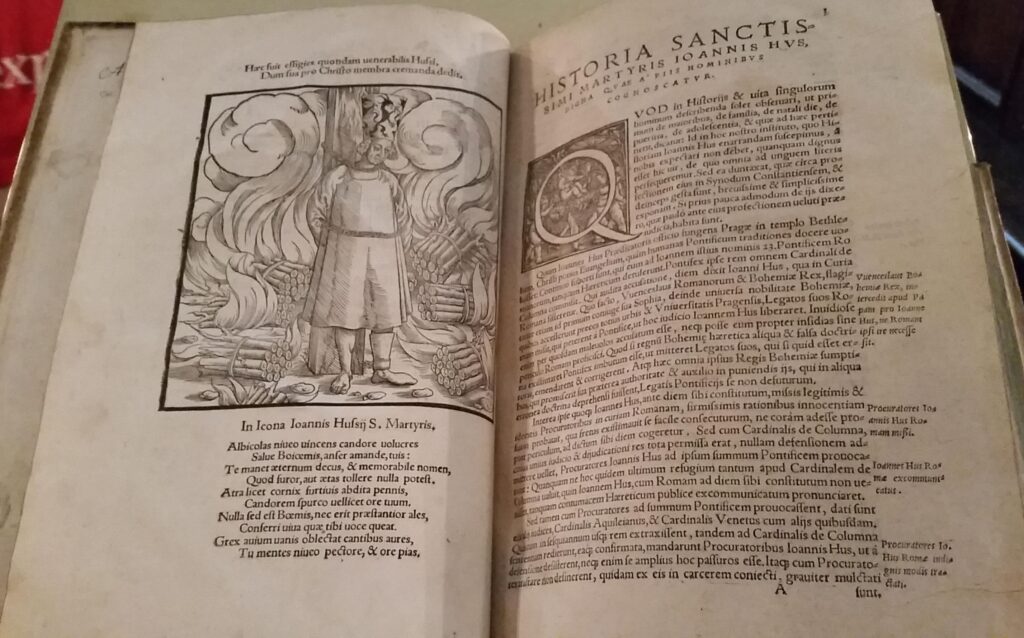
The burning of Jan Hus in the St Edmund Hall copy (Old Library QQ 23) of the first complete edition of his works which will be on display during the conference. VD16 H 6154

European connectedness

Peter Payne is an iconic figure of the university milieux and religious reform movements in England and Europe: a scholar and an exceptionally brave and dedicated intellectual reformer. He is less known and studied than he deserves, and this is emphasised in the workshop’s title, paraphrasing the title of his biography published by James Baker in 1894 (‘a forgotten great Englishman’). He is a perfect example of the European connectedness evident in all aspects of medieval culture.

Our focus on an individual

The workshop’s focus on a relatively well-documented individual, rather than on groups or social categories, such as Wycliffites and Hussites, is an important methodological point. The study of medieval religion is first of all the study of the written tradition, with texts acting as the sources of information about ideas. We want to supplement this approach with emphasis on the experience of writers and users of texts, bringing a real individual to life, and giving him a chance to speak and be heard. Without the study of experience, materiality and everyday practices we get a limited picture of medieval life, including religion, education, scholarship and travel. The focus on an individual will allow us to make observations on how a change of material and cultural environment influenced the formation of national and European identity.

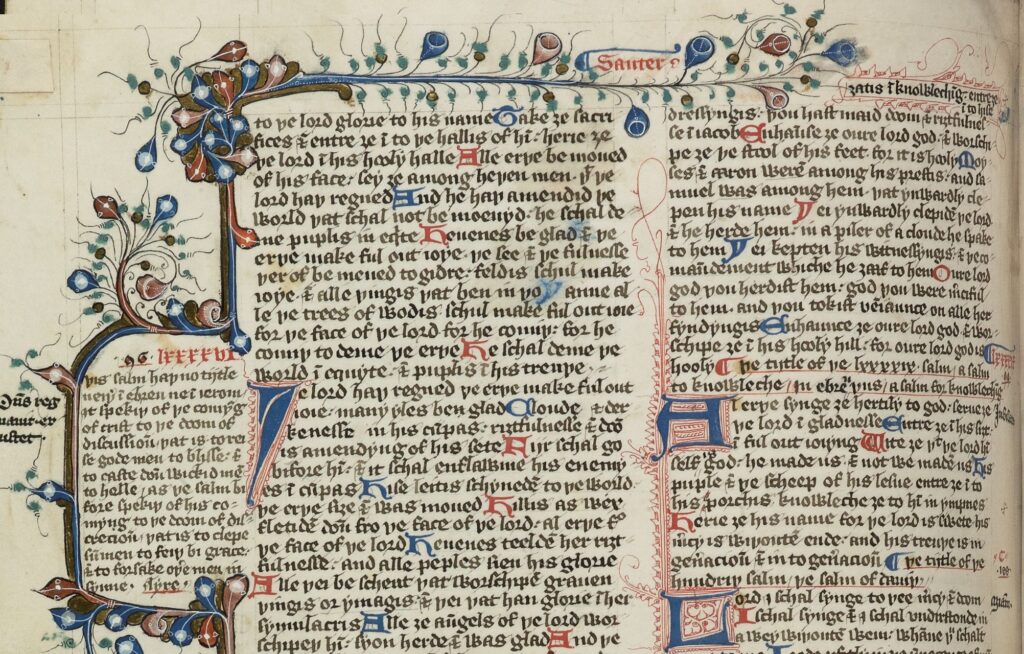
Wycliffite Bible, Oxford, Bodleian Library MS Bodl. 277

Programme

29 September

Arrival at St Edmund Hall. Dinner at a restaurant.

30 September

9am-10.30am: St Edmund Hall, Old Dining Hall

Chair: Elizabeth Solopova (University of Oxford)

  • Katherine J. Willis (Principal of St Edmund Hall), Henrike Lähnemann and Elizabeth Solopova (University of Oxford), Welcome
  • James Howarth (University of Oxford), ‘“At Oxford he called himself Peter Clerk”: Peter Payne as Principal of St Edmund Hall’
  • Michael Kuczynski (Tulane University), ‘Payne on Paper: The London and Prague Copies of Peter Payne’s Testimonial to Wyclif’
  • Ondřej Fúsik (Charles University and National Library of the Czech Republic) and Kristýna Loušová (National Library), ‘Peter Payne Manuscripts in the National Library of the Czech Republic’

10.30am: Coffee

11am-12.30pm: St Edmund Hall, Old Dining Hall

Chair: Vladimir Agrigoroaei

  • Pavlina Rychterová (Austrian Academy of Sciences), ‘Peter Payne and John of Pribram’
  • Dušan Coufal (Centre for Medieval Studies, Institute of Philosophy of the Czech Academy of Sciences and Charles University), ‘Peter Payne’s Treatise De Iuramento in the Hussite Discourse on the Oath’
  • Martin Dekarli (University of Hradec Králové), ‘Notes on Peter Payne’s Notabile de trinitate increata’

1-2pm: Lunch at St Edmund Hall

2.15pm Book display at the Old Library, St Edmund Hall

3pm Excursion to Godstow Abbey and Binsey church

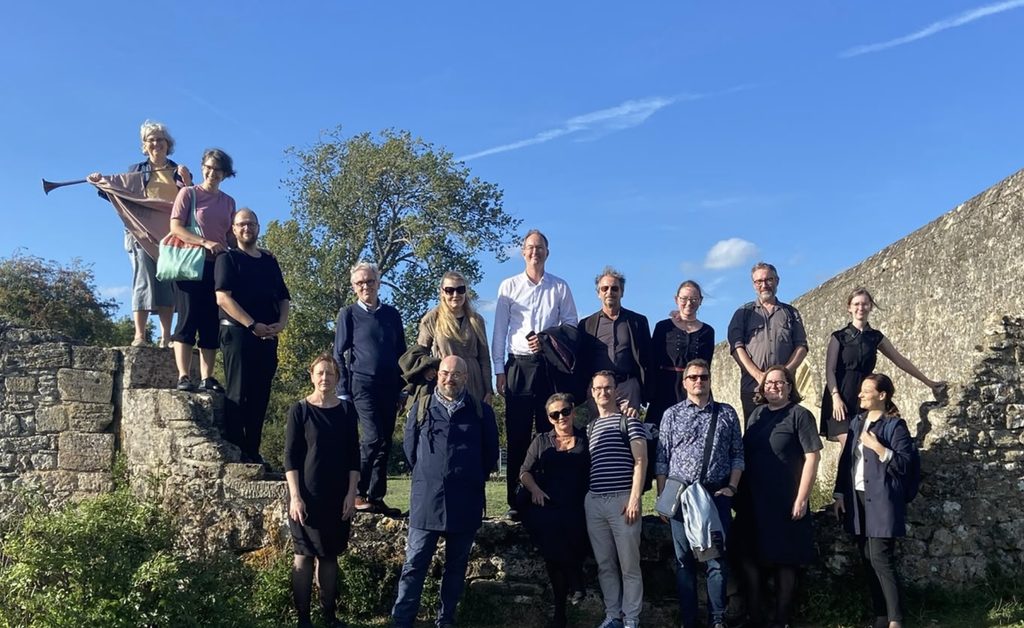
The Peter Payne Workshop participants among the ruins of Godstow Abbey

Evening: Pub dinner

1 October

9am-10.30am: St Edmund Hall, Old Dining Hall

Chair: Manfred Kern (University of Salzburg)

  • Vladimir Agrigoroaei (CNRS / Centre for Medieval Studies, Poitiers), ‘How Constantine Platris, the English Czech of Constantinople (1452), Came to be Confused with Peter Payne’. Consisting of a playful rewriting of the bibliography, incorporating the various conjectures that have been proposed and attempting to make sense of them, and a research paper, explaining the hypotheses incorporated into the video
  • Ana-Maria Gînsac (Institute of Interdisciplinary Research, Alexandru Ioan Cuza University of Iași), ‘Iași and the Transmission of the Constantinople-Prague 1452 Dialogue: Dositheos’s 1698 Edition’
  • Ágnes Korondi (Fragmenta et Codices Research Group of the Hungarian Research Network, National Széchényi Library), ‘English Saints in Two Hungarian Calendars and the Anglo-Hungarian Relations during the Later Middle Ages’

10.30am: Coffee

11am-12.30pm: St Edmund Hall, Old Dining Hall

Chair: Pavlina Rychterová (Austrian Academy of Sciences)

  • Kateřina Voleková (Charles University / Czech Language Institute), ‘Representations of Foreign Reformers in Hussite-Era Topical Songs’
  • Hannah Schühle-Lewis (University of Oxford), ‘Late-Medieval English Oath Discourse and Peter Payne’s de Iuramento’
  • Elizabeth Solopova (University of Oxford), ‘England and Europe: the Calendar of the Munich Manuscript of the Hussite Bible and the Wycliffite Mammotrectus’

1–2pm Lunch at St Edmund Hall

3pm–4.30pm: Open Lecture (Bodleian Library Lecture Theatre) – all are welcome!

Chair: Michael Kuczynski (Tulane University)

  • Michael van Dussen (McGill University), ‘Peter Payne’s Europe’

In the early 15th century, when English Church officials were closing in on the expanding Wycliffism, a proto-Protestant reform movement, Peter Payne, once Principal of St Edmund Hall, fled the country to begin a remarkable career in Central Europe. He became Wyclif’s surrogate in Bohemia and one of the leading representatives in nearly every Hussite delegation, including at the Council of Basel. This talk shows how Payne navigated his delicate situation in Europe and, in the process, gained a reputation (or notoriety) as an emblem of European Wycliffism. Today Payne remains an iconic figure of cross-linguistic and cross-cultural connectedness in European intellectual life and social development.

Bodleian manuscripts featured in the post-talk Show & Tell session:

  • Linc. Lat. 106 (Netter, Doctrinale fidei catholice, vol. 2)
  • Linc. Lat. 118 (Gascoigne, Liber de veritatibus, the second part)
  • Bodl. 55 (Floretum)
  • Tanner 86 (containing Juan Palomar’s Replicacio to Payne’s defense at Basel)

7pm: Conference dinner at St Edmund Hall, Old Dining Hall

9pm: Multilingual compline in the Norman Crypt of St-Peter-in-the-East (library church of St Edmund Hall)