The Cambridge Medieval History Graduate Workshop welcomes papers of 20 minutes, to be submitted by 17th April 2026.

The Cambridge Medieval History Graduate Workshop welcomes papers of 20 minutes, to be submitted by 17th April 2026.
The OMS emails will be put on brief pause over the vac, although the blog will be continually updated with new events. Please see below a number of important opportunities and reminders before term starts. Of particular note to those interested in early medieval England (and who amongst us doesnt fall into that category) is the British Library’s upcoming PhD placement on the Norman Conquest. Applications are open for three PhD placements which will support the development of our upcoming major exhibition on the Norman Conquest, marking the 1,000th anniversary of the birth of William the Conqueror. Apply by Monday 6 April 2026. Apply by Monday 6 April 2026.
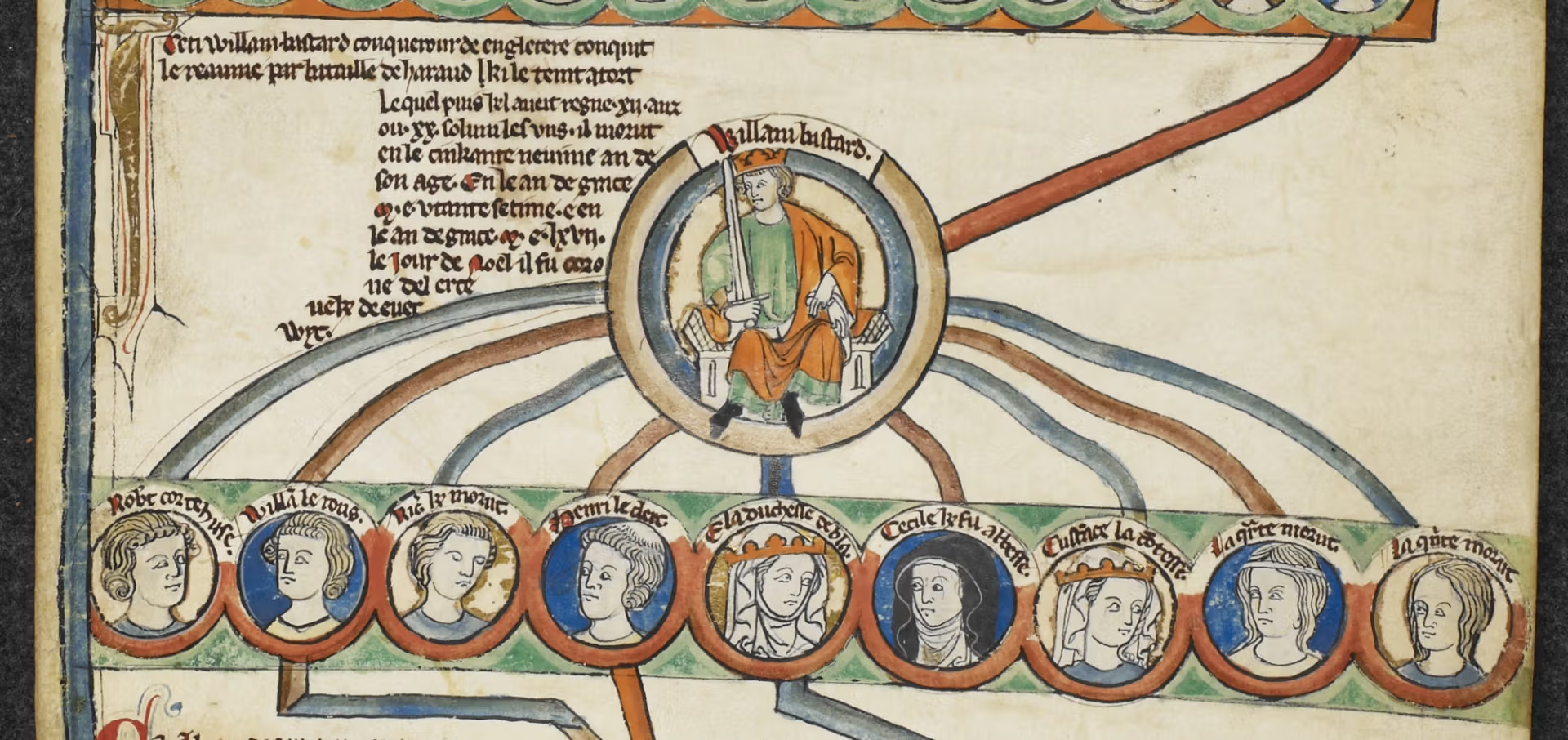
Application are open for three PhD placements which will support the development of our upcoming major exhibition on the Norman Conquest, marking the 1,000th anniversary of the birth of William the Conqueror. Apply by Monday 6 April 2026.
This placement will be hosted by the Ancient, Medieval and Early Modern Manuscripts team at the Library. This team curates the extensive national collection of British and European manuscripts dating from Antiquity to 1600, actively making these collections accessible through cataloguing, digitisation and exhibitions. Curators in the section have led major Library exhibitions including Medieval Women: In Their Own Words (2024–25); Elizabeth and Mary: Royal Cousins, Rival Queens (2021–22); Anglo-Saxon Kingdoms: Art, Word, War (2018–19); Harry Potter: A History of Magic (2017–18) and Magna Carta: Law, Liberty, Legacy (2015).
The Library is currently developing a major exhibition on the Norman Conquest which will run from 1 October 2027 to 27 February 2028, to mark the 1,000th anniversary of the birth of William the Conqueror in 1027. The exhibition will span two generations either side of the Conqueror to explore the history, art and culture of England from the early 11th century to the middle of the 12th century. It will draw on our extremely strong collection of historical and illuminated manuscripts from this period, together with a large number of manuscripts and museum objects on loan from collections in Britain and Europe.
The placement student will be supervised primarily by the co-curator of the exhibition and will assist with key tasks in the development of the exhibition.
The students will assist with the varied tasks involved in developing the exhibition, including but not limited to:
Friday 9th June, at 10:00
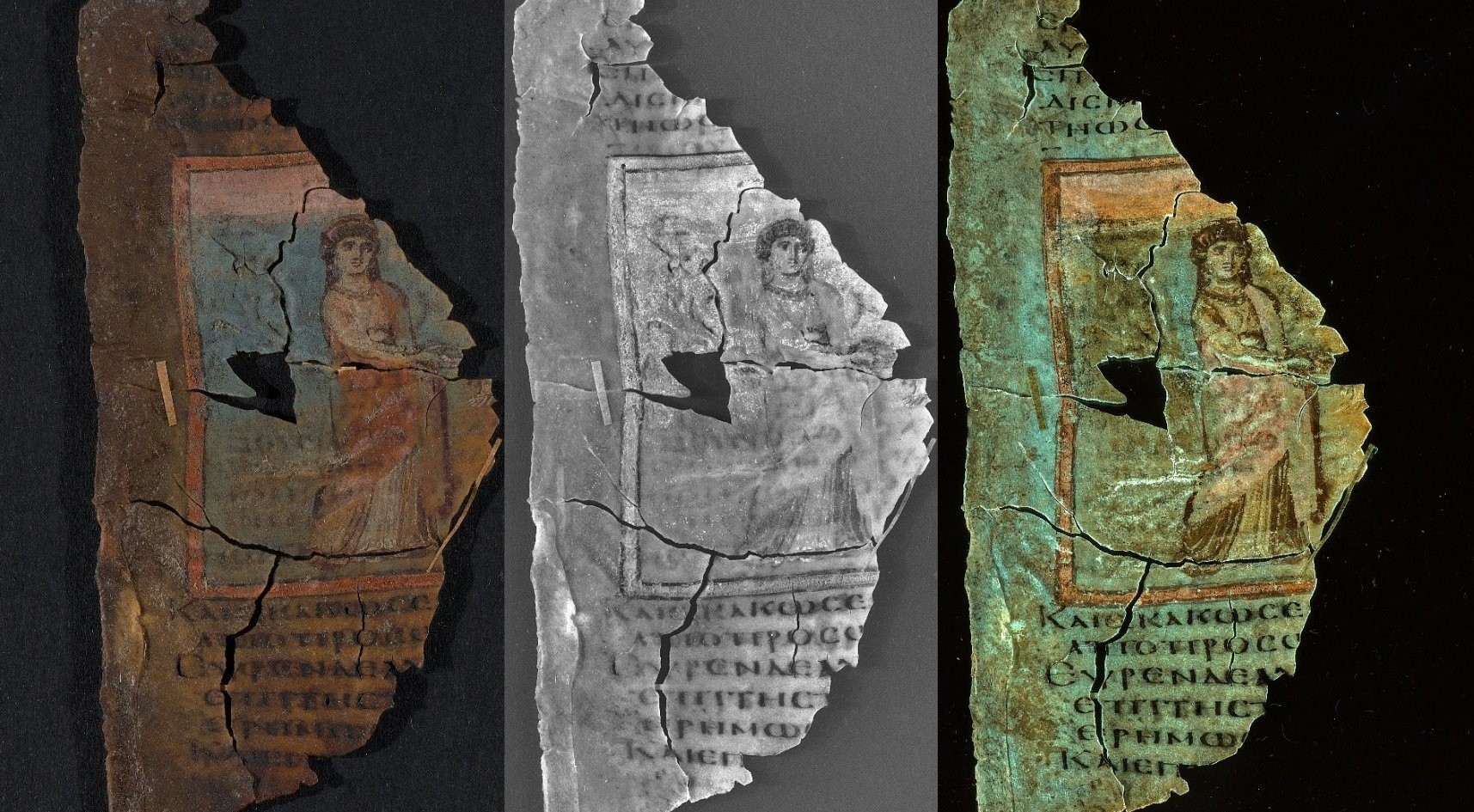
The British Library recently undertook a new multispectral digitisation campaign of the Cotton Genesis (British Library, Cotton MS Otho B VI), one of the greatest works of manuscript art to survive from late Antiquity and one of the most tragic casualties of the Cotton Library fire of 1731. The new imagery made visible parts of the manuscript unseen since the fire. Pages that look black to the naked eye now reveal portions of readable texts; illuminations that look like blocks of colour now show layers of paint, brush strokes, and fold outlines. This opens exciting opportunities for new research on this manuscript, which is a significant witness both of an influential late-antique visual tradition and of the text of the Septuagint. The British Library will celebrate the launch of the multispectral images of the Cotton Genesis on its website with an interdisciplinary conference fully dedicated to the manuscript: Multispectral Gaze: New Approaches to the Cotton Genesis.
View the full programme and register here.
Supported by the Paul Mellon Centre for Studies in British Art and the Association for Manuscripts and Archives in Research Collections (AMARC).
Thank to support from AMARC, five free student tickets are available. To apply, please contact elena.lichmanova@bl.uk and e.zingg@hist.uzh.ch.
A workshop on editing texts from medieval Britain
The Early English Text Society for graduate students and early career scholars.
Featuring: Richard Dance, Ralph Hanna, Kathryn Lowe, William Marx, Ad Putter, and Susan Irvine.
St Hilda’s College, Oxford
11.00 a.m. – 5.00 p.m.
Saturday 18 April 2026.
£20 for members of the EETS,
£34 for non-members.
Lunch and refreshments will be provided free
For registration or membership of the EETS, contact Dr Daniel Orton at eets@ell.ox.ac.uk
It is possible to obtain the members’ discount by joining at the time of registration. Website EETS
University of Oxford – 30 March 2026
L1 Lecture Theatre 10.300 Stephen A. Schwarzman Centre for the Humanities, Radcliffe Observatory Quarter, Woodstock Road, Oxford, OX2 6GG, Faculty of English Language and Literature, University of Oxford
Registration is now closed for this event, which is sold out.
08.30–9.00: Welcome and Registration
09.00–10.30: Session 1: Early Prose (chair: Tom Revell)
Samuel Cardwell (University of Nottingham), ‘The Earliest English Sentence? Old Northumbrian psalm glosses in MS Pal. Lat. 68‘
Maura McKeown (University of Oxford), ‘The Four Senses of Scripture and the Vespasian Psalter Glosses‘
Emily Kesling (University of Bergen), ‘The Old English Exhortation to Prayer and the “Mercian Prefacing Tradition”‘
10.30–11.00: Tea and coffee break
11.00–12.00: Session 2: Putting Prose in its Place (chair: Helen Appleton)
Christine Rauer (University of St Andrews), ‘Assigning Mercian Texts to Places and Individuals‘
Tristan Major (Pontifical Institute of Mediaeval Studies), ‘Old English Prose at Winchester, c. 940–c. 1100‘
12.00–12.15: Comfort break
12.15–13.00: Keynote 1 (chair: Francis Leneghan):
John Hines (University of Cardiff), ‘Syntax, Style and Semiotics: How Anglo-Saxon Inscriptions help to frame and define Old English Prose‘
13.00–14.00: Lunch break [sandwich lunch provided]
14.00–15.30: Session 3: New Contexts for Alfredian Prose (chair: Amy Faulkner)
Nagore Palomares (University of the Basque Country), ‘Weaving the Vernacular: Tracing Frankish Influences in Old English Texts‘
Alice Jorgensen (Trinity College Dublin), ‘Gesceadwisnes in the Alfredian Prose Translations‘
Eleni Ponirakis (University of Nottingham/UCL/University of Oxford), ‘Swa swa leof on treowum: Eriugena and the Alfredian Solioquies‘
15.30–16.00: Tea and coffee break
16.00–17.30: Session 4: Repurposing Prose (chair: Jasmine Jones)
Courtnay Konshuh (University of Calgary), ‘Missing Ealdormen: Editing Chronicle Prose‘
Claudio Cataldi (University of Palermo), ‘Rewriting Christianisation in King Edgar’s Establishment of the Monasteries‘
Gabriele Cocco (University of Bergamo), ‘From Cloak to Allegory: Christian Adaptations in the Old English Apollonius of Tyre‘
17.30–17.45: Comfort break
17.45–18.30: Keynote 2 (chair: Niamh Kehoe):
Luisa Ostacchini (University of Oxford), ‘Thinking Global, Acting Local: The Old English Martyrology’s Worldview and Mercian Prose Composition‘
18.30: Drinks Reception and Book Celebration
20.00: Conference Dinner
09.00–10.30: Session 5: Prose beyond the Pulpit (chair: Francis Leneghan)
Stefan Jurasinski (SUNY Brockport), ‘Beyond Wulfstan: The Homiletic Element in Old English Legislation‘
Anine Englund (University of Oxford), ‘Revisiting the Old English Soul-and-Body Homilies‘
Elaine Treharne (Stanford University), ‘Women Readers (and Writers?) of Old English Prose‘
10.30–11.00: Tea and coffee break
11.00–12.00: Session 6: Inclusion and Exclusion, Then and Now (chair: Hannah Bailey)
Juliet Mullins (University College Dublin), ‘Ignored and Obscured: “Behind the Scenes” of Ælfric´s Lives of Saints‘
Rebecca Stephenson (University College Dublin), ‘Weeding out the Danes: An examination of gardening metaphors in Latin and Old English prose texts describing Viking attacks and/or religious conversions‘
12.00–12.15: Comfort break
12.15–13.00: Keynote 3 (chair: Amy Faulkner):
Daniel Anlezark (University of Sydney), ‘West Saxon Prose from Alfred to Ælfric‘
13.00–14.00: Lunch break [sandwich lunch provided]
14.00–15.30: Session 7: Wulfstan’s Style (chair: Rachel A. Burns)
Winfried Rudolf (University of Göttingen), ‘Wulfstan’s Autograph Homily on Baptism and Its Echoes‘
James Titterington (University of Oxford), ‘Prose in Progress: Tracing Wulfstan’s Intellectual Development through Autograph Evidence‘
Thomas A. Bredehoft (Chancery Hill Books), ‘Wulfstan’s Prose‘
15.30–16.00: Tea and coffee break
16.00–17.30: Session 8: Saints and Sinners (chair: Niamh Kehoe)
Claudia Di Sciacca (University of Udine), ‘Gūþ-Lāc vs Se Ealda Fēond? New Directions in the Demonology and Angelology of Gulthlac’s Old English Prose Tradition‘
Susan Irvine (University College London), ‘The Bridge as a Penitential Motif in Old English Prose‘
Corinne Clark (University of Oxford), ‘Fashioning fragmentation in the Corpus Christi MS 303 Life of St. Margaret‘
17.30: Close
Organising committee: Helen Appleton (Oxford), Rachel A. Burns (Oxford), Amy Faulkner (UCL), Niamh Kehoe (Oxford), Francis Leneghan (Oxford)
Contact: Francis Leneghan
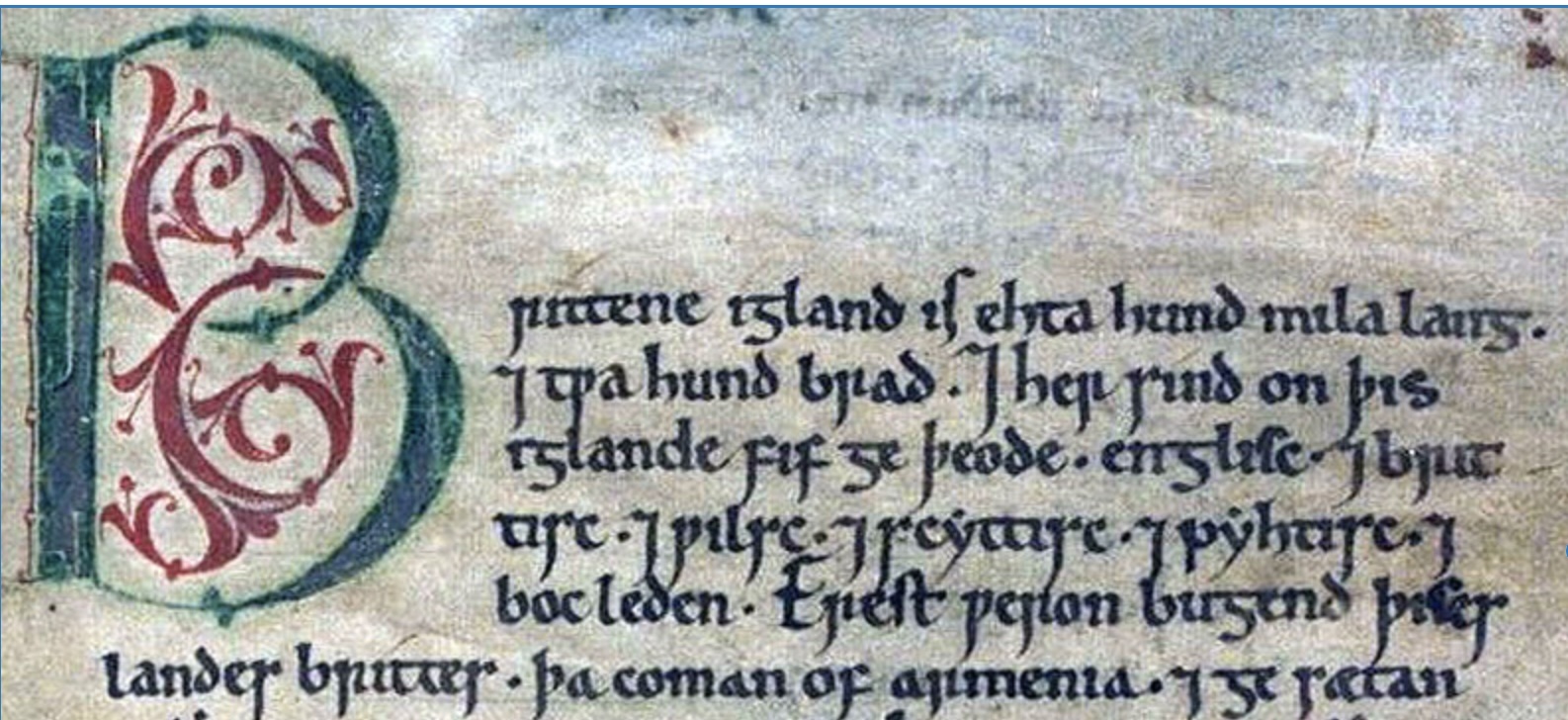
Header image: Peterborough Chronicle
29 May 2026, German Historical Institute in London
Organised by the German Historical Institute London and the German History Society
Commentators: Henrike Lähnemann (Oxford) & Christian Jaser (Kassel)
Convenors: Thomas Kaal (GHIL) and Marcus Meer (UCL)
9.30 Session 1 (Chair: Thomas Kaal)
11.00 Coffee & Tea
11.30 Session 2 (Chair: Marcus Meer)
13.00 Lunch
14.00 Session 3 (Chair: Thomas Kaal)
15.00 Session 4 (Chair: Gabriele Passabi)
16.00 Coffee & Tea
16.30 Session 5 (Chair: Marcus Meer)
17:30 End
18:00 Conference Dinner
Students and researchers interested in medieval German history are very welcome to attend and listen to the presentations. There is no charge for attendance, but pre-booking is essential due to limited capacity. If you would like to attend as a guest, please contact Kim König.
This one-day workshop on the history of medieval Germany (broadly defined) offers an opportunity for researchers from Europe and the wider English-speaking world to meet at the German Historical Institute in London. Participants will be able to discuss their work in a relaxed and friendly setting and to learn more about each other’s research.
Proposals for short papers of 10–15 minutes are invited from researchers at all career stages with an interest in any aspect of the history of medieval Germany. Participants are encouraged to present work in progress, highlight research questions and approaches, and point to yet unresolved challenges of their projects. Presentations will be followed by a discussion.
Participation is free of charge and includes lunch and dinner. The GHIL and the GHS will also provide a contribution towards travel expenses. Accommodation costs cannot be reimbursed. Support is available for postgraduate and early career researchers: up to £150 for travel within the UK (excluding London) and up to 300€ for an economy round trip from Europe. Please indicate your interest in travel support in your application.
We look forward to reading your proposals. Please send your submission—which must include a title, an abstract of c.2000 words, and a biographical note of no more than c.1000 words—to Thomas Kaal: t.kaal@ghil.ac.uk. Questions about all aspects of the workshop can also be sent to Marcus Meer: m.meer@ucl.ac.uk.
In celebration of the quincentenary of the first Yiddish printing (the 1526/7 Agode of Gershom ben Salomon Kohen of Prague), please join us at the University of Oxford on the 4th–6th of October for a symposium on Yiddish printing, broadly defined.
Papers and workshops will be on the topics of Yiddish printing (letterpress & otherwise), book & publishing history, type design & production, printed images, orthography & linguistics of the printed word, &c. Other topics are included as they relate to Yiddish printing history and practice.
The deadline for submissions of abstracts for papers (~20 minutes) and workshops has now passed. Any inquiries (or late submissions, within reason) may be submitted to Giovanna Truong.
A link for conference registration will be released on this page. Stay tuned!
Conference Programme:
We have made it, at long last, to the end of another Hilary term – but the events don’t stop coming! Please find below another week full of medieval events for you to enjoy, and an ever-increasing list of future opportunities. NB: the Maison Française d’Oxford lecture this Tuesday has had to move earlier and is now at 12:00.
Monday
Tuesday
Wednesday
Thursday
Friday
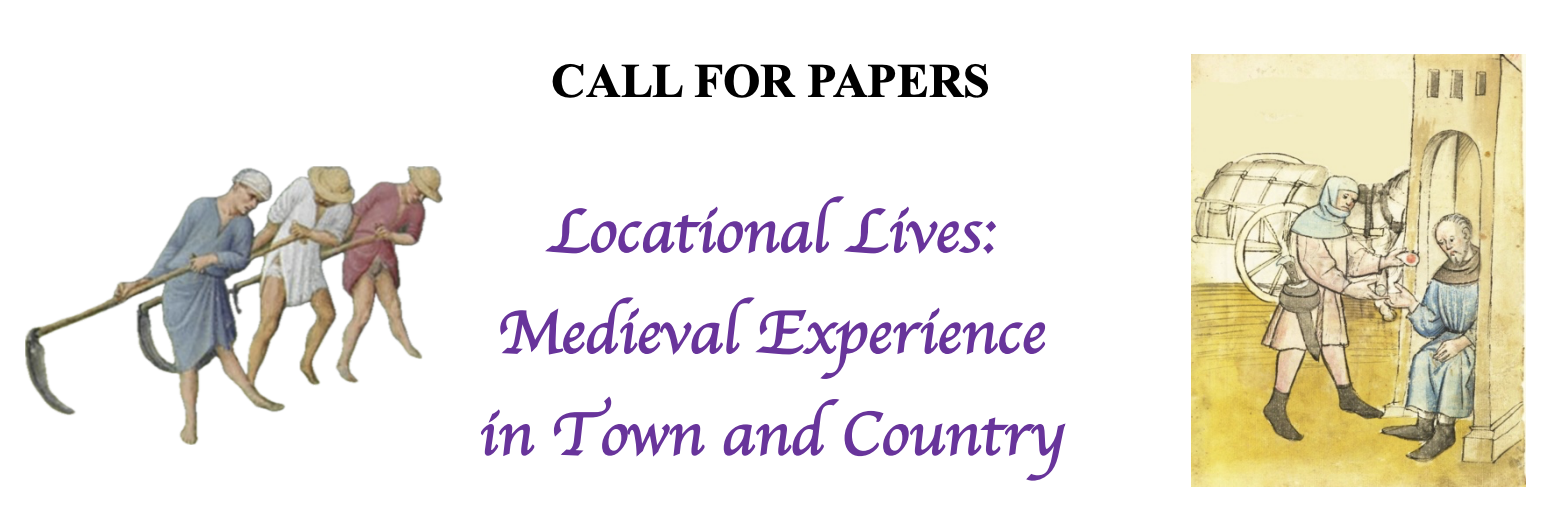
Invitation to join the Graduate Centre of Medieval Studies at Reading on Thursday, 16th April 2026, for a postgraduate forum and discussion on understanding medieval life from the perspective of those in Town and those in the Country. Four sessions of 20-minute presentations followed by discussion on each topic area. Hybrid event in person and online – please register with Eventbrite.
10:00 -17:00 (Registration from 9:30; Lunch break 13:00 -14:00)
Session 1: The Impact of the Church on the Rural
Session 2: The Rurality of Italy
Session 3: Cities, Towns and Links with Wider Populations
Session 4: The Urban as seen in Manuscripts
TICKETS FOR BOTH IN PERSON AND ONLINE ATTENDEES AVAILABLE VIA EVENTBRITE: Please search ‘GCMS Eventbrite’ , or use this Eventbrite link