Searching for History. A Workshop with Ian Forrest

by Cris Arama (MSt. Medieval Studies)

Report on the workshop for the graduate students of the MSt. in Medieval Studies: ‘Fragments and photographs: what are we doing when we try to get close to medieval people?’ which started using examples from medieval records and Ian Forrest’s account of publishing with the photographer Martin Stott https://martin-stott.com/argehane-books/bartlemas-oxfords-hidden-sanctuary/

How do you find someone who lived in a leper hospital in Oxford nine hundred years ago? Not find them in the sense of retracing their biographical data—but stepping into their world, breathing life into their form. Founded by Henry I in 1126, the hospital of St Bartholomew, known as Bartlemas, cared for countless residents over the centuries. In addition to its beginnings as a leprosarium, it has acted as an almshouse, hosted a nursery between 1956 and 2009, and now fosters a culturally-diverse community, offering occasional services in its chapel.

What would it have felt like to step through Bartlemas in 1126, the moans of the ill reverberating into the night? What would it have felt like to reach for the supposed reliquary of St Bartholomew’s skin, desperate for the certainty of healing? These are the sort of questions Ian Forrest brought to the workshop held on February 20th 2026 at the Schwarzman Centre. It was inspired by the recent book ‘Bartlemas: Oxford’s Hidden Sanctuary’ (2025), in which an essay by Prof Forrest accompanies nearly a hundred photographs by Martin Stott of Bartlemas and its surroundings.

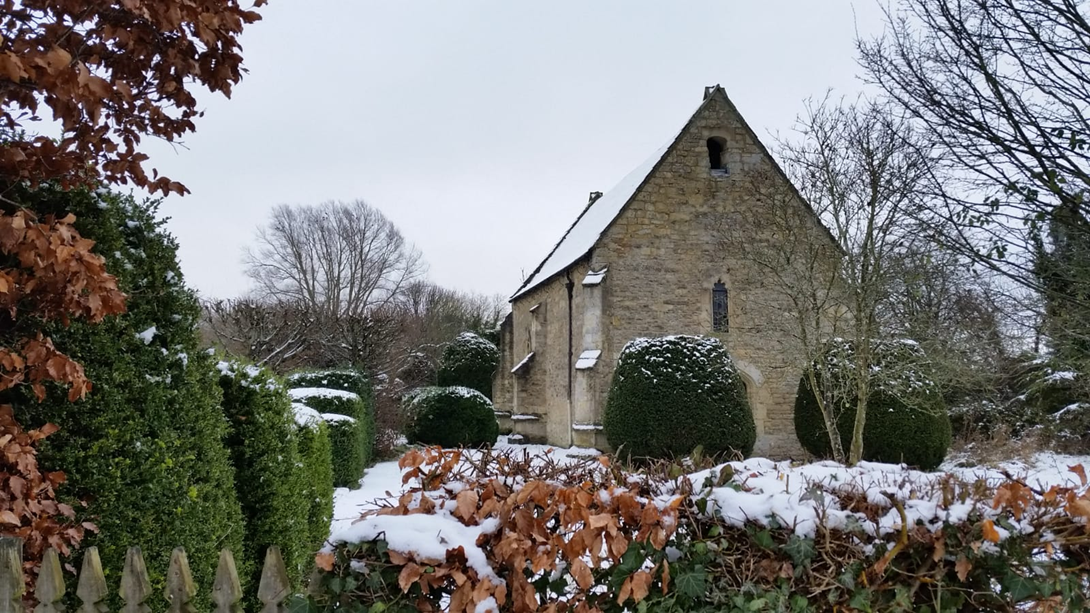
Together, we leafed through the photographs of Bartlemas as it exists today—the chapel rebuilt in the 17th century, the garden which has likely witnessed nine hundred years of continuous tending, and Muslim men kneeling in prayer, not unlike the countless Bartlemas brothers before them. Looking through the photographs, I was struck by two overlapping impressions: on the one hand, the vibrancy of the life which has been unfolding at Bartlemas for centuries; on the other, the ghostly absence of the countless people who spent their lives here. You would almost expect their memory to have left behind some physical trace, akin to geological layers. But it did not. We are left only with sparse biographical, financial and administrative records. Do they do justice to the richness of humanity that these people had? As historians, can we do more?

We discussed whether alternative ways of ‘doing’ history might help us achieve that. We started with a recent photo of a gardener at Bartlemas, a scythe propped on his shoulder. Perhaps taking a closer look at life in such spaces today, and finding echoes of the past in it, might help us to better imagine the full life of someone who lived there long ago. Henrike Lähnemann brought to the discussion a similar approach, sharing an interview she took at a German convent tracing its origins to Medieval times. Watching the Abbess of Kloster Lüne speak, her face lit in a kaleidoscope of warm yellows, blues and greens from the stained glass above her, it was not difficult to imagine a Medieval nun stepping softly through the same light. Nevertheless, looking at the experience of a place in the present can inform, but not elucidate, that of the past.

In an effort to fill in these gaps, we can also turn to the writings or even artwork left behind. For instance, as Henrike Lähnemann pointed out, it was commonplace for medieval German nuns to not only write prayer books, but to also illustrate them. Their humanity peeks out through the careful brush-strokes and the painstaking process which merged prayer with creation, the spiritual with the material. In manuscripts from Medingen Abbey, the pieces of gauze sometimes used to veil illuminations were likely of the same material of the nuns’ headdresses. When we examine such manuscripts, in which the creator and the creation are intertwined, we are brought closer to the person behind that process.

Lastly, we discussed the potential of fiction to capture the humanity of people long gone. It could allow us to step into the life of a resident at Bartlemas in the 12th century, imagining their routine of ointments and prayer, and perhaps their moments of wavering faith. We could imagine the deep ache in the shoulders of a nun at Medingen after a day spent hunched over parchment, sharpening her quill and watching flecks of gold float in the air after an illumination. In this sense, fiction could open the possibility for a truer account of human experience than what we can glean from sparse historical records.

There is no clear answer to this dilemma. If we stick too closely to historical data, we risk losing the fullness of humanity against the hard edges of fact. If we rely too much on imagination, we risk treading too far into speculation, ending up misrepresenting the very people we sought to understand.

Perhaps there is value in the act itself of asking these questions, as Ian Forrest guided us to do. Perhaps we begin to do justice to the unreachable past simply by paying attention to it.


Picture: Bartlemas Chapel (off Cowley Road) in Winter (Henrike Lähnemann 2020)
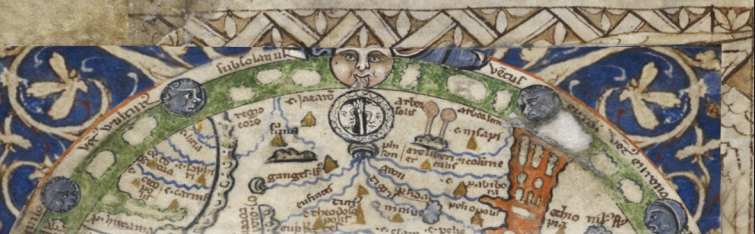
Borders, Boundaries and Barriers: Real and Imagined in the Middle Ages

20 and 21 April 2026 in Oxford

From the Call for Papers

Borders, Boundaries, and Barriers have become increasingly prominent themes in historical scholarship. Over the last decade, these concepts have been the focus of sustained scholarly interest, drawing especially upon theoretical frameworks and (trans-)national contexts. There is, therefore, a pressing need to examine how these constructs have shaped the lived experiences of historically marginalised groups, as well as how they were perceived, defined, and engaged with by those groups.

This conference seeks to reorient discussions around borders, boundaries, and barriers by foregrounding the experiences and perspectives of marginalised groups and considering how these divisions were perceived fromthe peripheries of societies. Rather than treating these concepts as abstract or solely geopolitical, we will explore the ways in which they have operated — both historically and historiographically — as tools of exclusion and differentiation.

Organised by Natasha Jenman (University of Oxford), Naomi Reiter (QMUL), and Dean A. Irwin (University of Lincoln/OCHJS), the conference will focus on individuals, religious groups, social groups, societal constructions, and natural phenomena. Participants are invited to explore the role played by evolving borders, boundaries, and barriers in the medieval world as part of group identities; and how groups used them to their advantage. Likewise, it will consider the extent to which borders, boundaries and barriers have been imposed upon the medieval world by modern scholars. Possible topics for consideration include, but are not limited to:

  • Legal jurisdictions
  • The natural and the supernatural worlds
  • Socio-economic strata
  • Ritual and religion
  • Space, time, and the environment
  • Gender and sexuality
  • Disability
  • Transgression, delinquency, and the grey middle space

This conference adopts a broad chronological and geographical approach with submissions from all historically-related disciplines being welcome. The conference will take place on 20 and 21 April 2026 in Oxford. To submit, please send a title, abstract (c. 250 words), and a bio (c. 100 words) to: bordersboundariesbarriers@gmail.com. Any questions should be directed to the same e-mail address.
The organisers hope to be able to offer a limited number of bursaries for students and those on low income. Please indicate in your proposal whether you would like to be considered for
one of these if this becomes possible.

Image ref: Latin Psalter (13th-15th C), f.9 – BL Add MS 28681,


Kevin Crossley-Holland Reading

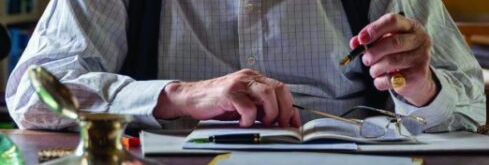
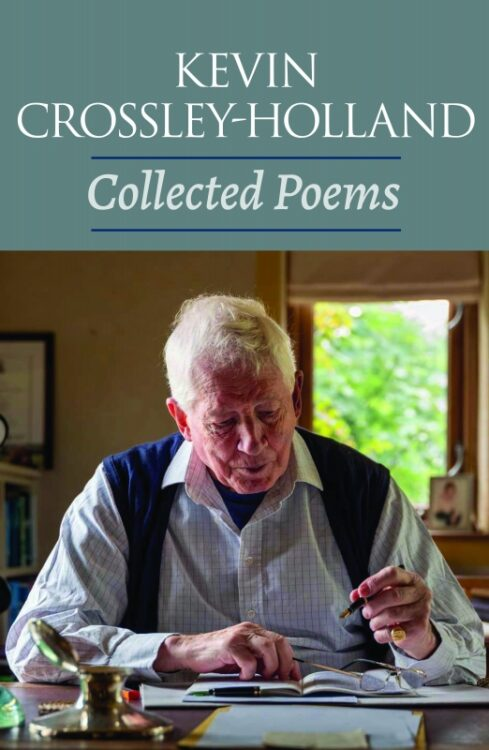
Kevin Crossley-Holland will be reading from his newly-published Collected Poems in the Old Dining Hall at St Edmund Hall on Tuesday 3 March at 5:30pm.

Bringing together over five decades of work. Collected Poems celebrates one of Britain’s most admired and enduring voices. Kevin Crossley-Holland’s writing spans the landscapes of memory, myth and the human heart. Rooted in lived experience and rich in literary tradition, his poetry draws on folklore and the natural world to speak vividly to our own time. This landmark volume captures the full measure of his craft and imagination-a celebration of a lifetime devoted to words.

Kevin is a prize-winning poet, translator from Anglo Saxon (including Beowulf), re-teller of traditional tale (The Penguin Book of Norse Myths and Between Worlds: British Folk Tales), librettist and novelist for children, winning the Carnegie Medal for Storm and the Guardian Fiction Prize for The Seeing Stone, the first book in his Arthur trilogy.

He has collaborated with many composers, including Sir Arthur Bliss, William Mathias, Nicola LeFanu, Bob Chilcott , Bernard Hughes and Cecilia McDowall, and artists including Charles Keeping, John Lawrence, Norman Ackroyd and Chris Riddell.

He is a Fellow of the Royal Society of Literature, was a Fulbright Distinguished Visiting Professor and endowed chair in the Humanities in Minnesota from 1991 until 1996, and served as President of the School Library Association 2012-2017. He is a Fellow of the Royal Society of Literature and the Society of Authors, and an Honorary Fellow of Saint Edmund Hall, Oxford.

“Kevin Crossley-Holland is a master, a magician and commander of the language, the roots of whose work are deeply entwined with ancient patterns of truth and knowledge. I salute and venerate him.” Philip Pullman

“This is a fantastic collection, and I love it. His poetry is so very rich and so varied, and covers such an impressive amount of ground. There are anthems, war cries, memories, love songs and hymns to the glory of nature, all written in language that is clear, robust, and sometimes luminously, breathtakingly beautiful.” Joanne Harris

Entry is free and no need to register.

Medieval Matters HT26, Wk6

Welcome, all, to week 6 – it was lovely to see so many of you at the OMS lecture last week. An updated version of the OMS Booklet is linked here, and is available on the OMS website throughout the term.

Events

Monday

  • French Palaeography Manuscript Reading Group – 10:30, Weston Library
  • Seminar in Palaeography and Manuscript studies – 2:15, Weston Library. Eric Crégheur (Université Laval) will be speaking on ‘The Bruce Codex (MS. Bruce 96): Answering the Riddles of Coptic Gnostic Manuscript’.
  • Medieval Archaeology Seminar – 3:00, Archaeology Faculty. Charlotte Wood will be speaking on ‘A cultural history of combs in Medieval England, c. 400-1400’.
  • Medieval History Seminar – 5:00, All Souls College. Chris Wickham (Birmingham/Oxford) will be speaking on “International commerce and regional development: pepper in the Indian Ocean”.
  • Theory and Play: Comparative Medievalisms – 5.15, Lady Margaret Hall. Selections from: Dhuoda’s Liber Manualis  (9th Century CE, tr. Handbook for William); Boethius’ Consolatio (6th Century CE, tr. Consolation of Philosophy); Ode in Praise of al-Mansur Al-Amiri, Emir of Córdoba by Ibn Darradj al-Qastalli (10-11th Century CE)  
  • Oxford Thomistic Institute Lecture – 7:30, Blackfriars. Prof Rebecca Rist will be speaking on ‘Pope or Antipope?: Schism and the Medieval Papacy’

Tuesday

  • Medieval English Research Seminar – 12:15, Room 00.079 (Humanities Centre). Elaine Treharne (Stanford University) will be speaking on ‘‘Motes of gold’: early English poetry and its modern recollection’
  • Europe in the Later Middle Ages Seminar – 2:00, New Seminar Room, St John’s College. Tom Cousins (Bournemouth) will be speaking on’ The Mortar Wreck: A Thirteenth Century shipwreck outside of Poole Harbour, Dorset’.
  • Latin Palaeography Manuscript Reading Group – 2:00, Weston Library (Horton Room). Those who are interested can contact the convenor, Laure Miolo.
  • Early Modern Diplomacy Seminar 1400-1800: ‘Competition or Integration? Urban and Princely Diplomacy at times of Civil War in the Burgundian Low Countries (1380s vs. 1480s)’ – 4:15, University College. Michael Depreter (UC Louvain Saint Louis-Brussels) will be speaking on ‘Competition or Integration? Urban and Princely Diplomacy at times of Civil War in the Burgundian Low Countries (1380s vs. 1480s)’.
  • Medieval Church and Culture, theme: TRANSLATION(S) – tea and coffee from 5:00, Harris Manchester College. Celeste Pan (Balliol) will be speaking on ‘Some issues of translation in an illuminated Hebrew bible manuscript from medieval Brussels (Hamburg, Staatsund Universitätsbibl., Cod. Levy 19)’ 
  • Old English Hagiography Reading Group – 5:15, Jesus College Memorial Room. T
  • Book Launch: Medieval Commentary and Exegesis – Interdisciplinary Perspectives – 5:30, Monson Room (LMH). More information.
  • Church Historian Pub Night – 6:00 at the Chequers Inn. Contact Rachel Cresswell

Wednesday

  • Medieval German Graduate Seminar – 11:15, Old Library, St Edmund Hall. The topic for this term is the ‘Liederbuch der Clara Hätzlerin’. 
  • History and Materiality of the Book Seminar series – 2:15, Weston Library. Laure Miolo will be speaking on ‘Calendars and time-reckoning’.
  • Older Scots Reading Group – 2:30, Room 30.401 (Humanities Centre). Palyce of Honour, Seconde Part, ll. 772-1287.
  • The Medieval Latin Documentary Palaeography Reading Group – 4:00, online.
  • Late Antique and Byzantine Seminar – 5:00, Ioannou Centre for Classical and Byzantine Studies. Robert Wiśniewski (Warsaw) will be speaking on ‘Mapping Unholy Places in Late Antiquity’
  • Islamic Studies Seminar – 5:00, Oxford Centre for Islamic Studies. Jocelyne Cesari (University of Birmingham) willbe speaking on ‘From Divine Sovereignty to National Legitimacy: Transformations in the Theology of Political Islam’
  • John Lydgate Book Club – 5:15pm. All Souls College, Hovenden Room. Mishtooni Bose will be speaking on ‘Thinking with Lydgate’. Please email shaw.worth@all-souls.ox.ac.uk for a copy of the text.

Thursday

  • Middle English Reading Group (MERG) – 11:00, Lincoln College, Beckington Room. Sir Gawain and the Green Knight.
  • Medieval Women’s Writing Research Seminar – 4:00, Somerville College. Experiences of Captivity and Enslavement – including extracts from the works of Layla bint Lukayz, ‘Arib al-Ma’muniyya, Qamar, Uns al-Qulub and Leonor López de Córdoba
  • Seminars in Medieval and Renaissance Music – 5:00, online. Andrew Kirkman (University of Birmingham) will be speaking on ‘Made to measure or prêt à chanter? The Court of Wilhelm IV and the Later Alamire Manuscripts’
  • Celtic Seminar – 5:15, Online. Malo Adeux (CRBC)  willbe speaking on ‘Ystoria Daret: sources, circulation, reception’
  • The Khalili Research Centre For the Art and Material Culture of the Middle East: Research Seminar – 5:15, The Khalili Research Centre. Eva Schreiner (Kunsthistorisches Institut, Florence) will be speaking on ‘Debt in stone: architectures of finance in late Ottoman Istanbul’.

Friday

  • Medievalist Coffee Morning – Friday 10:30, Visiting Scholars Centre (Weston Library). All welcome, coffee and insight into special collections provided.
  • The History of the Bible: From Manuscripts to Print – 12:00, Visiting Scholars Centre at the Weston Library. Week 6: The Bible in Medieval Europe. Places are limited. To register interest and secure a place, please contact Péter Tóth.
  • Exploring Medieval Oxford through Surviving Archives – 2:00, Weston Library (Horton Room). Those who are interested can contact the convenor, Laure Miolo.
  • Oxford Medieval Manuscript Group – 5:00, Sir Howard Stringer Room at Merton College. Tour of the All Souls College library with Peregrine Horden, Fellow Librarian. The deadline to register has passed. To be put on a waiting list, write to oxfordmedievalmss@gmail.com

Opportunities and Reminders

Medieval matter HT26 Wk 5

Welcome to Week 5.

Apart from the Medieval Studies Lecture this Thursday, I would like to highlight a new CfP: Forgotten Libraries: Lost, Dispersed, and Marginalised Manuscript Collections: The Centre for Manuscript and Text Cultures (CMTC) is pleased to invite Oxford-based researchers to participate in the workshop Forgotten Libraries to be held at The Queen’s College (Oxford) on Tuesday 16 June. 

Events

Monday

  • French Palaeography Manuscript Reading Group – 10:30, Weston Library
  • Medieval History Seminar – 5:00, All Souls College. Jay Rubenstein (University of Southern California) will be speaking on “Queen Melisende of Jerusalem and the Wages of Sin”.

Tuesday

  • Europe in the Later Middle Ages Seminar – 2:00, New Seminar Room, St John’s College. Maria Fusaro (Exeter) will be speaking on ‘Maritime Risk Management and Aequitas: the long life of the principle of General Average’
  • Latin Palaeography Manuscript Reading Group – 2:00, Weston Library (Horton Room). Those who are interested can contact the convenor, Laure Miolo.
  • Maghrib History Seminar- 5:00, The Queen’s College. Prof. Cyrille Aillet (Université Lumière Lyon 2)  will be speaking on “Ibadism and Medieval Maghrib: a View from Within”
  • Medieval Church and Culture, theme: TRANSLATION(S) – tea and coffee from 5:00, Harris Manchester College. Luisa Ostacchini (Jesus) will be speaking on ‘(Re)working Miracles: translating Gregory the Great’s Dialogues in Old English literature’.
  • Medieval French Research Seminar – 5:15, Maison Française d’Oxford. Fran Charmaille (Gonville & Caius College, Cambridge) & Gareth Evans (St John’s College, Oxford) will be speaking on ‘Trans Studies and Medieval Literatures’. (joint seminar with Medieval English)
  • Old English Hagiography Reading Group – 5:15, Jesus College Memorial Room. The first text is the anonymous Life of Saint Giles – email Luisa Ostacchini for a copy.
  • Church Historian Pub Night – 6:00 at the Chequers Inn. Contact Rachel Cresswell

Wednesday

  • Medieval German Graduate Seminar – 11:15, Old Library, St Edmund Hall. The topic for this term is the ‘Liederbuch der Clara Hätzlerin’. 
  • History and Materiality of the Book Seminar series – 2:15, Weston Library. Andrew Honey will be discussing Bindings.
  • Older Scots Reading Group – 2:30, Room 30.401 (Humanities Centre). Palyce of Honour, Seconde Part, ll. 772-1287 .
  • The Medieval Latin Documentary Palaeography Reading Group – 4:00, online.
  • Late Antique and Byzantine Seminar – 5:00, Ioannou Centre for Classical and Byzantine Studies. Arietta Papaconstantinou (Aix-Marseille) will be speaking on ‘Dependent Labour in the Late Antique Near East’
  • Maison Française d’Oxford lecture series – 5:00, at the Maison. Antoine Destemberg will be speaking on ‘‘Is medieval biblical exegesis a form of totemism? An examination of analogical-social thinking in Moralised Bibles’
  • Islamic Studies Seminar- 5:30, Oxford Centre for Islamic Studies. Dr Tugba Bozcaga (Kings College London) will be speaking on ‘Imams and Patrons: Service Provision by Islamic Non-State Actors’.

Thursday

  • Middle English Reading Group (MERG) – 11:00, Lincoln College, Beckington Room. All are welcome as we read Sir Gawain and the Green Knight: bring any edition of the original text.
  • Environmental History Working Group – 12:30–2:00pm, Humanities Centre History Hub Room 20.421. Louis James Henry (PhD Medieval Environmental History, University of Stavanger, Visiting Student at KCL) will be speaking on “Timely Courts and Immediate Responses: Waste Management as a Temporal Issue in Late Medieval England”.
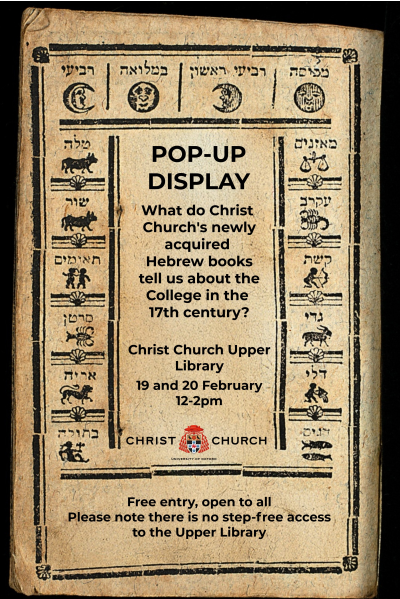
  • Pop-up display – ‘What do Christ Church’s newly acquired Hebrew books tell us about the College in the 17th century?’ – 12:00 – 2:00,  Christ Church Upper Library. More info here.
  • OMS Lecture -5–6.30pm in the Old Dining Hall of St Edmund Hall. Prof. Ian Forrest (Glasgow) will be speaking on ‘Telling Tails: Weaponizing Gender in the Late Medieval Church‘. Drinks to follow. More information and register for dinner.
  • Heraldry Society – 5:00, Oriel College. Dr Nicolas Vernot (Guest Researcher, CY Cergy Paris University) will be speaking on ‘Heraldry and Magic’.
  • Celtic Seminar – 5:15, Room 20.306 (Humanities Centre and Online). Sarah Zeiser (Harvard) will be speaking on ‘Finding allegory, history, and a complicated timeline in the harvest quatrain of Rhygyfarch ap Sulien’.
  • Old English Graduate Reading Group – 5:15. Email Harriet Carter for location.
  • Centre for Manuscript and Text Cultures – 5:15, Memorial Room, The Queen’s College. Hana Navratilova (Harris Manchester College/ AMES, Oxford) will be speaking on ‘Meidum: landscape, pyramid, graffiti, and political memory’
  • The Khalili Research Centre For the Art and Material Culture of the Middle East: Research Seminar – 5:15, The Khalili Research Centre. Umberto Bongianino (Khalili Research Centre) will be speaking on ‘Wall painting in the Islamic West and the aesthetic of naqsh’.
  • Latin Compline in the Crypt with the St Edmund Consort – 9:30, St Edmund Hall.

Friday

  • Medievalist Coffee Morning – Friday 10:30, Visiting Scholars Centre (Weston Library). All welcome, coffee and insight into special collections provided.
  • The History of the Bible: From Manuscripts to Print – 12:00, Visiting Scholars Centre at the Weston Library. The theme this week is ‘The Bible in Latin: Old Latin and the Vulgate’. Places are limited. To register interest and secure a place, please contact the lecturer at Péter Tóth.
  • Pop-up display – ‘What do Christ Church’s newly acquired Hebrew books tell us about the College in the 17th century?’ – 12:00 – 2:00,  Christ Church Upper Library. More info here.
  • Exploring Medieval Oxford through Surviving Archives – 2:00, Weston Library (Horton Room). Those who are interested can contact the convenor, Laure Miolo.
  • Oxford Medieval Manuscript Group – 3:30, Weston Library. Workshop with Laure Miolo: Observing and Measuring the Heavens: Manuscripts, Instruments, and Astronomical Practice in the Middle Ages. Limited places. The deadline to register has passed. Write to Oxford Medieval Manuscript group if you want to go on a waiting list. 
  • Postponed: the Wikipedia Editathon planned for today has been postponed to Trinity Term.

Opportunities and Reminders

New Hebrew Acquisitions in Christ Church

You are warmly invited to attend our third pop-up display of the term: “What do Christ Church’s newly acquired Hebrew books tell us about the College in the 17th century?”

Where: Christ Church Upper Library (ask for directions at the Porter’s Lodge!)
When: 19th and 20th February, 12-2pm
Questions: library@chch.ox.ac.uk

Please join us for this pop-up display of some new and exciting Hebraica acquisitions, paired with items from our existing collections, with focus on the 17th century. Highlights will include Syriac, Arabic and Ottoman Turkish manuscripts but also Hebrew calendar volvelles.

Entry is free and open to all. Please note that there is no step-free access to the Upper Library.

Dr Rahel Fronda, Hebrew and Judaica Deputy Curator, Bodleian Weston Library, Broad Street, Oxford OX1 3BG, T: 01865 277602
E: rahel.fronda@bodleian.ox.ac.uk

CfP: Forgotten Libraries: Lost, Dispersed, and Marginalised Manuscript Collections

The Centre for Manuscript and Text Cultures (CMTC) is pleased to invite Oxford-based researchers to participate in the workshop Forgotten Libraries to be held at The Queen’s College (Oxford) on Tuesday 16 June. Conceived as the first stage of a broader research initiative, the workshop aims to bring together scholars working across linguistic traditions and historical periods to reflect on neglected manuscript collections and their significance for the study of textual cultures.

Within the dominant frameworks of manuscript studies, research have long been anchored in the analysis of individual codices and in major, well-defined collections that structure institutional and disciplinary narratives. Yet many manuscripts survive in ways that render them effectively invisible: scattered across different holdings, insufficiently catalogued, marginalised by new political and linguistic orders, or remembered only through fragmentary references. These “forgotten”, “lost”, or “marginalised” collections raise fundamental questions about how manuscripts and libraries contingently relate to knowledge production over time.

While the workshop’s emphasis falls on libraries and manuscript collections—their formation, coherence, disintegration, and afterlives—we also recognise that individual artefacts often reveal broader dynamics. Manuscripts are mobile objects: they migrate across regions, institutions, and epistemic frameworks, and this movement profoundly shapes their visibility, accessibility, and scholarly legibility. A single codex may preserve traces of an otherwise vanished collection; an isolated manuscript may retain ownership marks, organisational clues, or textual relationships that point back to a forgotten ensemble. Attention to both scales—the library and the single object—is therefore essential.

Participants will present short case studies illustrating how forgotten libraries can be located, reconstituted, or reintegrated into scholarly practice, whether through surviving catalogues, dispersed manuscripts, institutional histories, or digital tools. The workshop aims to: (1) Map the diversity and significance of forgotten manuscript collections; (2) Develop shared methodological approaches that integrate collection-level thinking with close artefact analysis and digital methods; (3) Reflect on the broader structural, institutional, and historical conditions that produce manuscript displacement, fragmentation, and neglect.

Beyond these immediate aims, the workshop constitutes the first phase of a larger collaborative project on forgotten and displaced manuscript collections. It will be followed by an international conference in 2027, and its results will contribute to a collective volume to appear in the forthcoming book series Manuscript and Text Cultures (Liverpool University Press).

The workshop will be held at The Queen’s College (Oxford) on Tuesday 16 June.

Abstracts of up to 300 words, together with a short biographical note, should be submitted by Friday 14 March to Shaahin Pishbin and Clément Salah

Medieval Matter HT26, Week 4

Welcome to Week 4. An updated version of the OMS Booklet is linked here, and is available on the OMS website throughout the term. For your diary: The 2026 OMS Lecture will take place on Thursday 19 February 5–6.30pm in the Old Dining Hall of St Edmund Hall. Prof. Ian Forrest (Glasgow) will be speaking on ‘Telling Tails: Weaponizing Gender in the Late Medieval Church‘. Drinks to follow. More information and register for dinner. Tony Hunt’s memorial service is will be held on 16th May, 2.30, St Peter’s College Chapel (booking etc in due course).

Events

Monday

  • French Palaeography Manuscript Reading Group – 10:30, Weston Library
  • Seminar in Palaeography and Manuscript studies – 2:15, Weston Library. Emily Guerry (Oxford) will be speaking on ‘The Bodleian’s Gaignières Collection: A paper museum for Gothic tombs’.
  • Medieval Archaeology Seminar – 3:00, Archaeology Faculty. Matthew Johnson will be speaking on ‘New World Settlement and the English Middle Ages’.
  • Medieval History Seminar – 5:00, All Souls College. Cordelia Heß (Aarhus) will be speaking on “Medieval Racism? Social Practices in Colonial Contact Zones in Greenland and Sápmi (900-1500)
  • General Linguistics Seminar – 5.15, Humanities Centre 30.400. Henrike Lähnemann will be speaking on The nuns’ language: Latin-German code-mixing in the Lüne letters
  • Theory and Play: Comparative Medievalisms – 5.15, Lady Margaret Hall. Selections from: Anandavardana’s Dhvanyaloka (9th century CE, tr. The Light of Suggestion); Mechthild of Magdeburg’s Das fließende Licht der Gottheit (13th century CE, tr. The Flowing Light of the Godhead); Cywydd Ymry

Tuesday

  • Medieval English Research Seminar – 12:15, Room 00.079 (Humanities Centre). Kirsty Bolton (University of Oxford) will be speaking on ‘Power and conversion in middle English romance’.
  • Europe in the Later Middle Ages Seminar – 2:00, New Seminar Room, St John’s College. Simon Egan, Queen’s University Belfast will be speaking on ‘God forebede that a wylde Yrishe wyrlynge shulde be chosene for to be there kynge’: Gaelic Recovery in a North Atlantic Context, c.1350-c.1550′
  • Latin Palaeography Manuscript Reading Group – 2:00, Weston Library (Horton Room). Those who are interested can contact the convenor, Laure Miolo.
  • Medieval Church and Culture, theme: TRANSLATION(S) – tea and coffee from 5:00, Harris Manchester College. Clément Salah (Queen’s) will be speaking on ‘Materialising Translation: manuscripts and the movement of knowledge in tenth-century North Africa’.
  • Heraldry Society – 5:00, MacGregor Room, Oriel College. Patric Dickinson, CVO (Clarenceux 2010-21) will be speaking on ‘Symbolism in Heraldry: Mysterious or Manifest?’
  • Old English Hagiography Reading Group – 5:15, Jesus College Memorial Room. The first text is the anonymous Life of Saint Giles – email Luisa Ostacchini for a copy.
  • Church Historian Pub Night – 6:00 at the Chequers Inn. Contact Rachel Cresswell

Wednesday

  • Medieval German Graduate Seminar – 11:15, Old Library, St Edmund Hall. The topic for this term is the ‘Liederbuch der Clara Hätzlerin’. 
  • History and Materiality of the Book Seminar series – 2:15, Weston Library. Céline Delattre and Robert Minte will be speaking on ‘Inks and Pigments’
  • Older Scots Reading Group – 2:30, Room 30.401 (Humanities Centre). Palyce of Honour, First Part, ll. 127-771 
  • The Medieval Latin Documentary Palaeography Reading Group – 4:00, online.
  • Late Antique and Byzantine Seminar – 5:00, Ioannou Centre for Classical and Byzantine Studies. Pamela Armstrong (Oxford) will be speaking on ‘The Excavations of the Church of St Polyeuktos at Sarachane Revisited’
  • Islamic Studies Seminar: ‘Hajj the Art of Pilgramage’ – 5:00, Oxford Centre for Islamic Studies.
  • John Lydgate Book Club – 5:15pm. All Souls College, Hovenden Room. Mary Wellesley will speak on Lydgate and devotion.

Thursday

  • Middle English Reading Group (MERG) – 11:00, Lincoln College, Beckington Room. Sir Gawain and the Green Knight.
  • Medieval Women’s Writing Research Seminar – 4:00, Somerville College. Pilgrims and Travellers, including extracts from the works of Egeria, Margery Kempe and Lady Nijo.
  • Celtic Seminar – 5:15, Room 20.306 (Humanties Centre) and Online. Llion Wigley (University of Wales Press) will be speaking on ‘Ynysoedd Gobaith: Adeiladu Iwtopia yng Nghymru’r Ugeinfed Ganrif’.
  • The Khalili Research Centre For the Art and Material Culture of the Middle East: Research Seminar – 5:15, The Khalili Research Centre. BOOK LAUNCH — Islamic Objects in Seventeenth-Century Italy: Ferdinando Cospi, the Bologna Collection and the Medici Court.
  • A Medieval Saint in the Modern World: Oswald of Northumbria in Words and Music – 6:15, The Chapel at King’s College London.
  • Compline in the Crypt – 9:30, St Edmund Hall.

Friday

  • Medievalist Coffee Morning – Friday 10:30, Visiting Scholars Centre (Weston Library). All welcome, coffee and insight into special collections provided.
  • The History of the Bible: From Manuscripts to Print – 12:00, Visiting Scholars Centre at the Weston Library. Translations of the Bible in the Eastern Mediterranean: Syriac, Coptic, Ethiopic and Arabic. Places are limited. To register interest and secure a place, please contact Péter Tóth
  • Exploring Medieval Oxford through Surviving Archives – 2:00, Weston Library (Horton Room). Those who are interested can contact the convenor, Laure Miolo.
  • EMBI ‘Databases: A Skills Workshop’ – 4.00, Humanities Centre, History of Art Seminar Room.
  • Oxford Medieval Manuscript Group – 5:00, Sir Howard Stringer Room at Merton College, Emma J. Nelson (No take-backsies? Gerald of Wales and the Boundaries of Book Donation) and Elliot Cobb (Miraculous and Marginal Women in the Metz Psalter-Hours).

Opportunities and Reminders

Medieval Matter HT26, Wk 3

The OMS Booklet is linked here, and is available on the OMS website throughout the term. The 2026 OMS Lecture will take place on Thursday 19 February 5–6.30pm in the Old Dining Hall of St Edmund Hall. Prof. Ian Forrest (Glasgow) will be speaking on ‘Telling Tails: Weaponizing Gender in the Late Medieval Church‘. Drinks to follow. More information and register for dinner. Also: OMS sends condolences to our colleague Anna Abulafia (former Professor of Abrahamic Religions) for the death of her husband, Prof. David Abulafia FBA

Events

Monday

  • French Palaeography Manuscript Reading Group – 10:30, Weston Library
  • Medieval History Seminar – 5:00, All Souls College. Anna Molnár (Reading) will be speaking on “Nuns’ Financial Literacy and the Private Banking Activities of Female Religious Organisations in the Later Middle Ages”

Tuesday

  • Medieval English Research Seminar – 12:15, Room 00.079 (Humanities Centre). Joe Stadolnik (University of Chicago) will be speaking on ‘Bad books in medieval Bristol: alchemy, liturgy and Thomas Norton’s ordinals’.
  • Europe in the Later Middle Ages Seminar – 2:00, New Seminar Room, St John’s College. Tom Johnson, Oxford will be speaking on ‘‘He hath payd his part’: The Political Economy of Fishing Doles in Late-Medieval England’
  • Latin Palaeography Manuscript Reading Group – 2:00, Weston Library (Horton Room). Those who are interested can contact the convenor, Laure Miolo.
  • Medieval Church and Culture, theme: TRANSLATION(S) – tea and coffee from 5:00, Harris Manchester College. Eugenia Vorobeva (St Anne’s) will be speaking on ‘Devil’s Laughter, Language, and Sin in the Old Norse-Icelandic ‘Passio Domini’ Homily’
  • Medieval French Research Seminar – 5:15, Maison Française d’Oxford. Cat Watts (St Anne’s College, Oxford) will be speaking on ‘”Nothing  Of  Thine Own”: Fandom, Devilry, and Rewriting Holy Tales’ .
  • Old English Hagiography Reading Group – 5:15, Jesus College Memorial Room. The first text is the anonymous Life of Saint Giles – email Luisa Ostacchini for a copy.
  • Church Historian Pub Night – 6:00 at the Chequers Inn. Contact Rachel Cresswell

Wednesday

  • Medieval German Graduate Seminar – 11:15, Old Library, St Edmund Hall. The topic for this term is the ‘Liederbuch der Clara Hätzlerin’. 
  • History and Materiality of the Book Seminar series – 2:15, Weston Library. Martin Kauffmann will be discussing Decoration
  • The Medieval Latin Documentary Palaeography Reading Group – 4:00, online.
  • Late Antique and Byzantine Seminar – 5:00, Ioannou Centre for Classical and Byzantine Studies. laudia Rapp (Vienna) and Michael Whitby (Birmingham) will be speaking on ‘Mark the Deacon: The Life of Porphyrius of Gaza (in collaboration with Translated Texts for Historians and LUP)’
  • Islamic Studies Seminar- 5:00, Oxford Centre for Islamic Studies. James McDougall (University of Oxford) will be speaking on ‘Worlds of Islam: A Global History’.

Thursday

  • Middle English Reading Group (MERG) – 11:00, Lincoln College, Beckington Room. All are welcome as we read Sir Gawain and the Green Knight: bring any edition of the original text.
  • Environmental History Working Group – 12:30–2:00pm, Humanities Centre History Hub Room 20.421. Louis James Henry (PhD Medieval Environmental History, University of Stavanger, Visiting Student at KCL) will be speaking on “Timely Courts and Immediate Responses: Waste Management as a Temporal Issue in Late Medieval England”
  • Medieval Visual Culture Seminar – 5:00, St Catherine’s College. Millie Horton-Insch (British Museum & Trinity College Dublin) will be speaking on “Technologies of Reproduction and Sonderauftrag Bayeux: Re-Creating the Bayeux Tapestry for the Third Reich”
  • Celtic Seminar – 5:15, Room 20.306 (Humanities Centre and Online). Rhiannon Marks (Cardiff) will be speaking on ‘Envisaging the end: the representation of language decline in contemporary Welsh writing’
  • Old English Graduate Reading Group – 5:15. Email Harriet Carter for location.
  • The Khalili Research Centre For the Art and Material Culture of the Middle East: Research Seminar – 5:15, The Khalili Research Centre. Maria Judith Feliciano (CSIC, Madrid) will be speaking on ‘the silk core, or lessons from medieval Iberian textile studies’
  • Guild of Medievalist Makers, Making Space Session  – 5:30, online. Optional theme: birds.
  • Compline in the Crypt – 9:30, St Edmund Hall.

Friday

  • Medievalist Coffee Morning – Friday 10:30, Visiting Scholars Centre (Weston Library). All welcome, coffee and insight into special collections provided.
  • The History of the Bible: From Manuscripts to Print – 12:00, Visiting Scholars Centre at the Weston Library. The theme this week is ‘The New Testament’ Places are limited. To register interest and secure a place, please contact the lecturer at Péter Tóth  
  • Exploring Medieval Oxford through Surviving Archives – 2:00, Weston Library (Horton Room). Those who are interested can contact the convenor, Laure Miolo.

Opportunities and Reminders