The Society for the Study of Medieval Languages and Literature warmly invites OMS community members to a wine reception to launch the Nigel F. Palmer Travel Fund, to be held at 18:00 on Monday 11 May in the Hinrich Reemtsma Auditorium of the Warburg Institute (Woburn Square, London WC1H 0AB).
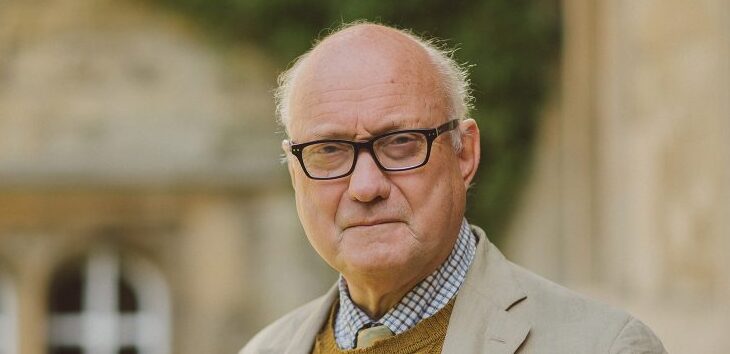
The Fund will support graduate students whose research in medieval languages and literature necessitates travel, and its launch comes at a point when funding for graduate students across the arts and humanities is becoming increasingly restricted. Its specified aim is to enable students to visit libraries and archives to consult manuscripts or other archival material, and to visit archaeological sites and/or monuments of direct relevance to their research. The Fund is named in honour of Nigel F. Palmer, executive editor of the Society’s journal Medium Ævum, and its responsible editor for German, Latin and all historical disciplines for well over thirty years from 1990 until his death in 2022. Our Society’s intention with the Fund is to take forward Nigel’s work, undertaken through the Society and widely beyond, in encouraging young scholars, by supporting graduate students in medieval studies to travel and pursue research on original materials.
Please email the Society’s Executive Officers at ssmll@history.ox.ac.uk to confirm your attendance by 1 May. If you are unable to join us on 11 May, I would be delighted if you would consider a donation towards the endowment of the Fund. You can donate to the fund via this link: Donate
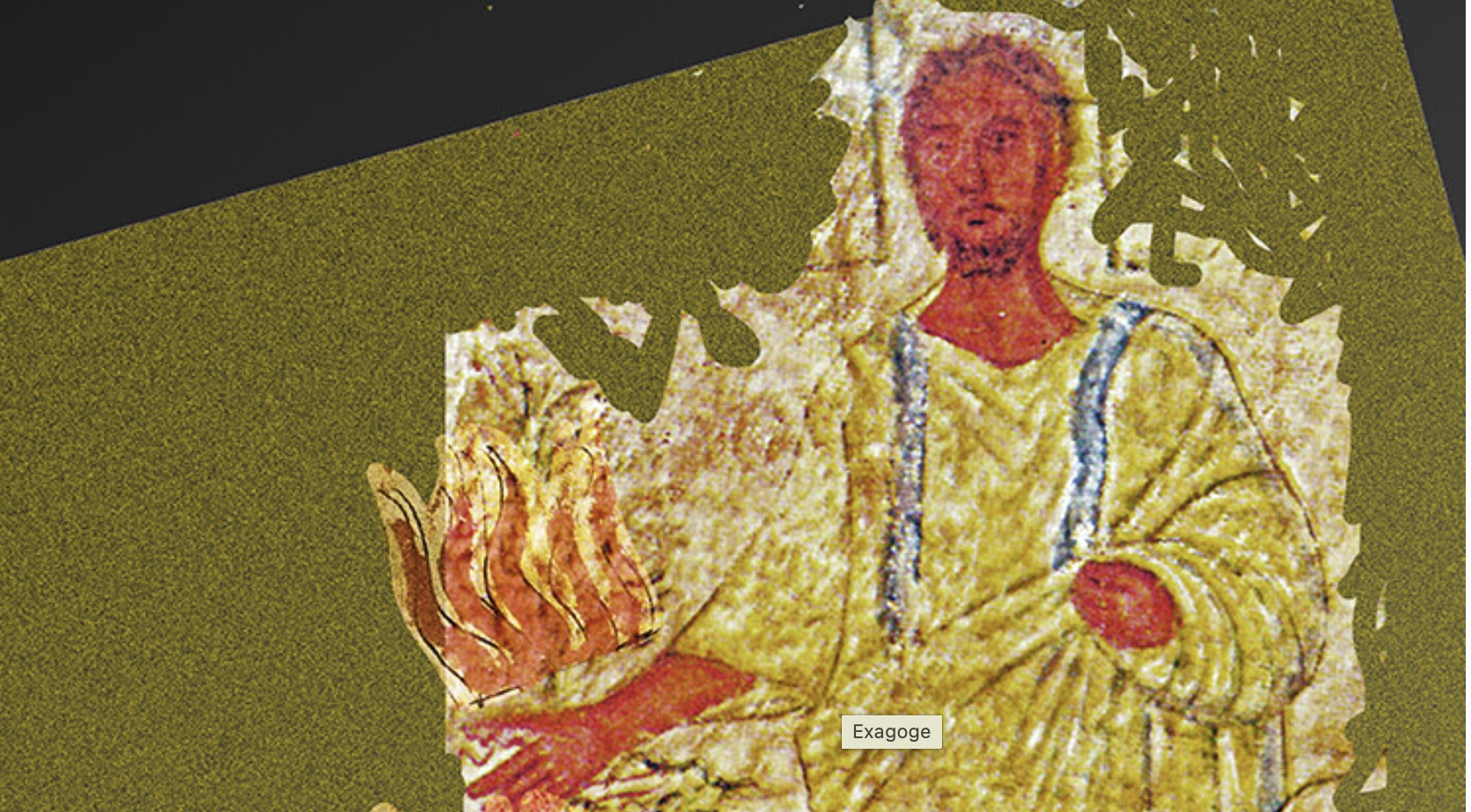
Moses. The ‘Exagoge’ of Ezekiel. ‘Moses and the Shepherd’ by Rumi
Friday, May 8, 2026 – 18:30: Ioannou Centre, 66 St Giles Sunday, May 10 – 12.30: Iffley Church Hall Monday, May 11 – 6pm: Wolfson College Buttery
David Wiles directs a production of the extant fragments of a tragedy written in Alexandria in the second century BC. Drawn from the Book of Exodus, the story tells of the Hebrews’ escape from Egypt. The play was written by a Jew, and is the first extant dramatization of a biblical text.
The performance is mostly given in ancient Greek, with the opening scene played in English. The project follows on from Hrosvita’s Martyrdom of the Three Virgins performed in Latin in 2025, and prior to that Seneca’s Octavia in a Renaissance translation.
The cast are a mix of students and seniors. The production style will be choral, using movement to illustrate narrative passages such as the burning bush and the crossing of the Red Sea – so fluent knowledge of ancient Greek is not required.
The first performance is in the Classics Centre in St Giles at 6.30 on Friday May 8, sponsored by the APGRD https://www.apgrd.ox.ac.uk/events. The second is in Iffley Church Hall at 12.30 on Sunday, May 10. The third is in Wolfson College Buttery at 6.00 on Monday, May 11, sponsored by the Ancient World Research Cluster. The performance should last for about 35 minutes, and we will have a brief Q&A afterwards. The APGRD and AWRC are both kindly providing wine.
EXAGOGE by Ezekiel. The Exagoge was written in Alexandria in the 2nd century BCE in the mode of a Greek tragedy, adapted from the Book of Exodus. It is the earliest dramatic adaptation of Biblical text. 269 lines were preserved by Christian commentators. We have made only a small number of cuts, but line allocations have been transposed, with the role of Moses divided between four different actors. Storyline: Pharaoh’s daughter discovers baby Moses in the Nile, and rears him. He kills an Egyptian overseer and flees to Libya, where he marries, sees a vision of the stars, and then God in a burning bush. Moses is reluctant to return. God tells him to inflict plagues on Egypt in order to secure the release of the Hebrews from bondage. After an angel of death has ‘passed over’ the houses of the Hebrews, they flee, pursued by the Egyptian army. The waters of the Red Sea open for them, then drown the Egyptians. In the final non-Biblical episode, the story is resolved by a kind of deus ex machina – perhaps a mirage, perhaps a demon, perhaps a phoenix.
Alex Marshall. Raguel (Sepphora’s father); Moses 4.
Laurence Nagy. Pharaoh; God.
Vishal Rameshbabu. Herald.
David Wiles (standing in). Moses 2.
All. Chorus
MOSES AND THE SHEPHERD by Rumi. Much more contemplative, Moses and the Shepherd is a story from the Manavi, a compilation of parables dictated by the Persian Sufi poet Rumi (1207-1273) over the last fifteen years of his life. We hope that the two plays speak to each other in interesting ways.
29 May 2026, German Historical Institute in London Organised by the German Historical Institute London and the German History Society
Programme
Commentators: Henrike Lähnemann (Oxford) & Christian Jaser (Kassel) Convenors: Thomas Kaal (GHIL) and Marcus Meer (UCL)
9.30 Session 1 (Chair: Thomas Kaal)
Henrike Lähnemann (Oxford): The Nuns’ Letters – Work-in-Progress
Temitope Fagunwa (Lüneburg): From ‘‘Moors Are Not Blacks’’ to Mohr Muss Weg: Identity and Misrepresentation in Europe
Erik Pauls (Berlin), The Typus of the ‘Heretic’ and its Function in Historical Thinking
11.00 Coffee & Tea
11.30 Session 2 (Chair: Marcus Meer)
Christian Jaser (Kassel): Digital Edition of Medieval Accounting Records (Examples from Munich and Vienna in the Early 15th Century)
Thomas Billard (Paris/Konstanz) Accountability: Critical Study of the recording of Accounting Documents in Urban Areas of the Southern Empire (Basel, Nördlingen, Nuremberg, 14th–15th centuries)
Arik Solomon (Be’er- Sheva): Beyond the City Walls: Persistence and Permeability in the Expulsion of Jews from Merseburg
13.00 Lunch
14.00 Session 3 (Chair: Thomas Kaal)
Anna Wilmore (Oxford): ‘Ich bin din gespile’: Play as Paradigm in Mechthild of Magdeburg
Tina Druckmüller (Cologne): From Another Perspective: Hildegard of Bingen on the Origin of the Soul
15.00 Session 4 (Chair: Gabriele Passabi)
Carolin Victoria König (Oxford): The Interrelation of Image and Text and the Popularity of Sebastian Brant’s ‘The Ship of Fools’
Hila Manor (Jerusalem): Measured Marvels: Ingenuity and Artistic Exchange in Nuremberg around 1500
16.00 Coffee & Tea
16.30 Session 5 (Chair: Marcus Meer)
Ole Bunte (Bielefeld): Narrating War: A Cultural History of War in 15th Century East Central Europe
Laura Potzuweit (Kiel), The Baltic Sea as a Room of Diplomacy? The Kalmar Union, the Teutonic Order, and other Key Players as a Late Medieval Communication Network
17:30 End
18:00 Conference Dinner
Students and researchers interested in medieval German history are very welcome to attend and listen to the presentations. There is no charge for attendance, but pre-booking is essential due to limited capacity. If you would like to attend as a guest, please contact Kim König.
The Call for Papers
This one-day workshop on the history of medieval Germany (broadly defined) offers an opportunity for researchers from Europe and the wider English-speaking world to meet at the German Historical Institute in London. Participants will be able to discuss their work in a relaxed and friendly setting and to learn more about each other’s research.
Proposals for short papers of 10–15 minutes are invited from researchers at all career stages with an interest in any aspect of the history of medieval Germany. Participants are encouraged to present work in progress, highlight research questions and approaches, and point to yet unresolved challenges of their projects. Presentations will be followed by a discussion.
Participation is free of charge and includes lunch and dinner. The GHIL and the GHS will also provide a contribution towards travel expenses. Accommodation costs cannot be reimbursed. Support is available for postgraduate and early career researchers: up to £150 for travel within the UK (excluding London) and up to 300€ for an economy round trip from Europe. Please indicate your interest in travel support in your application.
We look forward to reading your proposals. Please send your submission—which must include a title, an abstract of c.2000 words, and a biographical note of no more than c.1000 words—to Thomas Kaal: t.kaal@ghil.ac.uk. Questions about all aspects of the workshop can also be sent to Marcus Meer: m.meer@ucl.ac.uk.
Borders, Boundaries, and Barriers have become increasingly prominent themes in historical scholarship. Over the last decade, these concepts have been the focus of sustained scholarly interest, drawing especially upon theoretical frameworks and (trans-)national contexts. There is, therefore, a pressing need to examine how these constructs have shaped the lived experiences of historically marginalised groups, as well as how they were perceived, defined, and engaged with by those groups.
This conference seeks to reorient discussions around borders, boundaries, and barriers by foregrounding the experiences and perspectives of marginalised groups and considering how these divisions were perceived fromthe peripheries of societies. Rather than treating these concepts as abstract or solely geopolitical, we will explore the ways in which they have operated — both historically and historiographically — as tools of exclusion and differentiation.
Organised by Natasha Jenman (University of Oxford), Naomi Reiter (QMUL), and Dean A. Irwin (University of Lincoln/OCHJS), the conference will focus on individuals, religious groups, social groups, societal constructions, and natural phenomena. Participants are invited to explore the role played by evolving borders, boundaries, and barriers in the medieval world as part of group identities; and how groups used them to their advantage. Likewise, it will consider the extent to which borders, boundaries and barriers have been imposed upon the medieval world by modern scholars. Possible topics for consideration include, but are not limited to:
Legal jurisdictions
The natural and the supernatural worlds
Socio-economic strata
Ritual and religion
Space, time, and the environment
Gender and sexuality
Disability
Transgression, delinquency, and the grey middle space
This conference adopts a broad chronological and geographical approach with submissions from all historically-related disciplines being welcome. The conference will take place on 20 and 21 April 2026 in Oxford. To submit, please send a title, abstract (c. 250 words), and a bio (c. 100 words) to: bordersboundariesbarriers@gmail.com. Any questions should be directed to the same e-mail address. The organisers hope to be able to offer a limited number of bursaries for students and those on low income. Please indicate in your proposal whether you would like to be considered for one of these if this becomes possible.
Image ref: Latin Psalter (13th-15th C), f.9 – BL Add MS 28681,