Medieval Matter MT 25, Week 5

A medieval event a day keeps the blues away – meet week 5 head-on with another set of seminars and events! As always, you can find a complete copy of the Oxford Medieval Studies Booklet here.  Any last-minuted changes will be updated in the weekly blogpost and in the calendar, both accessible via https://medieval.ox.ac.uk/.

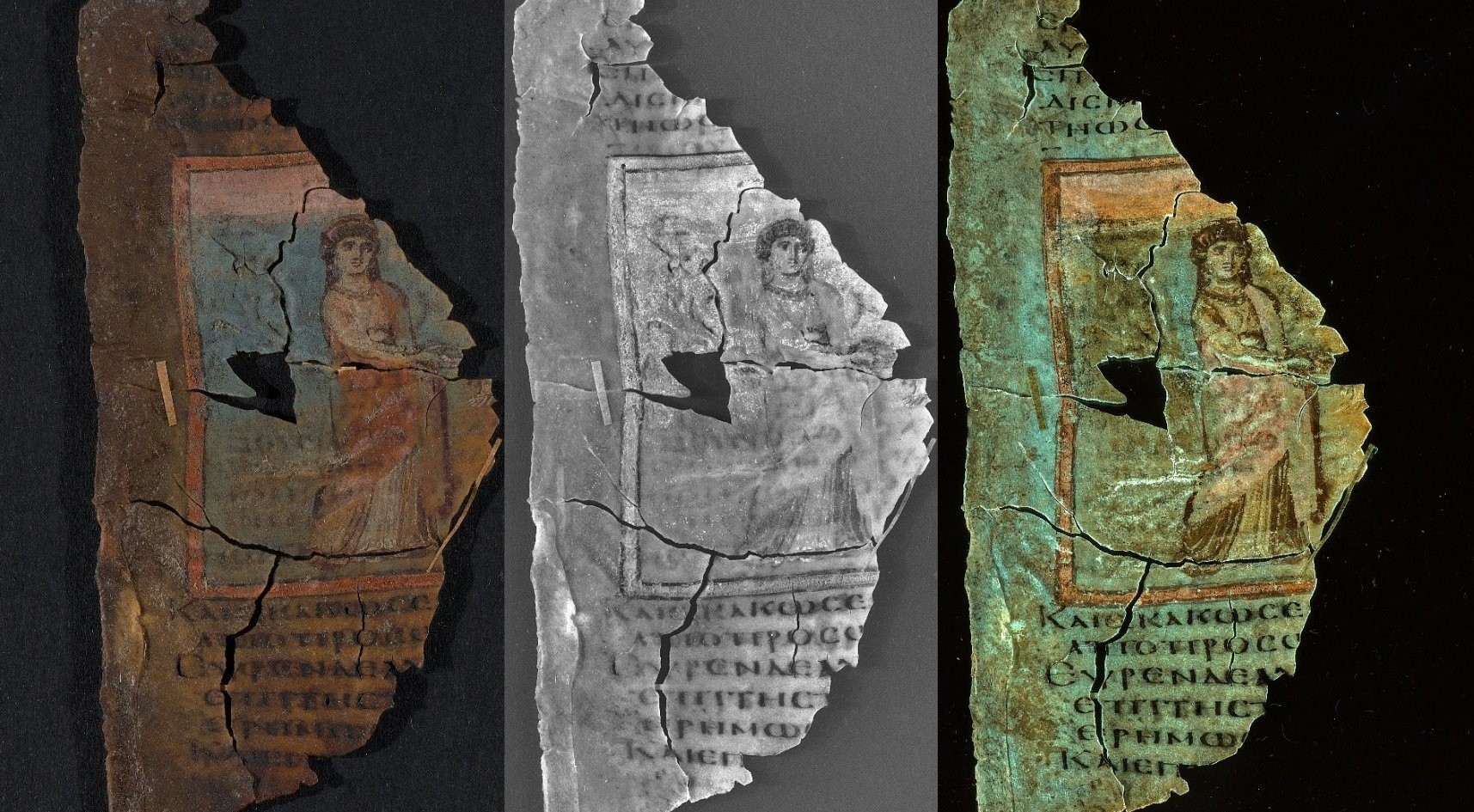
This week, on the 13th and 14th of November, the Crafting Documents project, alongside the Centre for Manuscript and Text Cultures, is hosting the ‘Heritage Science and Manuscript Conference‘. Registration is free, and the full programme of events is available here.

Monday

Tuesday

  • Medieval English Research Seminar AND Medieval French Seminar – 12:15, Margaret Thatcher Centre, Somerville. Juluan Mattison (U of Georgia) will be speaking on ‘What is an English book? French Scribes, Scripts and Texts in England’
  • Latin Palaeography Manuscript Reading Group – 2:00, Weston Library (Horton Room)
  • Medieval Church and Culture Seminar – 5:00, Harris Manchester College. Nancy Thebaut (Catz) will be speaking on ‘Gender, Nature, and the Limits of Art: A Close Reading of ‘Two Riddles of the Queen of Sheba’, a Late Medieval Tapestry at the Met Cloisters‘.
  • Old Norse Research Seminar – 5:00, New Seminar Room, St. John’s College. Caz Batten (Pennsylvania) will be speaking on ‘Unmaking a Man: The Contested Bodies of the Völundr Legend’. Drinks to follow.
  • Old English Graduate Reading Group – 5:15, location TBC, contact Hattie Carter

Wednesday

  • John Lydgate Book Club – 11:00, Smoking Room (Lincoln College).
  • Medieval German Graduate Seminar on the Constance Chronicle – 11:15, Somerville College.
  • Older Scots Reading Group – 2:30, Room 30.401 in the Schwarzman Centre.
  • Medieval Latin Documentary Palaeography Reading Group – 4:00, online.
  • Late Antique and Byzantine Seminar – 5:00, Ioannou Centre. Marlena Whiting (Groningen) will be speaking on ‘Hodology, Wayfinding, and Geographical Knowledge in Late Antique Pilgrimage Accounts’

Thursday

  • Middle English Reading Group – 11:00, Beckington Room (Lincoln College).
  • Environmental History Working Group – 12:30, Room 20.421 in the Schwarzman Centre. Ryan Mealiffe will be speaking on ‘What are White Storks (Ciconia ciconica) Doing in High and Late Miedieval Calendars’?
  • Celtic Seminar – 5:00, hybrid. Simon Rodway (Aberystwyth) will be speaking on ‘Gwlithod Blewog a Mygydau Barddol: Golwg Newydd ar Garchariad Aneirin yn y Tŷ Deyerin’
  • Medieval Visual Culture Seminar – 5:00, St. Catherine’s College. Carly Boxer (Bucknell University) will be speaking on ‘Abstract Figures and Bodily Change: Giving Form to Unseen Things in Late Medieval England’
  • Seminars in Medieval and Renaissance Music – 5:00, online. Elina Hamilton, Peter Lefferts and Elzbieta Witkowska-Zaremba will be speaking on ‘Theinred of Dover (fl. c. 1300): A New Context for him in Fourteenth-Century Music Theory’
  • Compline in the Crypt – 9:30pm, St Edmund Hall.

Friday

  • Medievalist Coffee Morning – 10:30, Visiting Scholars Centre (Weston Library). All welcome, coffee and insight into special collections provided.
  • Exploring Medieval Oxford through Surviving Archives – 2:00, Weston Library (Horton Room).
  • Oxford Medieval Manuscript Group: Library Visit (Merton) – 5:00. Sign-up required.

Saturday

Opportunities

Heritage Science and Manuscripts Conference: Programme

New directions in the study of written artefacts from Antiquity to the late Middle Ages.
Organised by the Crafting Documents project (AHRC-DFG) and co-sponsored by the Centre for Manuscripts and Text Cultures, University of Oxford.
13-14 NOVEMBER 2025, SHULMAN AUDITORIUM. THE QUEEN’S COLLEGE, UNIVERSITY OF OXFORD
Register for free here

9:30 Arrival and registration (coffee and tea available for all attendees)
9:45 Welcome
Julia M. H. Smith (Crafting Documents co-PI, All Souls College, University of Oxford)
Martin Kauffman (Head of early and rare collections, Special Collections, Bodleian Library)
Dirk Meyer (Director of the Centre for Manuscript and Text Cultures, The Queen’s College, Oxford)
10:00 Brent Seales (University of Kentucky): UnLost: uncovering lost knowledge from the ancient library of Herculaneum
10:50 Richard Gameson (Durham University): The Hereford palimpsest psalter
11:40 Jess Hodgkinson (University of Leicester)
Insular manuscripts and their readers: using photometric stereo imaging
to study drypoint writing
12:30 Lunch Break
TECHNOLOGIES TO RETRIEVE WRITING
(Chair Lesley Smith, Harris Manchester College, Oxford)
INKS AND PARCHMENT
(Chair Martin Kauffman, Bodleian Library)
2:30 Kristine Rose-Beers (University Library Cambridge)
Early Islamic manuscripts on parchment: surface preparation and
practice-based research
3:20 Andy Beeby (Durham University)
On the variation in the density of writing as seen by multi and hyper-spectral
imaging: looking over the scribe’s shoulder
4:10 Coffee and tea break
5:00 Ira Rabin (Bundesanstalt für Materialforschung und -prüfung)
Ana de Oliveira Dias (University of Oxford)
Ink analysis of early medieval relic labels
Wine reception sponsored by the Centre for Manuscript and Text Cultures,
The Queen’s College, Oxford
(6:00 – 7:00)DAY 2
MATERIAL SCIENCE AND HERITAGE RESEARCH
9:30 Alberto Campagnolo (Katholieke Universiteit, Leuven)
Approaches to heritage science for manuscripts in the Digital Humanities
10:20 Michael Marx, Institut für Studien der Kultur und Religion des Islam
Goethe-Universität Frankfurt / Institute of Advanced Studies Jerusalem
Results of carbondating of early Qurʾānic manuscript and their implications for
our understanding of the history of the Qurʾān
11:10 Coffee and tea break
11:40 Matthew Collins (University of Copenhagen/University of Cambridge)
Proteomics analysis of parchment samples
12:30 Colloquium pause
(Chair Dirk Meyer, The Queen’s College, Oxford)
4:00 Coffee and tea
4:30 Tessa Webber (Trinity College, University of Cambridge)
Early medieval written artefacts: a palaeographical perspective
5:00 Round table discussion
BROADER PERSPECTIVES
(Chair Julia Smith, All Souls College, University of Oxford)

Report on the Dark Archives Conference 2019

For the latest iteration in the conference series, cf. https://medieval.ox.ac.uk/arsinquirendi/

A Conference on the Medieval Unread & Unreadable

THE DARKNESS OF THE MEDIEVAL ARCHIVES, the shadows of the library stacks: too vast for countless lifetimes of scholarship to exhaust? And yet, in our internet era, the accelerating machine-processing of centuries of collected medieval materials and data is yielding ever more detailed, extensive maps of the archive’s extent and  features. The goal of completely surveying the archive, down to every folio and character, is not only increasingly viable but irresistible – and at a time when competence in its languages, diplomatics and palaeography is contracting; for this same process promises new revelations, of unprecedented richness and detail, about the medieval world itself.
      Yet the great irony is that on our new map, the Dark Archives, the medieval unread and unreadable, dwarf all that we currently know, and indeed threaten to paralyse fresh research. In quantity, they encompass the great majority of the millions of known folios and associated records, that remain unread, unscanned and scattered across the world. Who will fund their expensive digitization? What should be prioritized? And to what end, when the mass-transcription and record-creation technologies needed to explore them remain unequal to the task?  Most challenging of all may be owning the shift in perspective that the Dark Archives are forcing upon us: the unsustainably small extent of what we term ‘the medieval’, and the uncertainty over what might succeed it.
Join us this September to crystallize and advance the field at Dark Archives, which is bringing together over 50 of its likely academic and commercial key-holders, from archivists and intellectual historians to machine-learning researchers. General registration now open, and full programme published:

Day 1 (10th September): Mapping the Medieval Graphosphere: What Dimensions, How Composed, Whether Habitable?

Day 2 (11th September): Endless Deserts, Oceans and Mountains: Tackling the Metadata Crisis

Day 3 (12th September): Re-Making Medieval History

along with a range of practical workshops on the latest techniques for Dark Archives discovery on 13th September. 

8:30am to 6:00pm

10th September: Mapping the Medieval Graphosphere: What Dimensions, How Composed, Whether Habitable?

   8:30-9:00am     Coffee and Registration

9:00am to 1:05pm

Manuscripts, Extant and Destroyed

Chair/Respondent: 

  • Nigel Palmer
  • Teresa Webber
  • Eltjo Buringh
  • Utrecht University

Keynote Address: Estimates of Manuscript Numbers

  • Jo Story
  • University of Leicester

Insular Manuscripts: how many and what next?

  • Joanna Tucker
  • University of Glasgow

Survival and loss: working with documents from medieval Scotland

  • Ralph Cleminson
  • University of Oxford

Non leguntur: shedding light on Slavonic sources

  • Adrien Quéret-Podesta
  • Petőfi Sándor School

“Textual ghosts” in the oldest Central European historiography

Coffee

  • Daniel Sawyer

@DE_Sawyer

  • University of Oxford

At Knowledge’s Edge: Lost Materials

  • Krista Murchison
  • Leiden University

(Re)collecting the Archive: Recovering Medieval Manuscripts Destroyed During WWII


Video

  • Henrike Lähnemann

@HLaehnemann

  • University of Oxford

Nuns’ Dust

PDF icon nuns dust handout

  • Gustavo Fernández Riva

@Medieval_Gus

  • FAU Erlangen-Nürnberg
  • Time Machine Organization

Network Analysis of Manuscripts

Questions

1.00pm to 2pm    Lunch

2:00pm to 4:05pm

Neither Parchment Nor Paper

Chair/Respondent: 

  • Graham Barrett
  • Ellie Pridgeon

@consularchivist

  • University of Leicester

The Writing on the Wall: Medieval Painted Inscriptions

  • Maria do Rosário Morujão
  • University of Coimbra

Dark Seals in Portuguese Archives

  • John Hines
  • Cardiff University

Dark Sides of the Runes

  • David King
  • University of East Anglia

The Corpus Vitrearum Medii Aevi

Questions

Coffee

4:25pm to 6:15pm

Why Exalted, Why Neglected?

Chair/Respondent: 

  • Anthony Lappin
  • Anastasia Shapovalova
  • Institut de recherche et d’histoire des textes, Paris

Exploring the Medieval Archives in France

  • Monika Opalinska
  • University of Warsaw

Reconstructing medieval English religious culture: forgotten manuscript sources versus digital media

  • Matthew Holford

@matthewholford

The Least Studied Manuscripts in the Bodleian

  • David Rundle

@DrDavidRundle

  • University of Kent

The Unbearable Lightness of the Archive

Questions

6:15pm to 6:50pm

Drinks Reception

9:00am

11th September: Endless Deserts, Oceans and Mountains: Tackling the Metadata Crisis

  • Will Noel

@willnoel

  • Schoenberg Institute for Manuscript Studies

Keynote Address: Through a screen darkly: the metadata crisis and the authority of the digital image

9:55am to 1:00pm

Achieving Mass Transcription – Ex Machina? Ex Populo? And How Soon?

Chair/Respondent: 

  • Eltjo Buringh
  • Verónica Romero
  • Universidad Politecnica, Valencia

Interactive-Predictive Transcription and Probabilistic Text Indexing for Handwritten Image Collections

  • Achim Rabus
  • University of Freiburg

Training generic models for handwritten text recognition using Transkribus: Opportunities and Pitfalls

  • Vincent Christlein

@v_christlein

  • Friedrich-Alexander University

Scribal identification and document classification

11.10am to 11.25am Coffee

  • Ben Kiessling
  • University of Leipzig

The Limits to Digitization

  • Roger Louis Martinez-Davila

@rogerlmartinez

  • University of Colorado

Massive Open Online Projects to teach palaeographic skills and to prepare manuscript transcriptions

Thought-Game – Build a Universal Manuscript Transcription Platform – Now !

Participants joining the chair & panelists: 

Michael Sargent

Stewart J. Brookes

Emma Goodwin

PDF icon Download Goodwin Dark Archives Poster.pdf (991.16 KB)

12.45pm to 1.55pm Lunch

1:55pm to 4:50pm

How to Organize the Metadata Once We Have It

Chair/Respondent: 

  • Jo Story
  • Toby Burrows

@TobyBurrows

  • Oxford E-Research Centre

Aggregating provenance metadata to reveal the histories of medieval manuscripts

  • Andrew Hankinson

@ahankinson

  • Bodleian Library
  • International Image Interoperability Framework

Discovery through Data: How IIIF shines a light into the dark archive’

  • Debra Cashion

@dtcashion

  • St Louis University

METAscripta

video

3.20pm to 3.30pm Coffee

  • John McEwan
  • St Louis University

Reflectance Transformation Imaging and Medieval Seals

  • Sarah Fiddyment

@drsfiddyment

  • University of York

Manuscript Palaeoproteomics

video

Thought-Game: Devise a metadata system to satisfactorily describe and relate all written medieval materials – Now!

Participants joining the chair & panelists: 

William Noel

Emma Stanford

Gustavo Fernández Riva

4.50pm to 5pm     Coffee

5:00pm to 6:25pm

What Role Archives? (pt. 1)

Chair/Respondent: 

  • Suzanne Paul
  • Carolin Schreiber
  • München, Bayerische Staatsbibliothek

Keynote Address: Bringing the Dark Archives to the Light – Medieval Manuscripts in German Collections in the Digital Age

  • Paul Dryburgh

@pablodiablo74

  • The National Archives, Kew

Peering into an impenetrable gloom and the “tyranny” of digital by design: the future of medieval collections at The National Archives (UK)?

Video

Questions

7:30pm to 9:00pm

Conference Dinner at St. Edmund Hall

9:15pm

Compline in the Crypt of St-Peter-in-the-East (St. Edmund Hall)

PDF icon Download Compline-DarkArchives-SEH.pdf (404.39 KB)

Video of Compline in the Crypt

.. and some footage from the rehearsal!

9:00am to 6:00pm

12th September: Re-Making Medieval History

9:00am to 12:00pm

What Role Archives (pt. 2)?

Chair/Respondent: 

  • Pip Willcox
  • Luca Polidoro
  • University of Florence

The Secrets of the Barberini

  • Laura Light

Manuscripts in Private Hands

  • James Louis Smith

@ScrivenerSmith

  • Trinity College Dublin

Pre-Modern Manuscripts and Early Books in Conflict Zones: An Emerging Network and its Goals

  • Christopher Wright
  • Matteo di Franco
  • University of Cambridge

From isolation to integration: making Greek manuscripts readable

  • Dot Porter

@leoba

  • Schoenberg Institute for Manuscript Studies

Reading Across A Digitized Collection of Books of Hours

Coffee

Roundtable

Participants joining the chair & panelists: 

Suzanne Paul

@suz_paul

Paul Dryburgh

@pablodiablo74

Elaine Treharne

@ETreharne

Robin Darwall-Smith

Carolin Schreiber

Sarah Fiddyment

12.10pm to 1pm    Lunch

1:00pm to 6:00pm

The Future of Medieval Scholarship: Forms, Substance and Means

1:00pm to 3:10pm

The Edition …

Chair/Respondent: 

  • Daron Burrows
  • Michael G. Sargent
  • City University of New York

Hidden in Plain Sight: The Obfuscation of Manuscript Evidence

video

  • Kyle Ann Huskin

@kylehuskin

  • University of Rochester

Shedding Light on Dark Archives: Principles for Editing Recovered Texts

  • Andrew Dunning

@anjdunning

  • University of Cambridge

Opening medieval books and fragments to students with documentary editing

  • Elizabeth Solopova
  • University of Oxford

An Invisible Giant: Editing Neglected Canonical Texts

Questions

Coffee

3:30pm to 4:45pm

… And Beyond

Chair/Respondent: 

  • Roger Louis Martinez-Davila
  • Mark Faulkner
  • Trinity College Dublin

‘Big Dating’ and ‘Bottom-up periodisation’

  • Sarah Savant

@sarahsavant1

  • Aga Khan University

Finding Meaning in 1.5 Billion Words of Arabic: The KITAB Project and Its Aims

  • Julia Craig-McFeely
  • University of Oxford

‘How dark is my archive?’: What lies behind and beyond the face of Musicology’s online archive, DIAMM

Questions

Coffee

4:55pm to 6:30pm

Medieval Capital

Chair/Respondent: 

  • Richard Ovenden
  • Marc Polonsky
  • The Polonsky Foundation

Digitisation of cultural heritage: a funder’s perspective

  • Maja Kominko

The Arcadia Fund

  • Luciano Floridi
  • University of Oxford

Keynote Address: Semantic Capital. Its Nature and Value

Concluding Debate

9:00am to 5:00pm

13th September: Dark Archives Workshops

  • Verónica Romero
  • Universidad Politecnica, Valencia

Hands-on Workshop on Assistive Technologies to Access the Contents of Handwritten Text Manuscripts

PDF icon Presentation

  • John McEwan

@frangelegetege

  • St Louis University

Imaging Seals on a Budget

12pm to 1pm Lunch

  • Roger Louis Martinez-Davila

@rogerlmartinez

  • University of Colorado

Crowdsourcing Manuscript Transcriptions: Opportunities and Challenges using MOOCs, Social Media, and Emerging Platforms

Link to Website

  • Alexander Zawacki
  • Helen Davies

@MedievalZawacki

@helsinhashtags

  • University of Rochester

Multispectral Imaging: Technologies, Techniques, and Teaching

Full Presentation and Slides

Medieval Studies and the Far Right

Blog post by Charlie Powell and Alyssa Steiner

On Saturday, 11th May 2019, over 40 academics, students and activists met in the Doctorow Hall room of St Edmund Hall to hold a conference on the relationship between Medievalism and far right politics. Organisers Alyssa Steiner, a graduate student in Medieval German at St Edmund Hall, and Charlie Powell, a student on the MSt in Medieval Studies at Wadham College, describe the impetus behind organizing the conference, and the day itself.  

In October, the two of us were discussing our concerns about the Oxford Union’s decision to invite Alice Weidel, leader of the far-right Alternative Für Deutschland (AfD) party in Germany, to give a speech to Union members. Discussing the AfD’s links with Neo-Nazi group Pegida, our conversation turned to the rise of far-right nationalism across Europe, and the narratives through which it is spreading. We had both witnessed medieval tropes, symbols, and stories being instrumentalised by contemporary far-right movements, from the violence of white supremacists calling themselves “alt-knights” in the USA to the racist backlash against a woman of colour representing Joan of Arc in Orleans. We quickly discovered countless examples of medieval symbols, stories and tropes providing inspiration and legitimation for contemporary far right movements across the world. In fact, the prevalence of medievalism within far-right discourse has a long history, which goes back to the romantic nationalism of the 19th century, a movement which also produced some of the first medieval scholars. We decided to organize a conference to explore these troubling relationships, and how medievalists might respond to the current political use of medievalism in our own capacity.

We quickly received a lot of interest, and abstract submissions for more papers than we could accommodate with a one-day event. The three areas on which we wanted to focus the discussion were racism and violence in medieval contexts; the politics and origins of medieval studies, and the instrumentalisation of the medieval in contemporary far right movements. In the end, the day was packed with ten papers and a plenary discussion: topics included violence in Anglo-Saxon literary portrayals of Judaism, the impact historical constructions of Islam and premodern Europe had on German policy in World War One, medievalism in contemporary far-right metal music, and the role of the medieval in growing eco-fascist movements. See the programme at the bottom of this post for the full list of papers with short abstracts, hyperlinked to recordings of the papers.

Throughout the day, a picture of the past and present relationships between fascism and the medieval began to emerge. The power of academic narratives of the medieval to influence contemporary society, and the consequent responsibility of us as medievalists to be vigilant and mindful, was firmly apparent. However, many of the papers highlighted situations in which traditional academic paradigms offered no solution to medieval myths and their role in racisms, anti-semitisms, and contemporary white supremacy. In the question sessions at the end of each panel, the discussion often came back to the relationship between academia and broader public discourse, and questions over the construction of historical truth. If academic rigour entails dry, dense, and complicated research in constructing our narratives of the medieval past, but far right movements have the luxury of fiction and myth in their use of medieval narratives to legitimise racism, misogyny, and other bigotry, what can academics do but raise their voices and refute the claims of the far right? This perceived disjuncture between the responsibility of medievalists to oppose far right trends, and their actual ability to reach a broad social audience in order to do so, was met with several responses. Academic projects aimed at increasing access and engagement in the medieval, such as the public medievalist, were one. Counter-creation and humour, such as the demystification of the middle ages in Monty Python and the Holy Grail (informed by the writers’ experience studying Old and Middle English at university), were another. Lastly, an important and salient response recognised the limitations of academic discourse, and urged the importance of taking our opposition to far right medievalism to the places where it is aired: online spaces, media commentary, and – most importantly – the streets.
 

We had speakers from every academic stage from recent graduate to professor, and for some early career researchers, it was an excellent opportunity to present in an explicitly contemporary-focused and intellectually open space. It was important to us that the conference should be free to attend, and not limited to established academic researchers, as the casual delineation of academic from non-academic spaces is part of the issue at hand. It is important that this conference be a starting point for further discussion both inside and outside academic medieval studies, and we will be hosting recordings of the papers on the open-access oxtalks website to help facilitate this. We hope to organise more events in the future and develop models for truly open-access discussion that resists the cordoning-off of academic interests, and we hope to see our fellow medievalists resisting the far right in the pages of journals, in the press, and on the streets.


Conference Programme

09:30-10:00 – Registration

Opening remarks: Alyssa Steiner

10:10-11:30 – Session 1: Constructing the Medieval

‘Evaluating’ means approving or condemning phenomena of the past based on our values today. In the context of this conference these values are those of an enlightened intellectual elite that stand against those of the far right. The former condemn racism, nationalism and fascism, which mostly originate in the 19th century, while the latter support ethnic or religious supremacy, xenophobia and violent behaviour which can be found throughout the ages. In my talk I want to discuss the scientific and methodological difficulties and opportunities of applying anachronistic terms to medieval phenomena that relate to the ideology of the far right.

Taking an interdisciplinary approach, this paper examines Western academic and political discourses of power in twentieth-century constructions of the late antique and early medieval past and asks questions relating to periodisation. The late antique and medieval paradigms have been challenged by scholars of ancient and medieval intellectual currents. For example, the First Millennium perspective (G. Fowden, Before and After Muhammad, Princeton 2014) redefines the foundations of the Western debate with Islam. I argue that the First Millennium as a multicultural/multiconfessional category can also help to shed light on developments in the emergence of the Greek and Latin civilizations after Antiquity.

The quincentenary of the Reformation in 2017 has not only resulted in new critical readings of its leading figures but also stimulated research into memorial culture. There are few figures in German history, which have been claimed by such diverse groups as Martin Luther.  In my paper, I am looking at National Socialist pictures of Luther and then particularly at the celebrations in 1983. How can it be that at the same time as the medieval roots of Luther‘s thinking were discussed, German nationalists also reclaimed him as their prophet?

11:30-12:00 – Coffee

12:00-13:00 – Session 2: Racialising in the Middle Ages

Cynewulf’s Elene is oft-analysed in awe of the poet’s subtle and intricate design, and critics have been prone to neglect the anti-Semitic violence and oppression written into the poem’s operations. My analysis reveals sustained and constitutive literary patterning depicting the persecution and forced conversion of Judas Cyriacus from Jew to Christian saint as heroically transcendent; his dynamic characterisation sanctions, in Anglo-Saxon terms, the narrative and semiological abuse committed against him. Interrogating rhetorical constructs of power involving ideological coercion, which we associate with totalitarian regimes of today, requires the self-awareness and sensitive critical distance I hope to display in my study.

Economy has been a crucial part of society for millennia. Therefore, the far right has to relate to economic thinking if they claim to provide a vision of what society should be like. For propagating their political ideologies, emotional and narrative approaches have proven much more effective than theoretical explanations. Examples starting from programmatic Nazi writings to 21st century politics can show how referring to the middle ages has served nationalist and far right literature, science, and political decision making in Germany until today, employing the myth of a less monetary and therefore righteous golden age.

13:00-14:00 – Lunch

14:00-15:00 – Session 3: Instrumentalising the Middle Ages

  • Linus Ubl, Oxford: Place and identity: Storytelling of lieux de memoire. The example of Montségur

Historical places provide a special potential to create identity as Pierre Nora had already pointed out by his concept of lieux de memoire. These places need a story to tell about the historical event while simultaneously incorporating it into the present context. Far right story tellers take part in this process by trying to establish their own (hi)story. The study case, the Castle of Montségur, provides a prototypical example of such a scenario. It can be shown, how several storytelling methods were used by the extreme right trying to incorporate Montségur into their own contexts.

In the early 1990s, parts of the Metal-Subculture underwent a drastic radicalization in its ideological and religious background. Earlier bands have already used esoteric, neo-pagan, satanist or fascist symbols and topoi in order to provoke with a demonstrative but carnivalesque ‘sympathy for the devil’. Bands like Burzum or Absurd however, started recurring to a ‘Germanic’ religion and culture which laid the basis for a racist and ethnopluralist blood and soil ideology. As the sources for Norse Mythology and the Scandinavian Early Middle Ages are relatively scarce, this new tradition is largely based on invention.

15:00-15:30 – Break/Crypt tour

The 12th-century church of St Peter-in-the-East is on the site of St. Edmund Hall, and currently serves as the college library. During this break, there was the opportunity to tour the crypt of this Norman church with Professor Henrike Lähnemann.

15:30-17:00 – Session 4: Theorising the Medieval

  • Ilya Afanasyev, Moscow: Beyond the Far Right: Medieval Studies and Common-Sense Nationalism

This paper argues that it is necessary but not sufficient to criticise the appropriation of medieval history by the far right. We must also criticise the persistent common-sense nationalism of mainstream historical writing. To elaborate on this point, the paper proceeds in two steps. First, it shows how the reification of ‘national’ and ‘ethnic’ categories persists in a self-contradictory fashion even within the critical strands of scholarship on collective identifications in the middle ages, despite by now routine appeals to constructivist methodologies. Second, it demonstrates how we can use the complexity of the ways in which ‘ethnic’/’national’ identifications were constructed in the Middle Ages to challenge, unsettle and eventually unmake our own problematic political and analytical categories.

This paper examines the claim that new materialist and object-oriented philosophies deploy a critique of modernity that has disquieting parallels with fascist politics. A fetishization of ‘the premodern’ afflicts the work of Graham Harman in particular, whose atomised and essentialist ontology overlaps with far-right discourse. Yet critical responses to Harman often recalibrate Enlightenment dogmas which are equally unsustainable. The new materialist task is thus to theorise a more nuanced relationship between the premodern and the modern: one that avoids Harman’s obscure essentialism while retaining his suspicion of the transcendental subject. I propose that reading medieval texts can help us to develop this philosophy.

Provoked by the alarming capacity for the far right to claim the preoccupations of both medieval studies and environmentalism as its own, this paper posits that both these convergences share common coordinates. I will argue that ‘nature’ and the construction of an antithesis to modernity play central and combined roles in the strategic reorganisation of historical experience through the categories of race and nation represented by fascism. Theorising the tradition of appeal to these themes, alongside the contemporary iterations of such gestures, I will attempt to pose an environmentalist and anti-fascist query as to the responsibilities of medieval studies in this consequential discursive situation.

17:15-18:00 – Plenary, with Closing Remarks by Charlie Powell

Drinks were provided by courtesy of the Principal of St Edmund Hall.


We would like to extend our thanks to Oxford Medieval Studies of The Oxford Research Centre in the Humanities (TORCH) for sponsoring the conference, to the Principal of St Edmund Hall for her kind hospitality and generosity in sponsoring our plenary refreshments, and to Professor Henrike Lähnemann for her technical assistance and podcasting.