Medieval Matter MT25, Week 8

Welcome, finally, to week 8. Today is the last day to enter your paper for the Medium Ævum Essay Prize and to register for Ars Inquirendi – Querying the Pre-Modern in the Age of Large Multimodal Models (including a free conference dinner at St Edmund Hall on Saturday!). As always, you can find a complete copy of the Oxford Medieval Studies Booklet here.  Any last-minute changes will be updated in the weekly blogpost and in the calendar, both accessible via https://medieval.ox.ac.uk/. As a little Oxmas gift, have a look at Péter Tóth explaining the layout of this early polyglot Bible fragment in the Bodleian Library, the newest contribution to the OMS Youtube channel.

Monday

  • French Palaeography Manuscript Reading Group – 10:30, Weston Library (Horton Room)
  • Introduction to Arabic Palaeography – 2:00, Khalili Research Centre
  • Medieval Archaeology Seminar – 3.00, Institute of Archaeology, Lecture Room. Aleks Pluskowski, will be speaking on ‘Re-thinking the “Green Revolution” in the Medieval Western Mediterranean (6th-16th centuries)’
  • Carmina Burana: Graduate Text Seminar – 5:00, Harris Lecture Theatre, Oriel College.
  • Medieval History Seminar – 5:00 with drinks reception to follow, All Souls College. Robert Swanson (University of Birmingham) will be speaking on “Margins, marginality, and marginalisation: drawing lines within and around late medieval Catholicism”

Tuesday

  • Latin Palaeography Manuscript Reading Group – 2:00, Weston Library (Horton Room)
  • Medieval Church and Culture Seminar:  5:15pm, Harris Manchester College (tea & coffee from 5.00). Antonia Anstatt (Tübingen): ‘Holy Emotions? Love, Grief, and Anger in the Later Medieval Lives of Elizabeth of Hungary’

Wednesday

  • Medieval German Graduate Seminar – 11:15, Somerville College. The topic for this term is Ulrich von Richental, Chronik des Konzils zu Konstanz (1414-1438).
  • Older Scots Reading Group – 2:30, Room 30.401 in the Schwarzman Centre.
  • Medieval Latin Documentary Palaeography Reading Group – 4:00, online.
  • Late Antique and Byzantine Seminar – 5:00, Ioannou Centre. Olivier Delouis (Paris) will be speaking on ‘Byzantium in Correspondence: 171 Letters of Athanasios Papadopoulos-Kerameus to Non-Greek Byzantinists (1875–1911)’

Thursday

  • Middle English Reading Group – 11:00, Beckington Room (Lincoln College).
  • Medieval Women’s Writing Research Seminar – 4:00, Somerville College. – Poetic Exchanges, Including poems by Wallada bint al-Mustakfi, Muhja bint al-Tayyani, Tecla de Borja and ‘Vayona’
  • Medieval Visual Culture Seminar – 5:00, St Catherine’s College. Kristine Tanton (U of Montreal) will be speaking on ‘Seeing Anew: Digital Methods and the Return of the Medieval Object’.
  • Celtic Seminar – 5:00, hybrid. Merryn Davies-Deacon (Belfast) will be speaking on ‘Lexical prescription in Breton: what does it involve and who is taking notice?’
  • Book Launch: Landscapes and Producers in Medieval England – 5:30, Main Lecture Theatre, Rewley House. A wine reception, with opportunity to purchase copies of the volume, will follow. More information here.

Friday

  • Medievalist Coffee Morning – 10:30, Visiting Scholars Centre (Weston Library). All welcome, coffee and insight into special collections provided.
  • Followed by the Medieval Manuscript Support Group 11:30, also in the Weston Library, Horton Room – to get help with a manuscript from a panel of experts, use the form on the website
  • Exploring Medieval Oxford through Surviving Archives – 2:00, Weston Library (Horton Room).
  • Oxford Medieval Manuscript Group ‘Reading Group’ – 5:00, online

Opportunities

Book Launch: Landscapes and Producers in Medieval England

Essays presented to Rosamond Faith

Thursday 4 December – 5.30pm. Main Lecture Theatre, Rewley House. 1 Wellington Square, Oxford, OX1 2JA
The launch of this festschrift for Dr Rosamond Faith will feature an introduction by the editors, an appreciation of the honorand by Professor John Blair (University of Oxford), and commentary by Professor Mark Gardiner (University of Lincoln). A wine reception, with opportunity to purchase copies of the volume, will follow. All are welcome

UArctic Congress 2026

Session 174: Representations of Indigenous Peoples in Medieval Literature

This panel is proposed with acknowledgement of and sensitivity to the historic and ongoing mistreatment of indigenous peoples and their lands. We hope to foster meaningful discussion about representations of indigenous peoples in medieval literature, which has previously and erroneously been presented from a solely white, Christian, Euro-centric perspective. Important work on the Global Middle Ages is seeking to rectify this narrow view of the medieval world, and engagement with the history of indigenous peoples in history and literature is an essential component of such scholarly reclamation.

We invite papers on literary engagements with Sámi, First Nations, and Indigenous Peoples across the globe in medieval texts (c.500–c.1500 CE). Topics may include, but are not limited to:

* Representations of indigenous peoples in literary texts

* Engagement with texts and artworks of indigenous origin

* Ecocritical analysis, particularly in relation to stolen lands and seas

* Movement of peoples across land and sea

* Intersectional identities, such as race, religion, gender, and sexuality

Our aim for this panel is to create meaningful dialogue based on dignity and understanding. Literary and historical sources provide essential windows into past lives, individual and collective, that broaden and deepen our engagement with each other. This panel aims to learn from the past to create a better future.

This session is organised by the UArctic Thematic Network in the Environmental Humanities.

Session 134: The Ocean as a Connector Between People, Places, and Cultures in Literature and History

For as long as people have been travelling, the ocean has served as a powerful connector, facilitating movement, trade, cultural exchange, and conflict, whilst also shaping identities and inspiring artistic expression. It acts as both a physical pathway and a metaphorical space, impacting human societies in profound ways. Literature and historical sources record and explore this impact, showing us the multi-faceted relationships that humanity has with the world’s waters.

In this session, we invite papers that will speak to each other about how different cultures, nations, peoples, and individuals explore these relationships through literature and historical record. Topics may include, but are not limited to:

* Representations of sea travel

* Personifications of the ocean

* Connections and exchanges between characters/historical figures facilitated by the sea

* Identity and nationhood as defined by watery borders

* Metaphorical explorations of personhood through the ocean

We welcome papers from a wide temporal and geographical scope, though we anticipate a focus on the northern seas. With water as a natural conduit, we hope that these papers on humanity’s relationships with and through the ocean will create connections across times and spaces, highlighting the fluid natures of seas and human identities.

This session is organised by the UArctic Thematic Network in the Environmental Humanities.

Session 162: When the waters came: Building resilience to flooding in Arctic communities through flood myths and stories

The Arctic is often described as the canary in the coal mine of global climate change, but melting ice and glaciers are also causing flood risks that are unique to the Arctic and its people. The IPCC Sixth Assessment Report highlights multiple flood hazards, fluvial and pluvial, from permafrost thaw, snow melt, and increased precipitation, while also pointing to growing risks of coastal flooding in Arctic regions caused by retreating sea ice.

Flooding can be undeniably destructive, but research at the University of Hull’s Centre for Water Cultures has highlighted the importance of creativity in our work with flood-risk communities. Using a place-based, participatory approach, we use literature, art, and history to make grand narratives about global flooding locally meaningful. Flooding has always been central to the stories of circumpolar communities, from the myths of the Inuit, Sámi, and Chukchi to the deluge of Ragnarök. Yet in these stories, flooding also marks a new beginning, bringing hope for the future. How can we harness the power of these stories for Arctic communities today?

In this roundtable, we invite researchers, artists, and community practitioners to reflect on the creative potential of flood stories to engage Arctic communities in conversations about flooding. Topics might include:

– The role of traditional flood myths in today’s Arctic communities

– Flooding as a source of inspiration for new stories by Arctic writers and poets

– Case studies of projects that explore creative responses to flooding in community settings

– Multi-media responses to flooding, in music, art, theatre, and film.

This session is organised by the University of Hull Centre for Water Cultures and the UArctic Thematic Network in the Environmental Humanities.

To submit an abstract for any of these sessions, please go directly to the Congress’s portal: https://www.uarcticcongress.fo/programme/call-for-abstract-proposals

Please contact Kirsty Bolton (kirsty.bolton@ell.ox.ac.uk) or Stewart Mottram (s.mottram@hull.ac.uk, session 162 only) with any questions.

Ars Inquirendi – Querying the Pre-Modern in the Age of Large Multimodal Models

Register at https://form.jotform.com/252734707575364 to attend the conference and workshops (online or in person ) and to view the videos

NB: All times on the programme are GMT / UK Time

Join leading pre-modernists and technologists from around the world at Ars Inquirendi, 4th-7th December 2025 (online / St Edmund Hall, Oxford ), to explore how Large Multimodal Models like Claude, ChatGPT and Gemini – massive, humanly conversant assimilations of learning – are transforming pre-modern studies, and how to use them in your own research.

Format: the first three days are entirely online. Presentations will be pre-released in late November via the Oxford Medieval Studies website, with the live sessions devoted to discussion, and held in the UK afternoon to maximize participation from around the world. The hybrid workshops on Days 3 & 4 are live.

***

Day 1 (Thursday, 4th December)A New Age of Pre-Modern Inquiry. In his opening keynote, Maurizio Forte unfolds how AI is transforming the conditions of archaeological knowledge, enabling archaeologists to rethink, reconstruct and even simulate the pre-modern world. From the evolution of ancient societies to the relations of minds and artifacts, humans and environments, he surveys emerging techniques such as agent-based reconstruction of cultural transitions, and neuroaesthetic analyses of gaze and visual attention. The following panel, Creating Research Machines with LMMs, gathers varied technologists and humanists to compare how they are already building working research systems using LMMs – and how even modest inputs can yield disproportionately large results.

12.30pm GMT (we will be replaying the day’s pre-recorded presentations on the conference zoom channel)
2.30pm GMT
Stephen Pink, Henrike Lähnemann
and Anthony J. Lappin
Welcome
2.40pm GMT Maurizio Forte (Duke)Opening Keynote (live): Rethinking the Past: An AI Perspective in Archaeology
Abstract: Archaeology, traditionally reliant on material traces and contextual interpretation, is now engaging AI to simulate the evolution and transformation of ancient societies, to generate new scenarios, and to study the relationships between minds and artifacts, humans and environments. This keynote offers a methodological overview of emerging research questions and applications across different periods, from agent-based reconstructions of cultural transitions to machine learning and neuroaesthetics applied to the analysis of gaze, attention, and affordances in art and architecture. Together, these approaches demonstrate that AI is not only a technical instrument but also a new epistemic partner. By integrating computation with contextual interpretation, AI enables us to rethink both the past itself and the conditions of archaeological knowledge in the twenty-first century.
3.45pm GMT Respondent:  Roger Martinez-Dávila (University of Colorado)Response and Questions on Keynote and the following talks (pre-released on 28th November):
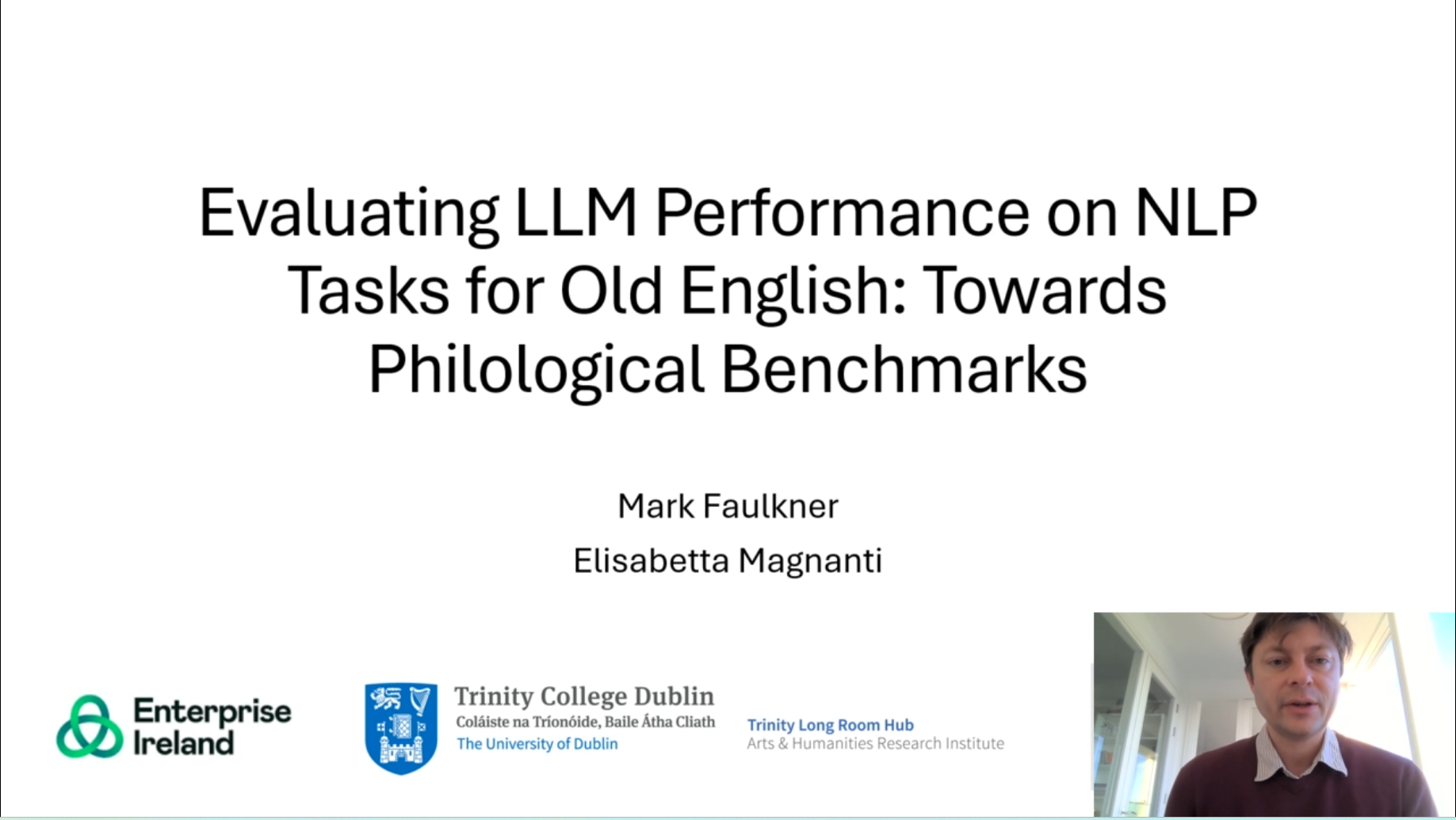
Mark Faulkner & Elisabetta Magnanti (TCD), Evaluating LLM Performance on NLP Tasks for Old English: Towards Philological Benchmarks
Register to Watch Now !
Stephen Pink, The Graphom Project: A Preliminary Atlas of Pre-Modern Written Sources  


Register to Watch Now !
5.15pmBreak
5.30pm GMT
Chair: Maurizio Forte (Duke)
Roundtable. Creating Research Machines with LMMs, I All participants above, with Laura Morreale (Harvard), Achim Rabus (Freiburg)
End c. 7pm GMT 

***

Day 2 (Friday, 5th December) – LMMs and / as the Archive. Our first panel exposes the unprecedented opportunities and challenges for using the technology with archival materials and records – how can one document and trust LMM records in the same fashion as those generated by people? The second panel asks what it means for LMMs themselves to be the archive. Almost automatically, such models infer a pre-modern Graphosphere: the Old World’s totality of scratched, daubed, written, and otherwise inscribed artifacts, extant and destroyed. Yet only a fraction of what survives is imaged, let alone readable by LMMs —and that survival itself is only a fraction of what once existed. How can an LMM usefully know the pre-modern? From there, we turn to what a realised Graphosphere might enable by mapping what exists and is missing: from guiding the allocation of scant human and financial resources, and correcting long-term historical biases; to opening wholly new fields of scholarship.

12.30pm GMT (we will be replaying the day’s pre-recorded presentations on the conference zoom channel)
2.30pm Chair: Stephen PinkResponse and Questions on the following talks (pre-released on 28th November):
Madeline Rose (TCD) (Re-) Structuring the Catalogue: Limitations and Design Strategy for Applying LLMs to Medieval Manuscript Catalogues
Register to Watch Now !
Achim Rabus (Freiburg): Visual Language Models and Traditional HTR for Multilingual Handwritten Text  
Register to Watch Now !
Dmitri Sitchinava (Potsdam), ‘Birchbark letters: the case of complex fragmented texts calling for LLM reconstruction
Register to Watch Now !
4pmBreak
4.30pm – 6pm GMT. Chairs: Anthony J. Lappin and Roger Martínez-DávilaRoundtable. LMMs as Archive All participants above, joined by Peter B. Kaufman (MIT), Laura Morreale (Harvard), and Elaine Treharne (Stanford)
Imagine a pre-modern graphosphere: an LMM-inferred reconstruction of the totality of the Old World’s scratched, daubed, written, and otherwise inscribed artifacts  –  extant and destroyed  – before the dominance of movable type. LMMs are already, almost automatically, inferring such a thing. Yet its likely centrality to future research also exposes the profound inadequacy of the current pre-modern LMM archive – that is, of the material on which these models train. This “archive” differs radically from an LMM’s usual training data. It is not the totality of printed matter (excluded by our definition of the pre-modern), nor of born-digital texts and images to which LMMs typically enjoy unfettered access. Instead it consists of the tiny fraction of extant pre-modern materials that have been transcribed or even just imaged – although most writing remains untranscribable by machine – in every case mediated by twenty-first-century technology and data forms. And the extant archive is only a fraction of what once existed. The first part of the panel examines this predicament: how the structure of digital availability shapes what AI can usefully “know” of the pre-modern world, and how technologies such as machine transcription are working to improve that structure. The second part turns to the opportunities even at this foundational phase: how LMMs can help map what exists and what is missing, guide digitisation priorities for funders, correct long-term biases in the historical record, and lay the ground for new insights, such as tracing the evolution – or polygenesis – of ideas and cultures across regions of the Old World and beyond.  

****

Day 3 (Saturday, 6th December) – Emergent Properties. We explore the unpredictable behaviours that appear as LMMs become more complex – above all, their apparent intellectual and aesthetic creativity. In his keynote, Roger Martínez-Dávila presents an AI-powered simulation of a fifteenth-century Castilian city, Plasencia, which resolved a civic dispute through an unforeseen strategy—one unattested in the sources yet historically plausible. The following panel broadens the discussion to ask what these behaviours mean for history, interpretation, and knowledge itself.

11am-1.45pm GMT (lunch provided)
Peter Broadwell, Simon Wiles (Stanford) & Katherine McDonough (Lancaster)
Introduction to Computational Map Studies with MapReader
Workshop (live: online / Doctorow Hall, St Edmund Hall).
Explore MapReader, a powerful toolkit for analysing historical maps – ideal for anyone interested in spatial humanities, cartography, or visual datasets.
1.45pm GMT . Tour of St Edmund Hall
led by Henrike Lähnemann
The rest of the day’s programme is entirely online
1.45pm GMT(we will be replaying the day’s pre-recorded presentations on the conference zoom channel)
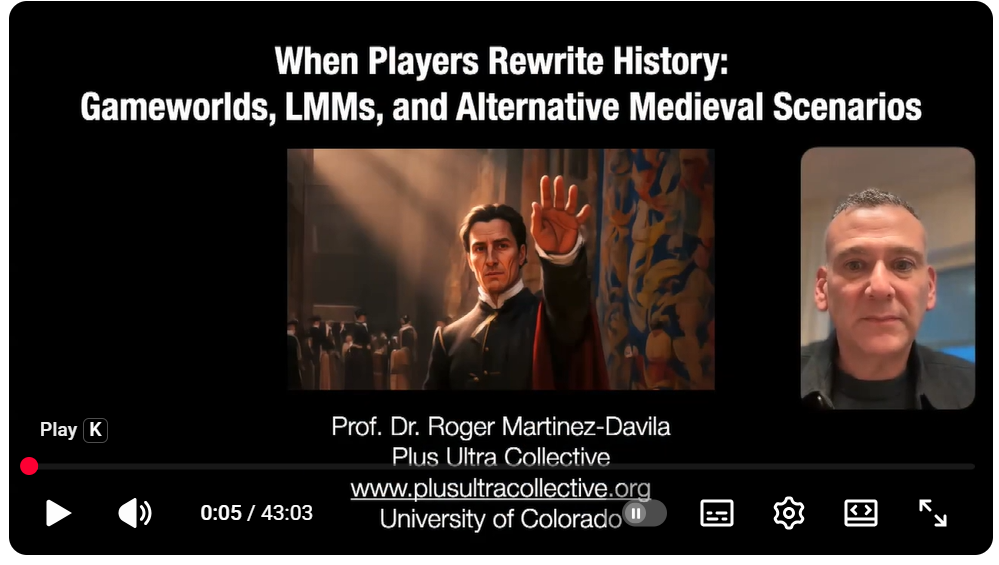
Roger Martinez-Dávila (University of Colorado)
Keynote. When Players Rewrite History: Gameworlds, LMMs, and Alternative Medieval Scenarios

Available to watch now.
Keynote will be replayed at 2.30pm GMT.

Register to Watch Now !
Abstract: In this keynote I’ll present Virtual Plasencia v4.0: The Medieval Vines of Three Religions, an AI-powered simulation of a fifteenth-century Castilian city, modeling its social, religious, and economic networks. In a course test run, a student team resolved a dispute involving a senorial lord, civic council, and bishop in an unforeseen way—one not attested in primary sources—yet arrived at the same result. Their novel strategy hints at a plausible but unrecorded historical pathway. I’ll analyse this surprise and propose that AI simulations like Virtual Plasencia v4.0 function not as rigid reconstructions, but as speculative spaces where LMM-driven agents can explore trajectories beyond the constraints of archival silence.
3.30pm GMT Respondent: Anthony J. LappinResponse and Questions to Keynote and Following Talks (pre-released 28th November)
Anthony Harris (Cambridge)
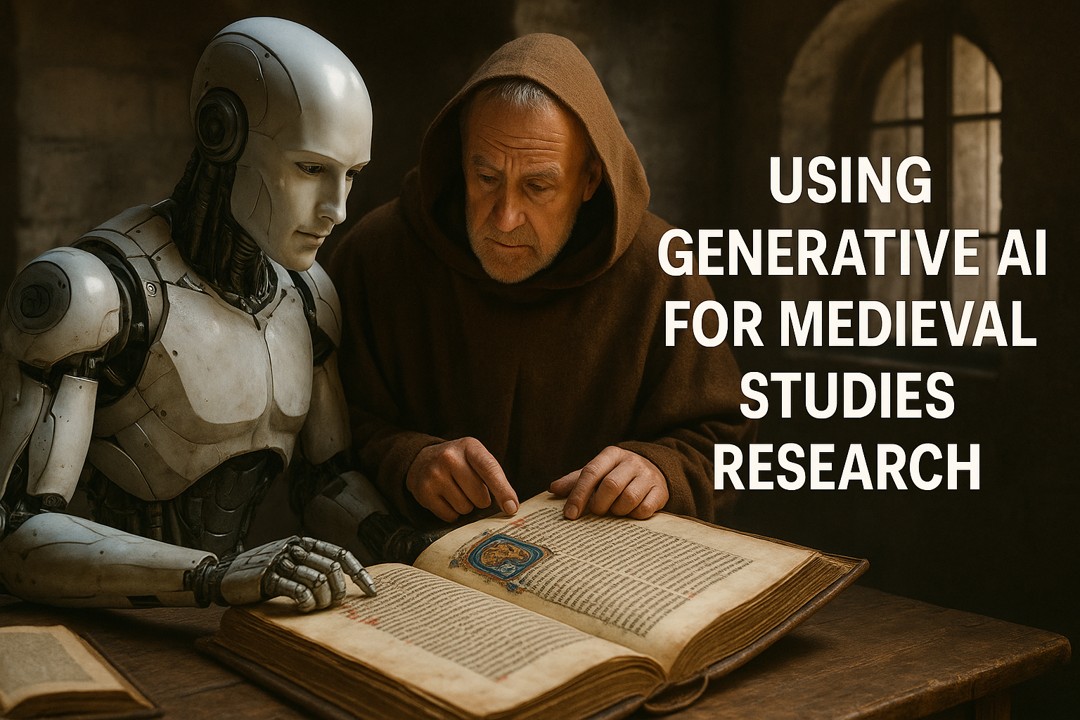
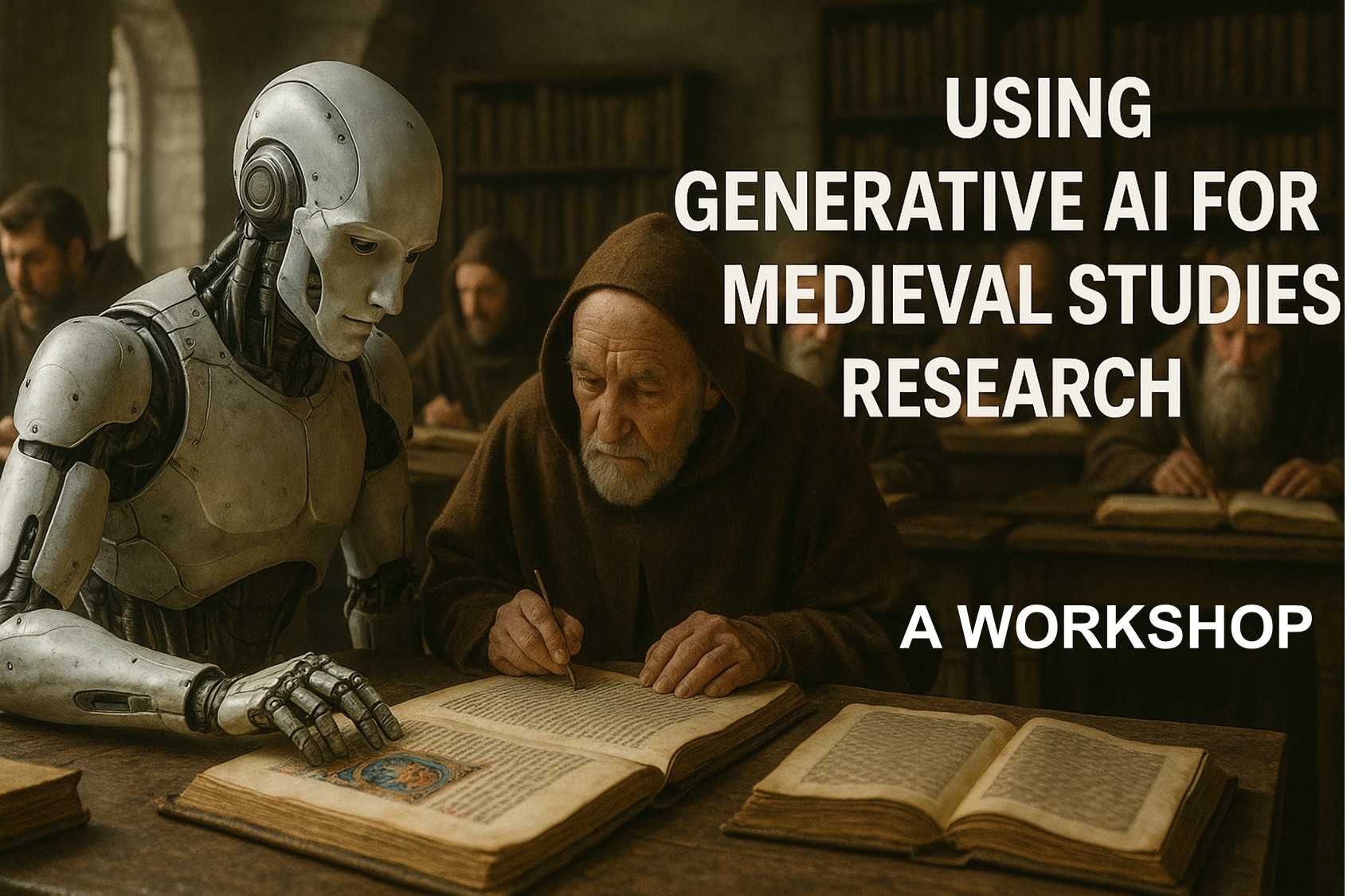
Using Generative AI for Medieval Studies Research (I)

( live ) 
Peter Broadwell, Simon Wiles (Stanford) & Katherine McDonough (Lancaster)
AI Models for Transcription and Exploration of Historical Maps and Other Troublesome Materials

Register to Watch Now !
Damon Wischik (Cambridge), Agentic AI and Homoiconic Coding 
Register to Watch Now !
4.45pmBreak
5pm-7pm GMTRoundtable. The Future of Pre-Modern Inference Studies
All participants above, with Sarah Bowen Savant (Aga Khan University), Peter B. Kaufman (MIT), Tom Revell (Oxford), Daniele Nardi (Sapienza), Pablo Acosta-García (UAB)

****

Day 4 (Sunday, 7th December) – Workshops. A hands-on continuation of Day 1’s theme, hybrid online / in-person workshops at St Edmund Hall, Oxford invite all participants to begin building and experimenting directly in their browsers. From promptotyping to map-based AI exploration and automated manuscript transcription, tutors guide attendees through the practicalities of integrating LMMs into their research.

1pm GMT
Anthony Harris (Cambridge)
Using Generative AI for Medieval Studies Research (II)
In this self-guided hands-on workshop attendees will have an opportunity to try out some of the things discussed by Dr Harris in the Saturday session –  ask questions, get feedback on problems with suggested solutions, and look at problem areas such as avoiding hallucinations, keeping research data confidential from the general model, and more advanced prompt engineering.  
Note, it is very important that delegates attending the session:
i. have a paid version of either ChatGPT (EDU is OK but the full version is preferred), Copilot for Office 365, Google Gemini, Claude or Perplexity.
ii. should have already logged into one or more of these Generative AI Sessions and have entered the prompt  ‘Give me a list of ten rhyming words of three syllables that do not end with Y’.
3.45pm GMT
Ben Kiessling (Université Paris Sciences et Lettres)
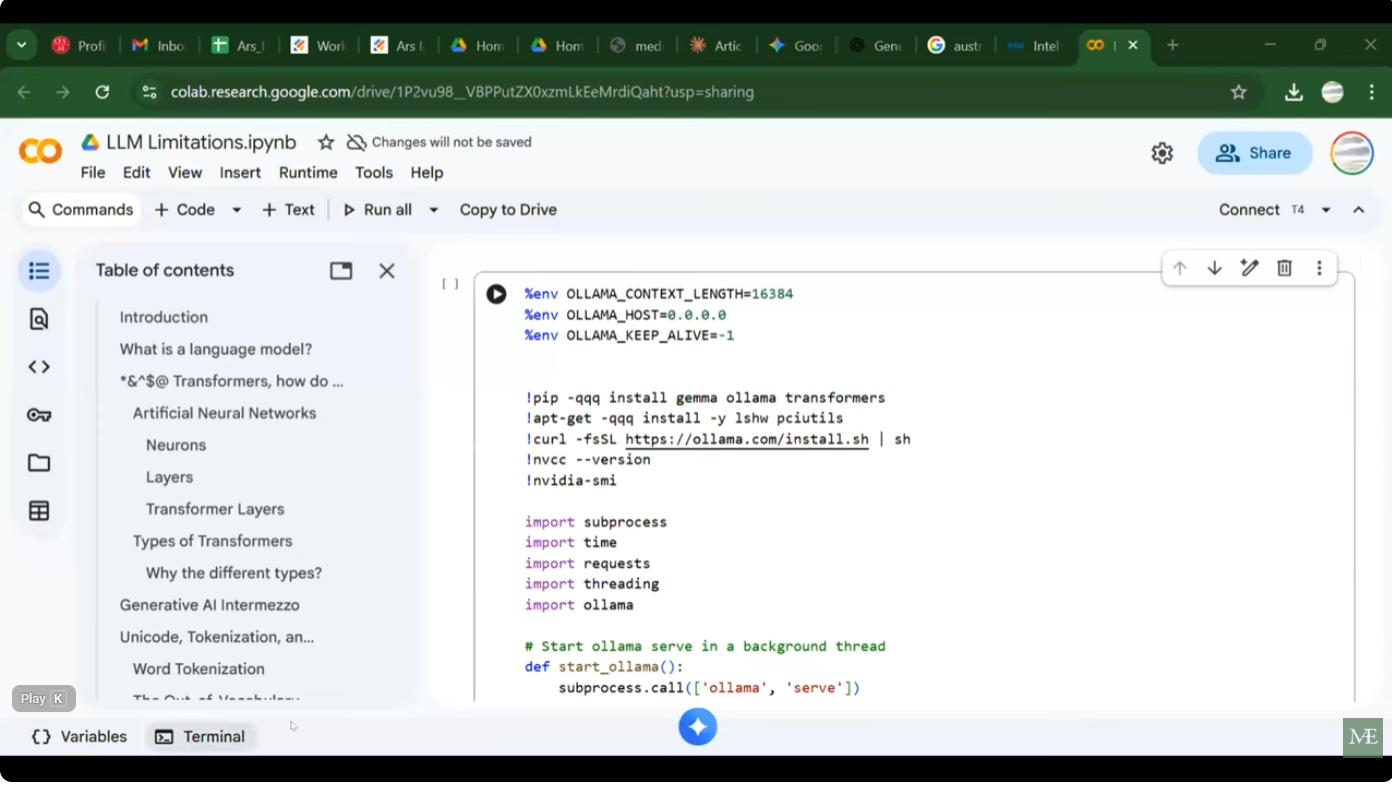
Unpacking Large Language Models: Design, Limitations, and Solutions for Humanities Research
Although LLMs have transformed text analysis, they remain optimised for the modern, leaving the pre-modern underserved.  Learn how LLMs are constructed, and how the chosen parameters intersect, and often conflict, with common scholarly practice. The session concludes with practical strategies for overcoming such limitations.
End 6.30pm GMT 

The conference is organised in collaboration with Dr Stephen PinkProf. Henrike Lähnemann, Oxford Medieval StudiesDr  Anthony John Lappin at the University of Stockholm; and the Plus Ultra Collective—a network of 40+ international scholars advancing intercultural studies and the digital humanities. If you have any further queries, please email us at arsinquirendi@gmail.com

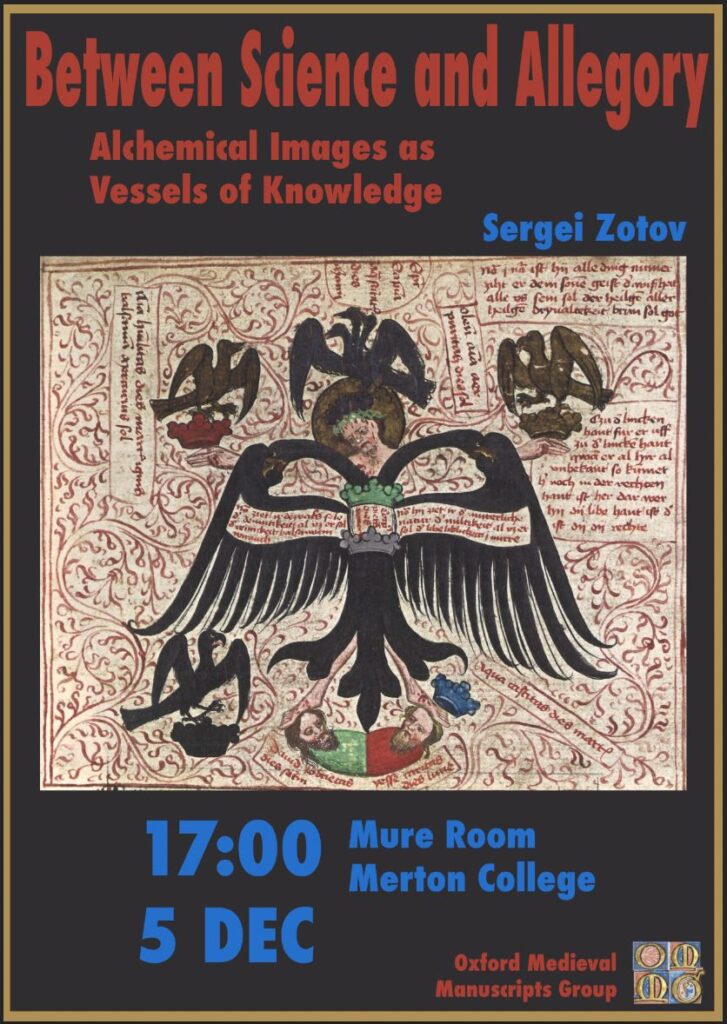
Sergei Zotov: Alchemical Images as Vessels of Knowledge

Merton College, 5 December 2025, 5pm

Join the Oxford Medieval Manuscripts Group for the final event in their Michaelmas Term ’25 programme in the Mure Room at Merton College at 5pm on Friday 5 December (Week 8) where Sergei Zotov (Warburg Institute, London) will speak on ‘Between Science and Allegory: Alchemical Images as Vessels of Knowledge’

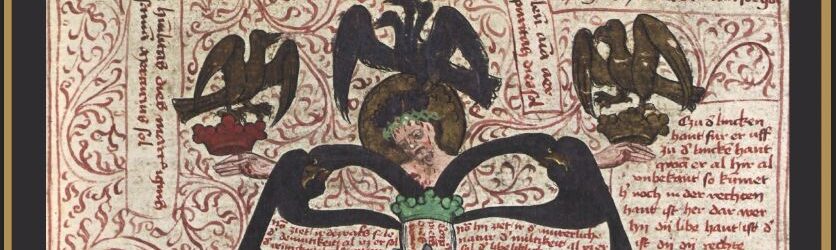
The talk examines how alchemical images in medieval manuscripts forged a distinctive mode of knowledge at the threshold of science and imagination. Originating as visual experiments, they developed into a symbolic language that articulated natural philosophy through allegorical form. Far from mere decoration, these images mediated between empirical inquiry and religious, zoological, bodily, or social interpretation — becoming vessels in which medieval science and allegory converged.

For any questions, or to be added to the Oxford Medieval Manuscripts Group’s mailing list, contact Fergus Bovill at oxfordmedievalmss@gmail.com

The Secret Geometry Behind Words

Report by Leonie Erbenich, Visiting Graduate Student in Modern Languages, on a workshop with Giles Bergel for the History of the Book students in Modern Languages 2025. Cf. the History of the Book blog on the workshops in 2024 ‘Seeing Materiality through a Computer’s Eyes‘ and 2023 ‘Digital Tools for Image Matching

How Archivists can benefit from Computer Vision

Dusty reading rooms are hardly the place where you’d expect to find cutting-edge technology — but AI researchers and libraries have formed an unlikely symbiosis in the field of Computer Vision, a technology that transforms images into geometrical data. You’ve probably come across this branch of AI in your daily life – e. g. when parking your car with park assist, or identifying a plant via an app, or trying to track down a pair of shoes with google lens. But Computer Vision is also a real gamechanger when it comes to unveiling the History of Books.
Humans mostly open books because they want to read the text that’s inside. The absence of this intent in the computational gaze allows for a different focus: Each page becomes first and foremost an image, a surface consisting of shapes and lines that can be measured and compared.
Even before the digital age, bibliographers were already looking for ways to see differences between seemingly identical pages: The McLeod Portable Collator for example is  a wonderfully eccentric, mechanical device that overlaid two printed pages optically. (More information on library machines can be found on the Bodleian blog)

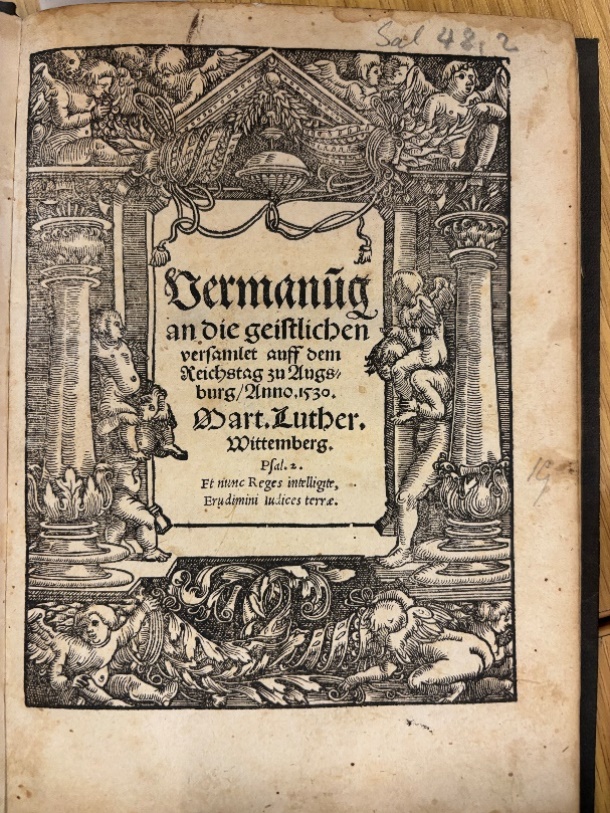
Today, those ingenious optical tools have digital descendants: Software such as ImageCompare, developed by Oxford’s Visual Geometry Group, can compare scans of bookpages and automatically highlight even the tiniest shifts in type, punctuation, or ink. What once required hours of eye-straining concentration can now be done in seconds. Funfact: The beloved “before- after” slide feature on Instagram is only one of several options ImageCompare offers to make it easier to “spot the difference”- for example in these title pages of reformation pamphlets from 1530:

ARCH8o.G.1530(15)
ARCH8o.G.1530(13)

Nevertheless, these tools are not magical “brains in a box” that spit out research results, as Dr Giles Bergel, Digital Humanities Researcher in the Visual Geometry Group Oxford, puts it. They just act as magnifiers that help spotting similarities and differences in material. It’s up to humans to interpret the data: Woodcuts, for example, were often reused across countless editions of books or manuscripts at different times and places. Paradoxically, the newer looking print can sometimes be the older one. Scotland Chapbooks (https://data.nls.uk/data/digitised-collections/chapbooks-printed-in-scotland/) is capable of searching a large dataset for illustrations and visually group them together, allowing researchers to trace how a single woodcut might have changed over time — a crack deepening, a border wearing thin, holes left by a bookworm.

Research Examples

Giovanna Truong, a former History of the Book student, used ImageCompare to identify identical illustrations in two different Yiddish Haggadot-uncovering a link between the two printers of the books based in Venice and Prague.

Blair Hedges, evolutionary biologist at Pennsylvania State University, studied the different patterns of wormholes which appear as white dots on prints and was able to attribute them to two different species of beetles. The holes in the woodcuts revealed how they were spread in Europe at the time, coincidentally strikingly in accordance to the distribution of Catholics and Protestants in Europe…

These examples show how the use of AI reveals formerly invisible patterns that can serve as clues to a book’s life and travels. And it might help to shift the image of dusty librarians and archivist trailing behind their time – as it is actually quite the reverse.

Launch of Peseants’ War Pamphlet

Friday, 28 November, 5-6.30pm
Room 2 of the Taylor Institution Library

The launch featured a dramatised reading of the text and a display of the Taylorian holdings of German Peasants’ War pamphlets by a group of readers from across the University. The new edition comprises a historical and bibliographic introduction as well as the edition, translation, and facsimile. Open access volume here and a recording.

Introduction by Henrike Lähnemann and Lyndal Roper. Reader in the order of speaking: Henrike Lähnemann, Ryan Hampton, Rahel Micklich, Lyndal Roper, Eddie Handley, Marina Giraudeau, Ararat Ameen, Monty Powell, Georgia Macfarlane, Hannah Free, Victoria Speth, Emma Huber, Tamara Klarić, Timothy Powell

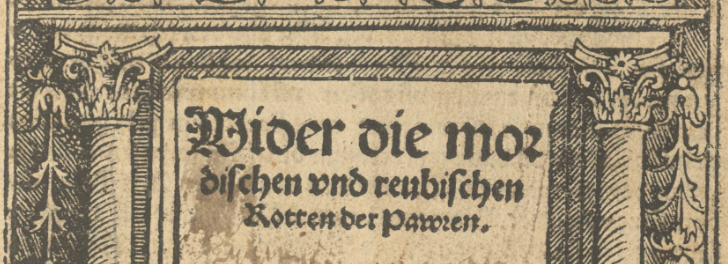
Practice recording of Martin Luther’s pamphlet ‘Against the Bands of Peasants’ by Henrike Lähnemann

1525 was a dramatic year in German politics. The Peasants’ War swept through South and East Germany and mobilised a large number of peasants in support of the movement, and an even larger number on the side of the princes and ruling classes opposing it. Martin Luther, dependent on the princes to realise his Reformation ideas, wrote one of the most vicious pamphlets of his life, attacking the ideas of the peasants, particularly their use of the term ‘freedom’. He defended his own use of the term as pertaining only to spiritual freedom and condemned insurrection in the strongest terms, calling on the princes to “slay, choke and stab” any rebel.

500 years after its first publication, this edition with a new modern English translation, extensive linguistic and historical footnotes, and a comprehensive introduction contextualises the attack, both in terms of its historic significance and its afterlife. As in the previous volumes from the Reformation Series of the Taylor Editions, the text is based on pamphlets from the Taylorian collection which are also provided as facsimiles. The volume is published open access and with additional resources such as an audiobook and ‘fold-your-own-pamphlet’ for both of the copies held in the Taylorian. In the historical introduction, Rahel Micklich discusses in turn the historical background of the Peasants’ War (1), the underlying conflict with radical reformer Thomas Müntzer (2), and the ensuing pamphlet war with the Catholic adversaries of Luther, particularly Johann Cochlaeus. Timothy Powell then looks at the reception of the pamphlet in the GDR who were clearly taking the side of the peasants and of Thomas Müntzer against Luther’s polemic. A book historical chapter follows, examining the contemporary reception of all of Luther’s 1525 pamphlets on the topic as mirrored in the pamphlets held in the Taylorian and in the Bodleian Libraries in Oxford. The introduction is rounded off by a short explanation of the language of the pamphlet, the typographical conventions, and the principles guiding the edition by Henrike Lähnemann, with a comprehensive bibliography on the pamphlet.

Have a look at the digital editions of the two Taylorian copies of Martin Luther’s pamphlet against the peasants. No. 2 also includes the new English translation.

  1. Wider die sturmēden Bawren Auch wider die reubischen vnd moͤrdisschen rottē der andern Bawren. Taylorian copy ARCH.8°.G.1525(28) [Erfurt: Matthes Maler,] 1525. https://editions.mml.ox.ac.uk/editions/peasants-erfurt/
  2. Wider die mordischen vnd reubischen Rotten der Pawren. The Taylorian copy ARCH.8°.G.1525(27) [Nuremberg: Friedrich Peypus,] 1525. https://editions.mml.ox.ac.uk/editions/peasants-nuremberg/

A full list of all Reformation pamphlets in the Taylorian with photographs of their title-pages is available on Taylor Editions website, and links to all published volumes in the three series ‘Treasures of the Taylorian’ is available on the publications website.

Medieval Matter MT25, Week 7

Week 7, and the prospects of the vac creeps ever closer! Two particular items of note this week. First, there is no Medieval History Seminar this week. Second, Prof. Roberta Mazza’s lecture for the Centre for Manuscript and Text Cultures has been postponed until next term. If you are looking for an alternative manuscript fix: come to the Medieval Manuscripts Support Group, following the Friday coffee morning this and next week.

As always, you can find a complete copy of the Oxford Medieval Studies Booklet here.  Any last-minute changes will be updated in the weekly blogpost and in the calendar, both accessible via https://medieval.ox.ac.uk/.

Monday

Tuesday

  • Latin Palaeography Manuscript Reading Group – 2:00, Weston Library (Horton Room)
  • Medieval Church and Culture Seminar – 5:00, Harris Manchester College. Mark Vessey (UBC) will be speaking on ‘Some Problems in the Earliest History of the Latin Life of Antony’.
  • Medieval French Research Seminar – 5:00, Maison Française d’Oxford. Prof. Francis Gingrass (University of Montreal) will be speaking on ‘Luttes fratricides dans l’Histoire ancienne jusqu’à César’.
  • Old English Graduate Reading Group – 5:15, location TBC, contact Hattie Carter

Wednesday

  • Medieval Hebrew Reading Group – 10:00, Clarendon Institute.
  • John Lydgate Book Club – 11:00, Smoking Room (Lincoln College).
  • Medieval German Graduate Seminar on the Constance Chronicle – 11:15, Somerville College.
  • EMBI Mapping Workshop – 2:00 in room 00.056 of the Schwartzman Centre. A few spaces are still available – sign up here.
  • Older Scots Reading Group – 2:30, Room 30.401 in the Schwarzman Centre.
  • Medieval Latin Documentary Palaeography Reading Group – 4:00, online.
  • Late Antique and Byzantine Seminar – 5:00, Ioannou Centre. Thomas Laver (Cambridge) will be speaking on ‘Estates, Economy, and ‘Holy Men’ in Late Antique Egyptian Monasteries’

Thursday

  • Middle English Reading Group – 11:00, Beckington Room (Lincoln College).
  • Environmental History Working Group – 12:30, Room 20.421 in the Schwarzman Centre. Meeting details to be announced.
  • Celtic Seminar – 5:00, hybrid. Gwen Angharad Gruffudd & Arwel Vittle will be speaking on ‘‘Dros Gymru’n Gwlad’: hanes sefydlu’r Blaid Genedlaethol’
  • King Faisal Lecture – 5:00, Oxford Centre for Islamic Studies. Professor Muhsin Jassim al-Musawi (Columbia University) will be speaking on ‘The Medieval Islamic Republic of Letters: Arabic Knowledge Construction’. All Welcome. No registration is required.
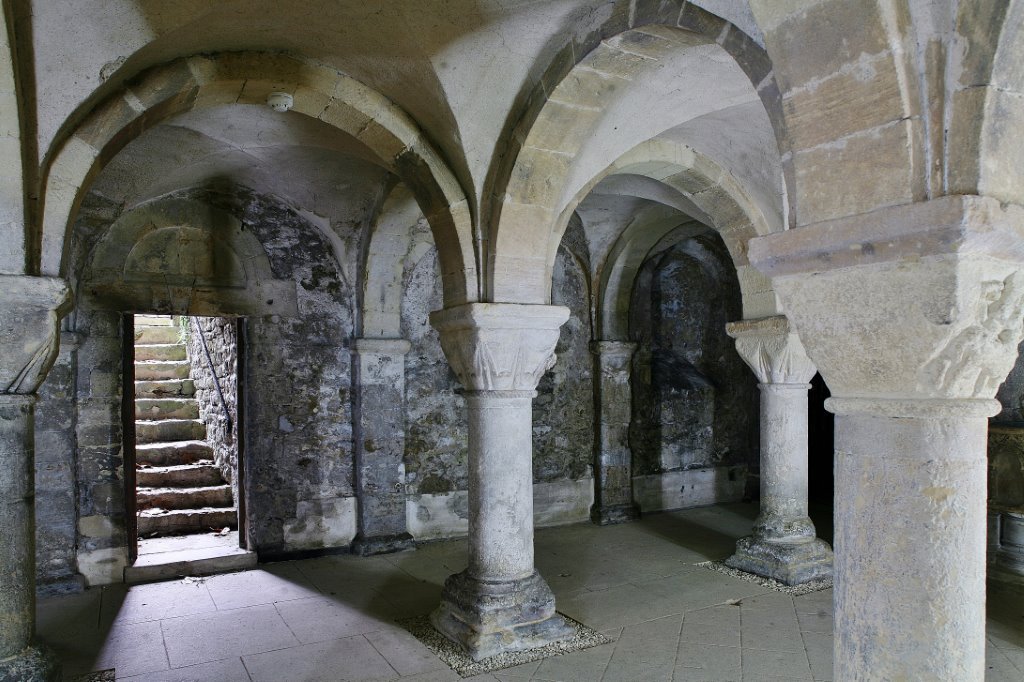
  • Compline in the Crypt – 9:30pm, St Edmund Hall.

Friday

Opportunities

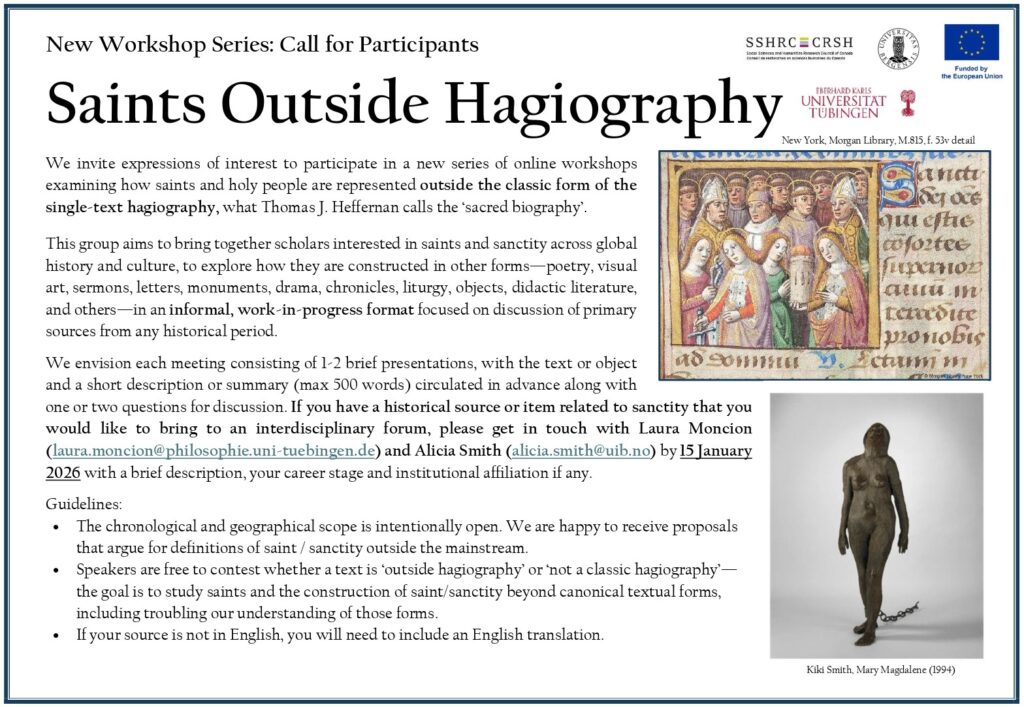
CfP: Saints Outside Hagiography

New York, Morgan Library, M.S15. E. 53v detail

We invite expressions of interest to participate in a new series of online workshops examining how saints and holy people are represented outside the classic form of the single-text hagiography, what Thomas J. Heffernan calls the ‘sacred biography’. This group aims to bring together scholars interested in saints and sanctity across global history and culture, to explore how they are constructed in other forms poetry, visual art, sermons, letters, monuments, drama, chronicles, liturgy, objects, didactic literature, and others – in an informal, work-in progress format focused on discussion of primary sources from any historical period. We envision each meeting consisting of 1-2 brief presentations, with the text or object and a short description or summary (max 500 words) circulated in advance along with one or two questions for discussion. If you have a historical source or item related to sanctity that you would like to bring to an interdisciplinary forum, please get in touch with Laura Moncion (laura.moncion@philosophie.uni-tuebingen.de) and Alicia Smith (alicia.smith@uib.no) by 15 January 2026 with a brief description, your career stage and institutional affiliation if any.
Guidelines:
The chronological and geographical scope is intentionally open. We are happy to receive proposals that argue for definitions of saint / sanctity outside the mainstream
Speakers are free to contest whether a text is ‘outside hagiography’ or ‘not a classic hagiography — the goal is to study saints and the construction of saint/sanctity beyond canonical textual forms. including troubling our understanding of those forms.
If your source is not in English, you will need to include an English translation.