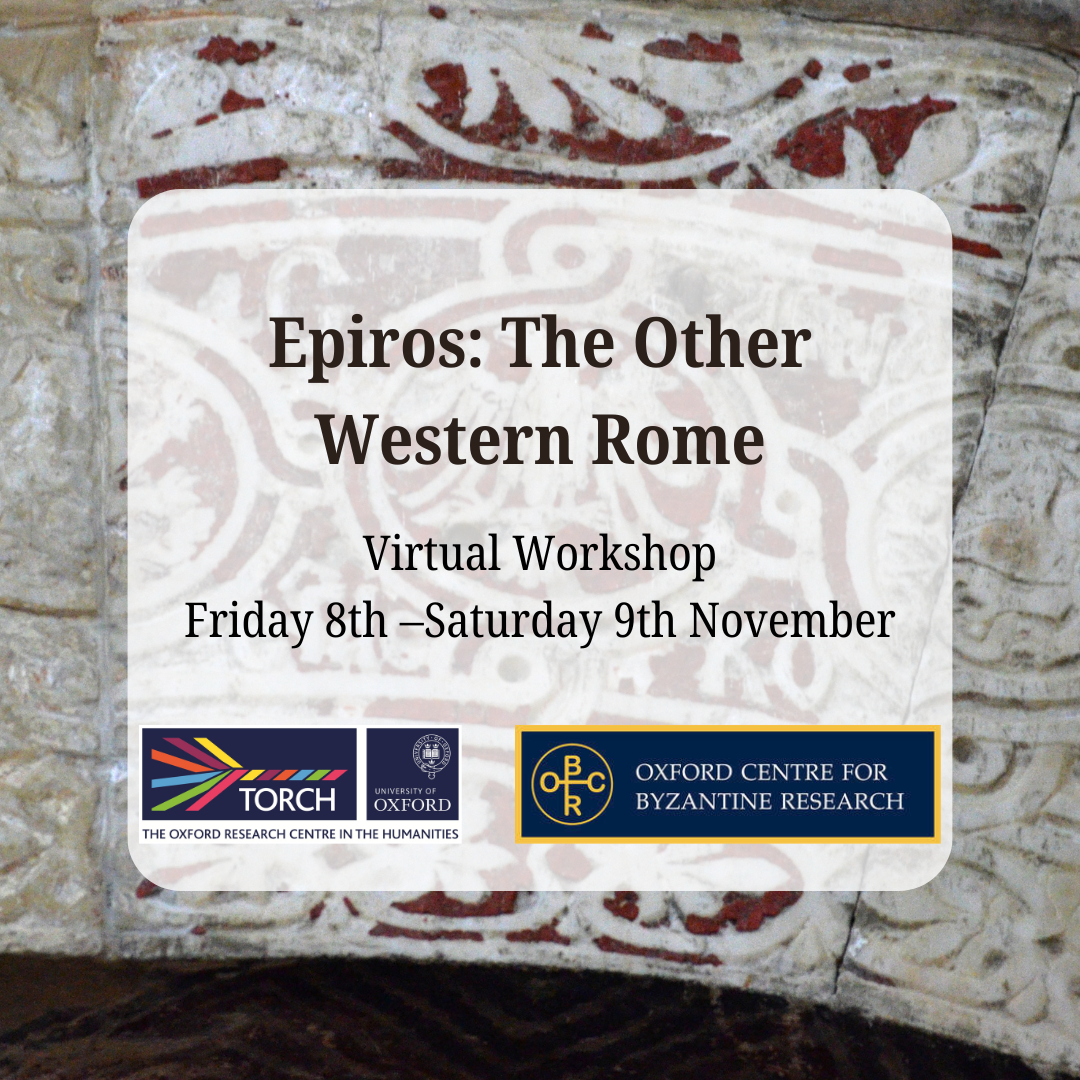
‘Epiros: The Other Western Rome’ Virtual Workshop, Friday 8th – Saturday 9th November 2024. Registration and Programme.

This workshop was made possible through the generous support of the Oxford Centre for Byzantine Research (OCBR) and The Oxford Centre for Research in the Humanities (Torch).

For close to two and a half centuries, the state of Epiros represented a crucial node for an alternative socio-political network of the Balkans. Founded by the illegitimate son of the union of three imperial Byzantine dynasties, at its largest extent Epiros assumed the title of ‘Empire of the Romans’ and campaigned to the very walls of Constantinople. Defeated but not destroyed in 1230, Epiros persisted in its autonomy through the strength of its ties. Bound by either marriage or confession to Italians, Serbians, Bulgarians, Vlachs, Albanians, and more, Epiros continued to exist as an alternate, moved Byzantium that understood its reunification of the former provinces of the Byzantine Balkans to be a retaking and preservation of ‘the West’, a term with which it also self-identified. Transitioning in the fourteenth century to Albanian and later Italian rule, Epiros’ role as a centre of multi-ethnic exchange and independence created a legacy that exists today.

This workshop gathers leading research across multiple fields to discuss the places and peoples which were either part of or engaged with this Epirote Western Rome. Following two successful panels at Kalamazoo and Leeds International Medieval Congresses, supported by the Oxford Centre for Byzantine Research, this hybrid workshop calls upon scholars to present from multiple specialisms. One of the reasons Epiros and its neighbours in the period of the Principality, Empire, and Despotate have remained so poorly studied has been the reliance upon century-old editions and a reluctance to publish in translation. Therefore, we envision not only a proceedings volume from this workshop but additionally the creation of a ‘sourcebook’ for Epirote Western Rome and its surrounding states which presents both papers and the key materials for its study in English translation with critical edition as necessary.

Registration: https://us06web.zoom.us/meeting/register/tZElduCsrjojHNIUxUlJ-geTXPVBuiBkzywn

All timings are in the UK’s Timezone (GMT)

DAY 1 Friday, 8th November 2024

Opening address

9:00 – 9:20

Welcome from Nathan D.C. Websdale and Evan Zarkadas

Session 1 Overview: Epirote Studies

9:30 – 11:00

9:30-10:00 EFSTRATIA SYGKELLOU (Ioannina)

Medieval Epiros: Scientific Studies and Activities in Greece: An Overview

Break – 15 min

10:00-10:30 EVAN ZARKADAS (Independent)

The New Ioannites: The Influx of the Constantinopolitan Refugees in Epiros after 1204 and their Impact on Ioannina

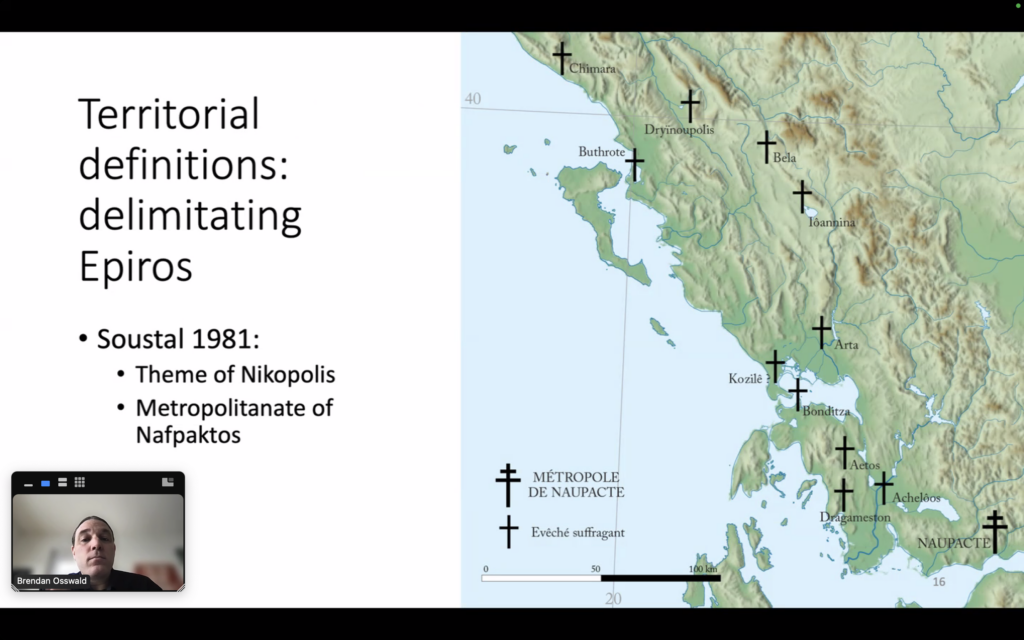
10:30-11:00 BRENDAN OSSWALD (Tübingen)

Late Medieval Epiros: A Spatial Analysis

Session 2

The Dytikoi I: The (Post) ‘Komnenian System’

11:15 – 12:45

11:15-11.45 MICHAEL ANGOLD (Edinburgh)

The Petraliphas in Exile

11:45-12:15 NATHAN D.C. WEBSDALE (Oxford)

In Defence of Epiros: Michael Angelos and Theodore Komnenos Doukas as Traitors, Heirs, and Moses

12:15-12:45 JOHN KEE (Dumbarton Oaks)

Michael Choniates’ Letters to Epiros: John Apokaukos, Theodore Komnenos Doukas, and the end of Byzantine Aegean Greece

Break – 75 min

Session 3 The Dytikoi II: Network Analysis

14:00 – 15:30

14:00-14:30 CHRISTOS TSATSOULIS (N.H.R.F., Athens)

Towards an Edition of a Prosopographical Lexicon for Byzantine Epiros (4th-15th c.): the “Anonymoi” in Epirote Society

14:30-15:00 KATERINA KORRE (Patras)

The Vasilachi case: Observations on the Population Patterns Through the “Archontes” of the Late Medeival Epiros

15:00-15:30 ROBIN SHIELDS (Independent)

Epiros as a Breadbasket? The Extraordinary Barges Agreement of 1436 and the Wider Cereal Trade Between the Tocco Despotate and Ragusa in the mid-15th century

Session 4 The Hybrid Material Culture of Epirote Rome

15:45 – 16:45

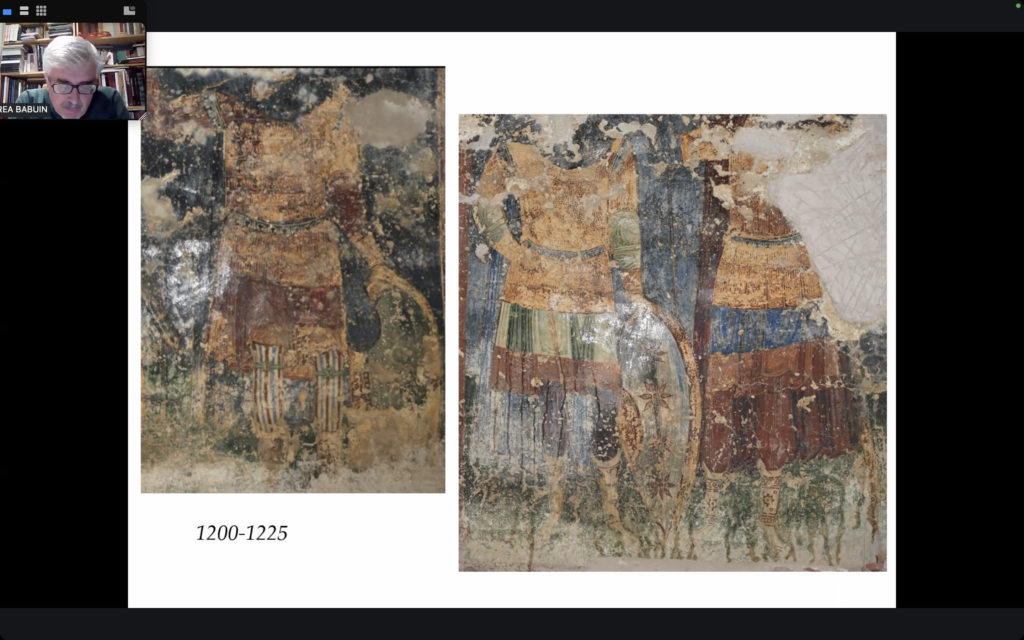
15:45-16:10 ANDREA BABUIN (Ioannina)

The Military Element in Late Medieval Epiros through Literary, Historical and Artistic Sources of the Period

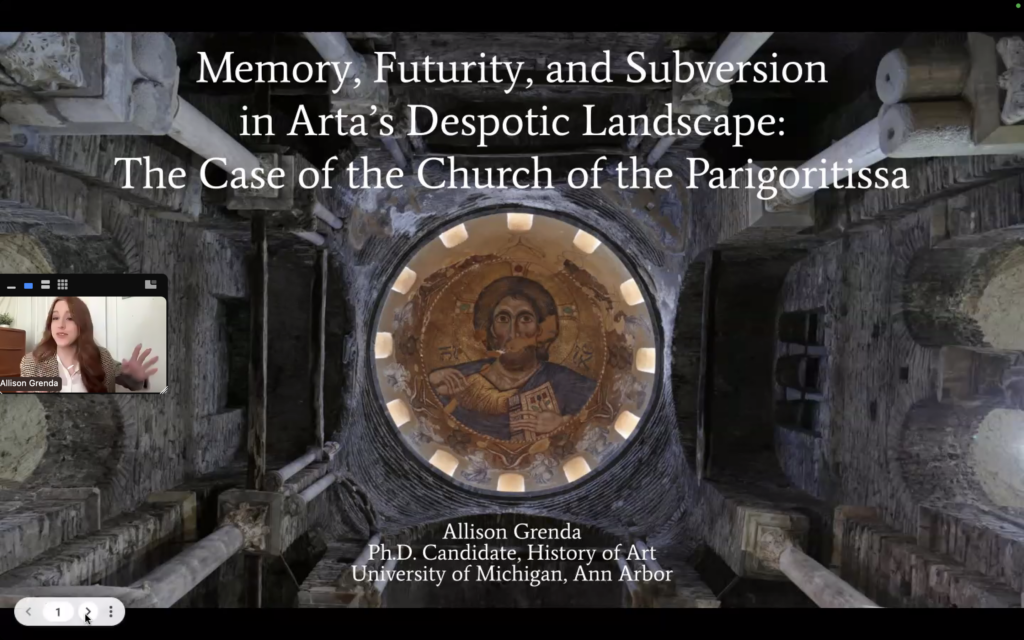
16:10-16:40 ALLISON GRENDA (Ann Arbor, Michigan)

Memory, Futurity, and Subversion in Arta’s Despotic Landscape: The Case of the Church of the Parigoritissa

DAY 2 Saturday, 9th November 2024

Session 5

09:00 – 11:00

A Roman ‘Empire’ of the Balkans I: Epiros and Bulgaria

09:00-09:30 FRANCESCO DALL’AGLIO (Bulgarian Academy)

Not Just Klokotnitsa: Relations Between Epiros and Bulgaria between 1207 and 1241

09:30-10:00 KALIN YORDANOV (Bulgarian Academy)

“Totum ducatum di Finepople et quisque eum tenet”: A Key to Solving Theodore Komnenos’ Mysterious Diversion Towards Klokotnitza at the March on Constantinople in 1230?

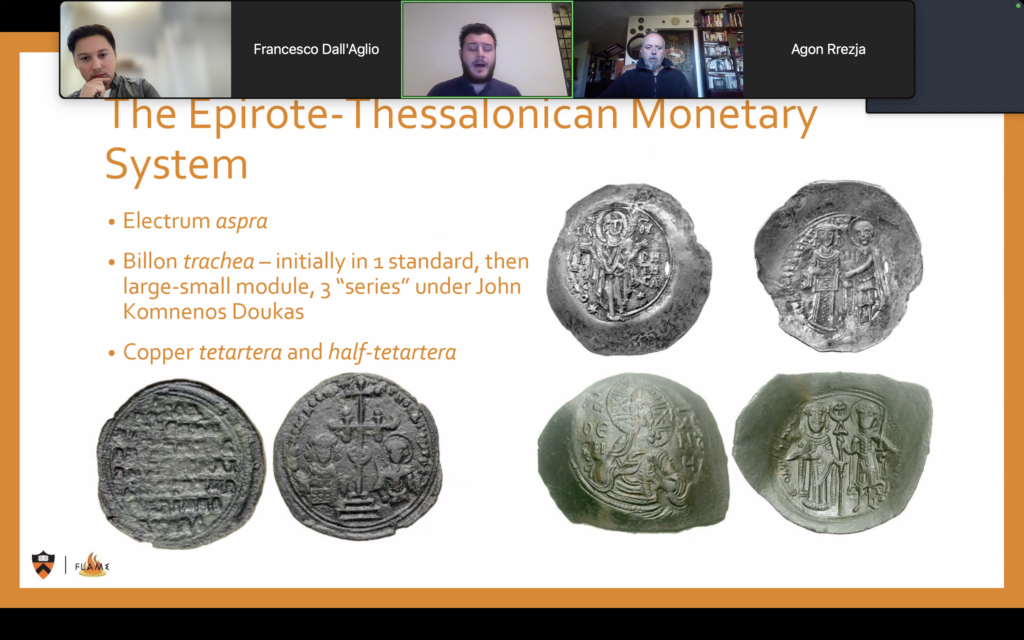
10:00-10:30 ILIA CURTO PELLE (Princeton)

Circulation Patterns of Epirote-Thessalonican Coinage in the 13th Century

10:30-11:00 SAMUEL E.L. COWELL (Vienna)

Reevaluating the Epirote Coinage of Michael II Komnenos Doukas

Break – 30 min

Session 6

A Roman ‘Empire’ of the Balkans II: Epiros amidst its Neighbours

11:30 – 13:30

11:30-12:00 JACK DOOLEY (Royal Holloway, London)

The Orsini Family in the Aragonese Chronicle of Morea

12:00-12:30 AGON RREZJA (Zagreb)

Albanians Between the Despotate of Epiros and the Latin West in the 13th-14th Centuries

12:30-13:00 GREGORY MANOPOULOS (D.U.Th., Komotini)

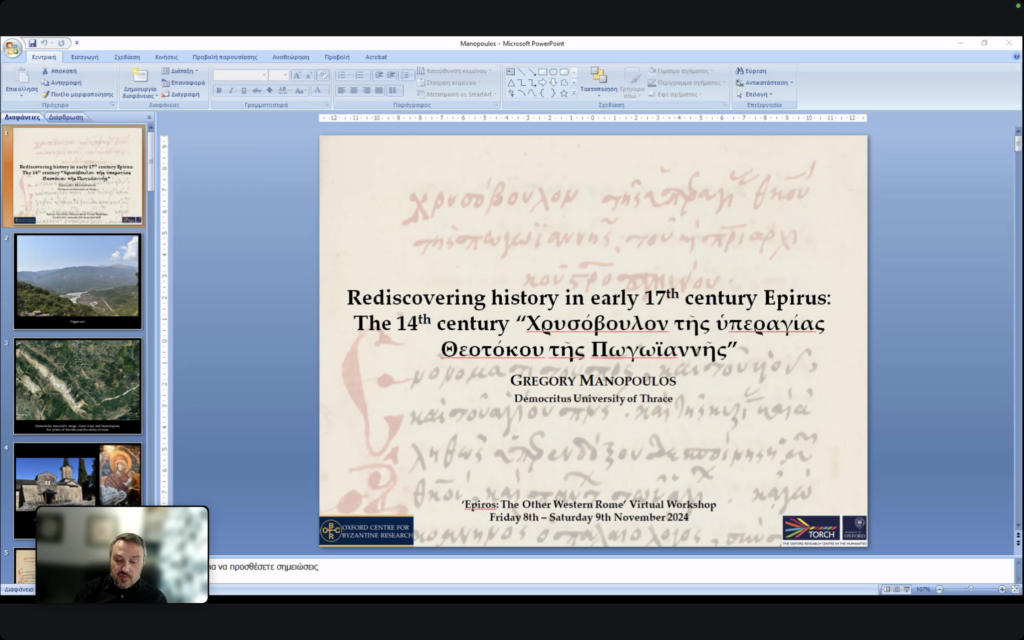
Rediscovering history in early 17th century Epiros: The 14th century “Χρυσόβουλον τῆς ὑπεραγίας Θεοτόκου τῆς Πωγωϊαννῆς”

13:00-13:30 GEORGE TEREZAKIS (Tübingen)

The Transformation of Late Byzantine Epiros to Early Ottoman Sanjak of Yanya (Ioannina) (12th-16th c.): Continuity and Change

Session 7

Reassessing Social Life in the Dossier of John Apokaukos, Metropolitan of Naufpaktos (1200–1232)

14:30 – 16:00

14:30-15:00 NICK CHURIK (Princeton)

Everyday Violence in Apokaukos

15:00-15:30 IOANNIS SMARNAKIS (Aegean)

Episcopal Power and Urban Communities in the Early Despotate of Epiros

15:30-16:00 ALEKSANDAR JOVANOVIC (Fraser Valley)

Contract-Loving Communities: Imperial Bureaucratic Practices in the Provincial Society of John Apokaukos

16:00 – 16:15 Closing Remarks

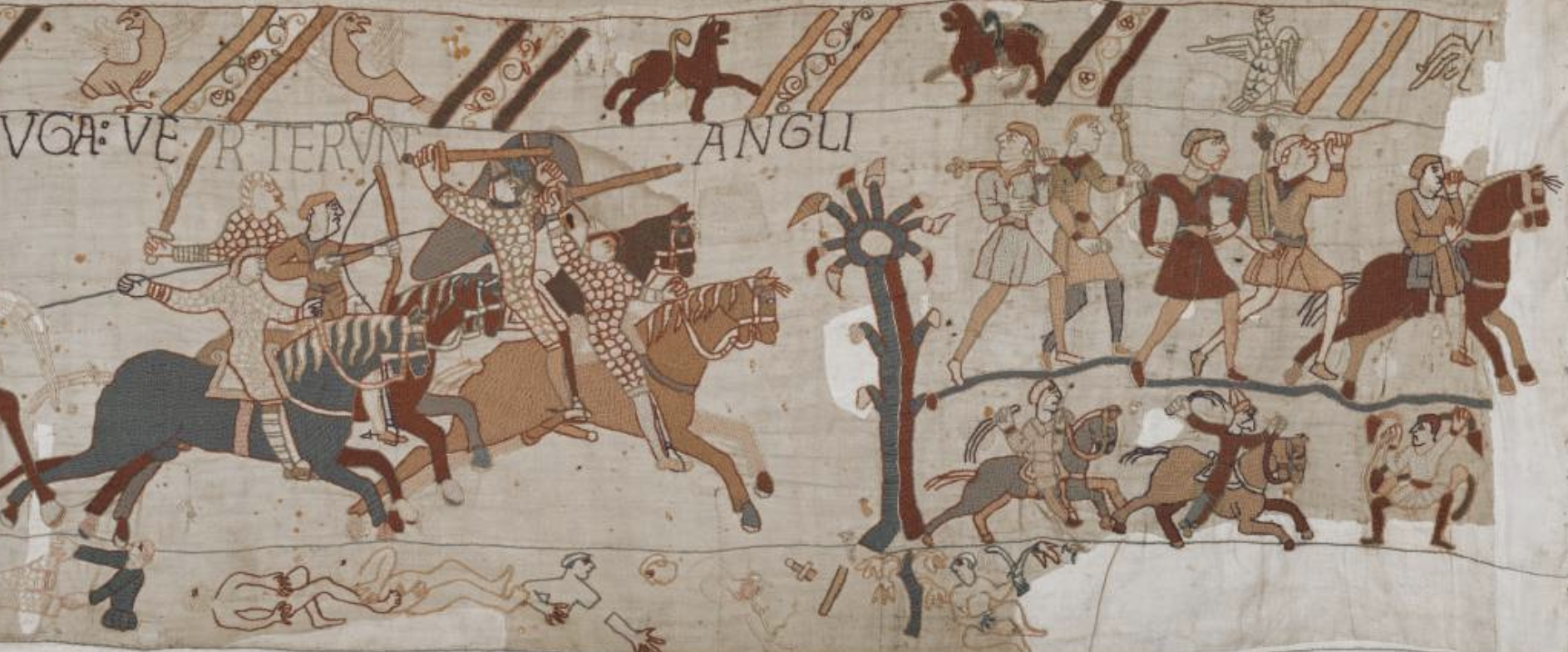
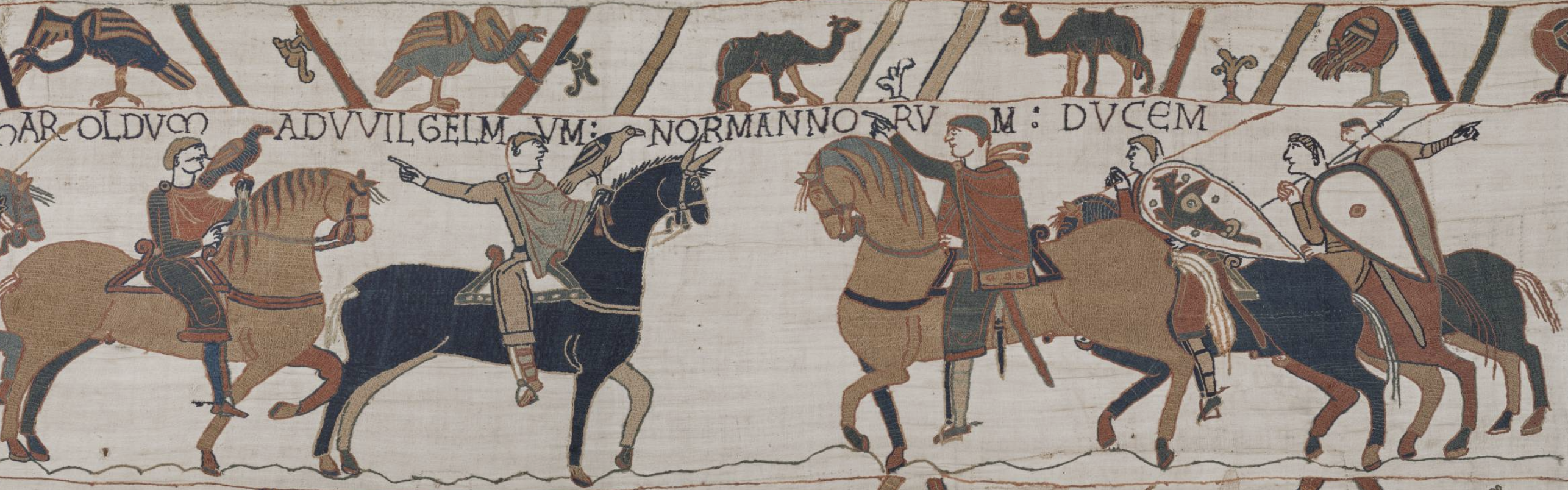
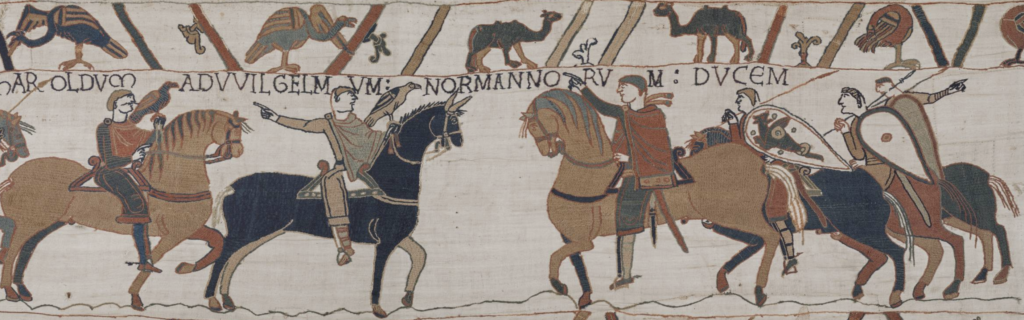
Panel 34 of the bayeux Tapestry, featuring two birds.

Medieval Matters: MT 24, week 1

First week is upon us! Welcome back, and a particular welcome to those joining us for the first time. I hope you’ve all had a chance to flick through the booklet of medieval events this term – if not, a PDF version can be found here. I’d like to draw your attention to the OMS Welcome Event this Tuesday at 5pm – I look forward to meeting lots of you there, and hearing more about the events you are running.

And: check out this handy guide to how to blog – including a call for authors for the OMS blog – by Miles Pattenden.

EVENTS THIS WEEK

Monday

  • French Palaeography Manuscript Reading Group – 10.30am at the Weston Library.
  • Medieval History Seminar – 5pm in the Wharton Room, All Souls. Edward Zychowicz-Coghill (KCL) will be speaking on ‘Writing the Conquest of Egypt: A case study in the Formation of Islamic Historical Writing’.

Tuesday

  • Medieval English Research Seminar – 12.15pm in Lecture Theatre 2, St Cross Building. Amy Appleford (Boston University) will be speaking on ‘Ascetic Theory and the Impaired Christ: Peter Damian, Richard Rolle, Julian of Norwich’.
  • Latin Palaeography Manuscript Reading Group – 2pm in the Weston Library.
  • Oxford Medieval Studies Welcome Event – 5pm in the Wellbeloved Room, Harris Manchester College. A welcome event for all medievalists, old and new – all those running a seminar/group are encouraged to come along to pitch their event to the community!

Wednesday

  • Reading Jews in Late Antiquity – 10am in Room 207, The Clarendon Institute, Walton St. The topic this week will be Jewish Women and Communal Roles.
  • Medieval German Graduate Seminar – 11.15am at Somerville College. The topic for this term is Konrad von Megenberg: ‘Buch der Natur’. The 1861 edition by Pfeiffer is open access online, 2003 edition by Luff/Steer is accessible via SOLO. This will be a short organisational meeting – contact Henrike Lähnemann for more information.
  • Medieval Latin Document Reading Group – 4pm on Teams. To join and/or to find out more, please contact Michael Stansfield.
  • Late Antique and Byzantine Seminar – 5pm in the Ioannou Centre for Classical and Byzantine Studies. Alexander Sherborne (Oxford) will be speaking on ‘The Extraordinary Medieval Monuments of Georgia: A Report by the Oxford University Byzantine Society Research Trip, July 2024’.
  • Dante Reading Group – 5.30pm in Seminar Room 11, St Anne’s College

Thursday

  • Medieval Women’s Writing Research Seminar – time TBC, Online. Arnisha Ashraf (Jamia Millia Islamia, New Delhi) will be speaking on ‘Woman’s Body as ‘Commodity’: Matrimonial Alliances and Political Dynamics in Medieval Assam (c.1600-1800)’.
  • Greek and Latin Reading Group – 3pm in the Stapeldon Room, Exeter College. The theme this term is ‘Greek and Roman Lives’.
  • Medieval and Renaissance Music – 5pm on Zoom. Please register here.
  • ‘The Winter Sun in Capricorn: Portal Imagery in Chaucer & Chartres Cathedral’, with the American Friends of Chartres – 7:30, held Online. Tickets here.

Friday

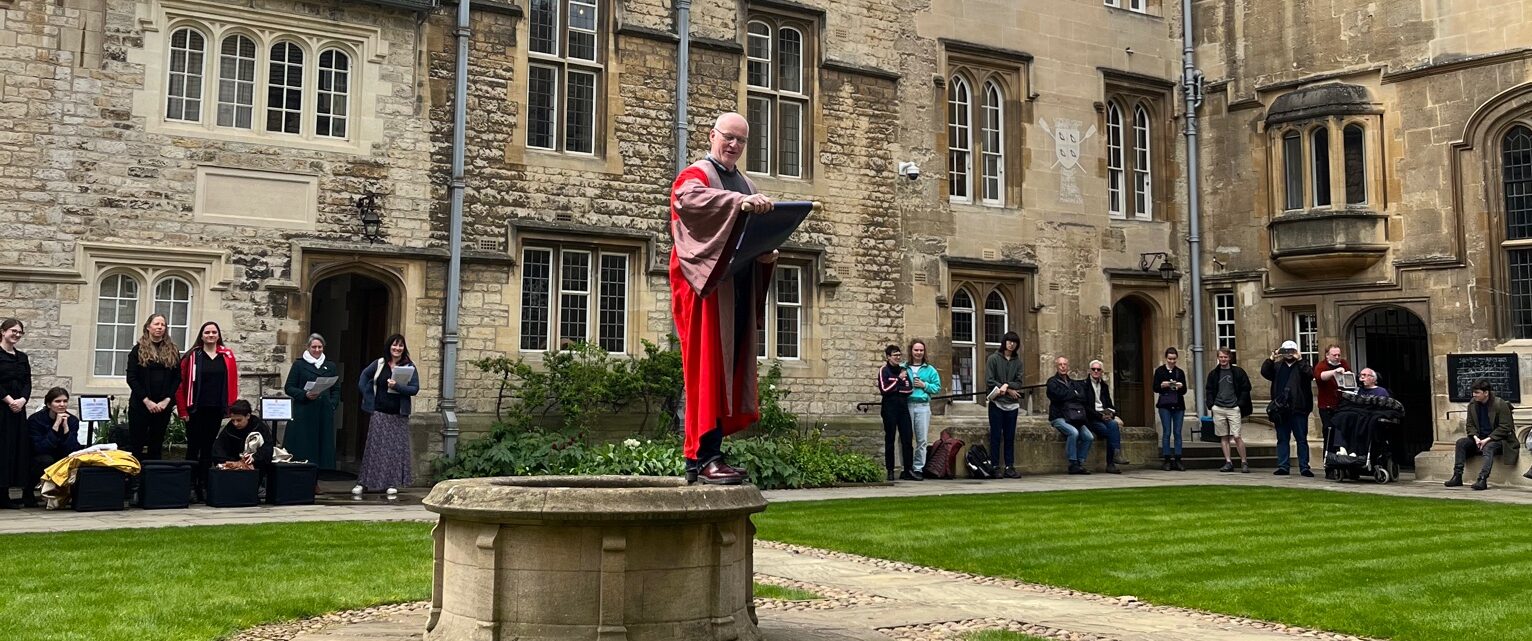
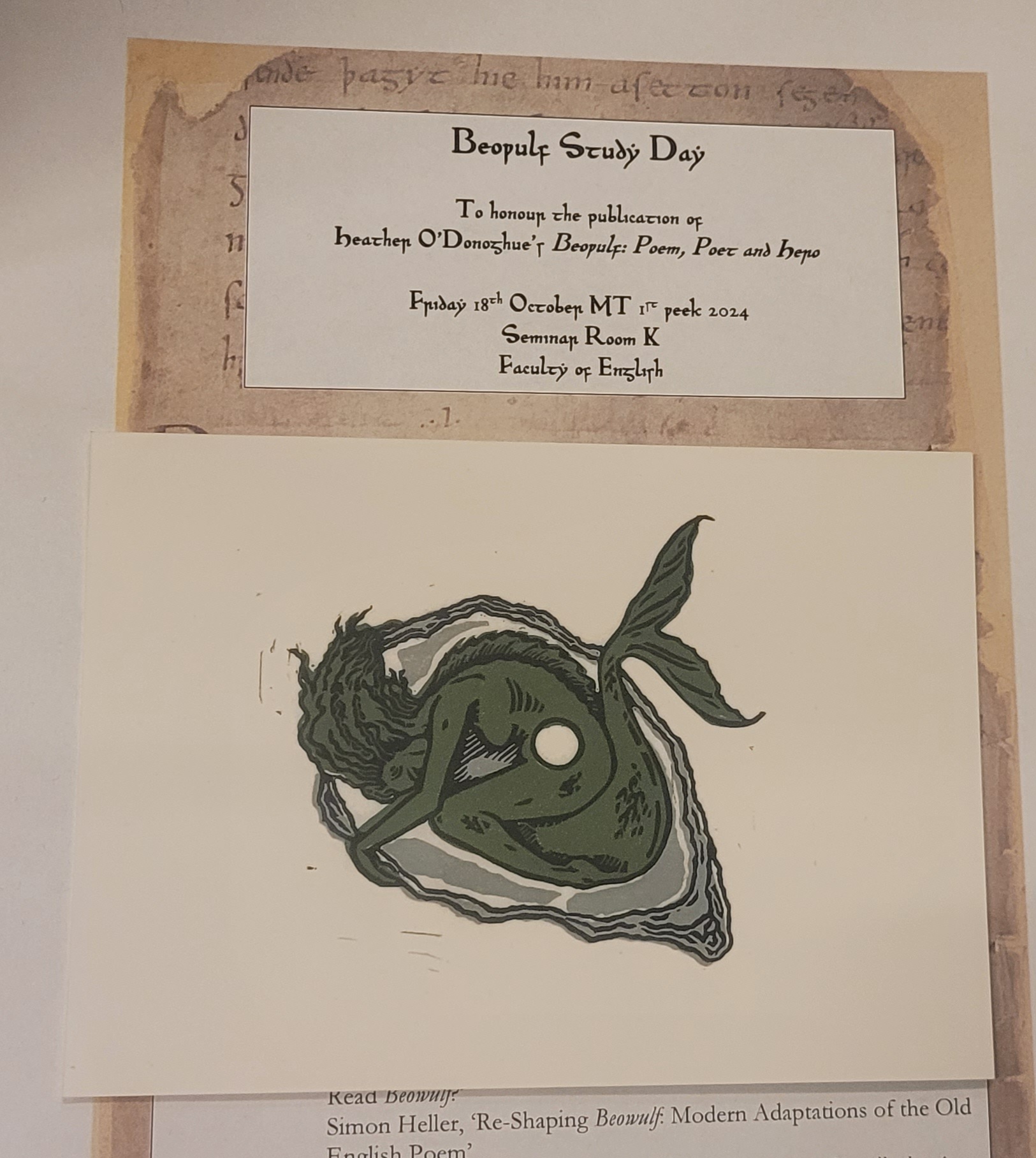
  • Beowulf Study Day – 10pm in the Study of the Book Room, Faculty of English. Booking required.
  • Medievalists Coffee Morning 10.30-11.30am in the Visiting Scholars Centre of the Weston Library. All welcome.
  • Middle English Reading Group – 3pm in the Beckington Room, Lincoln College. This term, the group will be reading Troilus and Criseyde – please bring a copy of the Riverside Chaucer if possible.
  • Oxford Medieval Manuscripts Group – 5pm at the Weston Library. Andrew Honey will be speaking on ‘Cataloguing Medieval Bookbindings at the Bodleian: Manuscripts from Reading Abbey as a case study’. Spaces are limited: please email Elena Lichmanova by 16/10/2024.
  • Anglo-Norman Reading Group – 5pm in the Farmington Institute in Harris Manchester College.

UPCOMING

  • Tickets are still available here for the inaugural lecture of the Gad Rausing Associate Professor of Viking-Age Archaeology, held at St Cross College at 3pm on Friday 8th November. Dr Jane Kershaw will be speaking on ‘The Viking Diaspora: Causes, Networks and Cultural Identity’.

OPPORTUNITIES

T.K.A

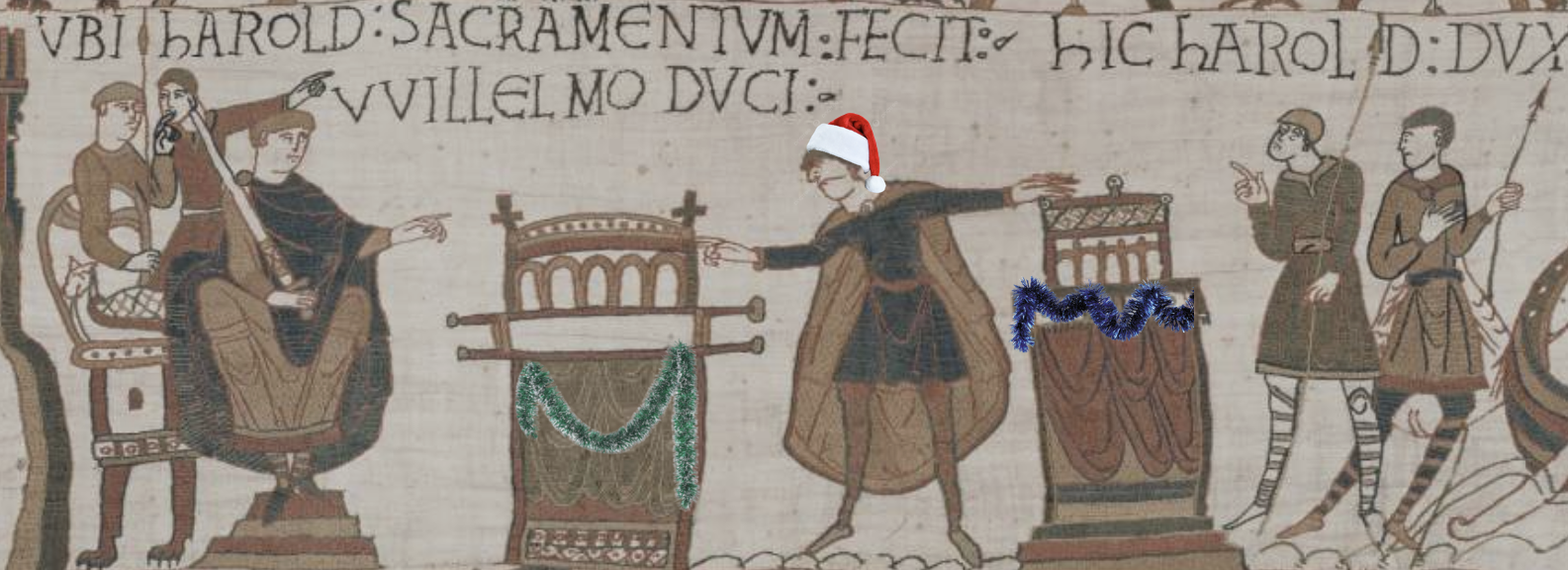
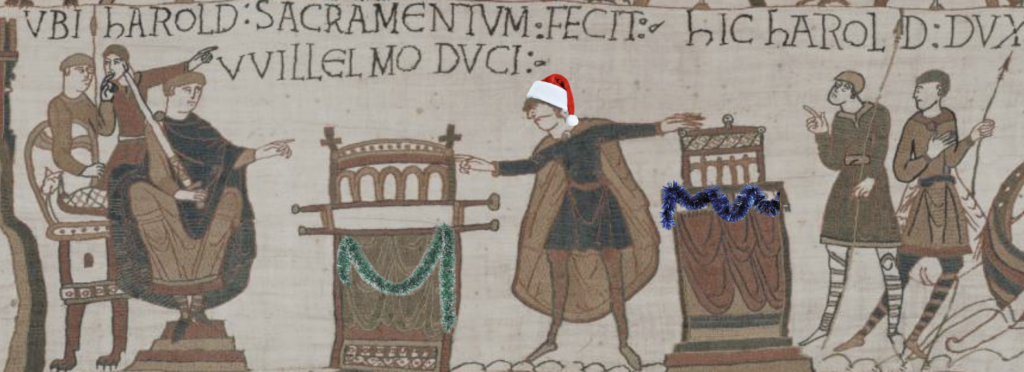
Bayeux Tapestry, Panel 34 (Available online Discover the Bayeux Tapestry online/). The little divider chap above is from Panel 18.

Medieval Matters: MT 24, week 0

Hello my friends, and welcome (back) to Oxford.

The beginning of another term means a new set of exciting events to put in your calendars. The first version of the new Medieval Booklet of events can be found here. If you are organising an event or series this term, please have a quick check through: addenda and corrigenda to medieval@torch.ox.ac.uk.

Each week I will be emailing out a list of that week’s events and opportunities, bright and early on a Monday morning. This week’s selection can be found below.

EVENTS THIS WEEK:

Thursday 10th October:

  • The Celtic Seminar starts at 5pm in the Memorial Room at Jesus College.

Friday 11th October:

  • Medievalists Coffee Morning 10.30-11.30am in the Visiting Scholars Centre of the Weston Library. All welcome
  • The NEW Medieval MSS Support Group 11:30-12:30 in the Horton Room in the Weston Library: once or twice a term, in which readers of medieval manuscripts can pose questions to a mixed group of fellow readers and Bodleian curators in a friendly environment. Come with your own questions, or to see what questions other readers have! If you wish to pose a question, please order the relevant manuscript to the issue desk, and email the details to Matthew Holford, Tolkien Curator of Medieval Manuscripts, the day before, so that he can arrange for it to be transferred across to the Horton Room for the session. Alternatively, provide a good quality digital image that we can display on a large monitor. A second date this term will be on 6 December.

COMING UP

  • On Tuesday, 15 October, there will be a chance to meet together as a community with the Welcome Social, held in the Wellbeloved Room at Harris Manchester College. If you are hosting a reading group/ lecture series/event this year we highly encourage you to come along to help spread the word. See you all there!

OPPORTUNITIES

  • University College Dublin is advertising a PhD studentship in Early medieval political and/or intellectual culture (c.500-c.1000 CE), supervised by Dr Megan Welton. For more information, please see the recent blog post here.

If you know of anybody interested in the medieval who is not on this mailing list, please encourage them to register here for the mailing list.

T.K.A

Balliol College MS 238A, fol. 1r

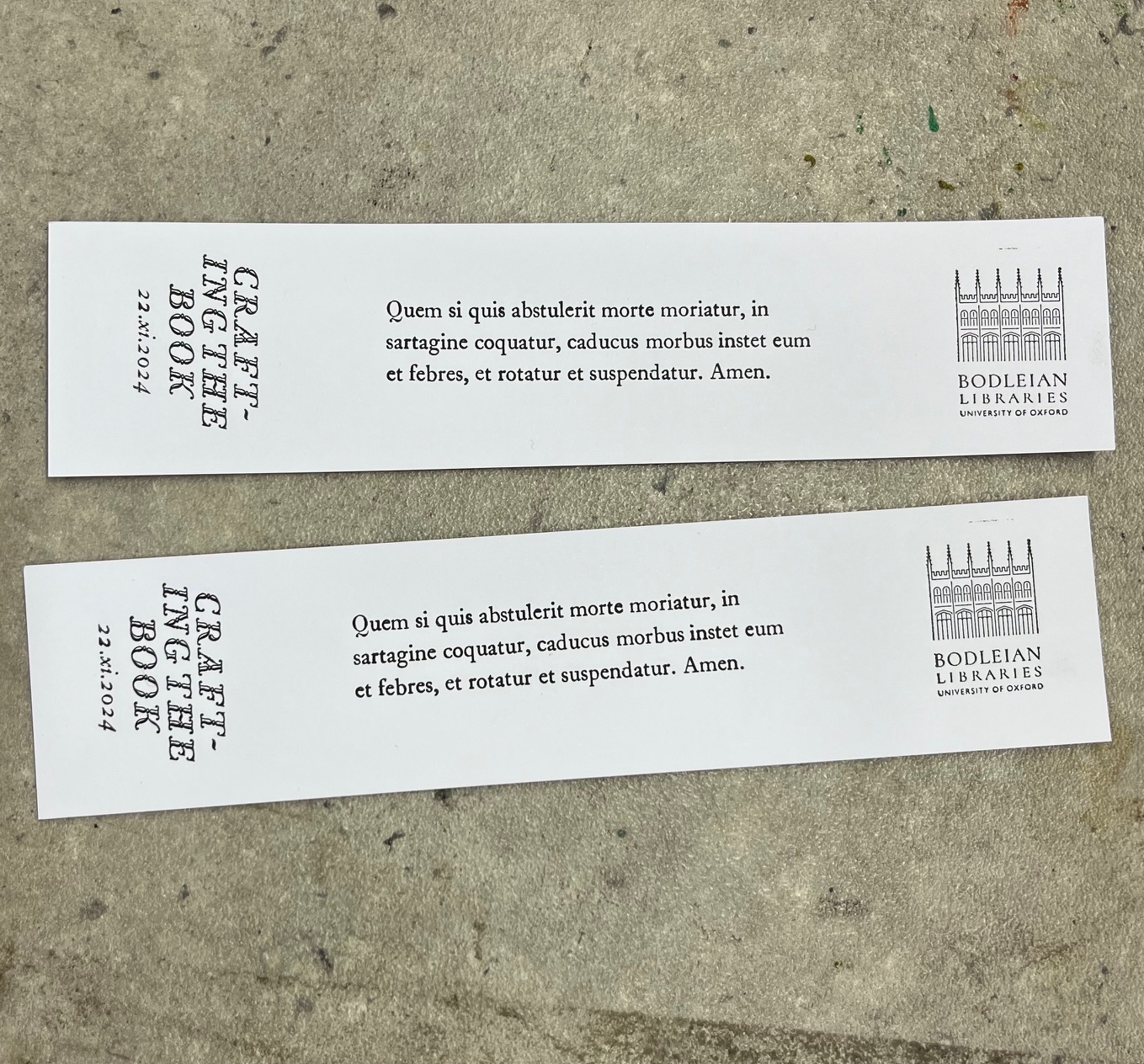
Crafting the Book: A One-Day Workshop

Date: Friday, 22 November 2024

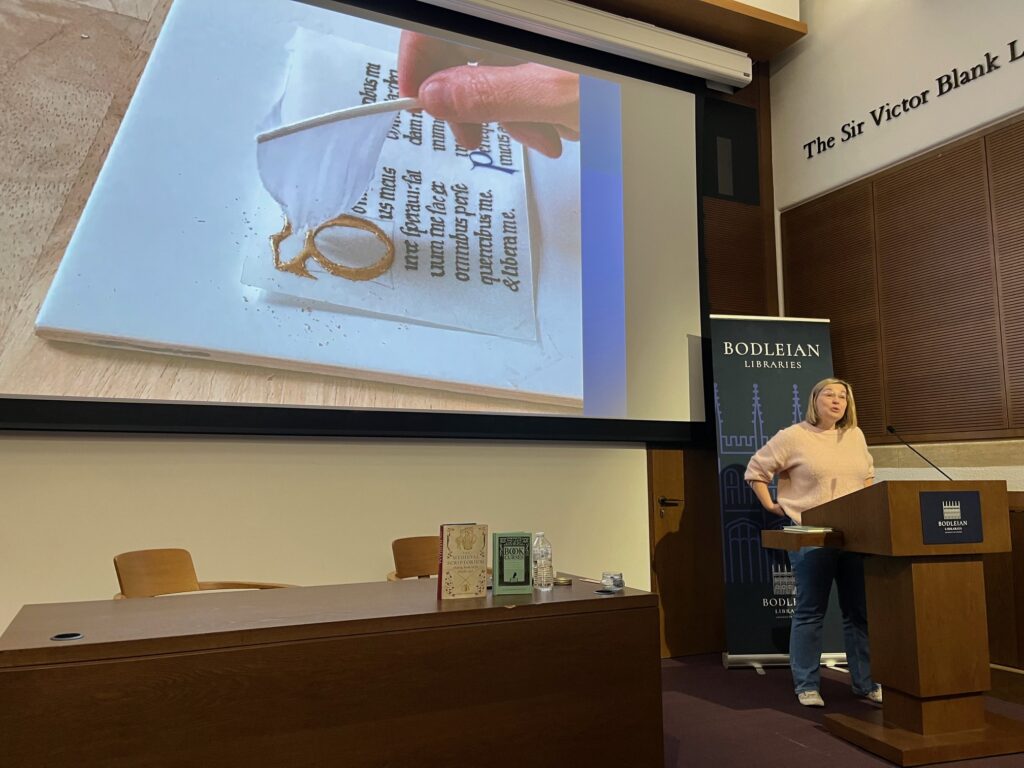
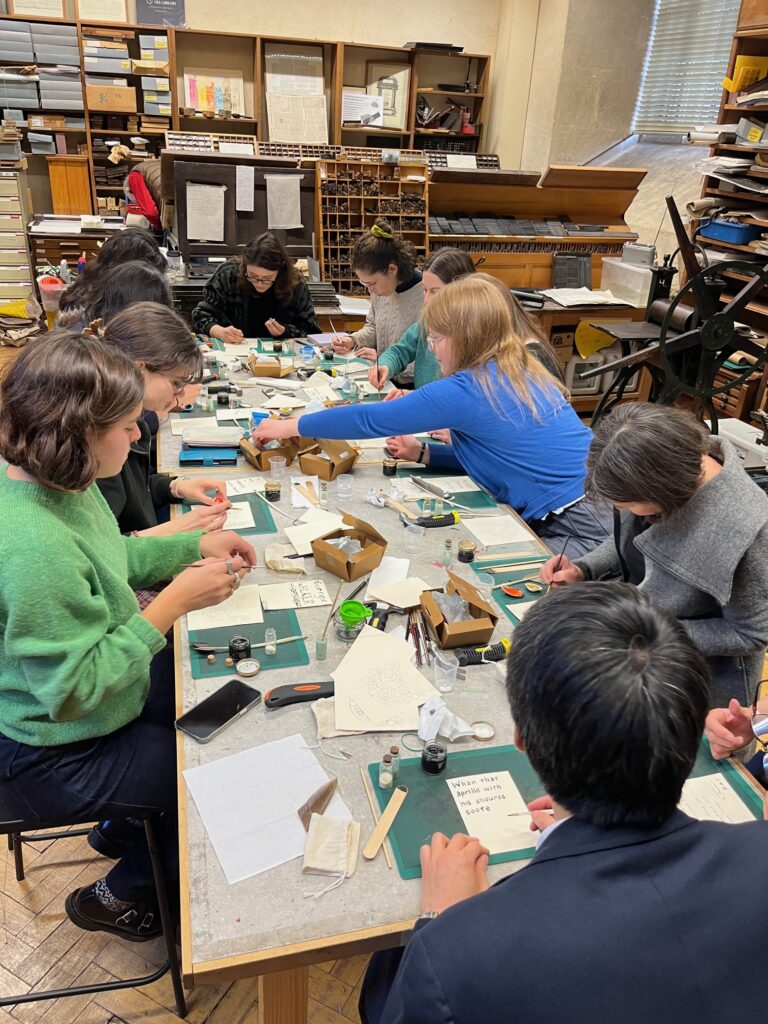
‘Crafting the Book’ is a one-day workshop aimed at current Oxford University students with an academic interest in the history of the book and material culture of medieval manuscripts and early printed texts, including their production, decoration, and provenance through signs of ownership. They will engage with historic materials and develop a deeper understanding of contemporary artistic and reader practices through taking part in hands-on activities with craft methods.

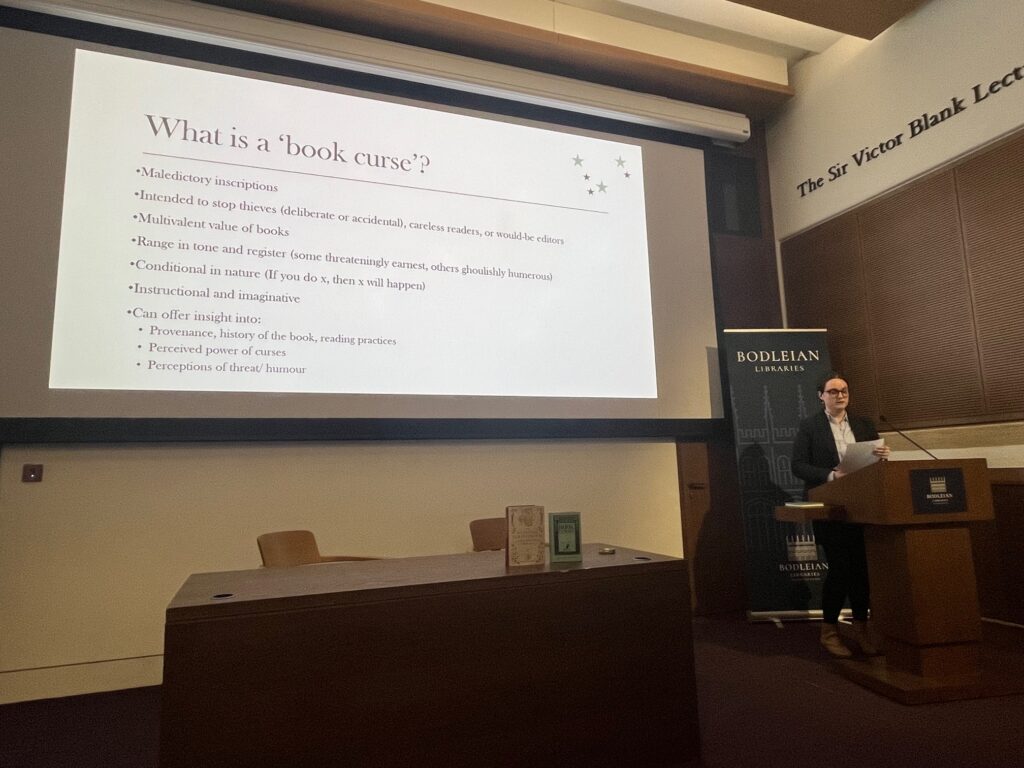
Lunchtime Lecture: Sir Victor Blank Lecture Theatre at the Weston Library, 1-2pm (BOOK HERE)

Talks by expert speakers Sara Charles and Eleanor Baker with focus on their wide-ranging research on medieval illumination, calligraphy, and early printing techniques. Sara is currently a PhD student at the Institute of English Studies studying manuscript production in the Latin Christian world, and has a forthcoming trade history book, The Medieval Scriptorium: Making Books in the Middle Ages (Reaktion Books, August 2024). Eleanor is currently the English Subject Lead for the University of Oxford’s Astrophoria Foundation Year, with a forthcoming trade history book, Book Curses (Bodleian Publishing, November 2024). The lunchtime lecture is free to attend.

Practical Workshops: Bodleian Bibliographical Press (FULLY BOOKED – contact the organiser to be added to the waiting list)

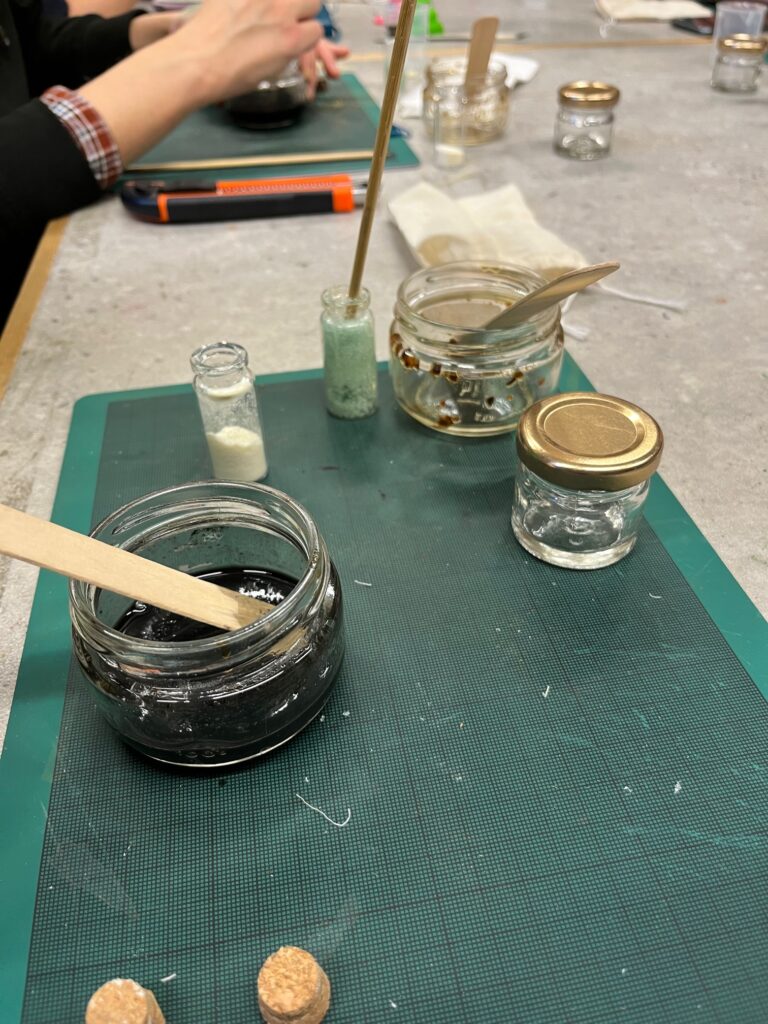
Workshop 1: Calligraphy Workshop led by Sara Charles taking place at 2.15pm on Friday, 22 November 2024 in the Bibliographic Press room located in the Old Bodleian Library. Sara is leading a practical session on making and writing with iron gall ink as well as painting on parchment.

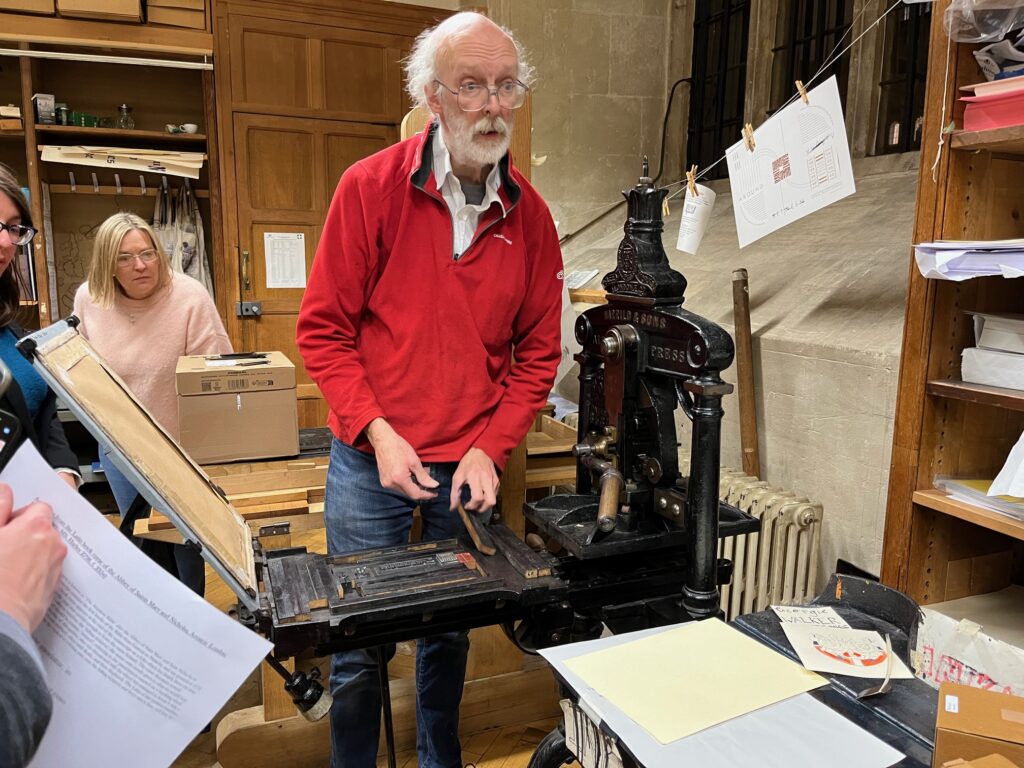
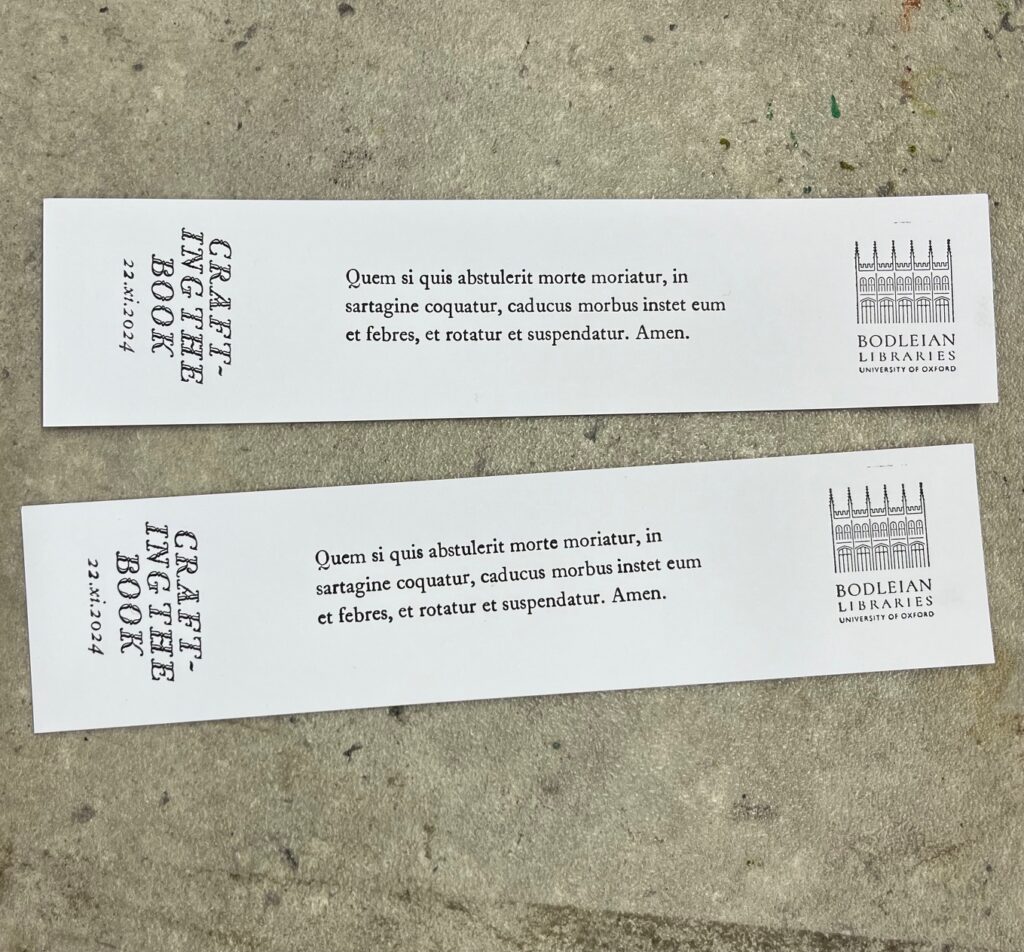
Workshop 2: Letterpress Workshop led by Eleanor Baker taking place at 4pm on Friday, 22 November 2024 in the Bibliographic Press room located in the Old Bodleian Library. Eleanor is leading a practical session on crafting book curses with early printing techniques.

There is a £6 registration fee to attend each workshop or £12 for both (please bring cash or contact organiser) and each workshop will last roughly 1.5 hours.

Please contact event organiser Alison Ray (St Peter’s College Archivist) with any questions.

‘Crafting the Book’ is generously supported by the Oxford Medieval Studies Small Grant Scheme.

The Barmakids – The Bridge between Islamic and Indic Worlds

Tuesday, 24 Sept, 11am  in the MBI El Jaber Auditorium, Corpus Christi College, Merton Street, Oxford

You are cordially invited to the 2nd Reza Hosseini Memorial Lecture Series delivered, in hybrid format, by William Dalrymple. Please register here to receive the Zoom link for those joining onlinehttps://www.eventbrite.co.uk/e/the-barmakids-a-bridge-between-islamic-and-indic-worlds-tickets-1012691907757. The opening statements will be offered by Profs Matthew Weait, Director of Continuing Education, and Arezou Azad, Director of the Invisible East Programme.

There will also be a workshop on Friday, 27 Sept. Limited seating, reservation required

The Speaker

William Dalrymple, All Souls Visiting Fellow 2023-2024, is the author of the Wolfson Prize-winning “White Mughals”, “The Last Mughal”, which won the Duff Cooper Prize, and the Hemingway and Kapucinski Prize-winning “Return of a King”. “The Anarchy” was short listed for the Duke of Wellington medal, the Tata Book of the Year and the Historical Writers Association Award, was a Finalist for the Cundill Prize for History and won the 2020 Arthur Ross Medal from the US Council on Foreign Relations.

William Dalrymple is the author of the Wolfson Prize-winning White MughalsThe Last Mughal, which won the Duff Cooper Prize, and the Hemingway and Kapucinski Prize-winning “Return of a King”. “The Anarchy” was short listed for the Duke of Wellington medal, the Tata Book of the Year and the Historical Writers Association Award, was a Finalist for the Cundill Prize for History and won the 2020 Arthur Ross Medal from the US Council on Foreign Relations.

The Reza Hosseini Memorial Lecture Series

The series connects individual stories to larger questions on the history and contemporary issues of the Middle East. The series aims to recognise and promote, in particular, microhistories, oral and documentary history, and fieldwork analysis. The series honours the life and work of Reza Hosseini (1960-2003) who last served as Humanitarian Officer in Iraq. The series was launched on the 20th anniversary of the attack on the United Nations Headquarters in Baghdad on 19 August 2003 which killed Reza and 21 colleagues.

This is a hybrid event. Please register here.

Come Collect!

An invitation from the Bodleian Libraries team: How do we relax? A lot of us like collecting things and enjoying our collections. They might be books, they might be records, they might be photographs… they can be anything!

Thursday 26 September, 6–8pm | Blackwell Hall, Weston Library

As a library, the Bodleian has enjoyed collecting for over 400 years and we want to foster that joy in others. Join us 6–8pm on Thursday 26 September in Blackwell Hall at the Weston Library to have a drink and celebrate collecting.

By all means just hang out with fellow collectors, but we encourage you to:

  • bring a treasured book, document, or vinyl record for an expert opinion
  • bring an old camera, or a photo or slide we may be able to scan
  • bring ephemera we might add to our collection (posters, flyers, event tickets… especially if they’re homemade).

You can also enjoy:

  • printing a memento on our historic press
  • having a go at making a mini zine
  • viewing some of the Bodleian’s special collections
  • meeting members of the student Bibliophile society and seeing what they collect
  • learning about how you can get more involved with the Bodleian.

Sign up here: https://forms.office.com/e/n63FFwAZCD – we look forward to seeing you soon! 

This is open to all university members, please spread the word.

Amelia Wray (she/her), Administrator, Special Collections, The Weston Library | Bodleian Libraries, Broad Street, Oxford, OX1 3BG, E: amelia.wray@bodleian.ox.ac.uk

Dutch Rhetoricians’ Play: Man’s Desire and Fleeting Beauty

On Sunday 29 September 2024 (6pm and 8pm) the Chapel of New College, Oxford, offers the rare opportunity to see Man’s Desire and Fleeting Beauty, a short Dutch comedy. 

The play was written for a dramatic competition in Gouda in 1546 by a Leiden Chamber of Rhetoric, and this performance may only be the second time the play has ever been staged. You are all invited to come and find out whether Man’s Desire can win Fleeting Beauty’s affections and what role Fashion and Custom play in this amorous quest. 

The play is co-produced by Charlotte Steenbrugge (University of Sheffield) and Elisabeth Dutton (Université de Fribourg). Admission is free.

An Introduction to Middle High German

Workshop and Launch

The new Introduction to Middle High German by Howard Jones and Martin H. Jones (OUP 2024) is a dedicated student edition of The Oxford Guide to Middle High German, designed for taught courses and self-study. It provides an accessible overview of the grammar and lexis of the language suitable for introductory-level students and includes thirty extensively-annotated texts with explanatory notes suitable for use in teaching. It is accompanied by a companion website which gives open access to further online resources for the study of Middle High German.

Introduction to the workshop by Howard Jones and Henrike Lähnemann

The workshop was designed as a test case to show ways of using the ‘Introduction’ within a university setting or for self-study . Participants got access to the online version and worked with it in groups ranging from beginners to experts on aspects of Middle High German. The “Translathon” consisted of a group competition to translate and comment on passages of the Middle High German text ‘Helmbrecht’.

Translatathon with six competing groups, translating lines 984 to 1035, featuring

00:00 Group 1: Nicholas Champness, Nina Cornell, Philip Flacke, Anna Vines
00:38 Group 2: Sharon Baker, Monty Powell, Willa Stonecipher, An Van Camp
01:14 Group 3: Theodore Luketina, Daniel Ruin, Nina Unland, Hestia Jingyan Zhang
02:04 Group 4: Reuben Bignell, Greta Evans, Andreas Groeger
03:01 Group 5: Joshua Booth, Lia Neill, Catriona Robertson
03:49 Group 6: Isabelle Gregory, Wilfred Lamont, William Thurlwell

The workshop took place on Saturday 2 November 2024, 2-6pm, Taylor Institution Library, Room 2, University of Oxford. Participants were students from first-year undergraduate to doctoral level – a range of people, in fact, who wanted to acquire, practise, and improve their knowledge of Middle High German. No previous knowledge of Middle High German was required. Organisers Sarah Bowden, Howard Jones, and Henrike Lähnemann

Launch of the ‘Life of Nuns’

During the Medievalist Coffee Morning on Friday, 21 June 2024, Henrike Lähnemann launched her new book The Life of Nuns. Love, Politics, and Religion in Medieval German Convents, Cambridge: Open Book Publishers 2024, open access: https://www.openbookpublishers.com/books/10.11647/obp.0397
To purchase a paper copy with a 20% discount, use the code LONHL_24 at checkout

On show were the following five manuscripts, all available digitised via https://medieval.bodleian.ox.ac.uk/, three from the Cistercian convent of Medingen near Lüneburg (http://medingen.seh.ox.ac.uk/) and two Rules for female convents:

Following this, there was a presentation by Stacie Vos (Ann Ball Bodley Visiting Fellow in Women’s History) talk about Women doing medieval studies in the early 20th century. Stacie reflected on the legacies of several early-20th-century women medievalists who pursued academic and extra-academic careers. She started the group ‘Enclosure’ which January 2021 to February 2024 was hosted at the Faculty of Medieval and Modern Languages under enclosure.mml.ox.ac.uk, now archived at the Bodleian Library Web Archive.

***

It all started with a mistake: ‘Der Spiegel’, a widely read news magazine in Germany, ran a double-spread article on the big research project which Eva Schlotheuber and I direct, the edition of 1.200 letters from the Benedictine convent Lüne in North Germany. In the interview for it, we had talked about how important education by the nuns was for the ‘Lehrkinder’, children educated at the convent. The girls would come into the community, aged 7 to 9, and then get a thorough grounding in a wide range of discipline such as music, as pictured in the scene from a text book from Kloster Ebstorf.

Teaching Music in the Convents (Ebstorf, Klosterarchiv V 3, 15th century, fols 200v–201r)

Der Spiegel’ turned our phrase of ‘Lehrkinder’ into ‘die Kinder der Nonnen’ (the children of the nuns) – hinting at sex and scandal behind convent walls (in 2/2020 ‘So colourful was the life of nuns in the Middle Ages’).

This sparked further media interest and the Ullstein publishing house approached us because it had piqued their interest. When we explained that the attention-grabbing headline about “the nuns had children” was based on a misunderstanding, they were slightly disappointed – but then offered us the opportunity to set the record straight. And, arguably, what we could offer was much more exciting: the colourful and detailed accounts of lively, intellectual, strategic, argumentative, powerful women, shaping religion and politics of their times, looking after the girls (despite or even because they were their spiritual and not biological daughters!), negotiating business deals, writing, painting, composing and influencing the way we live today through their books, songs, and art.

‘The Life of Nuns’ tries to capture the richness of the life of these medieval nuns by incorporating as much primary source material as possible. Each of the big topics – such as Education, Music, and yes: Love and Friendship – starts with an account taken from the diary of a nun who lived at the end of the 15th century in the convent St Crucis in Braunschweig. The anonymous author covers the high feasts – celebrating the entry of new nuns, welcoming illustrious visitors –  and the everyday mundane events – lice, Lebkuchen (gingerbread), laundry. And we end every of our chapters with the presentation of a significant art work from the convents: the impressive wall paintings done in the 14th century by “three nuns all called Gertrud” in Wienhausen, the largest medieval world map in Ebstorf (30 goatskins sewn together), tapestries, statues, stained glass, the oldest spectacles in the world (fallen through the floorboard cracks in the nuns’ choir) – an embarrassment of riches from a world that few people even know existed. That is particularly true for an Anglophone audience since so much of the evidence is lost due mainly to the dissolution of the monasteries but also a repurposing of surviving architecture and treasures. Compare Kloster Wienhausen and Godstow Abbey: in Wienhausen we have got the full set of monastic buildings, cloisters, huge grain stores, cells, corridors, imposing Gothic nuns choir and more – and everything that furnished it: stained glass, wall paintings, sculptures, down to the different set of dresses for the statues.

The Cistercian Convent of Wienhausen from the South: Magazine (left) and Nuns’ Choir. Photograph: Henrike Lähnemann
Filming at the ruins of one Godstow Abbey near Oxford

In Godstow, on the other hand, we can sense the dimensions of its former power by looking at the impressively long surrounding wall of enclosure and glimpse some of its stylish beauty from the ruined chapel at the back – the rest is only possible to reconstruct from scant archival evidence. Looking at the German counterparts, who shapeshifted through the Reformation, transforming into Protestant female communities who still look after the rich tapestry of medieval life, offers the chance to rectify this in part – and encounter the Life of Nuns at their fullest, mystical, worldly, polyphonous and very much relevant still today.

Medieval Women’s Writing Research Group Conference 2024: Exchanging Words

The Medieval Women’s Writing Research Group Conference 2024 will be held on 18th June 2024 with the theme of “Exchanging Words” in Room 2 of the Taylor Institution Library both in person (presenters/attendees) and online (attendees).

Tuesday 18 June 2024, 9am – 5pm
Online and In-person, Room 2, Taylor Institution Library, Saint Giles’, Oxford OX1 3NA
Free but registration required
Register here for in-person attendance – Sold out
Register here to join the conference online
Online registration closes 15 minutes before the start of the event. You will be sent the joining link within 48 hours of the event, on the day and once again 10 minutes before the event starts.

The aim of this conference is to explore the concept of exchange, whether it be textual or material, to, for and between women in the global Middle Ages. As a research group based upon the concept of exchanging ideas, we wish to explore medieval women’s own networks of exchange and transmission, and the influence of this upon both the literature and culture of the period as well as the present day.

We are delighted to present the programme for the day:

9:00-9:30 Registration 
9:30-9:45 Welcome and Opening Remarks 
9:45-11:15 Session 1 “Scholarly Networks” 
Katrin Janz-Wenig (SUB Hamburg) & Lenka Panušková (The Czech Academy of Sciences) | Communication Strategies Through Change: Translations, Compilations and Ekphrasis 
Ved Prabha Sharma (Independent Researcher) | Women Scholars and Knowledge Exchange in Medieval Indian shāstrārth Tradition 
Tatiana Barkovskiy (University of Cambridge) | A Beguinian Learning Network, or How to Approach ‘Medieval Women Mystics’ as Philosophers  
11:15-11:45 Break with Refreshments 
11:45-13:15 Session 2 “Relationships With and Between Women” 
Costas Gavriel (University of Oxford) | Gaining the Queen’s Confidence: The Relationship Between Leonor López de Córdoba and Catherine of Lancaster, Queen of Castile 
Lucia Akard (University of Oxford) | Talking About Rape and Exchanging Knowledge in Medieval Dijon 
Meg Greenough (Independent Researcher) | The Wilton Matrix: Mothering in Goscelin of Saint Betin’s Liber Confortatorius
13:15-14:30 Lunch Break 
Exploring the Taylorian’s Treasures, with Professor Henrike Lähnemann (University of Oxford) 
14:30-15:45 Keynote Address 
Professor Diane Watt (University of Surrey) | Medieval Women Writers: Troubling a Feminist History of British Women’s Writing
15:45-16:15 Break with Refreshments 
16:15-17:45 Session 3 “Nuns’ Words” 
Francesca Maria Villani (University of Bari) | Eloise’s Psalmody: Body and Voice Through the Epistles
Jane Bliss (Independent Researcher) | The Nun Changes her Library Book 
Hilary Pearson (Independent Researcher) | Teresa de Cartagena’s Models of Female Authority 
17:45 Closing Remarks 
18:00 End of Conference

Please direct any questions to any of the conference organizers: 
Katherine Smith (katherine.smith@mod-langs.ox.ac.uk
Marlene Schilling (marlene.schilling@mod-langs.ox.ac.uk
Carolin Gluchowski (carolin.gluchowski@mod-langs.ox.ac.uk
Santhia Velasco Kittlaus (santhia.velascokittlaus@mod-langs.ox.ac.uk)

The research group and the conference are generously funded by The Oxford Research Centre in the Humanities (TORCH) and their “Critical-Thinking Communities” Initiative.