Call for Podcast Proposals

The Multicultural Middle Ages Podcast Series (see the website here // Twitter: @Podcast_MMA_MAA) welcomes proposals for single episodes to be featured in its fourth season. After three successful seasons, The Multicultural Middle Ages (MMA) will return for its fourth in 2025. Sponsored by the Medieval Academy of America, MMA is an anthology-style podcast that welcomes the global turn in Medieval Studies. This podcast series is a platform from which to continue ongoing conversations and generate new and exciting avenues of inquiry related to the Middle Ages that emphasize its diversity. We seek to highlight thoughtful reflections on culturally responsible approaches to the study of the Middle Ages. This is a space from which to speak to fellow medievalists and, more importantly, the wider public to inform our audience about the multicultural reality of the medieval period and the plurality of voices that comprise the fields of medieval studies. We invite proposals from individuals and collaborators of all ranks and disciplines, including graduate students, for single podcast episodes aimed at fellow medievalists and the wider public.

Possible topics include, but are not limited to, the following:

  • Innovative methodological and disciplinary approaches to the Middle Ages
  • The future of Medieval Studies
  • Research on the multicultural, multiracial, and multiethnic Middle Ages
  • Discussions of recent scholarship
  • Archival discoveries
  • Academic activism and responses to misappropriations of the Middle Ages
  • Pedagogical approaches
  • Medievalisms
  • Medieval culture in contemporary political discourse

Cultural heritage and approaches to curating exhibitions of the Middle Ages

Possible formats may include narrative expositions, interviews, textual analysis, visual analysis, oral performances, and panel discussions. No previous experience with podcasting is required. The Graduate Student Committee of the MAA has hosted several podcasting workshops, which are now available on the MAA YouTube channel. If accepted, an MMA team member will support you through the episode development process and post-production. If you would like our technical assistance to realize your episode, such as facilitating an interview, helping record the episode, or taking care of the audio editing, please make a note of it in your proposal. Your application should include a brief description (500 words) of your proposed episode, noting the following: the chosen topic and its relevance; the plan for adapting the topic to a podcast medium (we encourage 40-50 min. episodes, but also welcome proposals for shorter or longer episodes); and the episode format (interview, narrative, etc.) with an overview of its structure a description of the support you’ll need (if any) from the MMA production team. This information is not binding but will help the committee assess the potential of the project. Please include the name and CV of each author. Submit your proposals and any questions to mmapodcast1@gmail.com and to Loren Lee (lel7qsf@virginia.edu) by October 11, 2024.

The Multicultural Middle Ages Podcast Series Production Team, Will Beattie | wbeattie@nd.edu, Jonathan Correa Reyes | jonatcr@clemson.edu, Loren Lee | lel7qsf@virginia.edu, Reed O’Mara | rao44@case.edu, Logan Quigley | quigleylogan@gmail.com, Website: https://multiculturalmiddleages.com/, X: @Podcast_MMA_MAA, Instagram: @MulticulturalMiddleAgesPod

Introduction to Archival Research

From Domesday Book to the Leveson Enquiry, our historical records offer students a myriad of untapped research opportunities across a wide range of time periods and disciplines. With so many options, however, getting started in the archives can be a daunting prospect. Many students have questions which they are too afraid to ask. How will I know where to go? What do I need to bring with me? How do I find records for my research? How do I order documents? Do I need to use gloves? How can I be sure I’m not wasting my time?

To demystify the research process The National Archives has developed a programme of Archival Skills Training, providing students with the key skills and knowledge needed to undertake academic research using the archives.

This introduction day will explain how to get started with archival research, the importance of knowing the history and structure of a collection to navigate the records, and how to make the most of your time on site.

We will be running this one-day on-site training session on October 1 (BOOK HERE) and December 3 (BOOK HERE), with more sessions in the new year.

Thank you, and we look forward to welcoming you to The National Archives!
All the best,
Kath

Dr Kathryn Maude Team Leader, Medieval Specialists
T: 02083925369 | W: nationalarchives.gov.uk
Twitter: @krmaude @UkNatArchives |Pronouns: she/her
The National Archives, Kew, Richmond, TW9 4DU

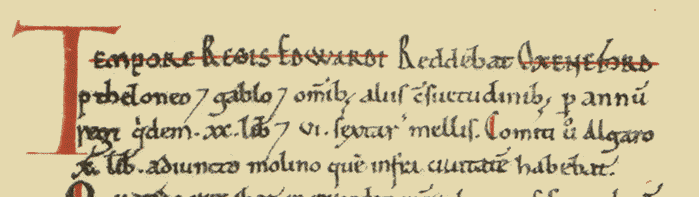
header image: A page of Domesday Book for Oxford, cf. the National Archives guide to the Domesday Book

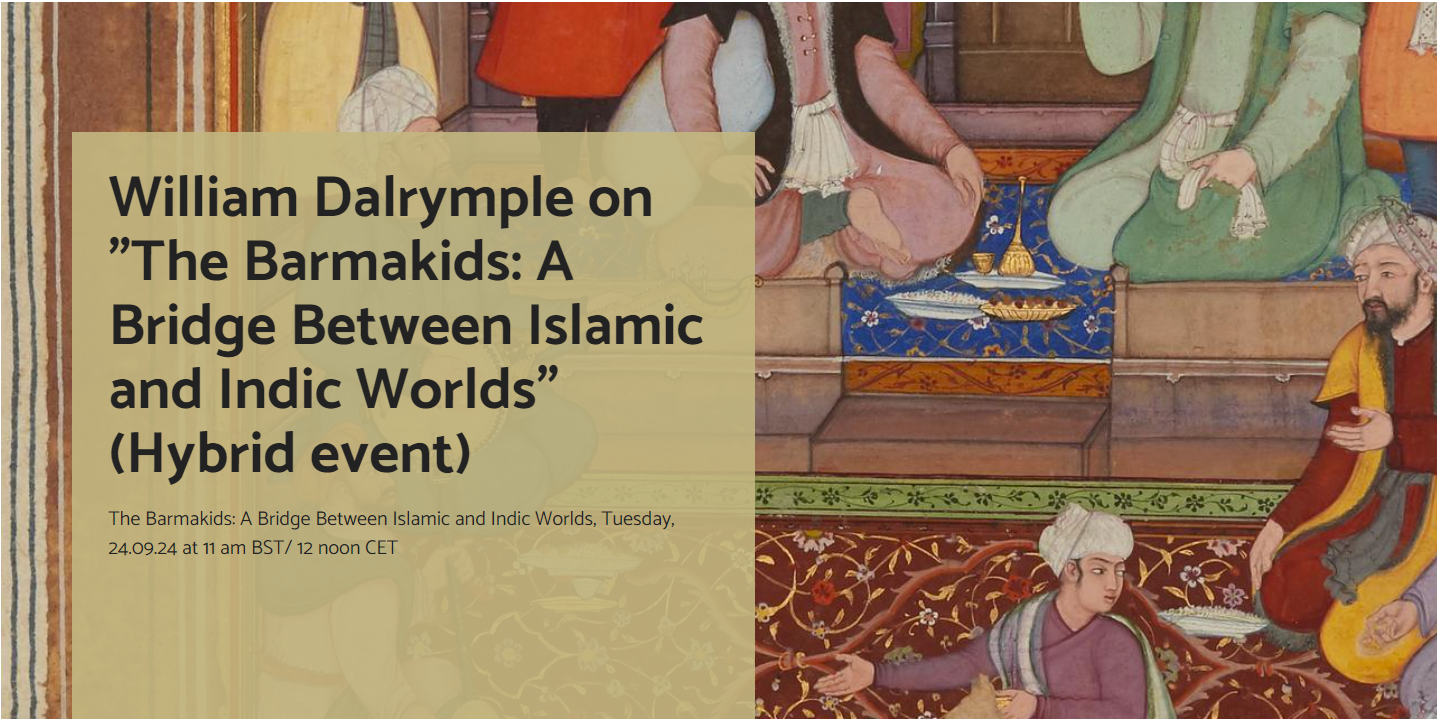
The Barmakids – The Bridge between Islamic and Indic Worlds

Tuesday, 24 Sept, 11am  in the MBI El Jaber Auditorium, Corpus Christi College, Merton Street, Oxford

You are cordially invited to the 2nd Reza Hosseini Memorial Lecture Series delivered, in hybrid format, by William Dalrymple. Please register here to receive the Zoom link for those joining onlinehttps://www.eventbrite.co.uk/e/the-barmakids-a-bridge-between-islamic-and-indic-worlds-tickets-1012691907757. The opening statements will be offered by Profs Matthew Weait, Director of Continuing Education, and Arezou Azad, Director of the Invisible East Programme.

There will also be a workshop on Friday, 27 Sept. Limited seating, reservation required

The Speaker

William Dalrymple, All Souls Visiting Fellow 2023-2024, is the author of the Wolfson Prize-winning “White Mughals”, “The Last Mughal”, which won the Duff Cooper Prize, and the Hemingway and Kapucinski Prize-winning “Return of a King”. “The Anarchy” was short listed for the Duke of Wellington medal, the Tata Book of the Year and the Historical Writers Association Award, was a Finalist for the Cundill Prize for History and won the 2020 Arthur Ross Medal from the US Council on Foreign Relations.

William Dalrymple is the author of the Wolfson Prize-winning White MughalsThe Last Mughal, which won the Duff Cooper Prize, and the Hemingway and Kapucinski Prize-winning “Return of a King”. “The Anarchy” was short listed for the Duke of Wellington medal, the Tata Book of the Year and the Historical Writers Association Award, was a Finalist for the Cundill Prize for History and won the 2020 Arthur Ross Medal from the US Council on Foreign Relations.

The Reza Hosseini Memorial Lecture Series

The series connects individual stories to larger questions on the history and contemporary issues of the Middle East. The series aims to recognise and promote, in particular, microhistories, oral and documentary history, and fieldwork analysis. The series honours the life and work of Reza Hosseini (1960-2003) who last served as Humanitarian Officer in Iraq. The series was launched on the 20th anniversary of the attack on the United Nations Headquarters in Baghdad on 19 August 2003 which killed Reza and 21 colleagues.

This is a hybrid event. Please register here.

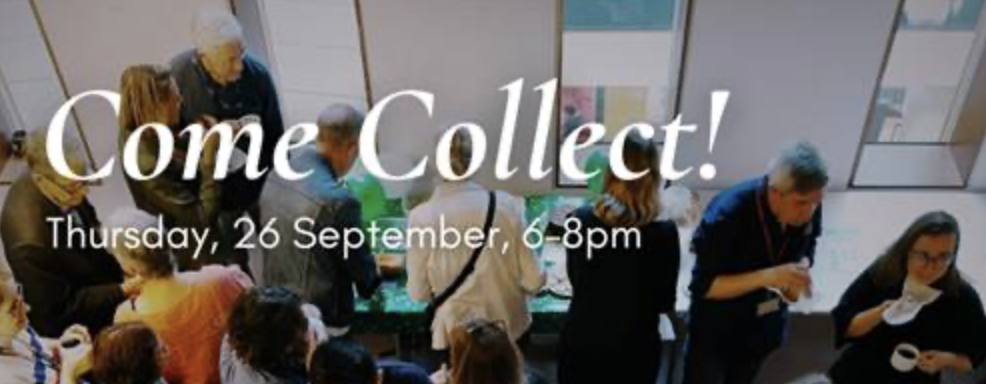
Come Collect!

An invitation from the Bodleian Libraries team: How do we relax? A lot of us like collecting things and enjoying our collections. They might be books, they might be records, they might be photographs… they can be anything!

Thursday 26 September, 6–8pm | Blackwell Hall, Weston Library

As a library, the Bodleian has enjoyed collecting for over 400 years and we want to foster that joy in others. Join us 6–8pm on Thursday 26 September in Blackwell Hall at the Weston Library to have a drink and celebrate collecting.

By all means just hang out with fellow collectors, but we encourage you to:

  • bring a treasured book, document, or vinyl record for an expert opinion
  • bring an old camera, or a photo or slide we may be able to scan
  • bring ephemera we might add to our collection (posters, flyers, event tickets… especially if they’re homemade).

You can also enjoy:

  • printing a memento on our historic press
  • having a go at making a mini zine
  • viewing some of the Bodleian’s special collections
  • meeting members of the student Bibliophile society and seeing what they collect
  • learning about how you can get more involved with the Bodleian.

Sign up here: https://forms.office.com/e/n63FFwAZCD – we look forward to seeing you soon! 

This is open to all university members, please spread the word.

Amelia Wray (she/her), Administrator, Special Collections, The Weston Library | Bodleian Libraries, Broad Street, Oxford, OX1 3BG, E: amelia.wray@bodleian.ox.ac.uk

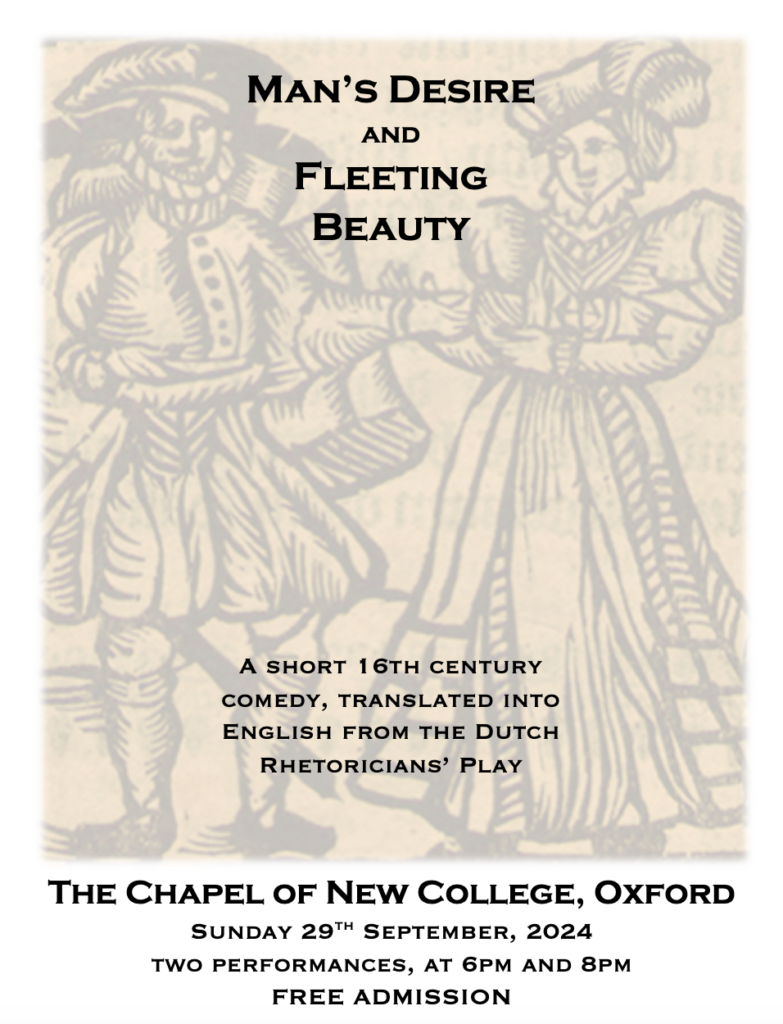
Dutch Rhetoricians’ Play: Man’s Desire and Fleeting Beauty

On Sunday 29 September 2024 (6pm and 8pm) the Chapel of New College, Oxford, offers the rare opportunity to see Man’s Desire and Fleeting Beauty, a short Dutch comedy. 

The play was written for a dramatic competition in Gouda in 1546 by a Leiden Chamber of Rhetoric, and this performance may only be the second time the play has ever been staged. You are all invited to come and find out whether Man’s Desire can win Fleeting Beauty’s affections and what role Fashion and Custom play in this amorous quest. 

The play is co-produced by Charlotte Steenbrugge (University of Sheffield) and Elisabeth Dutton (Université de Fribourg). Admission is free.

Sheep Liver Divination for US Election

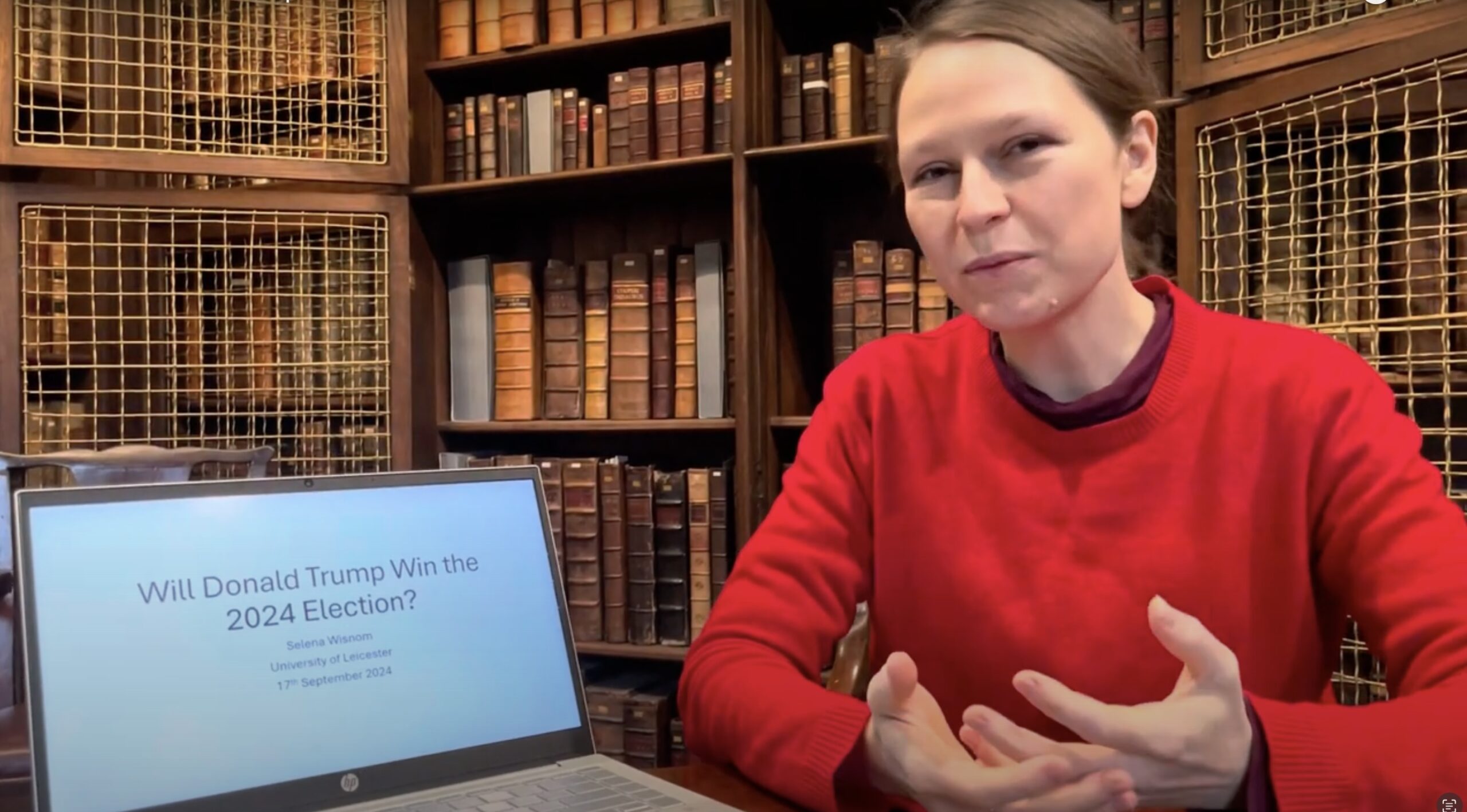
Explanation of the result of the inspection of a sheep liver in the Old Library of St Edmund Hall. Dr Selena Wisnom (Leicester) researches ancient Mesopotamian divination, and asks the question: Will Donald Trump win the 2024 US election?

You can watch the inspection in this video:

Inspection of the sheep’s liver in the kitchen of The Queen’s College, Oxford
Explanation of the results in the Old Library of St Edmund Hall, Oxford

and you can watch the alternative Babylonian reading in this video:

Alternative reading of the result

Disclaimer: the extispicy is for entertainment and research purposes only!

Dr Wisnom held a Junior Research Fellowship in Manuscripts and Text Cultures at The Queen’s College, Oxford from 2016-2020 and is currently Lecturer in the Heritage of the Middle East at the University of Leicester.

Short Story Competition: Morgana le Fay

Call for submissions of short stories about Morgana le Fay on behalf of the publisher Flame Tree who are advertising a new hardcover series with myths and short stories. Deadline for submissions is 22nd September 2024

From their website: Discover the mythology of humankind through its heroes, characters, gods and immortal figures. Myths, Gods & Immortals brings together the new and the ancient, familiar stories with a fresh and imaginative twist. Each book brings back to life a classic mythological or folkloric figure, with completely new stories alongside the original tales. New and emerging writers from open submissions, reveal hidden themes, casting fresh perspectives on well-known stories, alongside specially commissioned text on the origins and the cultural background of the mythology. The first four books in the series are MedusaOdin, Circe and Anansi. We’re now opening up submissions for the next two books, Achilles and Morgana le Fay.

Morgana le Fay

Morgana le Fay is a mysterious figure of Arthurian legend, found in Sir Gawain and the Green Knight, Le Morte d’Arthur and a number of other accounts. She is often seen in the context of the men in those myths – a half-sister of King Arthur, a jilted lover of Lancelot, a foil of Merlin – and yet is an extremely powerful character herself. She has deep roots in Celtic mythology and offers a fascinating canvas to be explored. Well known for her magical abilities, including shape-shifting, her complex character oscillates between benevolent healer and malevolent sorceress. Her relationship with Arthur and the Knights of the Round Table is marked by both familial loyalty and deep-seated enmity, making her one of the most enigmatic and multifaceted figures in the Arthurian mythos. Stories submitted for consideration need to explore new angles to the character: have her follow alternative paths, present different viewpoints, imagine new futures, or perhaps pursue story lines that are hinted at in the original tales. Submissions to: Morgana@flametreepublishing.com

Terms:

  • Multiple submissions are fine but must be in separate emails.
  • Simultaneous submissions are fine but you must have the right to license your story in an anthology.
  • For accepted stories we pay Science Fiction & Fantasy Writers of America (SFWA) rates of 8 cents/6 pence per word for original stories, 6 cents/4 pence for reprints.
  • We will aim to read each story and confirm its status within 4 months of the submission deadline.
  • Payment for the chosen stories will be made within 30 days of the final advertised publication date (see our website flametreepublishing.com for details), although some may be paid earlier than that.
  • Submission does not imply the right to publication. Each story will be read and assessed by the selection panel.
  • Let us know in your submission email whether your story would be a reprint or is currently unpublished.

Important Notice about Submissions and Guidelines

We’re always looking for better ways of working so we’ve tweaked our submission process to allow us to read more stories, and spend more time assessing the balance of our books. So follow these rules to avoid your story getting lost in our system!

  • Submissions must use the dedicated email address.
  • The subject line of the email must be the story title.
  • The file with the story must be attached to the email (.docx, .doc or .rtf format).
  • The name of the file must match the name in the subject line.
  • If submitting more than one story, please submit one story per email.

Other useful tips for a more successful submission

  • The file name of the submission must be the story name only.
  • Please just use spaces between words in the title (not _ or – ).
  • If the story name starts with A or The, please use it at the beginning of the file name.
  • If you’d like to add some details about the story, confirm if it’s new or a reprint, or add a short bio of yourself, please add to the body of the email not as an attachment.
  • Story length is most likely to be successful at 3,000-4,000 words, but we will still read stories slightly outside this range.
  • If submitting a story that has recently been submitted to us for consideration to another anthology, please state this in the submission email.
  • Deadline for submissions is 22nd September 2024.

Thank you, and good luck!

Medieval Studies Academic Mentor and Communications Officer

The Humanities Division Interdisciplinary Master’s Programmes are advertising an Academic Mentor & Communications Officer Joint Position for the MSt in Medieval Studies and Oxford Medieval Studies (OMS). The deadline for applications is 2 September 2024. For an insight into the duties involved, read the blog post by two previous postholders, Dr Luisa Ostacchini:  A Medieval Monologium, and Dr Karl Kinsella Heralding Oxford Medieval Studies.

The role of the Academic Mentor is to support the work of the programme convenors by fostering a group identity for the incoming cohort of students. The Academic Mentor will make an important contribution to the experience of students on this course.

The role of Oxford Medieval Studies (OMS) Communication Officer is to prepare the termly Medieval Booklet, send out a weekly news bulletin, and coordinate graduate students working with OMS.

The position will be offered for one year in the first instance. The holder will be expected to work 64 hours during Michaelmas term and 56 hours during each of Hilary  and Trinity terms (for a total of 176 hours over the year).  The hours should be divided flexibly between the MSt and OMS portions of the job, with a typical split of two-thirds MSt and one-third OMS. The remuneration offered is at point 7.1 of the casual pay spine; in 2023-24 this was £18.98 per hour.

Duties of the joint position

The role of the Academic Mentor is to:

  • help foster a sense of group identity and cohesion
  • contribute to the research mentoring and professional development of the students during the course
  • establish an informal space for group interaction

This will involve:

  • directing students towards relevant events and activities and helping them to navigate sources of information, including signposting to relevant learning opportunities and skills development provision
  • providing information and guidance on academic choice, including programme options and further study
  • discussing with students their future plans (whether professional or academic) and offering appropriate guidance by directing students towards relevant offices in the University
  • leading group discussions of academic and professional topics as may be relevant, depending on students’ needs
  • providing appropriate guidance on drafting research proposals for doctoral applications
  • coaching students in study skills (e.g., writing)
  • readiness to serve as ‘a helpful ear’ to students’ academic concerns or anxieties, liaising with the convenors where appropriate and/or where the mentor’s own concerns arise about a student. The mentor will not act as a welfare officer; however, they are advised to consult the convenors or the course administration should welfare issues arise so that students may be directed to the proper sources of support
  • The role will support the more formal work of the programme convenor to whom the Academic Mentor should report regularly and consult for guidance on offering advice to students (e.g., on University procedures)

The above is meant to act as a broad guidance; it is expected that the role will be flexible and responsive to the needs of individual cohorts. 

The role of OMS Communications Officer is to:

  • Prepare the termly Medieval Booklet for publication two weeks before term starts
  • Write and circulate a weekly OMS email news bulletin
  • Coordinate graduate students working with OMS as events and social media officers
  • Help to administer the medieval.ox.ac.uk blog and the mailing list
  • Encourage graduate participation in blogging, application to OMS small grants, and so on
  • Work with the Directors of Oxford Medieval Studies to promote medieval studies

We welcome applications either from postdoctoral candidates, or candidates with relevant experience. Depending on availability and expertise, there might be scope for some collaborative teaching (for which additional payment would be made).

How to apply

Please write a letter of application outlining your suitability for the role, and send it, together with a CV, to interdisciplinary@humanities.ox.ac.uk by 2 September. Please ask two referees to send their references to the same address by the same date. Interviews for shortlisted applicants will take place in late August, and successful applicants will be expected to start from the beginning of Michaelmas term 2024.

An Introduction to Middle High German

Workshop and Launch

The new Introduction to Middle High German by Howard Jones and Martin H. Jones (OUP 2024) is a dedicated student edition of The Oxford Guide to Middle High German, designed for taught courses and self-study. It provides an accessible overview of the grammar and lexis of the language suitable for introductory-level students and includes thirty extensively-annotated texts with explanatory notes suitable for use in teaching. It is accompanied by a companion website which gives open access to further online resources for the study of Middle High German.

Introduction to the workshop by Howard Jones and Henrike Lähnemann

The workshop was designed as a test case to show ways of using the ‘Introduction’ within a university setting or for self-study . Participants got access to the online version and worked with it in groups ranging from beginners to experts on aspects of Middle High German. The “Translathon” consisted of a group competition to translate and comment on passages of the Middle High German text ‘Helmbrecht’.

Translatathon with six competing groups, translating lines 984 to 1035, featuring

00:00 Group 1: Nicholas Champness, Nina Cornell, Philip Flacke, Anna Vines
00:38 Group 2: Sharon Baker, Monty Powell, Willa Stonecipher, An Van Camp
01:14 Group 3: Theodore Luketina, Daniel Ruin, Nina Unland, Hestia Jingyan Zhang
02:04 Group 4: Reuben Bignell, Greta Evans, Andreas Groeger
03:01 Group 5: Joshua Booth, Lia Neill, Catriona Robertson
03:49 Group 6: Isabelle Gregory, Wilfred Lamont, William Thurlwell

The workshop took place on Saturday 2 November 2024, 2-6pm, Taylor Institution Library, Room 2, University of Oxford. Participants were students from first-year undergraduate to doctoral level – a range of people, in fact, who wanted to acquire, practise, and improve their knowledge of Middle High German. No previous knowledge of Middle High German was required. Organisers Sarah Bowden, Howard Jones, and Henrike Lähnemann

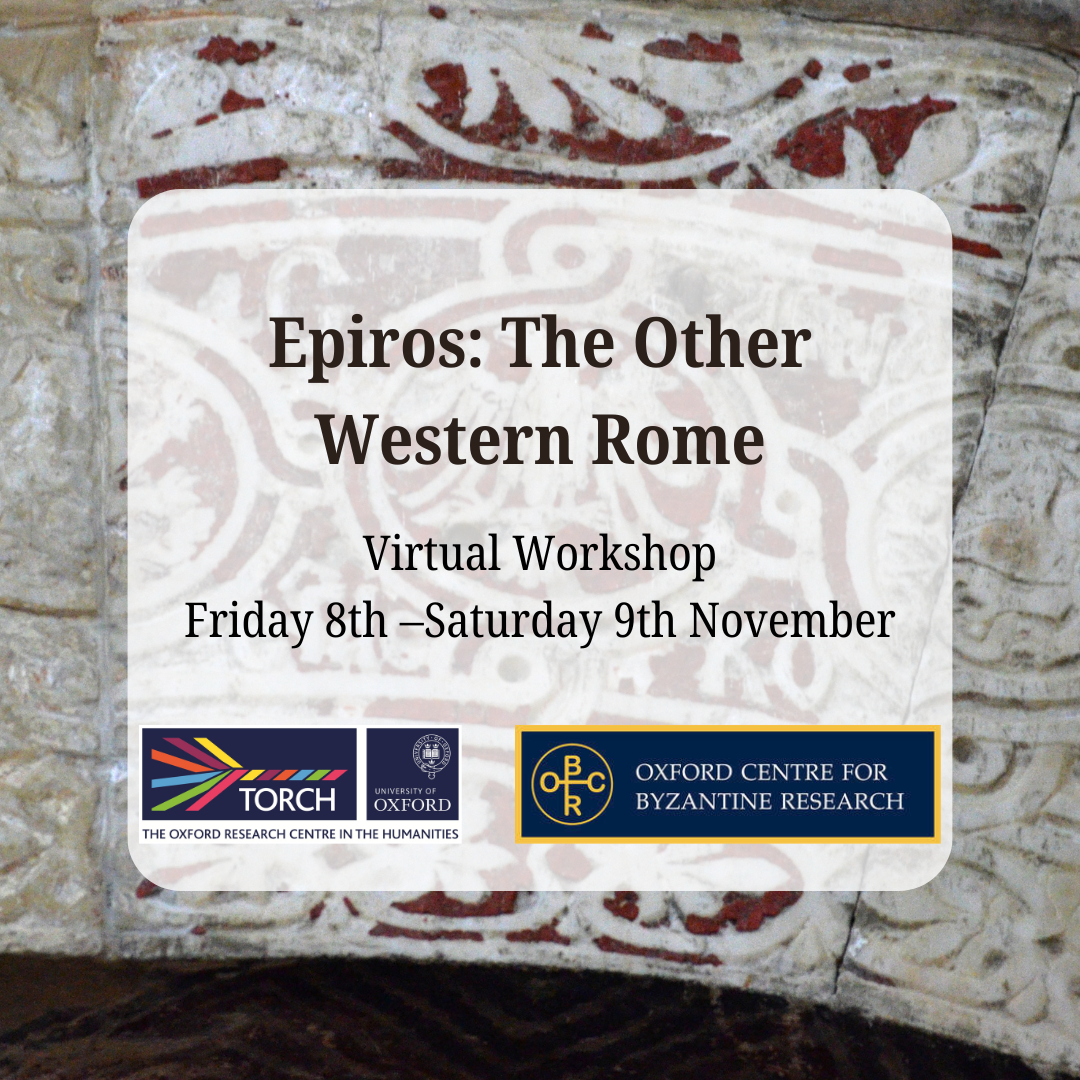
Call for Papers – ‘Epiros: The Other Western Rome’

Friday 8th – Saturday 9th November 2024, Virtual Workshop

For close to two and a half centuries, the state of Epiros represented a crucial node for an alternative socio-political network of the Balkans. Founded by the illegitimate son of the union of three imperial Byzantine dynasties, at its largest extent Epiros assumed the title of ‘Empire of the Romans’ and campaigned to the very walls of Constantinople. Defeated but not destroyed in 1230, Epiros persisted in its autonomy through the strength of its ties. Bound by either marriages or confession to Italians, Serbians, Bulgarians, Vlachs and Albanians, and more, Epiros continued to exist as an alternate, moved Byzantium that understood its reunification of the former provinces of the Byzantine Balkans to be a retaking and preservation of ‘the West’, a term with which it also self-identified. Transitioning in the fourteenth century to Albanian and later Italian rule, Epiros’ role as a centre of multi-ethnic exchange and independence created a legacy that exists today.

This workshop seeks to gather leading research across multiple fields to discuss the places and peoples which were either part of or engaged with this Epirote Western Rome. Following two successful panels at Kalamazoo and Leeds International Medieval Congresses, supported by the Oxford Centre for Byzantine Research, this hybrid workshop calls upon scholars to present from multiple specialisms. One of the reasons Epiros and its neighbours in the period of the Principality, Empire, and Despotate have remained so poorly studied has been the reliance upon century-old editions and a reluctance to publish in translation. Therefore, we envision not only a proceedings volume from this workshop but additionally the creation of a ‘sourcebook’ for Epirote Western Rome and its surrounding states which presents both papers and the key materials for its study in English translation with critical edition as necessary.

Potential topics for study include but are not limited to: History, Archaeology, Epistolography, Art History, Ethnic/Identity Studies, Spatial and Topography Studies, Numismatics, Network Studies, Sigillography, Ecclesiastical Studies, Manuscript Studies, Environmental History, Philology and Vernacular Studies. Papers should be twenty minutes long, allowing ten minutes for questions, and shall be delivered in English. Please email abstracts of 300 words to Nathan Websdale by Saturday 17th August 2024.

Organisers: Nathan Websdale (Oxford), Evangelos Zarkadas (Rhode Island).

Header image: Michael I Komnenos Doukas Angelos. Silver Aspron Trachy (3.54 g), ca. 1210. Mint of Arta. Nimbate bust of Christ Emmanuel facing, raising hand in benediction and holding Gospels. Reverse: + MIXAHΛ ΔECΠE, Michael standing facing, holding scepter and akakia; above to right, manus Dei. DOC 1; SB 2227 Extremely rare.

In association with the Oxford Centre for Byzantine Research (OCBR) and Oxford Medieval Studies, sponsored by The Oxford Research Centre in the Humanities (TORCH).