Workshop on the Murbach Hymns and MS. Junius 25

When?        17th/18th February 2022 (week 5, HT)

What?         In this workshop, the fascinating Murbach hymns – a Latin hymnal with Old High German interlinear glosses from the 8th/9th century – and their manuscript (Oxford, Bodleian Library MS. Junius 25) will be carefully examined regarding their translation technique, use and function, cultural background and transmission. Expect two days full of presentations and discussions, a consultation of this and other manuscripts and a live recitation of the hymns.

Updates and official registration on this page!

Convenor: Luise Morawetz (luise.morawetz@mod-langs.ox.ac.uk)

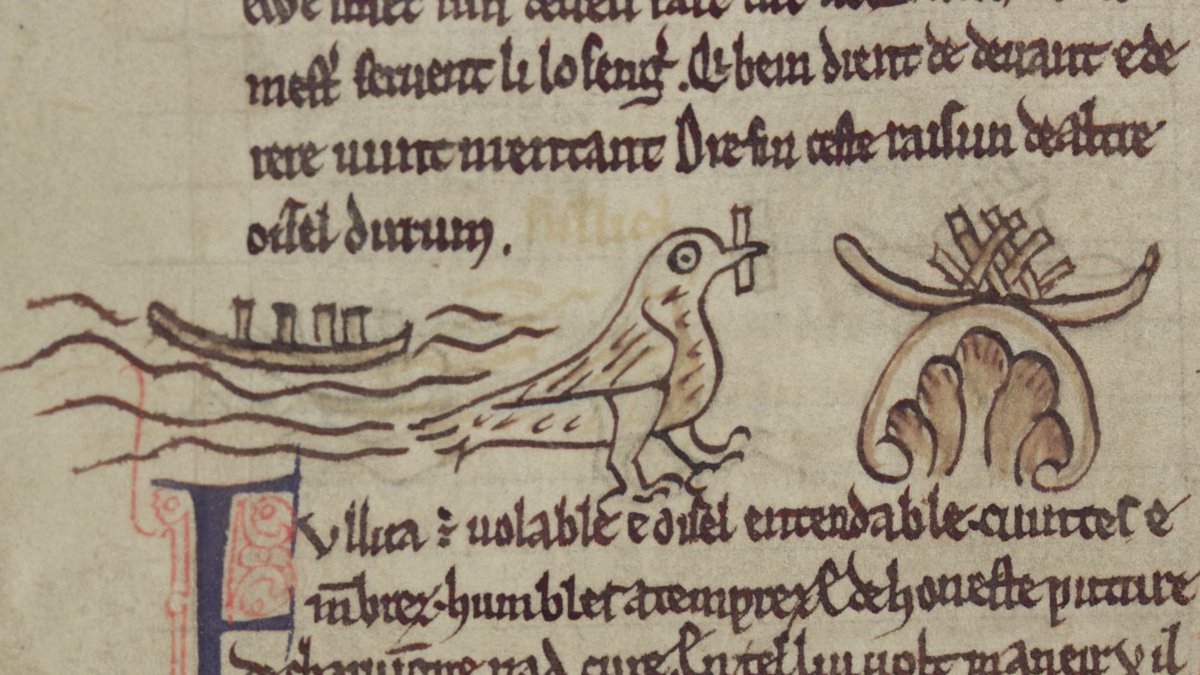
Image: fol. 122v, Oxford, Bodleian Library MS. Junius 25

Region and Enmity: A RaceB4Race® Symposium


The symposium is being held virtually from October 19-22, 2021 and will include panels, informal coffee talks, an editor roundtable, and 1-on-1 sessions with invited editors. 

Enmity is a sustaining force for systemic racism, a fervent antipathy toward a category of people. Enmity exists at the nexus of individual and group identity and produces difference by desiring opposition and supremacy, imagining separation by force, and willing conflict. Enmity unfolds in different ways in different places, according to local logics of territory, population, language, or culture, even as these geographical divisions are subject to constant change.

This interdisciplinary symposium, hosted by Rutgers University, focuses on how premodern racial discourses are tied to cartographical markers and ambitions. The notions of enmity and region provide a dual dynamic lens for tracing the racial repertoires that developed in response to increasingly hostile contention between premodern cultural and political forces. The symposium will invite scholars to take up this intersection between region and enmity, and to examine how belief in difference, or the emergence of polarizing structures and violent practices, configured race thinking and racial practices in ways that are both unique to different territories and that transcend them.

Register for the event: https://www.eventbrite.com/e/region-and-enmity-a-raceb4race-symposium-tickets-165791636247

Learn more about RaceB4Race: https://acmrs.asu.edu/RaceB4Race

Call for Papers: Spirits and Spirituality in Medieval Britain and Ireland C. 600 – 1400

An Interdisciplinary Online Conference at the University of Nottingham.

Wednesdays, 9th, 16th and 23rd March 2022

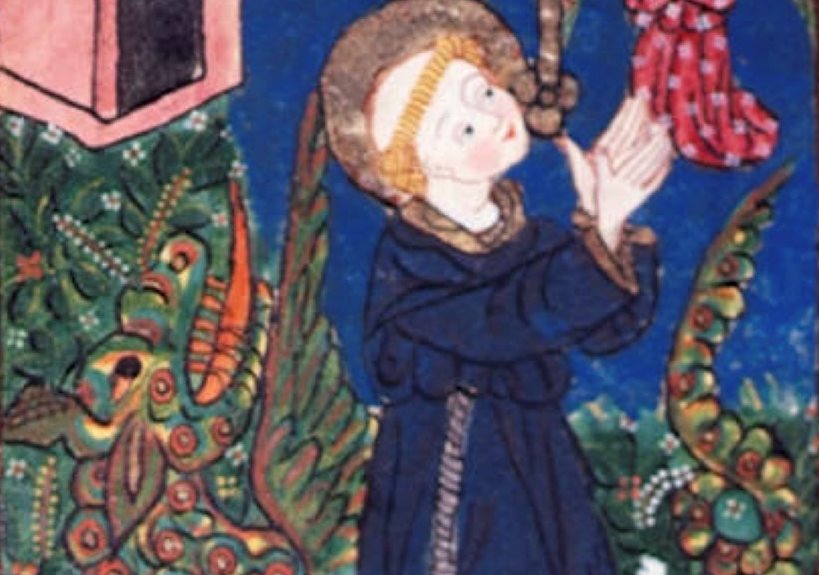
A medieval illustration of a person praying.

Call for Papers

We invite papers which explore representations of spirits and spirituality in the medieval period from c. 600-1400 in Britain and Ireland, including, but not limited to, the following suggestions:

  • The influence of Eastern and / or Western patristics
  • Representations of spirits and demons
  • Approaches to spirituality
  • How spirits and spirituality are represented in medieval texts, artefacts, art and material culture
  • Alternative spiritualities

Please send abstracts of no more than 200 words to: eleni.ponirakis3@nottingham.ac.uk by the 30th November 2021.

For more information, please visit: https://www.nottingham.ac.uk/english/spirits-and-spirituality.aspx

Seminar on the History of Domestic Violence

The 5th Seminar in History of Domestic Violence and Abuse series, organized by Juliana Dresvina & Anu Lahtinen, University of Oxford & University of Helsinki.

October 1, 2021 at 10am GMT

Elena Chepel, ‘How to complain about violence if you are a woman: language and gender in Ptolemaic papyrus petitions

Despina Iosif, ‘Populus Exasperatus: The violent Graeco-Roman crowd

Annette Volfing, ‘Beating the bride into Shape: Domestic violence within bridal mysticism

Juliana Dresvina ‘The Uncomfortable Liber Confortatorius: Grooming in a monastery?’

Since January 2021, Lahtinen & Dresvina have been organizing online seminars on the long history of domestic violence and abuse. For more information about the following events, please follow the updates via https://tinyurl.com/histviolence

Register in advance for this meeting: https://helsinki.zoom.us/meeting/register/u5Mlc-CqqjMqGdPNvsw1b_wOS84lyG6YlkgI

Call for Papers: Oxford University Numismatic Society Graduate and ECR Colloquium 2021 (Tuesday 30th November 2021)

Oxford University Numismatic Society is delighted to announce its call for papers for an online colloquium on the afternoon of Tuesday 30th November 2021. This virtual event held over MS Teams will aim to explore various aspects of base metal coinage(s) and the motives behind its production. We invite contributions from postgraduate students and ECR researchers from any institution on any period or coinage. We hope to welcome three speakers to deliver talks of 30 minutes each (with additional time for questions and responses). Topics might include:

  • Political messages on base metal coinages
  • Fiduciary money and fiduciarity
  • The circulation and quantification of base metal coinage
  • Social and cultural aspects of base metal coinage and money
  • Hoards and/or base metal coins in their archaeological contexts
  • History of collections and base metal coins
  • Fakes and plated coins
  • Money and medallions in base metals

Abstracts of no more than 400 words (excluding a short bibliography) should be sent to daniel.etches@new.ox.ac.uk for consideration by the organising committee by Monday 20th September 2021. Speakers will be contacted shortly thereafter. If you have any further questions, please contact the Secretary by email at daniel.etches@new.ox.ac.uk.

Hold the Date – Workshop on the Murbach Hymns and MS. Junius 25

Vernacular Glossing in the Early Middle Ages

First lines of the Murbach hymns (fol. 122v, Oxford, Bodleian Library, MS. Junius 25).

When?           17th/18th February 2022 (week 5)

What?            In this workshop, the fascinating Murbach hymns – a Latin hymnal with Old High German interlinear glosses from the 8/9th century – and their manuscript (Oxford, Bodleian Library MS. Junius 25) will be carefully examined regarding their translation technique, use and function, cultural background and transmission. Expect an afternoon full of presentations and discussions, a peek in the original manuscript and a live recitation of the hymns.

For further information, visit http://medieval.seh.ox.ac.uk/2021/11/26/webinar-the-murbach-hymns/.

Convenor: Luise Morawetz (luise.morawetz@mod-langs.ox.ac.uk)

(7-8 January 2022) Identity Abroad in Central and Late Medieval Europe and the Mediterranean (Cambridge(venue TBC))

*Keynote Speakers: Prof. Miri Rubin (Queen Mary University, London); Prof. Roser Salicrú i Lluch (Institució Milà i Fontanals,CSIC,Barcelona); Prof. Teresa Shawcross (Princeton University)

Life in the central and late Middle Ages was characterised by high levels of mobility and migration. Shifts in political, economic, cultural and religious life encouraged and sometimes forced individuals and groups to move ‘abroad’ permanently or temporarily, to places nearby or further afield.

The position and impact of these ‘foreigners’in societieshas been widely discussed. However, what isless consideredis how theyunderstood and (re)presented themselves. Ourconference aimsto explorethe construction, expression, and practical significance of different forms of social identity among individuals and groups living ‘abroad’ in Europe and the Mediterranean in the period between the eleventh andfifteenth centuries.

We invite proposals for 20-minute papers from graduate and early career researchers working across all relevant disciplinesin the Humanities and Social Sciences. By bringing together a variety of different perspectives, the conference not only aims to consider how ‘identity abroad’ functioned in specific contexts, but also to emphasise developments, patterns, and divergences. Topics of interest include, but are not limited to:

• Individuals and groups living ‘abroad’, such as merchants, artisans, pilgrims, scholars, diplomats, soldiers, exiles, ethnic and religious minorities, and captives and enslaved people

• Voluntary orforced, temporary orpermanentmigration

•Importance of political allegiance, language, cultural heritage, and faith in identity construction

•Means of identity expression, such as writtenproduction and material culture

•Relations between different ‘foreign’ individuals and groups

• Interaction and assimilation/resistance to assimilation with ‘local’ populations, institutions, and rulers •Impact of gender, socio-economic background, and other types of differences

• Theoretical explorations of the concepts of ‘identity’, ‘foreignness’, and ‘abroad’ in the Middle Ages

Abstracts of 250 words and a short biographical note should be sent to identityabroad22@gmail.com by 12 September 2021. For more information, visit https://identityabroad22.crassh.cam.ac.uk/ and follow @identityabroad on Twitter.

Workshop: Oxford Medieval Commentary Network

Saturday, 9 October 2021, Christ Church, Oxford

Sign-ups for the workshop are now open. Sign-up closes 15 July 2021.

Sign-up form

The first workshop and initial meeting of the Medieval Commentary Network will take place at Christ Church, Oxford, on 9 October 2021, from 9am – 5pm. A buffet lunch will be provided. The workshop is free of charge for all participants.
This will take place as an in-person workshop (unless government regulations change). Unfortunately we are unable to live-stream the event, but we are hoping to make recordings of some talks available online after the event (subject to speaker approval).

Speakers include Alastair Minnis, Andrew Kraebel, Edit Lukacs, Audrey Southgate, Elizabeth Doherty, Malena Ratzke, Zachary Guiliano, Bond West, Rachel Cresswell, and others. The full conference programme will be available at https://medievalcommentary.network/ by the end of July.

We recognise that the current situation brings with it a great deal of uncertainty regarding travel; if you find you are no longer able to attend, please let us know as soon as possible.

Please email medievalcommentarynetwork@gmail.com with any questions and for further information.

CALL FOR PAPERS (archived version; CfP now closed)

Manuscripts Live: Singing from Medieval Sources in the Bodleian Library

Building on the success of Gregorian chant workshops  with manuscripts from the Bodleian Library (Singing Together, Apart 1  and Singing Together, Apart 2 ), a group of Oxford medievalists are offering insights into working with manuscripts during lockdown. Meet some of the manuscripts from the Abbey of Medingen, recently digitized through the Polonsky German project, and sing along to chants from the Easter period.  A special focus was on the ‘Exsultet’ which attracted some of the most colourful illumination of the manuscripts as well as detailed devotional instructions in Latin and Low German on how to sing it both out aloud and “on the harp strings of the soul”. Read more on Savouring the Exultet at Medingen in this blog post by Innocent Smith OP for the Polonsky German manuscript digitisation project.

Andrew Dunning, R.W. Hunt Curator of Medieval Manuscripts, showed the Medingen manuscripts at the Bodleian Library live via visualiser from the Weston Library; Zachary Guiliano, Chaplain of St Edmund Hall, Henrike Lähnemann, Professor of Medieval German Literature and Linguistics, and Nick Swarbrick, Gregorian chant instructor, and Connor Wood, Organ Scholar at St Edmund Hall, formed a Schola in the Crypt of St-Peter-in-the-East, the library of St Edmund Hall, and commented on the manuscripts, the music, and their theological significance. Two graduate students working on the Easter prayer books, Carolin Gluchowski and Marlene Schilling, pointed out some of the special nuntastic features of the manuscripts.

This was part of the IMC Leeds Fringe Events but open to all manuscript and music enthusiasts! Music downloads for the event: Nunc dimittis (audience sings the ‘repetitio’ Lumen ad revelacionem gencium as congregational responses); Exultet (audience sings the congregational responses); Victime paschali laudes (audience sings the ‘Christ ist erstanden’ as congregational response and the question of the disciples Dic nobis Maria…)

Exultet iam angelica turba celorum…

Oxford, Bodleian Library, MS. Lat. liturg. f. 4, fol. 20r – view the full manuscript on the Polonsky German website hab.bodleian.ox.ac.uk

Website Medingen Manuscripts

Recording of the first Polonsky German Workshop “Singing Apart, Together”.

Instruction for the Medingen Provost when during the ‘Exsultet’ to put the incense into the Easter candle, Bodleian Library MS. Lat. liturg. e. 18, fol. 36v

Medieval Matters: Week 8 TT2021

Dear all,

Unbelievably, here we are at the end of Trinity Term! The end of the year always flies by. Best wishes to all the Masters students turning in dissertations in the next few weeks.

There is only one announcement today: at the end of term, I’m departing my post as Communications Officer for Oxford Medieval Studies, as I’ll be headed off on postdoctoral adventures starting this autumn. I am, however, leaving you in the most capable of hands: the wonderful and brilliant Luisa Ostacchini will be taking over this job for the next academic year alongside her new role as Stipendiary Lecturer in Medieval English at St Edmund Hall.

It’s been an honour cluttering up your Monday inboxes. I’ve loved this job, and have deeply appreciated your hard work and enthusiasm in organizing these events and seminars; your promptness with announcements and reminders; your friendly corrections; and your kind missives about my relentless butchering of medieval texts for laughs. In the words of dear old Geoffrey: Min be the travaille, and thin be the glorie.

Hwæt, we Oxnaforda in ær-dagum / leorning-cnihta ond lareowa cræft gefrunon, / hu þa searo-monnas seminara fremedon. [Lo, we have heard of the skill of students and teachers of Oxford in the current times, how those clever people made seminars.] – A recently discovered Old English poem that will no doubt revolutionize the field

Onward to the seminars!

MONDAY 14 JUNE

  • The Oxford Byzantine Graduate Seminar meets at 12:30 pm on Zoom. Please register in advance by contacting james.cogbill@worc.ox.ac.uk. This week’s speaker is Kyriakos Fragkoulis (University of Birmingham), ‘(Re)contextualising a Late Antique City Through the Ceramic Record: The Case of Dion in Macedonia (Pieria, Greece)’.
  • The Medieval Latin Reading Group meets 1-2 pm on Teams. Submit your email address here to receive notices.
  • The Medieval History Seminar meets at 5 pm on Teams. This week we hear from another exciting panel of speakers: Tom McAuliffe, Richard Schlag, Ellie Birch, and Laura Rosenheim on ‘Politics and Power Plays, c. 1000-1500’.
  • Forgotten Christianities meets at 5 pm on Zoom. This week’s speakers are Joseph Glynias (Princeton), ‘Ibrahim the Protospatharios, the Melkites of Antioch, and Local Autonomy under Byzantine Rule’, and Kyle Brunner (NYU/ISAW), ‘Creation and Maintenance of Communal Boundaries Real and Imagined in Syriac Hagiography during the Early Islamic Period’. Register here.

TUESDAY 15 JUNE

  • The Medieval Book Club meets at 3:30 pm on Google Meet. Contact oxfordmedievalbookclub@gmail.com to receive notices. This week’s theme is ‘Image and Legend’, an exploration of visual sources.
  • The Early Slavonic Seminar meets at 5 pm on Zoom. Register here. This week’s speaker is Kati Parppei (University of Eastern Finland), ‘Between East and West: Assumptions and Interpretations Concerning Medieval Karelia’.

WEDNESDAY 16 JUNE

  • Digital Editions Live returns from 3-5 pm on Teams (join the meeting here). This week’s seminar is a book launch; Edmund Wareham presents the newest book in the Reformation Pamphlet series, speaking on ‘500 Years Passional Christi und Antichristi’.
  • The Late Antique and Byzantine Seminar meets at 5 pm on Google Meet (link here). This week’s speaker is Michiel Op de Coul (Tilburg), ‘Theodore Prodromos: Towards an Edition of his Letters and Speeches’.

THURSDAY 17 JUNE

  • The Early Text Cultures Astronomy and Astrology Seminar meets at 3 pm on Zoom. Fill out this Google form to receive the link. This week’s speakers are Vilius Bartninkas (Vilnius) and Federico Valenti (Independent Scholar), on ‘Naming and Nomenclature: Ancient Greek and Early Chinese Astronomical Terminology’.
  • In place of the Aquinas Seminar Series, Bernd Goebel (Faculty of Theology, Fulda) will offer a reading session on Ralph of Battle at 4:30 pm on Zoom, focusing on an extract (§§37-46) from Meditatio cuiusdam Christiani de fide. Register here
  • The Celtic Seminar meets at 5:15 pm on Teams. Contact david.willis@ling-phil.ox.ac.uk for the link. This week’s speaker is Joshua Byron Smith (University of Arkansas), ‘Madog of Edeirnion’s Strenua cunctorum: A Welsh-Latin Poem in Praise of Geoffrey of Monmouth’.
  • The Medieval Trade Reading Group also returns this week at 7 pm on Teams. To be added to the team and have access to the reading materials, email annabel.hancock@history.ox.ac.uk.

FRIDAY 18 JUNE

A few seminars this term will continue into WEEK 9:

  • The Medieval History seminar will meet on Monday 21 June at 5 pm on Teams, as usual. Another exciting panel: Mary Hitchman, John Merrington, James Miller, and Elena Rossi, speaking on ‘Minds, Morals, and Martyrs in Medieval Communities’ (you have to love that alliteration).
  • Forgotten Christianities will meet on both Monday 21 June and Monday 28 June at 5 pm on Zoom. On the 21st, the speakers will be Augustine Dickinson (Hamburg), ‘Martyrs of God and Pillars of Faith: Literature and Identity in the Stephanite Movement’, and Nevsky Everett (SOAS), ‘The Ark of the Covenant and the Cross in Isaac of Nineveh and the Adversus Judaeos Tradition’. Register here. On the 28th, the speakers will be Emily Chesley (Princeton), ‘“I am going to go beyond the bounds”: Creating Miaphysite Community through a Woman’s Biographical Mimro’, and Samuel Noble (KU Leuven), ‘Abdallāh ibn al-Faḍl’s Conception of Philosophy: Byzantine Falsafa’. Register here.
  • The Early Text Cultures Astronomy and Astrology Seminar will meet on FRIDAY (note the time change) 25 June at 3 pm on Zoom. Fill out this Google form to receive the link. Massimiliano Franci (CAMNES, Firenze) and Cristian Tolsa (Barcelona) will speak on ‘Cultural Vistas: Ancient Egyptian and Graeco-Roman Culture’.
  • The Anglo-Norman Reading Group will meet on Friday of Week 9 at its usual time of Friday 5 pm.

Thanks to you all for brightening a trying year with such an incredible array of events, and maintaining our academic community even in times of plague. With all best wishes for a lovely end to term and a (hopefully) covid-free summer,

Caroline