Workshop on Late Medieval German Drama

Report by Carlos Rodríguez Otero and Monty Powell

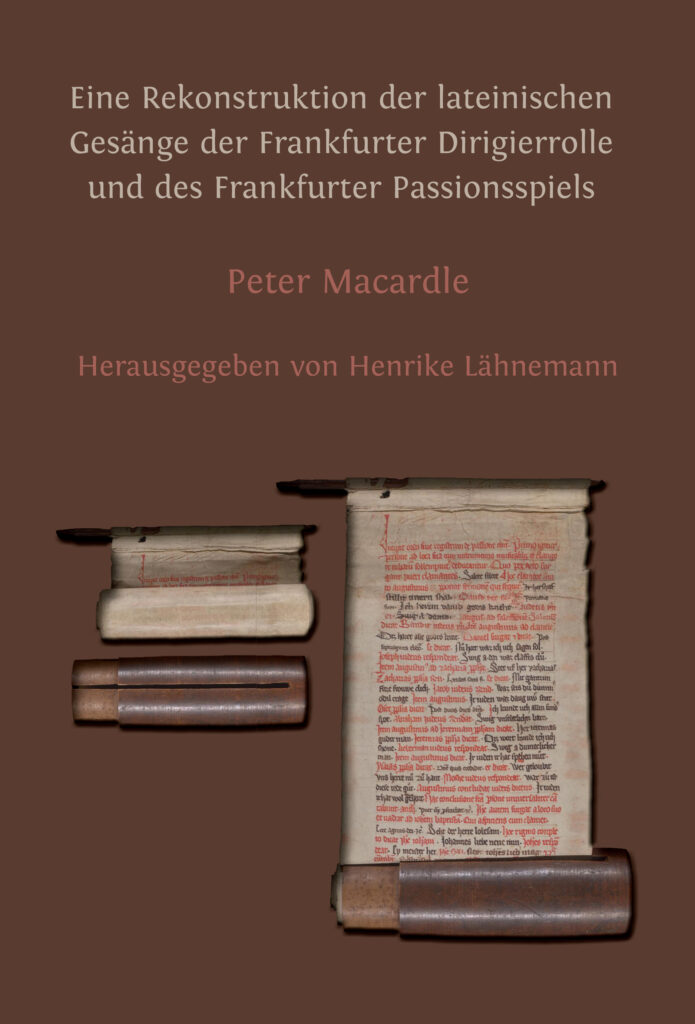
On Saturday 2 May 2026, a group comprising medievalists, musicians, musicologists, liturgists and art historians met in Room 2 of the Taylor Institution Library for a workshop on Medieval German Drama, organised by Henrike Lähnemann, Carlos Rodríguez Otero, Monty Powell and Sharang Sharma. The event centred on an ongoing project to publish the late Peter Macardle’s reconstruction of the liturgical music in the late-medieval Frankfurt Passion Play (Die liturgischen Gesänge der Frankfurter Dirigierrolle und des Frankfurter Passionsspiels, under contract with Open Book Publishers), more specifically focusing on scenes from the life of Mary Magdalene, arguably the play’s most interesting and multifaceted character.

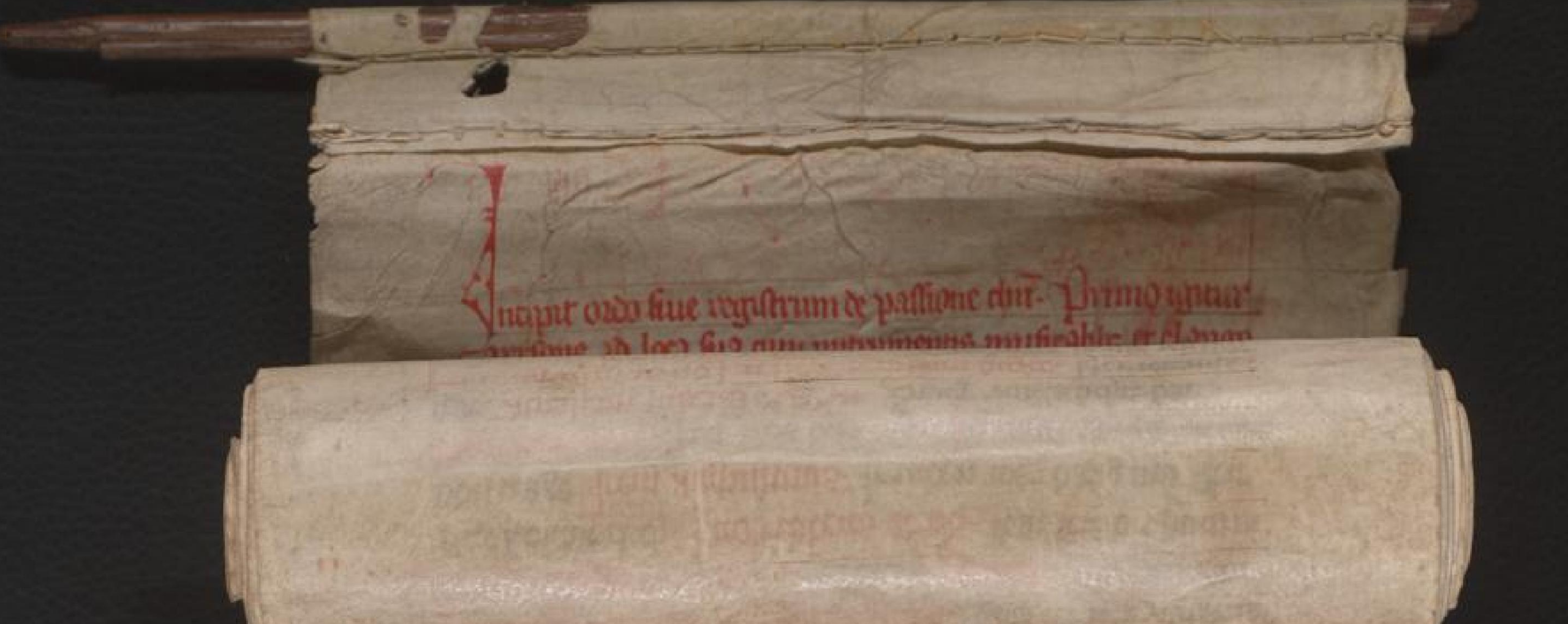
The play, which we know to have been performed from the early fourteenth century onwards if not earlier, included Latin chants to punctuate the drama, imbuing the Middle High German text with strong liturgical resonances. The surviving sources, however, preserve only the play’s text (principally, the Frankfurt Passion Play of 1493 and other regional versions) and condensed performance instructions (i.e. the mid-fourteenth century Frankfurt Director’s Roll). Only a small fragment of what was once a complete version survives, with both text and music intact.

Play Manuscripts

As Henrike Lähnemann mentioned in her introduction, Macardle had painstakingly obtained scans and photocopies of the play’s approximately 120 liturgical chants for a full reconstruction with text and music, building on his 2007 edition of the St Gall Passion Play. Central to Macardle’s approach was the importance of working from local liturgical sources, the sonic components of Christian liturgy in the Medieval West being significantly contingent on local traditions. Fortunately, a significant collection of late fifteenth- and early sixteenth-century chant books written in and for the Bartolomäusstift in Frankfurt survives, where the play originated in mid-fourteenth century. (It would also have been performed immediately outside this former Augustinian collegiate church, the cathedral of the city, in the town square.) Having been entrusted with the manuscript for its posthumous publication, Henrike Lähnemann brought Carlos Rodriguez Otero, Monty Powell and Sharang Sharma into the project to assist with the transcription of the play’s chants, as found by Macardle in these local sources, as well as to situate Macardle’s work among the subsequent research on medieval German passion plays.

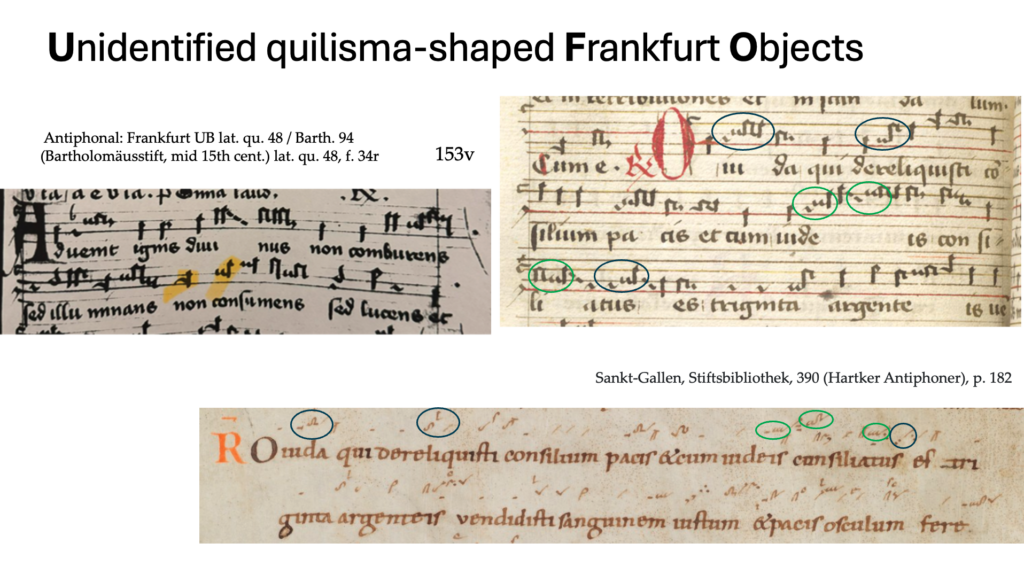
The music for the Frankfurt Passion Play, as recorded in the Director’s Roll, primarily consists of chants from the Office and the Mass, which, as Carlos Rodríguez Otero explained, Macardle located in graduals, antiphoners and a sequentiary belonging to the Bartolomäusstift (apart from a later gradual, nevertheless from the Archdiocese of Mainz), now kept in the Frankfurt Universitätsbibliothek. These sources, written in a late gothic musical script known as ‘Hufnagel’ (nails for horse shoes) notation, preserve the chants as they would likely have been known to the play’s late fifteenth-century audience. As Carlos and Sharang Sharma—the two musicologists on the team—learned, this notation has its own quirks, which has prompted fruitful discussions with several members of the musicological community. The most pressing for the purposes of publication was the presence of quilismas (or quilismata), symbols of unclear and contested meaning which appear in these late sources in unexpected ways, requiring a decision regarding their transcription.

From the presentation of the musical sources, adapted from a workshop day Cambridge 25 April 2026 on Liturgical Chant

Sharang Sharma, who specialises in digital resources for medieval chant research, discussed the new tools that developed since Macardle ceased work on this project in 2013, which have formed an indispensable component of the project. He began by explaining the team’s choice of musical font with which to engrave the musical transcriptions, Volpiano, a typeface that converts music into alphanumeric strings, enabling comparison between chants and large-scale analysis. Its compatibility with Microsoft Word, xml or any other text-based software, the ability to search for specific musical passages, and its Open Source ethos made it the ideal choice. Closely related to this is the Cantus Database, a central body of regional chant databases that include melodies and chants for the Mass and Office, which includes 7,000 manuscripts, 660,000 chants, and integrates the Corpus antiphonalium officii (CAO) numbering system, which identifies office texts and was used by Macardle to catalogue the play’s chants. As well as allowing us to look specifically at German sources that have been indexed, and even typeset with Volpiano, Cantus provides a platform with which to share our own transcriptions later on.

When this became clear, the team wrote to Margot Fassler, whose helpful advice guided the project and, fortuitously, led to her eventual presence at the workshop as an honoured guest and speaker. As well as the issue of quilisma, which traces its origins to the beginning of the chant tradition in German-speaking lands (in sources such as the Hartker Antiphoner from c. 1000), there is also the question of recitation chants, such as gospel tones and passion tones, indicated in the text by verbs such as ‘clamare’, which requires engagement with other plays from the Hessian Passion Play tradition (Alsfeld, Heidelberg, Fritzlar, Friedberg, Trier, etc.), consultation of modern chant sources, and indeed an element of reconstruction.

List of musical sources used for reconstructing the musical chant, all Frankfurt University Library

  • Sequentiary (Frankfurter Sequentiar): Ms. Barth. 49 (Bartholomäusstift, mid-15th cent.)
  • Anti­pho­ners: Ms. Lat. qu. 48 (Bartholomäusstift, mid-15th cent.) and Ms. Barth. 94 (Bartholomäusstift, mid-15th cent.)Frankfurt UB lat. qu. 48 / Barth. 94 (Bartholomäusstift, mid 15th cent.)
  • Graduals (archdiocese of Mainz, ‘Moguntinum’): Ms. lat. qu. 44 (Bartholomäusstift, 2nd ¼ 15th cent.), Ms. Leonh. 13 (c. 1525 from St Leonhard)

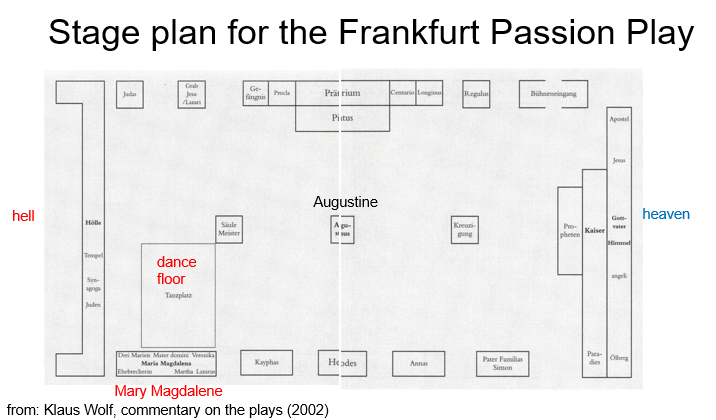
The character of Mary Magdelene was of central prominence during the day. In the Frankfurt Play she has nearly as many scenes as Christ (more than Mary the Mother of God) and she undergoes the most significant change throughout the narrative. This is even reflected in the staging, with her initially appearing on the West side of the square (representing Hell), and later moving to the East (Heaven) after her conversion. Within the Hessian play tradition, embellishments are added to her story (a lover, taunting devils…) that are of musical interest as well, involving vernacular song.

Margot Fassler explored this with reference to the longest chant of the play, a sequence written for her (‘Laus tibi Christe’) bv Gottschalk of Limburg (or of Aachen) in the late eleventh century. The malleability of her character, resulting from the unclarity of exactly who she is in the gospels, made her a popular and versatile saint, with several aspects of her life explored in visual arts as well as liturgical music. In the early Middle Ages, she was also rendered as the sinner in Luke 7 and Mary of Bethany. In the figure of Mary Magdelene, Margot Fassler explained, we have a condemnation of worldly vice (before her conversion), a model penance, and a story of conversion, making her both a universal saint and at the same time a privileged first witness of the Resurrection  and ‘apostola apostolorum’. Margot Fassler also highlighted the significance of visual depictions of Mary Magdalene, and how these would enrich a future performing edition project, as well as the role of intertextuality within the sequence repertoire. She pointed out how focussing on the ringdance in the Frankfurt and Alsfeld Passion Play could help as defining feature for a performance version of the Mary Magdalen passages.

Monty Powell then began the more hands-on afternoon session with a paper on the ‘adaptability’ of medieval drama, specifically in the context of the Hessian group of plays from which a large number of full and fragmentary play-manuscripts survive. A number of sources, collated from the Stadtrechnungen and Bürgermeisterbuch of medieval Frankfurt as well as from personal diaries, provide insightful (and sometimes amusing) accounts of the great tradition of putting on Passion and Easter plays in medieval Frankfurt. They also document amajor change that took place in the tradition: before 1480, it seems, plays were performed under the auspices of the Bartholomäusstift, to which context, from more than one century earlier, the Frankfurter Dirigierrolle belongs. After 1480, the plays came under the close control of the Town Council: the manuscript containing the text that Germanists have termed the Frankfurter Passionsspiel was copied in 1493, and contains an (incomplete) play text that has become far less “liturgical” in character but where other scenes have been added and vastly expanded upon. A case in point are the Mary Magdalene scenes: as the afternoon’s workshop showed, the later passion plays from Frankfurt and Alsfeld revel in exploiting to the full not only the comic potential inherent in such a character, but also her importance as a model of penance. This second, penitential aspect of Magdalene’s character had been demonstrated so wonderfully earlier in the day by Margot Fassler. 

​It is important to keep in mind that we can never safely map records of historical performance onto the text preserved in play-manuscripts. For instance: although it would be tempting to read Johannes’ Kremer’s 1493 play-text, now known as the Frankfurter Passionsspiel, as an archived version of the performance that we know took place one year before, things might not be quite so simple: is it an archive recording parts of the play performed one year before, or Kremer’s own rewritten version, perhaps intended for future performance – or for his own enjoyment and personal use? And what about its relationship to the plays held in Frankfurt over the following decades, for which no play-manuscriptssurvive? We can ask similar questions about the later Alsfelder Passionsspiel manuscript. Although dates of three performances, along with the content of what was performed when, is recorded on its first folio, the manuscript shows evidence of three scribal hands which cannot always be easily differentiated from one another, and includes added quires and pages stuck in to the manuscript. The point is that a ‘reconstruction’, of music and/or of a whole play, is not quite as simple as we might wish. As Johannes Janota, editor of the Hessian group of plays, argued in his excellent essay Mittelalterliche Texte als Entstehungsvarianten, it is paramount to develop models of editions (in the case of the Hessian group, parallel texts) that do not obscure but make clear (sichtbar) the constant processes of rewriting and adaptation – what Walter Haug called der aktualisierende Vollzug – at work between manuscript witnessesof play-texts, and in medieval literature more generally. By comparing and attempting to perform not just comparable Mary Magdalene scenes from the play-texts, but also their music as reconstructed by Peter Macardle, we hoped that Saturday afternoon’s workshop could make these processes not just sichtbar, but hörbar, too.

The group then divided into pairs and small groups, each exploring possible approaches to different elements of the play in a future English-language performing edition. Questions raised included whether—and how—music might be translated, how faithfully to adhere to original forms and language (both musical and textual), and how to transmit the feel and experience of the play, with its contrasts between sacred and secular, high- and lowbrow, vernacular and learned. The responses were creative, insightful and above all, enjoyable, culminating in a showcase of recomposed folk laments, sensuous settings of courtly and worldly desire, Shakespearean-influenced verse translations and various choreographies, including the Ring Dance, a popular dance type in Medieval Germany that blurred the boundaries between sacred and secular authorities, as well as the mundane and the divine.

The workshop was not only successful, therefore, in introducing the project of publishing Macardle’s edition, but it also demonstrated how his work can inspire a broader, creative engagement with this stimulating and exciting dramatic genre.

Medieval Matters TT26, Wk 1

Welcome back to Trinity term.

There have been a substantial number of new additions to the booklet since the draft issued last week – please have a check through the updated booklet here for even more medieval events throughout the term. For some time-sensitive announcements (such as the call for actors for an experimental production of the Harrowing of Hell) read through to the end under ‘opportunities’! A reminder that if there are any changes to events such as rooms or times, we are always happy to update the weekly blog post and calendar of events which is integrated into theblog.

Monday

  • French Palaeography Manuscript Reading Group – 10:30, Weston Library. If you are interested in joining the group or would like more information, please email the convenor Laure Miolo.
  • Runic Germanic Inscriptions and Language Lectures – 2:00, room 30.445 of the Schwarzman Centre
  • Medieval History Seminar: – 5:00, All Souls College. Ruth Mazo Karras (Trinity College, Dublin) will be speaking on ‘Parental control of women’s marriage in late medieval Paris’
  • Italian Research Seminar – 5:15, Taylorian, Room 2. Geri Della Rocca de Candal (Sapienza) will be speaking on ‘Italian Incunabula in US Collections: Paths, Patterns, and Investigation Methods’

Tuesday

  • Latin Palaeography Manuscript Reading Group – 2pm, Weston Library. Those who are interested can email the convenor Laure Miolo.
  • Medieval French Research Seminar – 5:00, Maison Francaise. Benedetta Viscidi (Université de Fribourg) will be speaking on ‘Représentations et mythes du viol dans la littérature médiévale en français: le cas du roman’ 

Wednesday

  • Methods in Arabic and Islamic Studies Class – 10:30, LMH Library.
  • Medieval German Graduate Seminar – 11:15, Oriel College. The first week will be a shortish planning meeting. The topic for this term is the ‘Welsche Gast’ by Thomasin von Zerklaere.
  • Old Norse Reading Group – 5:00, Merton College, Breakfast Room. This term we are reading Völsunga saga. If you are interested in joining the group, please contact one of the group convenors via email Brooklyn Arnot or Zeynep Kirca
  • The Medieval Latin Documentary Palaeography Reading Group – 4:00, online. To join and/or to find out more about this and the possibility of some hands-on experience of cataloguing such documents to develop further your research skills, please contact  Michael Stansfield.
  • Late Antique and Byzantine Seminar – 5:00, Late Antique and Byzantine Seminar, Ioannou Centre. The Oxford University Byzantine Society will discuss their Research Trip to Sicily.
  • Medieval English Research Seminar – 5:15, The Schwarzman Centre, room 00.063. Emma Nuding (U of Birmingham) will be speaking on ‘Writing the early medieval Fens: place in the medieval and modern lives of St Guthlac’.

Thursday

  • Middle English Reading Group (MERG) – 11:00, Lincoln College, Beckington Room. All are welcome as we finish Sir Gawain and the Green Knight. Bring any edition of the original text! There will be tea and biscuits. For more information or to be added to the mailing list, please email Rebecca Menmuir
  • Old English Graduate Reading Group – 5:15. This term we will be reading some of the Exeter Riddles. Our Location is variable so please email Hattie (harriet.carter@lmh.ox.ac.uk) or James (james.titterington@stcatz.ox.ac.uk) if you’re interested.
  • Heraldry Society – 5:30, Oriel College. Mark Scott (Somerset Herald) will be speaking on “Princely Heraldry in the United Kingdom”.
  • Bede Reading Group (or, ‘Bede-ing Group’) – 6:00, Blackfriars. To sign up, email Maura McKeon. Don’t stop Bede-lieving.

Friday

  • Medievalist Coffee Morning – Friday 10:30, Visiting Scholars Centre (Weston Library). All welcome, coffee and insight into special collections provided.
  • Medieval Latin Reading Group – 5:30, Christ Church. This term, we will be reading the Cosmographia of Bernardus Silvestris in the original. For more information, please contact Clara Bykvist or Monty Powell

Saturday (!)

Opportunities (see Medieval Studies booklet for full details)

  • The experimental production of the Harrowing of Hell is seeking performers. We will be performing our play in week 6 (2 to 6 June) at the Burton Taylor Studio, from 9:30 to 10:30pm and in week 7 (9 to 11 June, tbc) in the crypt of St-Peter-in-the-East (St Edmund Hall), from 8 to 9pm. We are still missing three roles (Adam, Eve, and a demon; all backgrounds welcome, aged 18+). More information can be found here.
  • OMS small grants is now open! Grants are normally in the region of £100–250 and can either be for expenses or for administrative and organisational support such as publicity, filming or zoom hosting. Closing date for applications: Friday of Week 5.
  • Publishing with the Journal Manuscript and Text Cultures. Are you interested in submitting to the journal Manuscript and Text Cultures? Please review the About the Journal page.
  • Register for the Anglo-German Research Funding Opportunities Showcase, Wednesday, 13 May  •  2 PM – 5:30 PM | Eventbrite. The Global Engagement team will host representatives from some of the major German and UK funding bodies (DFG, The Royal Society, the Alexander von Humboldt Foundation, the Royal Academy of Engineering and more) at Rhodes House; for Early Career People as well as established researchers!
  • Sir John Rhŷs Prize for the study of the Celtic languages, literature, history, and antiquities. Entries should be submitted by email, with the subject line “Sir John Rhŷs Prize”, to the English Faculty Office, no later than Monday of Week 8 of Trinity Term (15 June 2026).
  • CfP – 9th International Conference on Myth Criticism. Deadline: 15 May 2026
  • CfP – The Nine Worthies: Interdisciplinary Perspectives. Deadline: 15 May 2026
  • Bodleian Purchasing Opportunity. Do you know of books that would aid your work but are not in the Bodleian? Help us strengthen the university’s collections. You can submit details of suggested books via https://www.bodleian.ox.ac.uk/collections-and-resources/recommend-a-purchase or by email to medieval@bodleian.ox.ac.uk.

Nigel F. Palmer Travel Fund Launch

The Society for the Study of Medieval Languages and Literature warmly invites OMS community members to a wine reception to launch the Nigel F. Palmer Travel Fund, to be held at 18:00 on Monday 11 May in the Hinrich Reemtsma Auditorium of the Warburg Institute (Woburn Square, London WC1H 0AB).

The Fund will support graduate students whose research in medieval languages and literature necessitates travel, and its launch comes at a point when funding for graduate students across the arts and humanities is becoming increasingly restricted. Its specified aim is to enable students to visit libraries and archives to consult manuscripts or other archival material, and to visit archaeological sites and/or monuments of direct relevance to their research. The Fund is named in honour of Nigel F. Palmer, executive editor of the Society’s journal Medium Ævum, and its responsible editor for German, Latin and all historical disciplines for well over thirty years from 1990 until his death in 2022. Our Society’s intention with the Fund is to take forward Nigel’s work, undertaken through the Society and widely beyond, in encouraging young scholars, by supporting graduate students in medieval studies to travel and pursue research on original materials.

Please email the Society’s Executive Officers at ssmll@history.ox.ac.uk to confirm your attendance by 1 May. If you are unable to join us on 11 May, I would be delighted if you would consider a donation towards the endowment of the Fund. You can donate to the fund via this link: Donate

Events at Iffley Church

Living Stones is looking for volunteers of any age, background or beliefs. Living Stones is the heritage and educational arm of St Mary’s, the church at the heart of Iffley village, Rose Hill and Donnington. Volunteers welcome visitors to the church. They also run activities, events and talks on its history and architecture. They welcome visitors to the church on Sunday afternoons from Easter to October.

Events 2026 Drawing Iffley Church

Spend a day looking at and drawing Iffley Church with local artist and teacher, MICAH HAYNS

Saturday 16 May 2026 10.30-5.00pm St Mary’s Church OX4 4EJ

Iffley Church is an outstanding Romanesque building. It stands in a unique historic landscape

  • all materials supplied
  • live demonstration and feedback
  • For amateurs aged 16+
  • Limited numbers
  • BOOK NOW! Ticket sales open!

The session starts in the Church Hall, Church Way, Iffley OX4 4EG. Bring your own lunch. Or visit nearby pub, The Prince of Wales, 73 Church Way, Iffley, Oxford OX4 4EF 01865 586379  https://www.princeofwalesiffley.co.uk/

 Living Stones will provide free hot and cold drinks throughout the day.

All materials will be provided, but you are welcome to bring your own sketching stool, sketch book, or anything you are working on if you wish.

The day will run as part of East Oxford Art Weeks. Some of Micah’s work will be exhibited in the Church Hall throughout the day. 

Work by participants will join the exhibition at the end of the day after which participants may take their work home.

MORE INFORMATION and BOOKING FORM

https://www.eventbrite.co.uk/e/drawing-iffley-church-tickets-1981794010233?aff=oddtdtcreator

Events 2025

SATURDAY 10 MAY 10.00-4.30 – Drawing Iffley Church, day-school with artist Micah Hayns.

SATURDAY 17 MAY 11.00-7.15 – Day of chant in celebration of St Dunstan, patron saint of bellringers and music. The day ends with a special service in the church sung to music composed by St Dunstan and first written down in the 12th century.

SUNDAY 7 SEPTEMBER – Patronal Festival for St Mary the Virgin, picnic and family fun.

A Multilingual Moses Play

Moses. The ‘Exagoge’ of Ezekiel. ‘Moses and the Shepherd’ by Rumi

Friday, May 8, 2026 – 18:30: Ioannou Centre, 66 St Giles
Sunday, May 10 – 12.30: Iffley Church Hall
Monday, May 11 – 6pm: Wolfson College Buttery

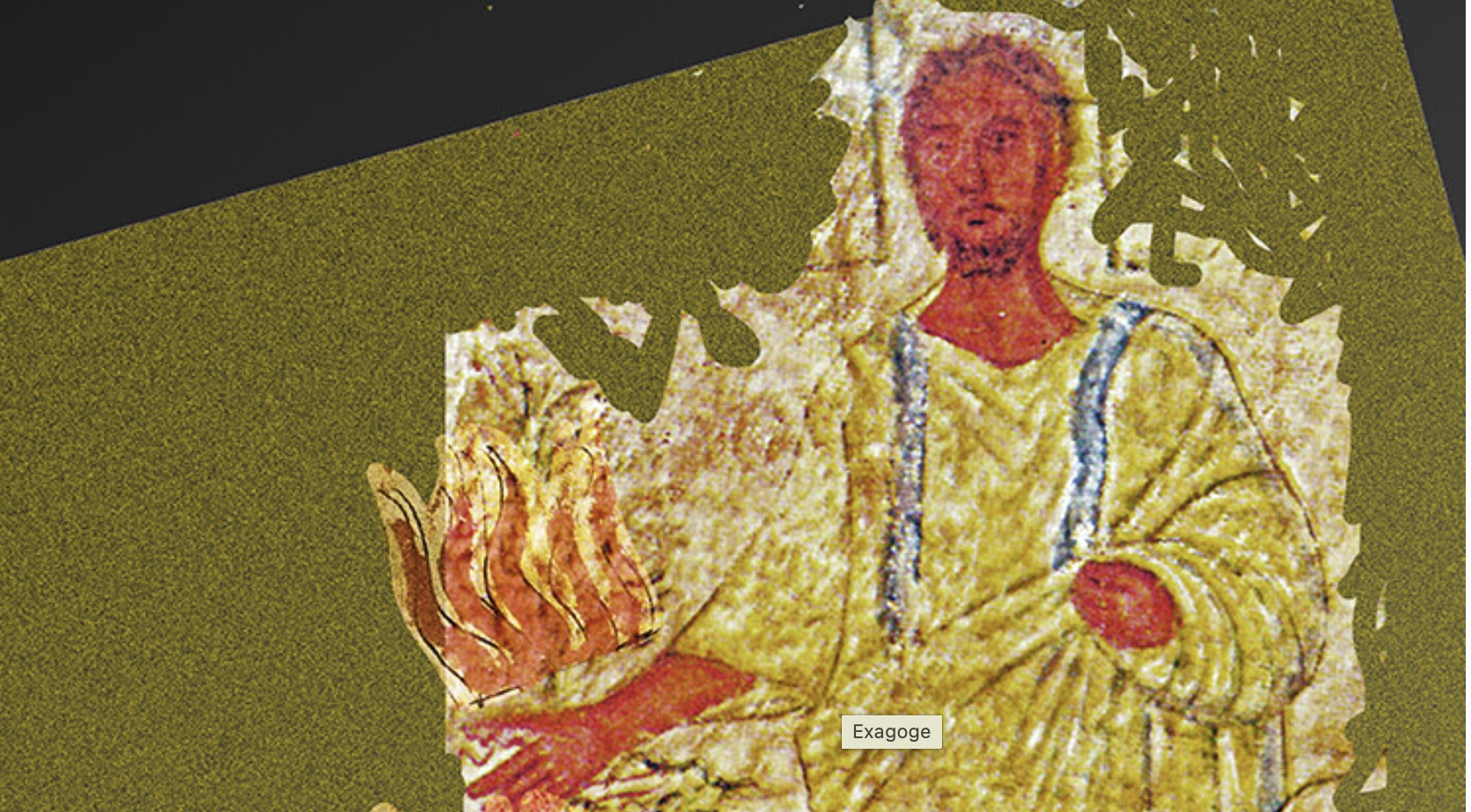
David Wiles directs a production of the extant fragments of a tragedy written in Alexandria in the second century BC.  Drawn from the Book of Exodus, the story tells of the Hebrews’ escape from Egypt.  The play was written by a Jew, and is the first extant dramatization of a biblical text. 

The performance is mostly given in ancient Greek, with the opening scene played in English.  The project follows on from Hrosvita’s Martyrdom of the Three Virgins performed in Latin in 2025, and prior to that Seneca’s Octavia in a Renaissance translation.  

The cast are a mix of students and seniors. The production style will be choral, using movement to illustrate narrative passages such as the burning bush and the crossing of the Red Sea – so fluent knowledge of ancient Greek is not required.  

The first performance is in the Classics Centre in St Giles at 6.30 on Friday May 8, sponsored by the APGRD https://www.apgrd.ox.ac.uk/events.  The second is in Iffley Church Hall at 12.30 on Sunday, May 10.  The third is in Wolfson College Buttery at 6.00 on Monday, May 11, sponsored by the Ancient World Research Cluster.  The performance should last for about 35 minutes, and we will have a brief Q&A afterwards. The APGRD and AWRC are both kindly providing wine.

EXAGOGE by Ezekiel. The Exagoge was written in Alexandria in the 2nd century BCE in the mode of a Greek tragedy, adapted from the Book of Exodus. It is the earliest dramatic adaptation of Biblical text. 269 lines were preserved by Christian commentators. We have made only a small number of cuts, but line allocations have been transposed, with the role of Moses divided between four different actors. Storyline: Pharaoh’s daughter discovers baby Moses in the Nile, and rears him. He kills an Egyptian overseer and flees to Libya, where he marries, sees a vision of the stars, and then God in a burning bush. Moses is reluctant to return. God tells him to inflict plagues on Egypt in order to secure the release of the Hebrews from bondage. After an angel of death has ‘passed over’ the houses of the Hebrews, they flee, pursued by the Egyptian army. The waters of the Red Sea open for them, then drown the Egyptians. In the final non-Biblical episode, the story is resolved by a kind of deus ex machina – perhaps a mirage, perhaps a demon, perhaps a phoenix.

  • Ruthanne Brooks. Mariam, Chum (Sepphora’s sister); Moses 3.
  • Leonie Erbenich. Pharaoh’s daughter; Sepphora (Moses’ wife).
  • Valentina Davi. Moses’ Mother.
  • Loveday (Junyu) Liu. Moses 1.
  • Alex Marshall. Raguel (Sepphora’s father); Moses 4.
  • Laurence Nagy. Pharaoh; God.
  • Vishal Rameshbabu. Herald.
  • David Wiles (standing in). Moses 2.
  • All. Chorus

MOSES AND THE SHEPHERD by Rumi. Much more contemplative, Moses and the Shepherd is a story from the Manavi, a compilation of parables dictated by the Persian Sufi poet Rumi (1207-1273) over the last fifteen years of his life. We hope that the two plays speak to each other in interesting ways.

  • Goatherd: Laurence Nagy
  • Moses: David Wiles
  • God: Alex Marshall
  • Director: David Wiles
  • Music: Jessica Qiao

Medieval Matters – Vac

The OMS emails will be put on brief pause over the vac, although the blog will be continually updated with new events. Please see below a number of important opportunities and reminders before term starts. Of particular note to those interested in early medieval England (and who amongst us doesnt fall into that category) is the British Library’s upcoming PhD placement on the Norman Conquest. Applications are open for three PhD placements which will support the development of our upcoming major exhibition on the Norman Conquest, marking the 1,000th anniversary of the birth of William the Conqueror. Apply by Monday 6 April 2026. Apply by Monday 6 April 2026.

A Conference at the British Library: Multispectral Gaze: New Approaches to the Cotton Genesis

Friday 9th June, at 10:00

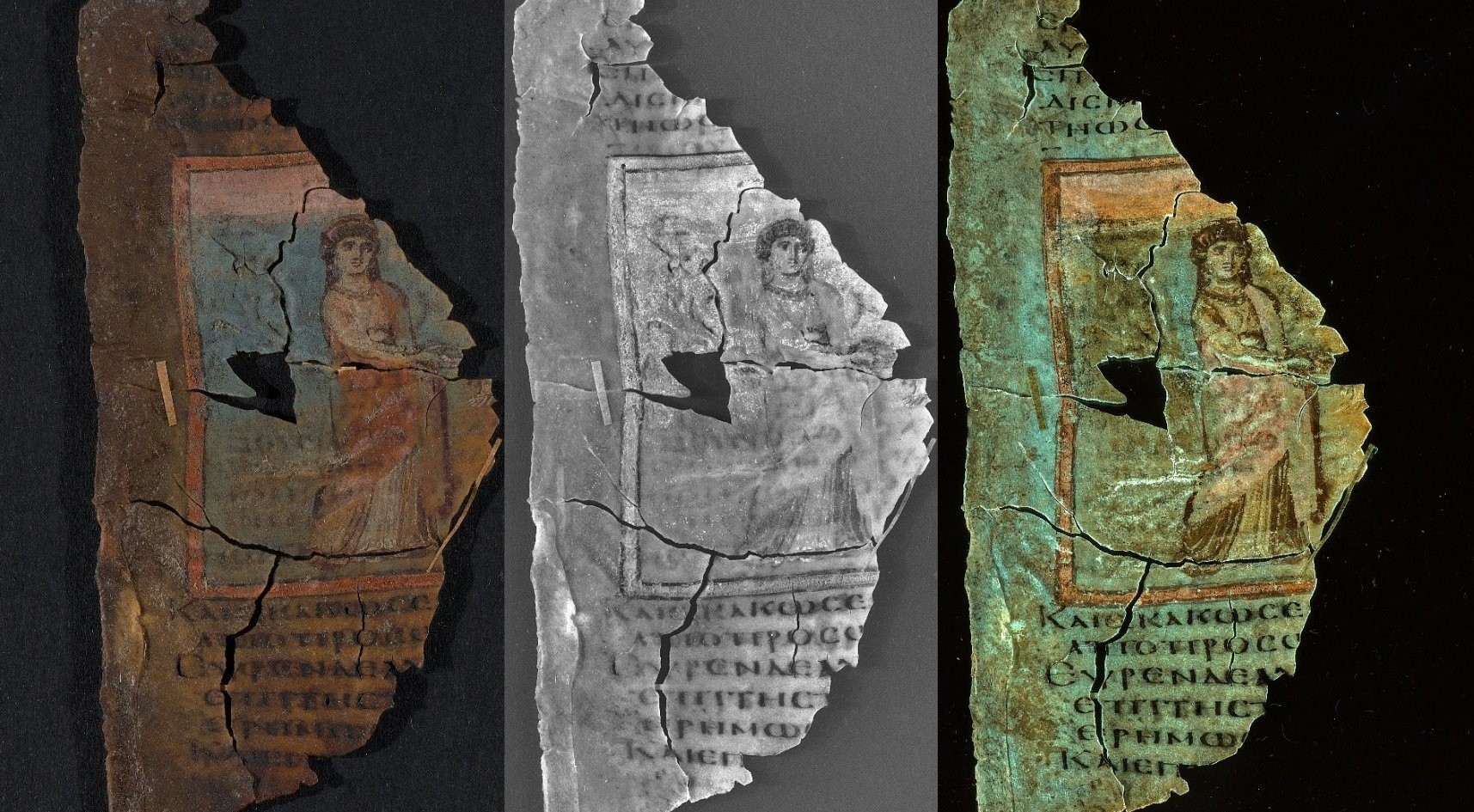
The British Library recently undertook a new multispectral digitisation campaign of the Cotton Genesis (British Library, Cotton MS Otho B VI), one of the greatest works of manuscript art to survive from late Antiquity and one of the most tragic casualties of the Cotton Library fire of 1731. The new imagery made visible parts of the manuscript unseen since the fire. Pages that look black to the naked eye now reveal portions of readable texts; illuminations that look like blocks of colour now show layers of paint, brush strokes, and fold outlines. This opens exciting opportunities for new research on this manuscript, which is a significant witness both of an influential late-antique visual tradition and of the text of the Septuagint. The British Library will celebrate the launch of the multispectral images of the Cotton Genesis on its website with an interdisciplinary conference fully dedicated to the manuscript: Multispectral Gaze: New Approaches to the Cotton Genesis.

View the full programme and register here.

Supported by the Paul Mellon Centre for Studies in British Art and the Association for Manuscripts and Archives in Research Collections (AMARC).

Thank to support from AMARC, five free student tickets are available. To apply, please contact  elena.lichmanova@bl.uk and e.zingg@hist.uzh.ch.

Texts in transition

A workshop on editing texts from medieval Britain

The Early English Text Society for graduate students and early career scholars.

Featuring: Richard Dance, Ralph Hanna, Kathryn Lowe, William Marx, Ad Putter, and Susan Irvine.

St Hilda’s College, Oxford

11.00 a.m. – 5.00 p.m.

Saturday 18 April 2026.

£20 for members of the EETS,

£34 for non-members.

Lunch and refreshments will be provided free

For registration or membership of the EETS, contact Dr Daniel Orton at eets@ell.ox.ac.uk

It is possible to obtain the members’ discount by joining at the time of registration. Website EETS

Medieval Matter HT26, Week 8

We have made it, at long last, to the end of another Hilary term – but the events don’t stop coming! Please find below another week full of medieval events for you to enjoy, and an ever-increasing list of future opportunities. NB: the Maison Française d’Oxford lecture this Tuesday has had to move earlier and is now at 12:00.

Monday

  • French Palaeography Manuscript Reading Group – 10:30, Weston Library.
  • Seminar in Palaeography and Manuscript studies – 2:15, Weston Library. Seamus Dwyer (Cambridge) will speak on ‘Pen-Flourishing and the Boundaries of Meaning’.
  • Medieval Archaeology Seminar – 3:00, Archaeology Faculty.  Eugene Costello will be speaking on ‘Exploring the expansion of pastoral farming in northern Europe’s uplands, c.1200-1600’.
  • Medieval History Seminar – 5:00, All Souls College. Nick Evans (Birkbeck) “Cowries, Cloth and Coins: Currency in Medieval Economic Anthropology”.
  • Theory and Play: Comparative Medievalisms – 5.15, Lady Margaret Hall.

Tuesday

  • Europe in the Later Middle Ages Seminar – 2:00, New Seminar Room, St John’s College. Mike Carr (Edinburgh) will be speaking on ‘Popes, Ambassadors and Falcons: Trade and Diplomacy between Latin Europe and the Mamluk Sultanate in the Fourteenth Century’.
  • Latin Palaeography Manuscript Reading Group – 2:00, Weston Library (Horton Room). Those who are interested can contact the convenor, Laure Miolo.
  • Maison Française d’Oxford lectures: ‘Children in the Middle Ages’ – 12:00, Maison Française. NB. the new, earlier, time.
  • Maghrib History Seminar: “Reading the Qurʾān across the Mediterranean: Toward a Maghribī School of Tafsīr in Early Islam” – 5:00, The Queen’s College.
  • Medieval Church and Culture, theme: TRANSLATION(S) – tea and coffee from 5:00, Harris Manchester College. Celeste Pan (Balliol) will be speaking on ‘Some issues of translation in an illuminated Hebrew bible manuscript from medieval Brussels (Hamburg, Staats- und Universitätsbibl., Cod. Levy 19)’.
  • Old English Hagiography Reading Group – 5:15, Jesus College Memorial Room.
  • Church Historian Pub Night – 6:00 at the Chequers Inn. Contact Rachel Cresswell.

Wednesday

  • History and Materiality of the Book Seminar series – 2:15, Weston Library. Matthew Holford and Laure Miolo will be speaking on ‘Text identification’.
  • Older Scots Reading Group – 2:30, Room 30.401 (Humanities Centre). Palyce of Honour, Thyrd Part, ll. 1288-2142; Palyce of Honour, Dedication, ll. 2142-2169.
  • The Medieval Latin Documentary Palaeography Reading Group – 4:00, online.
  • Islamic Studies Seminar – 5:00, Oxford Centre for Islamic Studies. Professor Sheilagh Ogilvie (University of Oxford) will speak on ‘Leviathan’s Health: State Capacity and Epidemics from the Black Death to Covid’.
  • Late Antique and Byzantine Seminar – 5:00, Ioannou Centre for Classical and Byzantine Studies. Nathan Websdale (Oxford) will be speaking on ‘Unbecoming Roman: Performative Ethnicity and Panspermía in the Byzantine World c.1190-1235’.
  • eCatalogus+: A Digital Tool for the Automated Study of Latin Manuscripts (Liturgical Case Studies) – 5:00, Weston Library. More infomation here.
  • Lydgate Book Club – Weston manuscript visit with Laure Miolo. Meet 3:50pm at the Weston lockers for a 4pm start. Please email Shaw Worth for any information.

Thursday

  • Middle English Reading Group (MERG) – 11:00, Lincoln College, Beckington Room. Sir Gawain and the Green Knight.
  • Medieval Women’s Writing Research Seminar – 4:00, Somerville College. Making and Breaking Connections, including letters sent by Hildegard von Bingen and Catherine of Lancaster, queen of Castile.
  • Seminars in Medieval and Renaissance Music – 5:00, online. Elisabeth Giselbrecht, Louisa Hunter-Bradley and Katie McKeogh (King’s College London) will be speaking on ‘No two books are the same. Interactions with early printed music and the people behind them’.
  • Celtic Seminar – 5:15, hybrid. Eleanor Stephenson (Cambridge) will be speaking on ‘Landscapes of Extraction: Philippe de Loutherbourg and the Morris Family’s Copper Works, Swansea’.
  • Medieval Visual Culture Seminar – 5:00, St Catherine’ College. Emily Guerry (University of Oxford) will be speaking on ‘Silver trees and pearl crosses: Franco-Mongolian diplomacy and cultural exchange in thirteenth-century Karakorum’.
  • The Khalili Research Centre For the Art and Material Culture of the Middle East: Research Seminar – 5:15, The Khalili Research Centre. Johannes Niehoff-Panagiotidis (Freie Universität, Berlin) will be speaking on ‘A Greek-Orthodox monastery in the desert: Mount Sinai and the material culture of its Arabic (and Islamic) manuscripts’.

Friday

  • Medievalist Coffee Morning – Friday 10:30, Visiting Scholars Centre (Weston Library). All welcome, coffee and insight into special collections provided. This week, Jana Lammerding will speak on the representation of witches in the Douce Collection.
  • The History of the Bible: From Manuscripts to Print – 12:00, Visiting Scholars Centre at the Weston Library. Week 8: The Bible printed. Places are limited. To register interest and secure a place, please contact Péter Tóth.
  • Exploring Medieval Oxford through Surviving Archives – 2:00, Weston Library (Horton Room). Those who are interested can contact the convenor, Laure Miolo.
  • EMBI ‘New Books: A Celebration’. – 4:30, Schwartzman Room 421. Helena Hamerow and Conor O’Brien will talk informally about the process of researching and writing the projects that they have both just published, and we will also hear some reflections on being a postdoctoral researcher on a major project such as the ERC-funded grant for FeedSax. End-of-term drinks in Jude the Obscure, Walton St.
  • Oxford Medieval Manuscript Group – 5:00, John Roberts Room at Merton College. Julian Harison (Curator, British Library) will be speaking on ‘Sir Robert Cotton and Oxford’.

Opportunities and Reminders

eCatalogus+: A Digital Tool for Latin Manuscripts

11 March, 5pm, Horton Room, Weston Library
Dr Paweł Figurski Institute of Art of the Polish Academy of Sciences, Warsaw
eCatalogus+: A Digital Tool for the Automated Study of Latin Manuscripts  (Liturgical Case Studies)

The presentation introduces eCatalogus+, an innovative digital platform designed for the comprehensive description and automated analysis of medieval Latin manuscripts, with a particular focus on liturgical sources. At its core, eCatalogus+ combines HTR (Handwritten Text Recognition) technology with advanced tools that improve transcription accuracy and enable the automatic analysis of manuscript contents. Its main features—powerful search functions, interactive databases, and collaborative research modules—facilitate both individual and collective work on medieval texts. The system has been successfully implemented in research projects such as eCLLA+ and Liturgica Poloniae: A Descriptive Catalogue of Polish Liturgical Manuscripts, where it supports the study, cataloguing, and interpretation of medieval liturgical sources. Through selected liturgical case studies, the presentation will demonstrate the platform’s research potential and its contribution to the evolving field of digital manuscript studies. Ultimately, the talk aims to show how digital technologies are transforming the study of medieval manuscripts, opening new avenues for both academic inquiry and public engagement.

Paweł Figurski is Assistant Professor at the Institute of Art of the Polish Academy of Sciences. The focus of his research is on the history of liturgy and its political significance as well as on medieval manuscript culture, book illumination, and the theology of politics in the Early and High Middle Ages. He is also an active researcher, database analyst, and developer of tools for automated research on the Latin liturgical tradition in the field of digital humanities. He is currently the Principal Investigator (PI) of two projects: “Liturgica Poloniae…”, funded by the Polish Ministry of Higher Education (NPRH), and “Dangerous Prayers…”, funded by the Polish National Science Centre (SONATA)  

Please let Matthew Holford know if you would like to join him and the speaker for dinner after the talk.