Funded MA and PhD opportunities at Central European University, Vienna

The Department of Historical Studies at Central European University (Vienna, Austria) is pleased to announce its call for applications for the 2025/2026 academic year. The deadline is February 1, 2025

Central European University is a graduate-level, English-language university with a multi-disciplinary Department of Historical Studies that offers the following programs:

• PhD in Late Antique, Medieval and Early Modern Studies (5 fully funded positions) 

• PhD in Comparative History (5 fully funded positions) 

• 1-year MA and 2-year MA in Historical Studies (History track and Late Antique & Medieval Studies track) 

• 2-year MA in Museum Studies 

The department’s programs are accredited in the US and Austria. Further information on the department and its programs can be found here: https://historicalstudies.ceu.edu/.  

CEU provides a variety of need- and merit-based scholarships and various other types of financial support available to students at all levels and from any country (tuition waiver, stipend, housing awards, health insurance coverage): https://www.ceu.edu/financialaid

Interested applicants can contact us at historicalstudies@ceu.edu or join one of our admissions events. For further details and registration, see https://historicalstudies.ceu.edu/recruitment-events.   

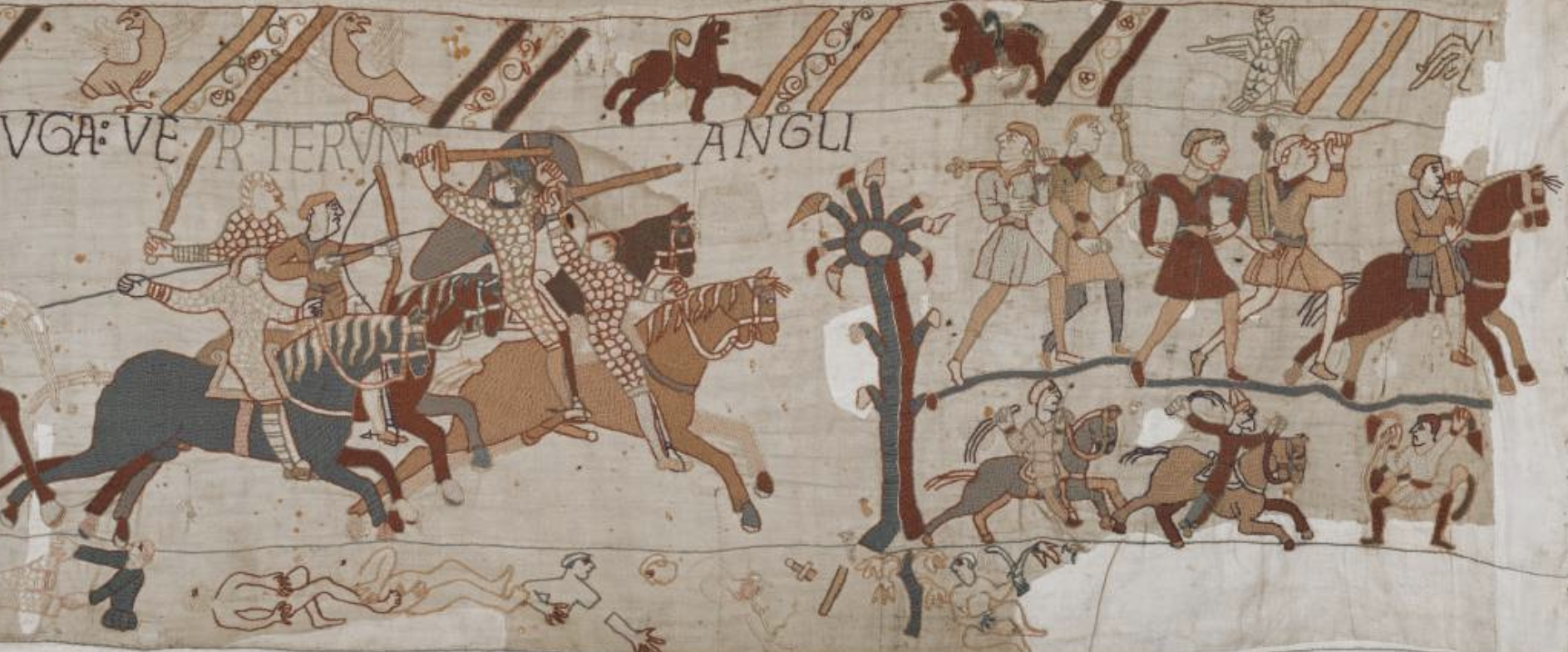
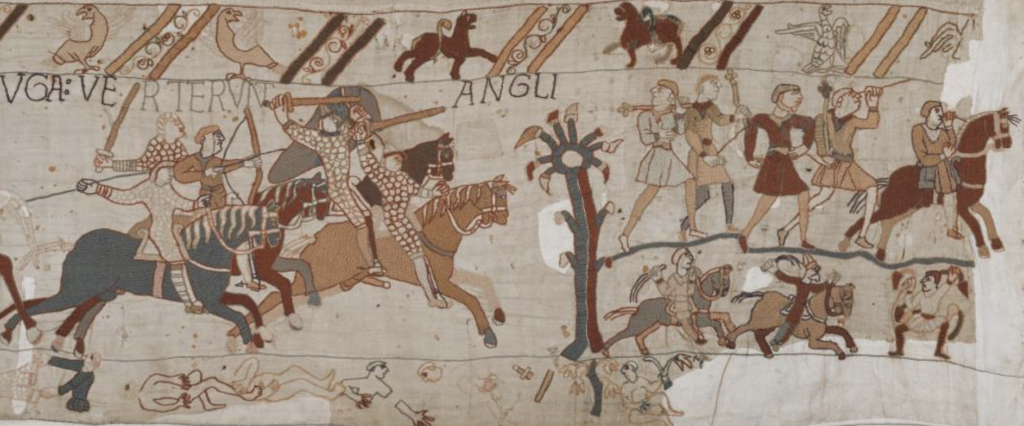
Panel 34 of the bayeux Tapestry, featuring two birds.

Medieval Matters: MT 24, week 1

First week is upon us! Welcome back, and a particular welcome to those joining us for the first time. I hope you’ve all had a chance to flick through the booklet of medieval events this term – if not, a PDF version can be found here. I’d like to draw your attention to the OMS Welcome Event this Tuesday at 5pm – I look forward to meeting lots of you there, and hearing more about the events you are running.

And: check out this handy guide to how to blog – including a call for authors for the OMS blog – by Miles Pattenden.

EVENTS THIS WEEK

Monday

  • French Palaeography Manuscript Reading Group – 10.30am at the Weston Library.
  • Medieval History Seminar – 5pm in the Wharton Room, All Souls. Edward Zychowicz-Coghill (KCL) will be speaking on ‘Writing the Conquest of Egypt: A case study in the Formation of Islamic Historical Writing’.

Tuesday

  • Medieval English Research Seminar – 12.15pm in Lecture Theatre 2, St Cross Building. Amy Appleford (Boston University) will be speaking on ‘Ascetic Theory and the Impaired Christ: Peter Damian, Richard Rolle, Julian of Norwich’.
  • Latin Palaeography Manuscript Reading Group – 2pm in the Weston Library.
  • Oxford Medieval Studies Welcome Event – 5pm in the Wellbeloved Room, Harris Manchester College. A welcome event for all medievalists, old and new – all those running a seminar/group are encouraged to come along to pitch their event to the community!

Wednesday

  • Reading Jews in Late Antiquity – 10am in Room 207, The Clarendon Institute, Walton St. The topic this week will be Jewish Women and Communal Roles.
  • Medieval German Graduate Seminar – 11.15am at Somerville College. The topic for this term is Konrad von Megenberg: ‘Buch der Natur’. The 1861 edition by Pfeiffer is open access online, 2003 edition by Luff/Steer is accessible via SOLO. This will be a short organisational meeting – contact Henrike Lähnemann for more information.
  • Medieval Latin Document Reading Group – 4pm on Teams. To join and/or to find out more, please contact Michael Stansfield.
  • Late Antique and Byzantine Seminar – 5pm in the Ioannou Centre for Classical and Byzantine Studies. Alexander Sherborne (Oxford) will be speaking on ‘The Extraordinary Medieval Monuments of Georgia: A Report by the Oxford University Byzantine Society Research Trip, July 2024’.
  • Dante Reading Group – 5.30pm in Seminar Room 11, St Anne’s College

Thursday

  • Medieval Women’s Writing Research Seminar – time TBC, Online. Arnisha Ashraf (Jamia Millia Islamia, New Delhi) will be speaking on ‘Woman’s Body as ‘Commodity’: Matrimonial Alliances and Political Dynamics in Medieval Assam (c.1600-1800)’.
  • Greek and Latin Reading Group – 3pm in the Stapeldon Room, Exeter College. The theme this term is ‘Greek and Roman Lives’.
  • Medieval and Renaissance Music – 5pm on Zoom. Please register here.
  • ‘The Winter Sun in Capricorn: Portal Imagery in Chaucer & Chartres Cathedral’, with the American Friends of Chartres – 7:30, held Online. Tickets here.

Friday

  • Beowulf Study Day – 10pm in the Study of the Book Room, Faculty of English. Booking required.
  • Medievalists Coffee Morning 10.30-11.30am in the Visiting Scholars Centre of the Weston Library. All welcome.
  • Middle English Reading Group – 3pm in the Beckington Room, Lincoln College. This term, the group will be reading Troilus and Criseyde – please bring a copy of the Riverside Chaucer if possible.
  • Oxford Medieval Manuscripts Group – 5pm at the Weston Library. Andrew Honey will be speaking on ‘Cataloguing Medieval Bookbindings at the Bodleian: Manuscripts from Reading Abbey as a case study’. Spaces are limited: please email Elena Lichmanova by 16/10/2024.
  • Anglo-Norman Reading Group – 5pm in the Farmington Institute in Harris Manchester College.

UPCOMING

  • Tickets are still available here for the inaugural lecture of the Gad Rausing Associate Professor of Viking-Age Archaeology, held at St Cross College at 3pm on Friday 8th November. Dr Jane Kershaw will be speaking on ‘The Viking Diaspora: Causes, Networks and Cultural Identity’.

OPPORTUNITIES

T.K.A

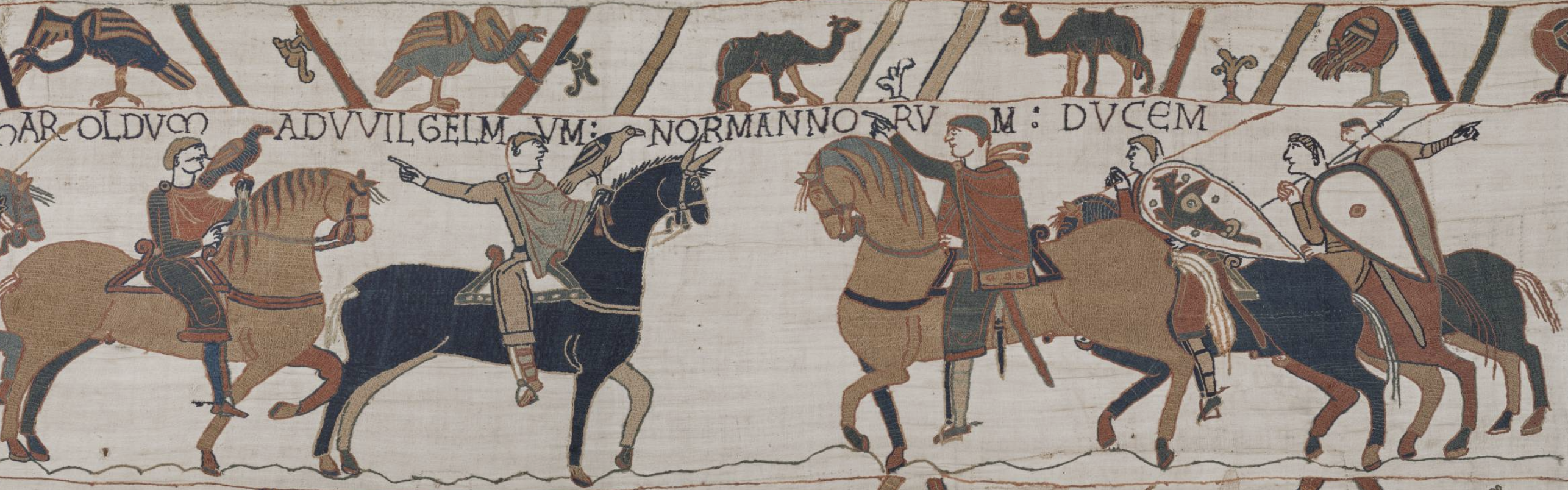
Bayeux Tapestry, Panel 34 (Available online Discover the Bayeux Tapestry online/). The little divider chap above is from Panel 18.

Medieval Matters: MT 24, week 0

Hello my friends, and welcome (back) to Oxford.

The beginning of another term means a new set of exciting events to put in your calendars. The first version of the new Medieval Booklet of events can be found here. If you are organising an event or series this term, please have a quick check through: addenda and corrigenda to medieval@torch.ox.ac.uk.

Each week I will be emailing out a list of that week’s events and opportunities, bright and early on a Monday morning. This week’s selection can be found below.

EVENTS THIS WEEK:

Thursday 10th October:

  • The Celtic Seminar starts at 5pm in the Memorial Room at Jesus College.

Friday 11th October:

  • Medievalists Coffee Morning 10.30-11.30am in the Visiting Scholars Centre of the Weston Library. All welcome
  • The NEW Medieval MSS Support Group 11:30-12:30 in the Horton Room in the Weston Library: once or twice a term, in which readers of medieval manuscripts can pose questions to a mixed group of fellow readers and Bodleian curators in a friendly environment. Come with your own questions, or to see what questions other readers have! If you wish to pose a question, please order the relevant manuscript to the issue desk, and email the details to Matthew Holford, Tolkien Curator of Medieval Manuscripts, the day before, so that he can arrange for it to be transferred across to the Horton Room for the session. Alternatively, provide a good quality digital image that we can display on a large monitor. A second date this term will be on 6 December.

COMING UP

  • On Tuesday, 15 October, there will be a chance to meet together as a community with the Welcome Social, held in the Wellbeloved Room at Harris Manchester College. If you are hosting a reading group/ lecture series/event this year we highly encourage you to come along to help spread the word. See you all there!

OPPORTUNITIES

  • University College Dublin is advertising a PhD studentship in Early medieval political and/or intellectual culture (c.500-c.1000 CE), supervised by Dr Megan Welton. For more information, please see the recent blog post here.

If you know of anybody interested in the medieval who is not on this mailing list, please encourage them to register here for the mailing list.

T.K.A

Balliol College MS 238A, fol. 1r

University College Dublin PhD opportunity

The College of Arts and Humanities, University College Dublin, Ireland, is pleased to announce a generously funded Ph.D. studentship specialising in Early medieval political and/or intellectual culture (c.500-c.1000 CE) which will be supervised by Dr Megan Welton, Assistant Professor in Medieval History and recently appointed Ad Astra Fellow at the School of History (https://people.ucd.ie/megan.welton).

Deadline: 4 November 2024 by email to megan.welton@ucd.ie.

The studentships are open to EU and non-EU candidates and are for a maximum of four years, renewable each year, subject to satisfactory progress. The award includes full tuition fee waiver, a PhD stipend of €25,000 per annum, and €4,000 per annum towards research costs of the Ph.D.  We anticipate that the successful candidate will start in January 2025.

Please submit the following application materials by email:

  • Personal statement and CV as one document
  • Writing sample (e.g. an essay or section of MA dissertation)
  • Two academic references
  • A proposal (1000-1500 words plus indicative bibliography).

The Selection Panel will shortlist candidates for interview, likely to take place in the last week of November. Successful applicants will be informed by email.

For the application procedure please see the relevant school guidelines below. The outcome of this competition will be communicated directly to all applicants.

Specialisation: Early medieval political and/or intellectual culture (c.500-c.1000 CE)

Proposals for a Ph.D. project in the history of early medieval politics and intellectual thought are welcomed, specialising in one or more post-Roman kingdoms, including (but not limited to) east and west Francia, early English kingdoms, and northern Italy. Proposals that incorporate a comparative approach are encouraged.

In addition to a competitive stipend, the successful candidate also will have access to an annual research budget of €4,000 for archival research in relevant collections abroad or related research expenses.

The UCD School of History stands as one of Europe’s premier centers for historical research, offering a vibrant research community. The School of History is well-connected through its active engagement with international partners and a broad array of UCD research centres and institutes. The successful candidate will join a robust graduate community of early career medieval scholars, from MA students in Medieval Studies in the School of History, to postgraduates and postdoctoral fellows in connected schools in Art History, Archaeology, and Irish, Celtic Studies and Folklore.

As such, interdisciplinary work is welcomed, and candidates from all relevant areas of medieval studies are encouraged to apply.

Introducing the new OMS Comms officer

Greetings friends, old and new.

My name is Tristan Alphey, and I am the new OMS comms officer for the coming year. I’ll be popping up in your inboxes throughout the year with all sorts of opportunities and events, and so I want to take this quick chance to briefly introduce myself and my research.

My research explores the social implications of nicknaming in pre-Conquest and early Norman England. I look at the themes, number, and distribution of nicknames in an attempt to understand what motivated people to give and repeat names, and whether we can begin to unpick some of the social systems that lay behind these names. My approach draws on a body of scholarship known as socio-onomastics, increasingly popular among linguists and anthropologists, that sees names as playing an active role in shaping the ways people interact with each other.

We find these nicknames all over the place: in Domesday Book, within witness-lists of charters, in manumissions, in confraternity books, (very occasionally) in poetry. Some of these English nicknames are simple observations: two late 7th century missionaries are given the nicknames ‘Black’ and ‘White’ for their hair colour. Others are openly pejorative: one Domesday subtenant is named, simply, ‘Bad Neighbour’. Yet others are downright unintelligible: if anyone can offer me a convincing interpretation for the nickname of Alric ‘Winter Milk’, I am all ears…

Elsewhere in Oxford I run the Medieval Misuse reading group, which explores the ways in which the medieval past has been misused by modern political parties and extremist groups. We hope to bring this back in the coming term, so keep your eyes peeled.

I look forward to getting to know you all better, and meeting many of you in person – feel free to email me with any specific questions. I’m always keen to convert other medievalists to the thrills of onomastics, particularly socio-onomastics, so do please reach out if you’d ever like to discuss names. Until then, enjoy this week’s downpour of rain and I will see you all in first week.

header image: Cnut and Emma as they appear in the liber vitae of New Minster: BL, Stowe, MS. 944, fol. 6 (https://imagesonline.bl.uk/asset/524)

Oxford Old English Work in Progress (WOOPIE) 2020

One unexpected positive from the lockdown has been the large number of online seminars that have sprung up in the absence of the various conferences and other meetings that are the lifeblood of academic research. Linking scholars from all over the world to share research and get feedback on ongoing projects, some of these online seminars have proved surprisingly successful.

After conversations among a group of Oxford Old English scholars back in March, it was decided to set up a small, informal weekly work-in-progress group via the OMS channel on Microsoft Teams. While the initial plan was simply for an internal support group, soon speakers from other institutions were volunteering to give papers and WOOPIE was born. Within weeks numbers had sprung up to a weekly average of 40, with attendees from all parts of the globe tuning in. The seminar has proved popular with graduate students as well as academics all over the world.

So far, we have heard papers on topics ranging from contested readings and the editing of texts to recent archaeological discoveries, from the reception of heroic poetry in local guilds to an eleventh-century chronicler’s special interest in astronomy, from the interpretation of charms and riddles to the surprising role of humour in hagiography. Other presentations have explored the influence of classical and medieval Latin writing on Old English texts, as well as the copying of Latin poetry in manuscript form in early medieval England. WOOPIE continues over the summer, meeting every Monday at 4pm, with a full programme of papers until the end of September. For further details, contact francis.leneghan@ell.ox.ac.uk

Of course, we are all looking forward to getting back to face-to-face conferences and seminars once the pandemic is over. But the success of online events such as this has certainly proved an eye-opener. Perhaps in the future, more events will incorporate an online element, such as streaming a keynote lecture, opening up discussion to a much wider international audience.

Programme

(NB this is subject to change; for up-to-date information, please consult the Teams channel)

20th April: Rachel Burns, ‘A Monastic Micro-riddle in Solomon and Saturn I,

l. 89a: “prologa prim”’

27th April: Francis Leneghan, ‘Dishonouring the Dead: Beowulf and the Staffordshire Hoard’

4th May: Rafael Pascual, ‘Beowulf 501b and the Authority of Old English Poetical Manuscripts’

11th May: Marilina Cesario (QUB), ‘Natural Science in the Peterborough Chronicle’

18th May: Glenn Cahilly-Bretzin, ‘The Case of the Missing Ducks: Thematic Reshaping in the Transmission of the Anonymous Martinmas Homily’

1st June: Mark Atherton, ‘Ælfwine and the guild of thegns: another look at the second half of The Battle of Maldon

10th June: Caroline Batten, ‘Charms and Riddles: Moving Beyond Sound and Sense’

15th June: Emily Kesling (Oslo), ‘The Royal Prayerbook and Intellectual Exchange across the Channel in the Eighth Century’

22nd June: Richard North (UCL), ‘Queen Camilla and Grendel’s Mother’

29th June: Niamh Kehoe (UCC), ‘Fool Steam Ahead: the Role of Humour in the Passion of St Eustace’

6th July: Colleen Curran, ‘Poetic Form and Function in Bede’s Historia Ecclesiastica

13th July: Sarah Barnett, ‘Hypermetricity and Homily: An Argument for Intentional Metrical Oddity in Christ III

20th July: Tristan Major (Qatar University), ‘Ælfric and the Dissemination of Canon Law at Worcester’

27th July: Elisa Ramazzina (QUB), ‘Wætan bestemed, beswyled mid swates gange: Water, Blood, and Baptism in Old English Poetry’

3rd August: Helen Appleton, ‘Folk Horror: Hell in Rogation Homilies’

10th August: Hannah Bailey, ‘St Rumbold in the Borderland’

17th August (NB change of time: 12pm): Georgina Pitt (University of Western Australia), ‘The thing-power of the exquisite Alfred Jewel’

24th August: Matt Coker, ‘A Tragic Sound? Interpreting the tragico sono of Old English Poetry’

31st August: Eleni Ponirakis (Nottingham), ‘The Greeks in Old England’

7th September: Michael Fox (Western), tbc

14th September: Luisa Ostacchini, ‘Imposter Saints and Fraudulent Shrines in Ælfric’s Lives of Saints’

21st September: Amy Faulkner (UCL), ‘Since berofene: Loss of Life and Treasure in Exodus and Beowulf

28th September: Kazutomo Karasawa (Rikkyo Univ.), ‘Borders between the Human and the Monster Worlds in Beowulf’

Image Credits: The runic signature of Cynewulf in The Fates of the Apostles, Vercelli Book folio 54r – public domain


Teaching the Codex II

Saturday 6th May 2017, Merton College, Oxford

Organisers: Dr Mary Boyle and Dr Tristan Franklinos

Committee: Jessica Rahardjo and Alexander Peplow

Following the success of the first Teaching the Codex colloquium in February 2016, which was attended by over one hundred international graduates and scholars, it became clear that there were a number of areas of palaeography and codicology which we had not been able to explore owing to the constraints of time. The intention of Teaching the Codex II was to continue the conversations started at the first colloquium, and to extend them into areas which will complement and supplement earlier discussions.

In order to facilitate more focused engagement, we structured the day a little differently from Teaching the Codex I, which involved panellists addressing all the delegates on their pedagogical approaches to palaeography and codicology, followed by some general discussion. Instead, morning and afternoon sessions each consisted of two panels running concurrently on particular topics (1.5 hrs) followed by a plenary session (1 hr) in which the members of the two panels were asked to report and comment on the panel session to all of the delegates, and facilitate further discussion.

The four panels were the result of suggestions from various colleagues who attended the first colloquium, and of consultation of our followers on Twitter. Each panel had four members of whom one was the panel chair. Each panel member offered a ten-fifteen minute presentation on the topic in question before the discussion was opened up to the delegates who had chosen to attend a particular panel. Dr Teresa Webber (Cambridge) offered closing remarks. The panels were as follows:

I: Continental and Anglophone approaches to teaching palaeography and codicology

  1. Dr Irene Ceccherini (Oxford) (Chair)
  2. Dr Marigold Norbye (UCL)
  3. Dr Daniel Sawyer (Oxford)
  4. Dr Raphaële Mouren (Warburg Institute)

II: Pedagogical approaches to musical manuscripts

  1. Dr Henry Hope (Bern) (Chair)
  2. Dr Margaret Bent (Oxford)
  3. Dr Eleanor Giraud (Limerick)
  4. Dr Christian Leitmeir (Oxford)

III: Approaches to teaching art history and manuscript studies

  1. Dr Emily Guerry (Kent) (Chair)
  2. Dr Spike Bucklow (Cambridge)
  3. Dr Kathryn Rudy (St Andrews)
  4. Emily Savage (St Andrews)

IV: Taking palaeography further: schools, outreach, and the general public

  1. Dr Pauline Souleau (Oxford) (Chair)
  2. Anna Boeles Rowland (Oxford)
  3. Sarah Laseke (Leiden)
  4. Sian Witherden (Oxford)

As with the first Teaching the Codex event, this event was made possible by the generous support of Dr Julia Walworth, Fellow Librarian at Merton College. The colloquium was attended by around seventy participants, and each panel was well-attended, and triggered substantial and wide-ranging discussion. Much of the day was live-tweeted, and one of our attendees, Dr Colleen Curran produced a Storify from our official hashtag, #teachingcodex

[https://twitter.com/hashtag/teachingthecodex?f=tweets&vertical=default&s…

Teaching the Codex has various continuing strands:

  1. Our blog is testament to the continued interest in the questions surrounding pedagogy in palaeographical and codicological studies, and to the wider impact and outreach that can be achieved across various disciplines in the humanities through the use of manuscripts and incunabula. Monthly blog-posts are offered by graduates and academics on their experiences of Teaching the Codex to various audiences, and on the potential impact of palaeography, codicology, and the history of the book, on specialist and non-specialist alike. We also have periodical ‘Teachable Features’ which draw attention to (aspects of) particular manuscripts which may be of pedagogical use in illustrating particular features of palaeography and codicology to students.
  2. We have been asked by various participants to consider organising a further Teaching the Codex colloquium, and we are in the process of considering fruitful ways in which we might broaden our remit. One possibility is to expand our focus beyond western palaeography, and Jessica Rahardjo has offered to take a lead in this area.
  3. The Manuscripts Outreach Network has been founded as a sister organisation by a group of primarily Oxford-based early-career scholars. Those currently involved are Dr Pauline Souleau, Anna Boeles Rowland, Sian Witherden, Naomi Gardom, and Henry Tann, Mary Boyle, Tristan Franklinos, and Alexander Peplow. This initiative would not be possible without the support of Dr Julia Walworth.

We are very grateful for the support we have been given by Oxford Medieval Studies, sponsored by the Oxford Research Centre in the Humanities (TORCH) for our colloquia in both 2016 and 2017, as well as the support we have received from the Merton College History of the Book Group (2016, 2017); the Lancelyn Green Foundation Fund (2016, 2017); the Craven Committee (2016); and the Society for the Study of Medieval Languages and Literature (2017).

Leeds IMC 2018: Commemorating Saints and Martyrs in Medieval Europe

In line with the IMC focus of Memory for 2018, which has also been named as the European Year of Cultural Heritage, the newly-launched MARTRAE network is organizing sessions on ‘Commemorating Saints and Martyrs in Medieval Europe’. The focus of these sessions is to explore the multifaceted ways in which saints and martyrs are remembered and how forms of commemoration functioned in creating, perpetuating or transforming collective cultural heritage.

Papers may focus on tangible as well as intangible forms of commemoration, including (but not limited to): devotional and liturgical practices; material aspects of commemoration in the form of relics, devotional objects and manuscripts; the conceptualisation of martyrdom and sainthood; the legacy and function of medieval forms of commemoration in the modern world; harmony and disharmony in remembering; landscapes as vehicles or anchors for commemoration; and the role of martyrdom in shaping or manipulating identities.

Please send abstracts of ca. 250 words to Nicole Volmering at volmern@tcd.ie or Ann Buckley at buckleai@tcd.ie by September 20th 2017.

Early Career Seminar

Early Career Seminar: Applying for Postdocs

23 March 2018

All Soul’s College, Oxford

Early career scholars are invited to a seminar on how to apply for postdoctoral fellowships and early career positions on the morning of 23 March 2018 in the Old Library of All Soul’s College Oxford, from 10:00am-1:00pm. The seminar will be presented by Dr Lydia Schumacher, Visiting Fellow at All Soul’s, who will speak from past experience as a British Academy Postdoctoral Fellow and Junior Research Fellow at Oriel College, Oxford; a Chancellor’s Fellow at Edinburgh University; a European Research Council Principal Investigator; and recipient of an Alexander von Humboldt Fellowship in Germany. At the seminar, guidelines will be shared for structuring a strong research proposal that is tailored to the requirements of different funding bodies. Advice will also be given on how to navigate the period just after the PhD and to make creative use of time ‘between positions’. There will be time for questions, and depending on the number of participants, a chance to gain feedback on a working research proposal.

To propose a paper, please submit an abstract of up to 200 words by 30 November 2017.

Prospective speakers be notified of the outcome by 1 January 2017.

QUESTIONS? Please contact Lydia Schumacher at Lydia.schumacher@kcl.ac.uk

SUBMIT AN ABSTRACT by 30 November 2017 and/or RSVP by 7 March 2018 for either or both events to Tom J. Savage at Thomas.savage@kcl.ac.uk.

New Postdoctoral Researcher Opportunity

The Music and Late Medieval Court European Cultures (MALMECC) project are taking applications for a new postdoctoral researcher. Details of this opportunity can be found here. The closing date for applications is the 2 December 2016.