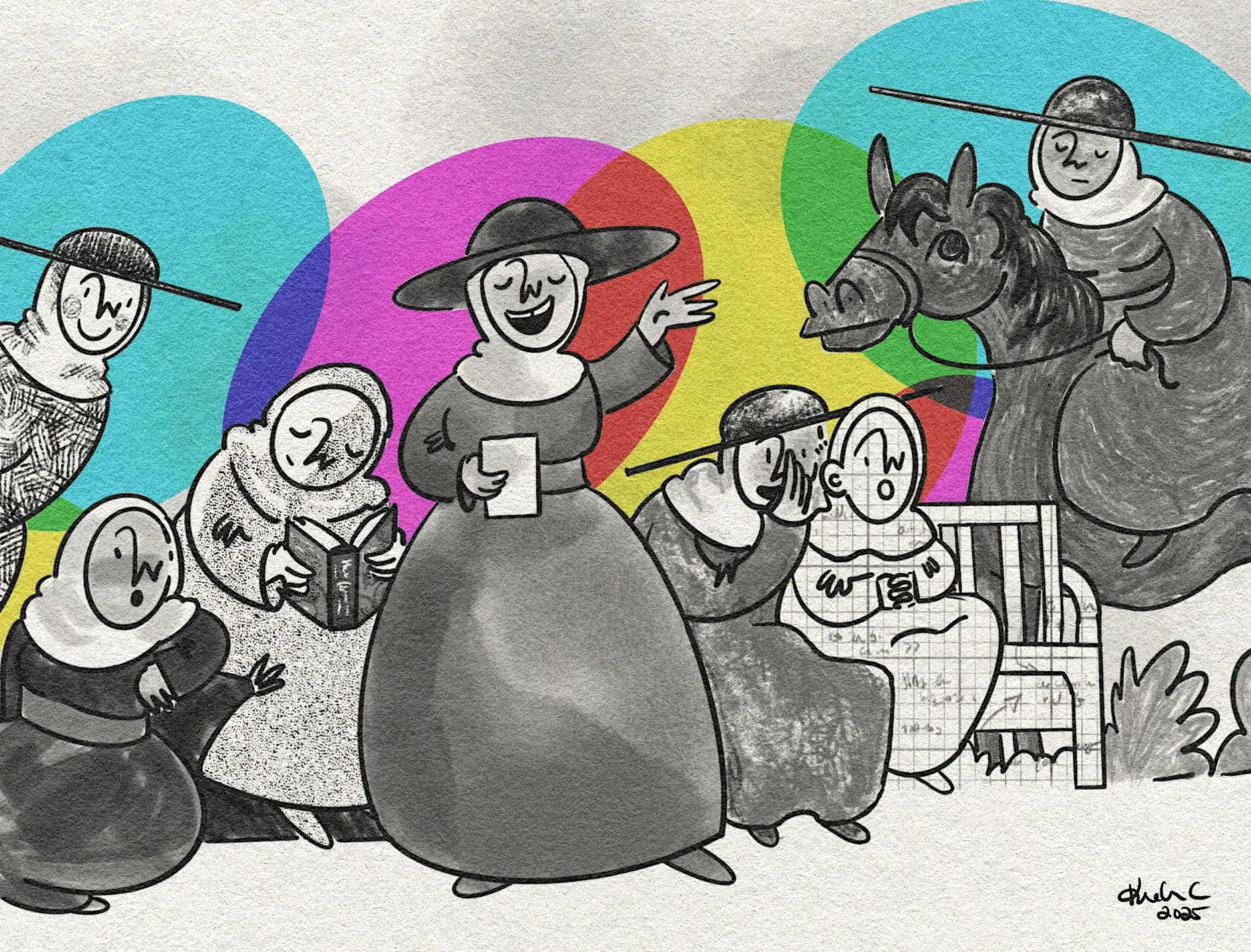
This term sees the first event in Dr Laura Varnam‘s John Fell Funded project ‘Creating Medieval Criticism Now’ on Wednesday 28th October at 5pm (3rd week) in the Goodhart Seminar Room at University College. All are welcome, please sign up via this Eventbrite link.
Co-sponsored by the Guild of Medievalist Makers, the first seminar will be on THE FORMS OF CRITICISM, with poet Susie Campbell, writer Nik Gunn, and cartoonist & illustrator Esther McManus.
Chaired by Laura, the speakers will explore the benefits & challenges of their particular creative practice (poetry, the historical novel, comics) as their mode of critical engagement with the Middle Ages in the modern day.
In Hilary Term, the network seminar will be on Creativity in the Classroom with Dr Daisy Black & Dr James Paz, and in Trinity Term is will be on Public Engagement and/as Creative Criticism with Prof Anthony Bale and Dr Eleanor Barraclough.
Speaker bios:
Susie Campbell completed a creative practice poetry PhD at Oxford Brookes in 2024. Her poetry is medievalist, experimental, and multi-modal. Her poetry publications include Tenter (2020), The Sleeping Place (2023), and Wastelands (2025). She has a chapter in the forthcoming book Beyond Medieval Archives due out from UCL Press later this year, plus a new poetry pamphlet Sarsen forthcoming from Little Hirundine Press this November.
Nik Gunn is a writer and medievalist. He received his PhD from the University of York in 2017, specialising in Anglo-Norse linguistic and literary exchange in the Viking Age. He held teaching positions at UCL and Oxford before leaving academia in 2022. He now works in creative and cultural industries policy.
Esther McManus teaches BA Graphic Communication Design (Central Saint Martins, UAL) and MA Illustration (Camberwell, UAL). She is currently undertaking a PhD titled ‘Under Construction: Representing Queer Archival Presence & Absence Through Comics’ at UAL. As a cartoonist and illustrator, her books & comics explore personal & collective relationships to history, informed by archival research.
With thanks to the John Fell Fund at the University of Oxford for their generous funding.