by Cris Arama (MSt. Medieval Studies)
Report on the workshop for the graduate students of the MSt. in Medieval Studies: ‘Fragments and photographs: what are we doing when we try to get close to medieval people?’ which started using examples from medieval records and Ian Forrest’s account of publishing with the photographer Martin Stott https://martin-stott.com/argehane-books/bartlemas-oxfords-hidden-sanctuary/
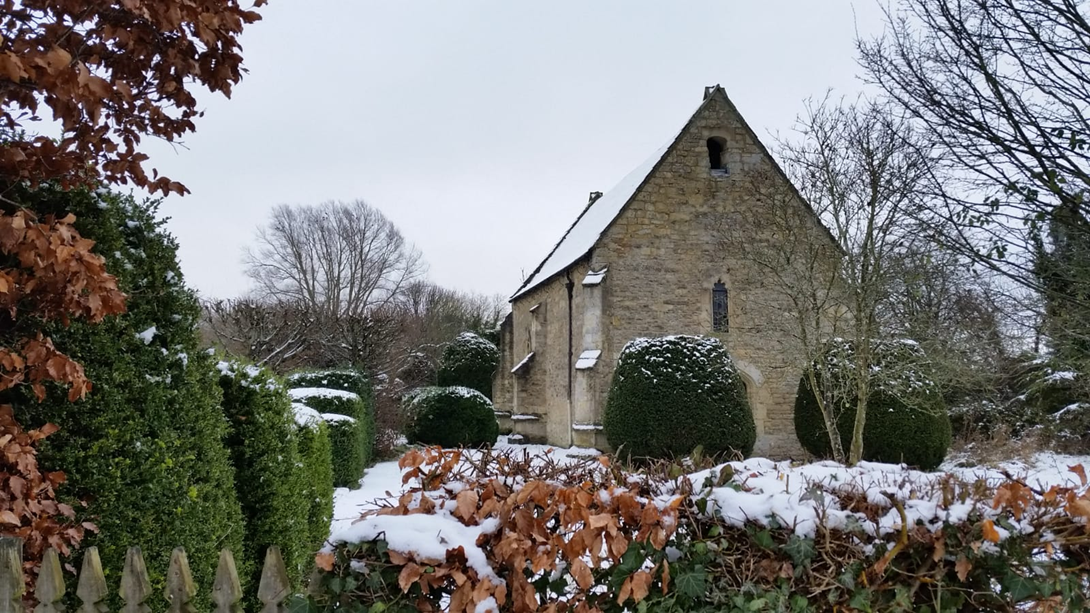
How do you find someone who lived in a leper hospital in Oxford nine hundred years ago? Not find them in the sense of retracing their biographical data—but stepping into their world, breathing life into their form. Founded by Henry I in 1126, the hospital of St Bartholomew, known as Bartlemas, cared for countless residents over the centuries. In addition to its beginnings as a leprosarium, it has acted as an almshouse, hosted a nursery between 1956 and 2009, and now fosters a culturally-diverse community, offering occasional services in its chapel.
What would it have felt like to step through Bartlemas in 1126, the moans of the ill reverberating into the night? What would it have felt like to reach for the supposed reliquary of St Bartholomew’s skin, desperate for the certainty of healing? These are the sort of questions Ian Forrest brought to the workshop held on February 20th 2026 at the Schwarzman Centre. It was inspired by the recent book ‘Bartlemas: Oxford’s Hidden Sanctuary’ (2025), in which an essay by Prof Forrest accompanies nearly a hundred photographs by Martin Stott of Bartlemas and its surroundings.
Together, we leafed through the photographs of Bartlemas as it exists today—the chapel rebuilt in the 17th century, the garden which has likely witnessed nine hundred years of continuous tending, and Muslim men kneeling in prayer, not unlike the countless Bartlemas brothers before them. Looking through the photographs, I was struck by two overlapping impressions: on the one hand, the vibrancy of the life which has been unfolding at Bartlemas for centuries; on the other, the ghostly absence of the countless people who spent their lives here. You would almost expect their memory to have left behind some physical trace, akin to geological layers. But it did not. We are left only with sparse biographical, financial and administrative records. Do they do justice to the richness of humanity that these people had? As historians, can we do more?
We discussed whether alternative ways of ‘doing’ history might help us achieve that. We started with a recent photo of a gardener at Bartlemas, a scythe propped on his shoulder. Perhaps taking a closer look at life in such spaces today, and finding echoes of the past in it, might help us to better imagine the full life of someone who lived there long ago. Henrike Lähnemann brought to the discussion a similar approach, sharing an interview she took at a German convent tracing its origins to Medieval times. Watching the Abbess of Kloster Lüne speak, her face lit in a kaleidoscope of warm yellows, blues and greens from the stained glass above her, it was not difficult to imagine a Medieval nun stepping softly through the same light. Nevertheless, looking at the experience of a place in the present can inform, but not elucidate, that of the past.
In an effort to fill in these gaps, we can also turn to the writings or even artwork left behind. For instance, as Henrike Lähnemann pointed out, it was commonplace for medieval German nuns to not only write prayer books, but to also illustrate them. Their humanity peeks out through the careful brush-strokes and the painstaking process which merged prayer with creation, the spiritual with the material. In manuscripts from Medingen Abbey, the pieces of gauze sometimes used to veil illuminations were likely of the same material of the nuns’ headdresses. When we examine such manuscripts, in which the creator and the creation are intertwined, we are brought closer to the person behind that process.
Lastly, we discussed the potential of fiction to capture the humanity of people long gone. It could allow us to step into the life of a resident at Bartlemas in the 12th century, imagining their routine of ointments and prayer, and perhaps their moments of wavering faith. We could imagine the deep ache in the shoulders of a nun at Medingen after a day spent hunched over parchment, sharpening her quill and watching flecks of gold float in the air after an illumination. In this sense, fiction could open the possibility for a truer account of human experience than what we can glean from sparse historical records.
There is no clear answer to this dilemma. If we stick too closely to historical data, we risk losing the fullness of humanity against the hard edges of fact. If we rely too much on imagination, we risk treading too far into speculation, ending up misrepresenting the very people we sought to understand.
Perhaps there is value in the act itself of asking these questions, as Ian Forrest guided us to do. Perhaps we begin to do justice to the unreachable past simply by paying attention to it.
Picture: Bartlemas Chapel (off Cowley Road) in Winter (Henrike Lähnemann 2020)